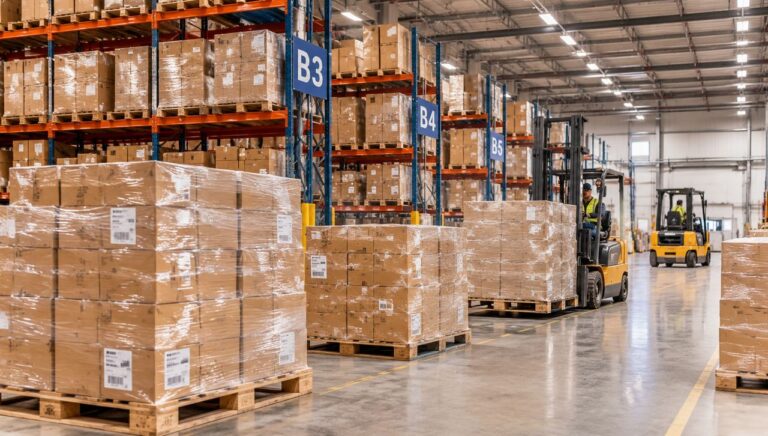
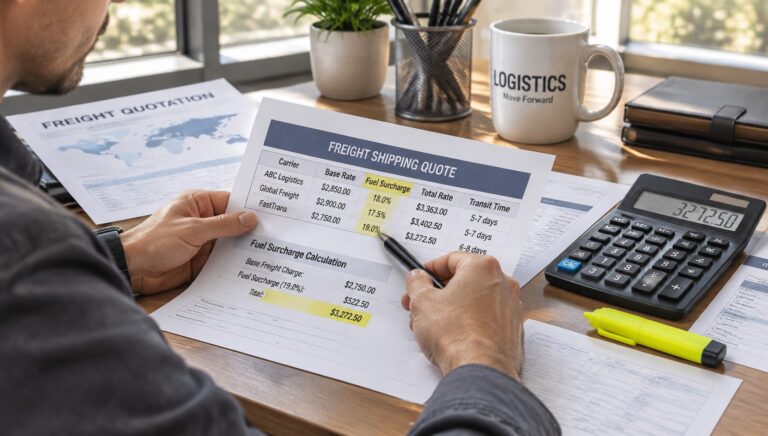
Fulfillment is the process of getting a customer’s order from available inventory to the customer. In ecommerce, it typically covers order receipt, inventory allocation, picking, packing, shipping, and sometimes returns processing. The exact scope depends on the seller’s operating model and the provider’s contracted responsibilities. For shippers and importers, the practical question is whether the inventory will reach the right fulfillment location, remain available for sale, and leave on time when an order arrives.
A fulfillment center definition should distinguish order handling from the transportation that supplies the facility. A warehouse or fulfillment provider may manage stock and prepare individual orders, while a freight forwarder coordinates the movement of inventory between origins, ports, airports, customs checkpoints, and destination facilities. Some providers coordinate several stages, but the word “fulfillment” alone does not confirm that they handle international freight, customs clearance, storage, last-mile delivery, or returns. Before choosing a service, identify the required handoffs and confirm which party owns each one.
What Fulfillment Covers—and Where It Stops
Fulfillment connects an accepted customer order with the inventory, warehouse work, and delivery activity needed to complete it. The central operating requirement is inventory accuracy: the seller or fulfillment provider needs reliable information about what is available, where it is stored, and whether it can be allocated to a specific order.
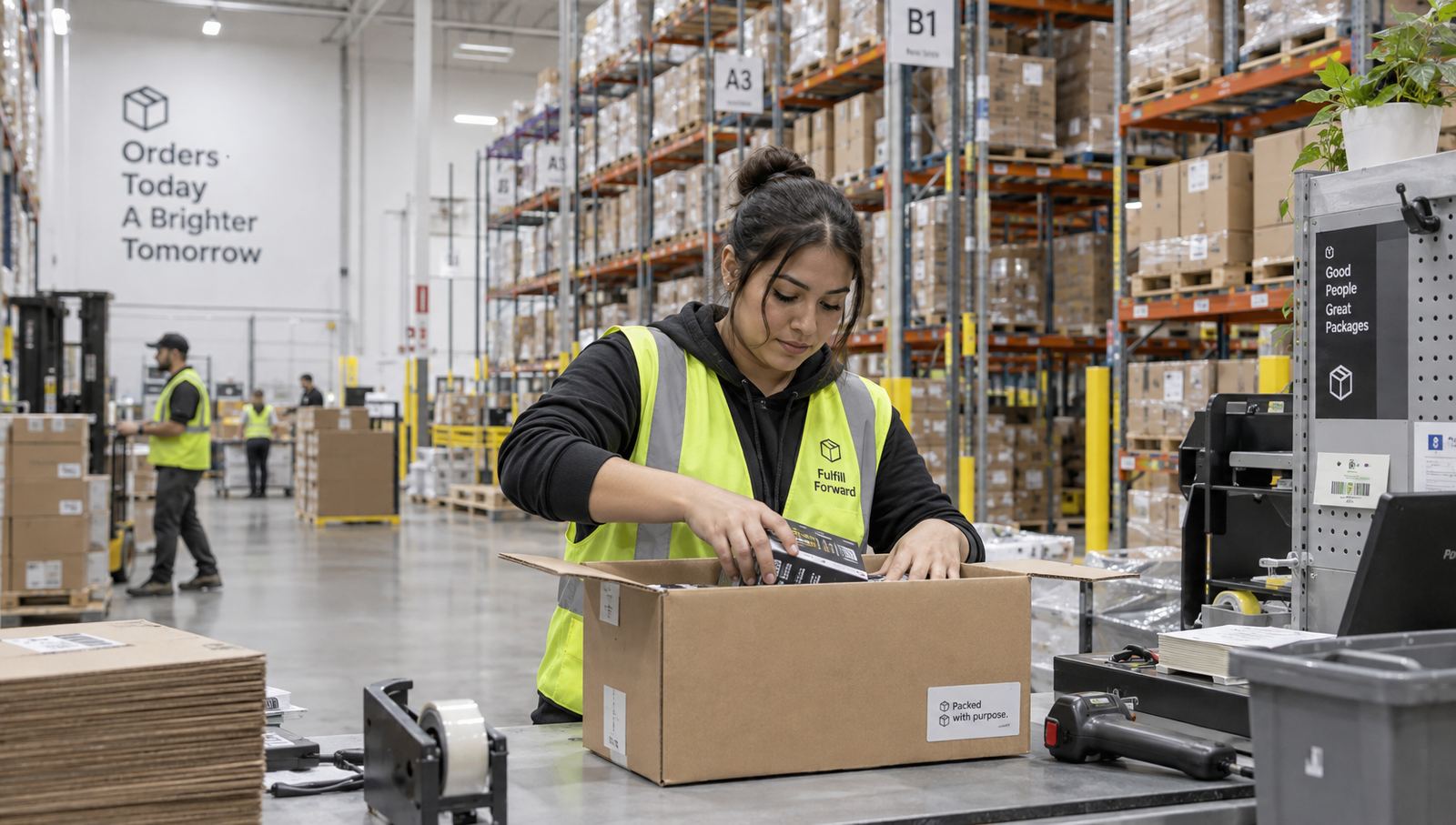
A fulfillment center performs the warehouse and order-handling functions assigned to it. Depending on the service arrangement, those functions may include receiving inbound stock, recording quantities, storing products, picking order lines, packing parcels, applying shipping labels, handing parcels to carriers, and processing returned goods. Receiving and storage are not automatically included in every arrangement, so the service scope matters more than the facility name.
| Stage | Main activity | Typical owner | Key verification |
|---|---|---|---|
| Inbound replenishment | Moves inventory to the facility | Seller, supplier, carrier, or forwarder | Arrival window and receiving requirements |
| Receiving and storage | Checks and records incoming stock | Warehouse or fulfillment provider | Accepted quantities and inventory records |
| Order processing | Allocates, picks, and packs products | Seller or fulfillment provider | Order accuracy and dispatch readiness |
| Outbound delivery | Moves the parcel to its destination | Carrier or delivery partner | Service level, tracking, and delivery status |
| Returns handling | Receives and evaluates returned products | Seller or designated returns provider | Return authorization and disposition |
These stages can overlap, but they have different control points. A carrier’s proof of delivery for an inbound shipment does not necessarily mean the warehouse has received and reconciled every unit. Likewise, a parcel marked as dispatched does not establish that the customer has received it. Each stage needs its own status and supporting records.
Which Fulfillment Model Fits the Business?
The right model depends on order volume, inventory control, warehouse capacity, product handling requirements, and the level of operational responsibility the seller wants to retain. A business should compare the full operating scope rather than select a provider based only on storage or shipping prices.
In-house fulfillment: The seller manages inventory, warehouse staff, packaging, and dispatch. This model gives the business direct operational control but requires suitable space, systems, labor, and shipping arrangements.
Third-party fulfillment: An external provider handles agreed warehouse and order-processing tasks. This arrangement can reduce the seller’s need to operate its own warehouse, but fees, inventory visibility, cutoffs, and responsibility for exceptions need clear documentation.
Marketplace-connected fulfillment: A selling platform or its fulfillment network handles specified logistics tasks for eligible products. Sellers must verify current program conditions, receiving procedures, packaging rules, charges, and inventory limits before sending stock.
For example, sellers evaluating Amazon FBA should distinguish the platform’s fulfillment operations from the transportation needed to deliver inventory to its designated receiving location. A service that arranges inbound shipping does not, by itself, establish that the provider controls product storage or individual customer orders after receiving.
In-house and outsourced arrangements can also be combined. A seller may keep certain products in its own warehouse while using an external network for other sales channels or destinations. The arrangement works best when inventory records distinguish stock by location, availability, and sales channel so the same units are not promised to multiple orders.
How Inbound Freight Supports Fulfillment
Fulfillment depends on replenishment arriving before available stock runs out. For imported products, the inventory plan therefore needs to account for transportation, border clearance where applicable, delivery to the receiving facility, and the time required for warehouse check-in. A shipment can arrive at the destination region without becoming available for customer orders immediately.
The transportation method should match the shipment’s volume, urgency, handling needs, route, and budget. No single mode fits every replenishment plan.
Sea freight may suit larger replenishment shipments when the inventory plan can accommodate the applicable transit and handling time. The shipper should consider the full movement to the receiving facility, not only the ocean leg, and verify the current sailing schedule, destination charges, and delivery arrangements.
Air freight may be worth evaluating when stock is time-sensitive, the shipment is relatively small, or the cost of a stockout justifies a higher transportation budget. The comparison should use the complete quoted scope, including handling, clearance where applicable, and delivery to the fulfillment center.
Where the route and service are available, rail freight can be another replenishment option. Its suitability depends on the origin, destination, network, transit estimate, handling arrangements, and the shipment’s delivery deadline. A quoted rail transit time should not be treated as the total time until inventory is ready for sale.
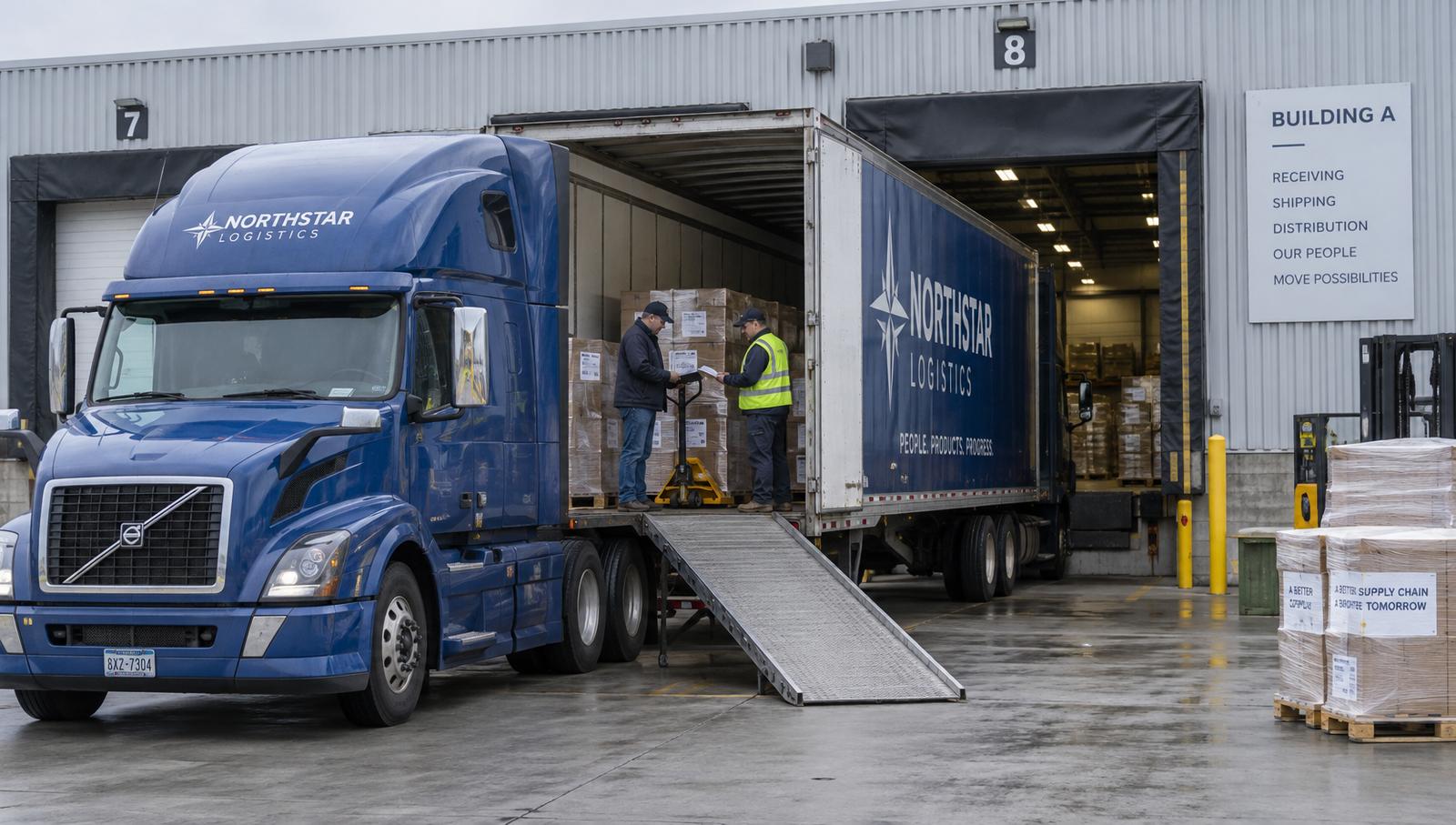
After an international shipment reaches its destination gateway, trucking freight may cover the inland movement to a distribution or fulfillment facility. The operator should confirm the receiving address, appointment requirements, shipment dimensions, unloading arrangements, and any equipment or access restrictions before dispatch.
When a shipment requires one provider to coordinate several transportation stages, a door-to-door freight service may simplify the handoffs. Confirm whether the quoted scope ends at the facility’s delivery point or also covers appointment coordination and other receiving requirements. Do not assume that door-to-door transport includes inventory storage, warehouse processing, or customer-order fulfillment.
Import planning can introduce additional dependencies. An import service may coordinate specified transportation-side tasks, while customs brokerage addresses applicable clearance procedures. The importer should identify the responsible party for shipment data, commercial documents, duty and tax arrangements, and clearance-related queries. The requirements depend on the transaction, goods, and jurisdictions involved and should be confirmed before dispatch.
Operational Inputs That Keep Orders Moving
Accurate product and shipment data help the warehouse receive inventory correctly and prepare customer orders without avoidable rework. Before shipping stock to a fulfillment center, the seller and receiving provider should agree on the information and physical requirements that apply to the shipment.
Start with the receiving facility’s exact address, delivery booking process, operating hours, and shipment reference requirements. Confirm the expected carton or pallet configuration, unit quantities, product identifiers, outer labels, and packaging specifications. Some fulfillment networks impose additional preparation or appointment rules, so the receiving party should supply the current instructions for that destination.
Product data also affects downstream handling. Dimensions and weights help determine storage suitability and transportation requirements. Product identifiers support stock reconciliation, while order-management integrations transmit order details and inventory availability between systems. The seller should test the relevant data exchange and exception process before routing substantial stock through a new provider.
Delivery timing should be planned around several separate milestones: origin pickup, main transport, any required clearance, inland delivery, warehouse receipt, and inventory becoming available for allocation. Each milestone has a different owner and may have a different status. The logistics coordinator should obtain an estimate for the complete sequence and ask which activities fall outside the service commitment.
Cost comparisons also require matching scope. Warehouse receiving, storage, pick-and-pack, packaging materials, parcel shipping, returns, inventory adjustments, and exceptional handling may appear as separate charges. The seller should compare the relevant service components for a representative order profile instead of treating a headline fulfillment rate as the total cost per order.
Shipping and inventory risk need separate attention. A cargo insurance service may address specified risks during covered transit, subject to the policy terms. The seller should verify the covered goods, insured journey, exclusions, claim documentation, and applicable limits. Transit insurance should not be assumed to cover goods while they sit in a fulfillment center or while a warehouse processes an order.
Common Fulfillment Mistakes and Operator Checks
The most preventable failures often occur where one party’s work ends and another party’s work begins. Two checks deserve particular attention before the first shipment moves.
First, do not confuse arrival with available inventory. A delivery receipt may confirm that freight reached the facility, but the receiving team may still need to count units, inspect packaging, resolve discrepancies, and post stock to the inventory system. Build this processing time into the replenishment plan and confirm how the facility reports shortages, damage, and receiving completion.
Second, do not leave handoff responsibilities undefined. An unclear delivery appointment, missing shipment reference, incorrect label, or unmatched product identifier can delay receiving or cause extra handling. Confirm who sends the appointment request, who provides the receiving documents, who monitors arrival, and who resolves exceptions if the shipment does not match the expected details.
Common mistake: Setting a restock date equal to the estimated freight arrival date. The date inventory becomes sellable may be later because of clearance, delivery scheduling, receiving checks, or system updates. Set the restock target using the complete operating sequence and track the remaining handoffs.
Operator check: Before releasing replenishment cargo, obtain the receiving instructions, verify the shipment references and quantities, identify the party responsible for each transport and clearance stage, and confirm how the fulfillment provider will report received and available stock.
For customer orders that require parcel delivery, confirm the carrier service and dispatch cutoff with the fulfillment operator. An express shipping service may suit some urgent outbound shipments, but transit time, delivery coverage, acceptance conditions, and the promised delivery date need separate verification. Faster transportation does not correct inaccurate stock records or eliminate warehouse processing time.
Disclosure: This guide provides general logistics information and may refer to services relevant to the topic. Carrier terms, customs requirements, fees, service coverage, and operating conditions can change. Confirm current requirements and responsibilities before acting.
Key Takeaways
- Fulfillment connects available inventory with order processing and customer delivery; the precise scope depends on the operating arrangement.
- A fulfillment center’s warehouse responsibilities are separate from inbound freight, customs clearance, and other services unless the agreement explicitly includes them.
- Choose an operating model based on inventory control, order profile, capacity, costs, and the responsibilities the seller wants to retain.
- Plan inbound replenishment around the complete journey, including clearance where applicable, inland delivery, receiving, and inventory availability.
- Verify receiving instructions, product data, handoffs, charges, and exception procedures before dispatching stock.
- Use confirmed operating milestones rather than the freight arrival estimate alone to set the date when inventory is expected to become available for sale.
Fulfillment FAQs
What is fulfillment in simple terms?
Fulfillment is the process of preparing and delivering a customer’s order using available inventory. It commonly includes picking, packing, and dispatch, with receiving, storage, and returns included when the service arrangement covers those tasks.
What does “in fulfillment” mean on an order status?
“In fulfillment” usually means the order is being processed before shipment, such as through inventory allocation, picking, or packing. The exact status definition varies by seller and platform, so the order-management system’s status descriptions determine whether the parcel has actually been dispatched.
What is a fulfillment center?
A fulfillment center is a facility that handles inventory and prepares customer orders under an agreed operating model. Its functions may include receiving, storage, picking, packing, and dispatch. Confirm whether the facility also handles returns, specialized products, and inbound receiving appointments.
Is fulfillment the same as warehousing?
No. Warehousing focuses on receiving, storing, and managing inventory, while order fulfillment also includes the work needed to prepare and dispatch individual customer orders. A provider may offer both services, but the contract determines which tasks are included.
Is fulfillment the same as shipping?
No. Shipping moves goods between locations, while fulfillment covers the wider process of completing an order. Shipping is one component of fulfillment, and inbound freight can supply the inventory a fulfillment operation needs. A transportation booking alone does not establish that order processing is included.
How long does fulfillment take?
The time varies with inventory availability, order cutoffs, warehouse workload, packaging requirements, and the selected delivery service. For inbound replenishment, clearance, inland transport, receiving, and inventory updates may add time before products can be allocated. Confirm the applicable milestones with each responsible provider.
What is the difference between self-fulfillment and third-party fulfillment?
Self-fulfillment means the seller handles the agreed warehouse and dispatch activities internally. Third-party fulfillment assigns specified activities to an outside provider. The decision depends on operating capacity, cost structure, required control, system integration, and the provider’s service scope.
Does a fulfillment provider handle international freight and customs?
Not necessarily. Some arrangements include coordination of inbound transport or clearance, while others begin when inventory reaches the receiving facility. Confirm the origin-to-destination scope, the party responsible for customs-related tasks, the required documents, and any charges or activities excluded from the agreement.
Disclaimer: This article is general informational guidance, not a binding quotation, legal opinion, customs ruling, carrier commitment, or delivery guarantee. Requirements, charges, service terms, and responsibilities can vary by route, cargo, contract, carrier, and jurisdiction. Confirm current requirements before booking or filing.