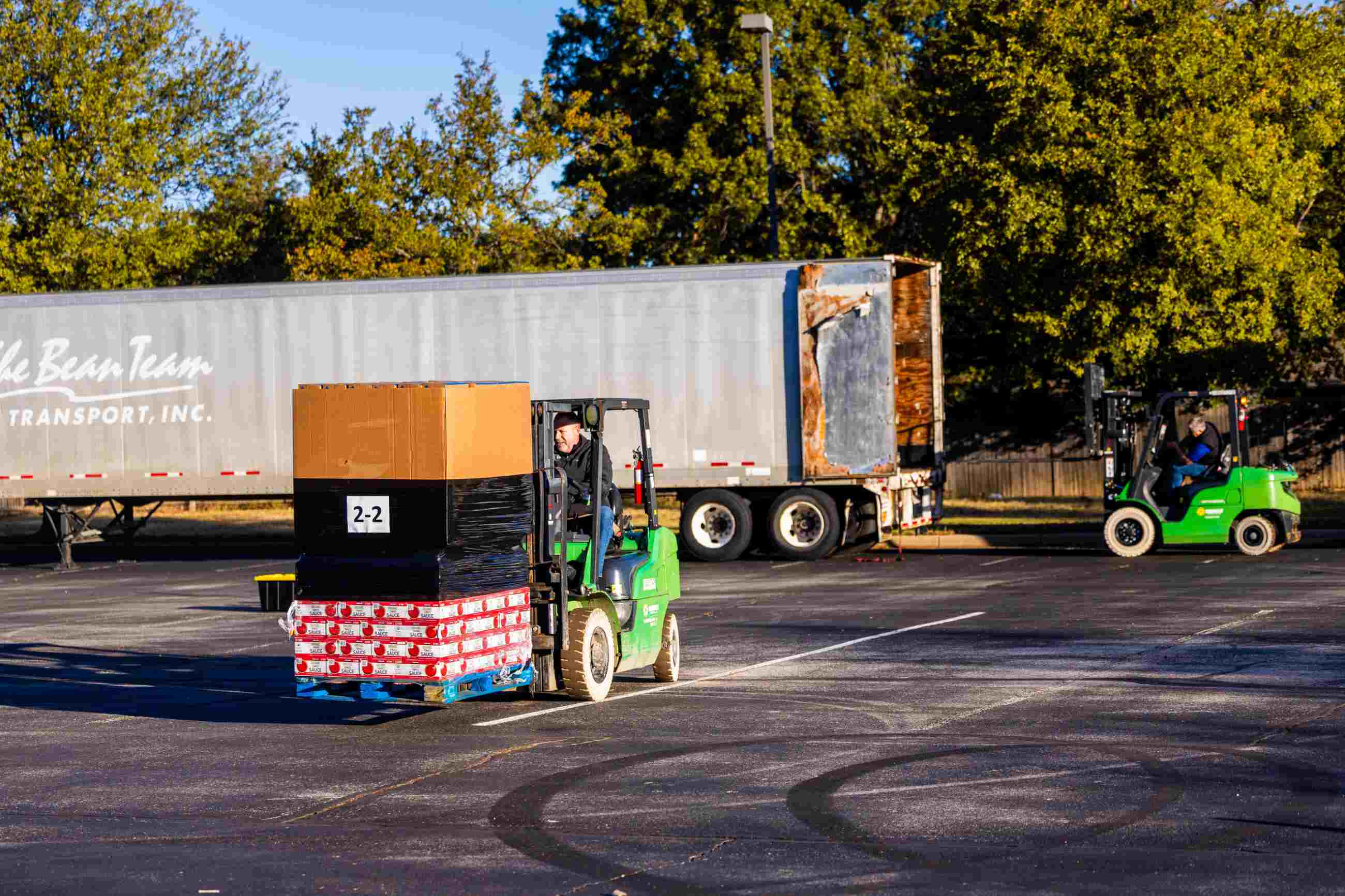
Warehouse team handling palletized freight for an inbound shipment

Freight forwarding and inbound coordination from China

Amazon FBA Shipping from China.

Build an FBA-ready freight plan around supplier pickup, consolidation, seller-approved prep and labels, customs responsibility and delivery to the fulfillment center assigned in your shipment plan.

Supplier-ready pickupCollect, consolidate or receive cargo in China
Prep and label scopeBuilt from the approved shipment plan
Import responsibilityCustoms, duty and tax scope defined early
Inbound deliveryMatched to the assigned FBA destination

Amazon assigns the inbound destination. Your freight plan must follow it.

FBA inbound shipping is more than a delivery address.

An Amazon FBA shipment has several linked handoffs: supplier readiness, product prep, carton data, shipment-plan labels, export, international freight, import clearance and final delivery. Missing information at any point can cause a reroute, relabel, storage delay or a shipment that cannot be accepted as planned.

One or many suppliersCollect directly or consolidate multiple supplier shipments before the outbound plan is finalized.
Marketplace-specific planUse the marketplace and fulfillment-center assignment in the current Seller Central shipment plan.
Product-specific readinessMatch packaging, prep, product identification and cartons to the seller-approved requirements.
Defined import and delivery scopeConfirm the importer, taxes, delivery method and receiving instructions before the cargo departs.

Independent logistics coordination: China Ship Net is not Amazon. Amazon controls its own inbound requirements and destination assignments through Seller Central; the final shipment plan should be confirmed before labels, freight release or fulfillment-center delivery.

Choose by inventory risk, cargo profile and total delivered scope

FBA head freight: choose the mode around the replenishment decision.

There is no default “best” shipping method from China to Amazon FBA. The right route changes with launch timing, stock cover, cargo volume, carton or pallet profile, destination plan and the coordination required at the final delivery.

01

Full Container Load

FCL sea freight

For planned high-volume replenishment where one shipment can use container space and the seller has time to build the inbound plan around the ocean schedule.

Best considered when: container-scale inventory and cost control matter more than fastest arrival.
02

Less Than Container Load

LCL sea freight

For smaller sea freight volumes that can share a consolidation container and accept origin and destination deconsolidation as part of the schedule.

Best considered when: volume is beyond air economics but not enough for a dedicated container.
03

Time-sensitive commercial cargo

Air freight

For heavier or palletized replenishment that needs a faster arrival than ocean freight, with airport, customs and FBA delivery scope planned together.

Best considered when: a stockout or launch date needs speed without using courier for every carton.
04

Small urgent top-up

Express courier

For compact, time-sensitive cartons where door-to-door handling and tracking justify a higher cost per kilogram.

Best considered when: the cargo is ready, allowed on the service and the inbound plan is confirmed.
Decision pointFCL sea freightLCL sea freightAir freightExpress
Best inventory situationPlanned, larger replenishment.Planned smaller-volume restock.Time-sensitive commercial inventory.Urgent compact top-up or launch-critical cartons.
Main operational trade-offContainer planning and longer lead time.Consolidation and deconsolidation handoffs.Higher freight cost with faster line-haul.Highest cost per kg, with the simplest parcel handoff.
FBA delivery checkContainer unload, pallet or final-mile plan.Deconsolidation, carton release and delivery allocation.Airport release, customs and warehouse delivery timing.Carton labels, import release and courier delivery scope.
Use it whenTime buffer and cargo volume support ocean planning.Sea economics matter but a full container is not justified.Lost sales risk outweighs the speed premium.Speed and traceability are worth more than lowest freight cost.

A controlled sequence protects the inbound delivery

China-to-Amazon FBA shipping process.

We plan the physical movement around the seller’s approved FBA shipment plan. Each step exists to prevent the freight from moving before the product data, labels, import scope and fulfillment-center delivery are ready.

  1. 01

    Confirm the inbound plan

    Verify marketplace, assigned destination or destinations, product list, shipment reference and the packing option in Seller Central.

  2. 02

    Check supplier readiness

    Confirm product completion, carton count, dimensions, weight, collection address, cargo-ready date and export documents.

  3. 03

    Agree prep and labels

    Use seller-approved instructions for product prep, cartonization, barcode handling and the current shipment-plan labels.

  4. 04

    Consolidate and release

    Receive or collect cargo, check the agreed scope, separate shipments where needed and release freight only after the outbound data is aligned.

  5. 05

    Export and main freight

    Move by the selected ocean, air or express route with the carrier and routing matched to the delivery plan.

  6. 06

    Clear import and deliver

    Complete the agreed customs scope, then coordinate final-mile delivery to the assigned fulfillment-center location.

  7. 07

    Track and close the handoff

    Share tracking or delivery information required by the selected route and keep shipment data available for the seller’s receiving review.

Palletized cargo prepared for warehouse handling and freight transport

Validate product and carton readiness before the freight moves

Amazon FBA packaging, labels and inbound readiness.

FBA preparation is not a generic sticker service. It is the matching of the seller’s current plan, the product’s actual packaging and the physical cartons that will be delivered. A change to SKU mix, carton contents or destination assignment can change the work required.

Unit identification

Use the correct barcode approach.

Confirm whether the seller’s product uses an Amazon barcode, manufacturer barcode or other approved identification method before original barcodes are covered or new labels are applied.

Product preparation

Protect the product for the actual journey.

Check the seller-approved preparation needs for the SKU, including protection, bagging, sets, fragile treatment or other product-specific instructions.

Carton data

Make contents match the plan.

Carton count, product quantity, outer dimensions and gross weight should match the shipment data supplied to the carrier and Seller Central.

FBA box and pallet labels

Apply labels after the plan is confirmed.

Use the current shipment-plan label files on the correct physical carton or pallet, with each code flat, readable and not competing with an old shipping barcode.

Compare complete delivered scope, not a headline freight rate

Amazon FBA shipping cost and fee structure.

A useful FBA quote separates the operational work in China, the main transport, the import scope and the final delivery. That gives you a real comparison between sea, air and express options without relying on a stale public rate table.

Cost componentWhat it coversChanges when
Supplier pickup and consolidationCollection, warehouse receiving and multi-supplier coordinationSupplier locations, ready dates, carton count and warehouse handling
FBA prep and label workAgreed inspection, repacking, cartonization and application of seller-approved filesSKU count, units, prep condition and label complexity
International freightOcean, air or express carrier service and equipment allocationMode, volume, chargeable weight, carrier capacity and origin lane
Export and destination handlingExport declaration, terminal, deconsolidation or airport processing scopeRoute, service product, cargo type and physical handoffs
Import duties and taxesCustoms charges under the agreed importer and delivery arrangementMarketplace, HS code, value, commodity and DDP or DAP scope
FBA final-mile deliveryDelivery from the destination gateway or warehouse to the assigned Amazon locationAssigned destination, appointment, pallets, access and delivery rules


The fulfillment-center address does not settle the import or delivery question

Customs, importer and FBA delivery scope.

Before the supplier releases freight, make the commercial and operational boundaries visible. This is especially important when inventory is sent to a third-party fulfillment center instead of your own warehouse.

01

Customs declaration data

Prepare a clear product description, values, quantities, HS code where known and supporting documents that match the actual cargo. Customs authorities make the final classification and assessment decision.

02

Importer, duties and taxes

Confirm who is the importer of record and who pays duties, VAT, GST or other assessed import charges. Do not treat a delivery-to-Amazon instruction as an import arrangement.

03

Final FBA handoff

Use the approved shipment-plan destination, packaging and label information, then match the final-mile carrier and appointment process to the receiving requirement on the selected route.

Answers for the decisions before dispatch

Amazon FBA shipping questions, answered clearly.

These answers help you prepare the freight request. Final acceptance, inbound requirements and fulfillment-center instructions should be validated against the current Seller Central workflow for the relevant marketplace.

How do I ship inventory from China to Amazon FBA?

Start with the active Seller Central shipment plan, the marketplace, product and carton data, and the supplier-ready date. We then scope pickup or consolidation, agreed prep and label work, export, international freight, import responsibility and delivery to the Amazon location assigned in the plan.

Can my supplier ship directly to an Amazon fulfillment center?

A supplier can be part of a direct shipment only when the seller-approved shipment plan, carton data, preparation, labels, customs scope and receiving process are all ready. Many sellers instead use a China-side consolidation or prep step to check those handoffs before the freight is released.

Should I use sea freight or air freight for Amazon FBA?

Sea freight is usually considered for planned replenishment and larger volumes. Air freight is often reviewed when inventory needs to arrive sooner but has grown beyond express parcel economics. The practical choice depends on stockout risk, cargo volume, ready date, destination scope and total delivered cost, not only a per-kilogram number.

What is the difference between FCL and LCL for Amazon FBA shipping?

FCL gives one shipment dedicated container space and can suit larger, planned inventory moves. LCL shares a consolidation container and can suit smaller volumes, but adds consolidation, deconsolidation and more handling steps. The right choice also depends on the final delivery plan and the Amazon locations assigned to the shipment.

Can you coordinate Amazon FBA prep and labeling in China?

We can scope agreed preparation, cartonization, inspection coordination and label application from seller-approved files. The seller should confirm the current product and shipment-plan requirements in Seller Central before labels are printed or cargo is released.

Who is responsible for import duties, taxes and customs clearance?

That responsibility must be defined before booking. The importer arrangement, customs declaration data, duties, taxes and any DDP or DAP scope depend on the marketplace, product and selected route. Amazon fulfillment-center delivery does not by itself define the import responsibility.

Can one shipment be delivered to more than one Amazon fulfillment center?

It can be possible when the shipment plan assigns multiple destinations, but the cartons, labels, freight allocation and final-mile delivery must follow the approved plan. Confirm the assignments before cargo is consolidated or carton labels are applied.

What do you need to quote Amazon FBA shipping from China?

Send the marketplace, shipment-plan destination if available, supplier location, ready date, SKU or product list, carton or pallet dimensions and weight, product description and value, requested preparation, and the preferred customs and delivery scope. Complete inputs lead to a comparable quote and fewer changes before dispatch.

A reliable FBA quote begins with a complete inbound brief

Get an Amazon FBA Shipping Quote.

Send the shipment facts once. We will assess the practical freight modes, China-side preparation scope, customs boundary and final delivery plan around your current FBA inbound requirement.

Include these details

  • Marketplace and shipment-plan destination, if already assigned
  • Supplier pickup address, contact and cargo-ready date
  • SKU or product list, carton or pallet count, dimensions and gross weight
  • Product description, material, value and HS code if known
  • Required prep, inspection, cartonization and seller-approved label files
  • Importer, duty/tax and DDP or DAP preference where applicable
  • Target delivery date and known receiving or appointment conditions
Request an FBA Quote info@chinashipnet.com