Understand Trucking Freight Costs from China
Trucking freight costs from China depend on the route, cargo profile, required vehicle, and services included in the quotation. A useful budget starts with the type of movement you need: domestic road transport between factories and warehouses, container drayage between a terminal and an agreed location, or cross-border trucking to an international destination.
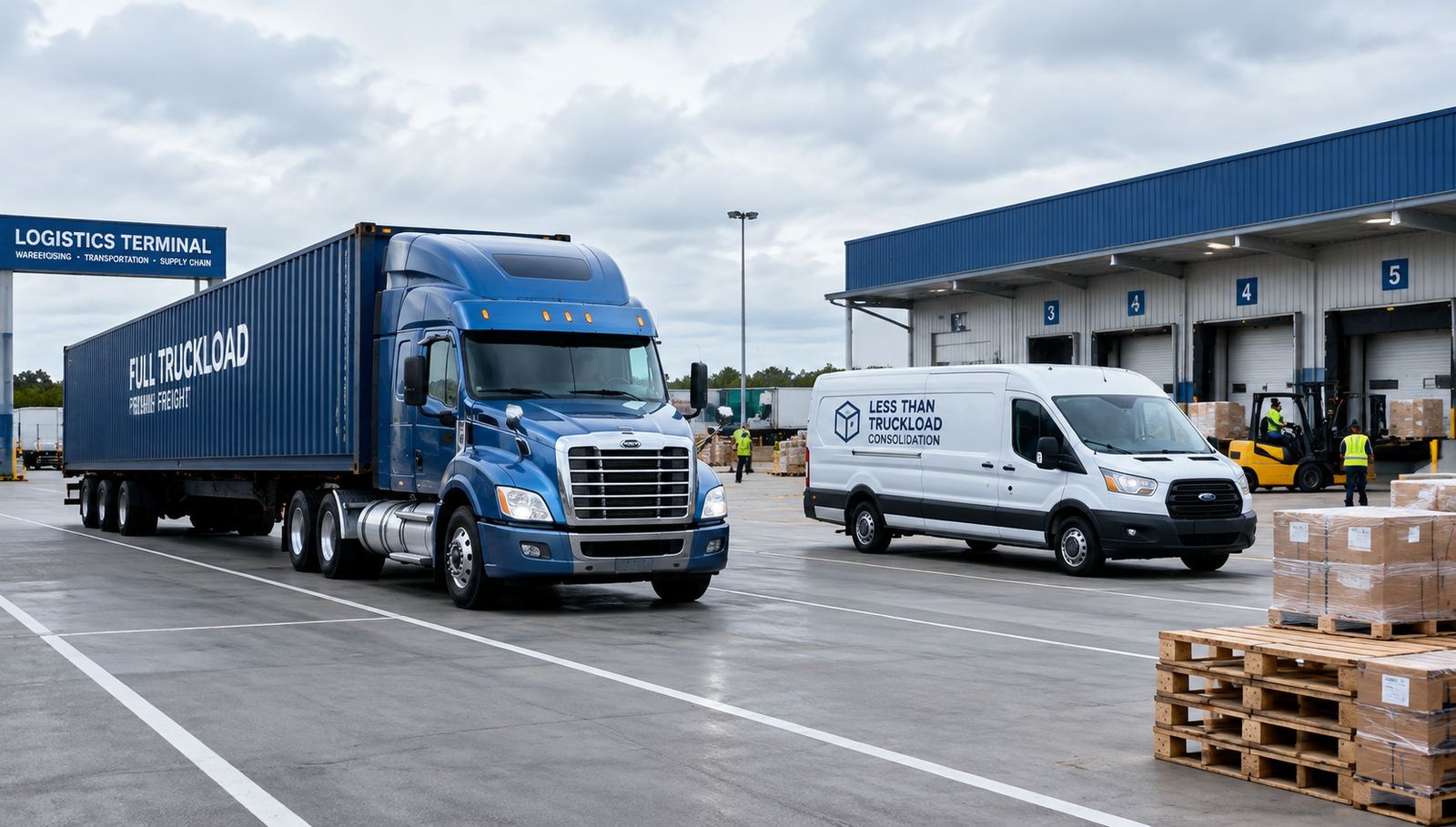
These services have different cost structures. Full truckload (FTL) commonly uses a vehicle-based or route-based quote. Less-than-truckload (LTL) pricing depends on cargo dimensions, weight, consolidation, handling, and any applicable minimum charge. Drayage requires the provider to define the container movement, terminal arrangements, equipment, and any agreed empty-container return. Cross-border trucking may also require separate confirmation of border-related services and destination handoffs.
Published estimates can help establish an initial budget, but they are not substitutes for a route-specific quotation. Compare a reference figure with the same transport scope, currency, cargo assumptions, and included services. Before approval, confirm the pickup and delivery points, cargo-ready date, packing details, pricing basis, and any costs that remain outside the quoted amount.
Trucking Freight Costs from China: Published Price Examples
The following examples come from a third-party China road-freight pricing guide updated in March 2026. They provide published reference points for preliminary budgeting, not live carrier quotes or verified China Ship Net rates. The figures are expressed in US dollars because that is the currency used by the cited guide.
| Route and service | Published price reference | Basis and limitations |
|---|---|---|
| Shanghai to Guangzhou, FTL | US$1.20–US$2.00 per km; approximately US$1,440–US$2,400 for the cited 1,200 km example | Indicative base transport only; additional charges are excluded |
| Guangzhou to Chengdu, LTL | Approximately US$120–US$220 for the cited 1,000 kg shipment | Published base-cost estimate; packing, service scope, and additional charges require confirmation |
| Container drayage, terminal to warehouse or factory | No comparable route-specific amount established by the references used here | Requires container details, terminal locations, equipment, and return arrangements |
Source and limitations: The FTL and LTL figures are published estimates in SINO Shipping’s China FTL and LTL pricing guide, updated March 2026. The route-based total is calculated from the guide’s stated distance and per-kilometer range. These estimates are not independently audited quotations, guaranteed prices, or evidence of current availability. The guide does not establish a comparable drayage amount for a defined container movement.
The figures should be treated as broad reference points, not universal China trucking rates. The FTL example does not establish that every vehicle, route, pickup, or delivery arrangement falls within the stated range. The LTL example does not establish a general rate for every 1,000 kg shipment. Cargo dimensions, minimum charges, consolidation, and included handling can change the quotation.
Published market indicators provide a different kind of evidence. China’s Highway Research Institute reported an August 2026 general-cargo FTL price index of 100.9 and a road-container freight index of 102.5, using the 2025 monthly average as the base of 100. These figures describe broad price movement, not freight charges per kilometer or a route-specific quote. See the August 2026 national road-freight price index for its methodology and scope.
Before using any published estimate for purchasing approval, confirm the current route, pricing unit, transport date, currency, cargo assumptions, and included work with the provider. If your business needs a dependable budget, obtain comparable offers for the shipment rather than applying a national indicator or a third-party range to an unverified route.
FTL vs. LTL vs. Container Drayage
The service type determines which costs matter most. Establish the operating requirement first, then compare the pricing basis and services that each provider proposes. A low unit rate does not make an option suitable if it cannot handle the cargo or complete the required handoff.
| Service | Best fit | Main pricing variables | Critical confirmation |
|---|---|---|---|
| FTL | Cargo requiring dedicated vehicle capacity or a controlled dispatch plan | Vehicle, route, loading, timing, and movement scope | Whether the quotation covers the complete required trip |
| LTL | Smaller shipments that can share truck capacity and accept consolidation | Weight, dimensions, cargo volume, handling, routing, and minimum charges | Which cargo basis and handling stages determine the charge |
| Container drayage | Moving a container between a terminal and an agreed facility | Container type, terminal, chassis, pickup, waiting, and return scope | Whether terminal work and empty-container return are included |
FTL: price the required vehicle movement. The provider may quote by vehicle, route, or agreed trip scope. The buyer should confirm the required equipment, distance basis if applicable, pickup window, loading conditions, and receiving arrangements. Dedicated capacity may suit cargo with fixed timing or special handling needs, but the quote must still identify which services are included.
LTL: verify the chargeable cargo details. Shared transport pricing depends on the shipment’s dimensions, weight, routing, and handling requirements. A small shipment may still be subject to a minimum charge. Ask the provider which cargo measurements determine the charge and whether collection, consolidation, terminal handling, and final delivery are part of the offer.
Drayage: define the complete container movement. A port or rail-terminal move can involve more than truck mileage. Container release, terminal appointments, chassis requirements, loading or unloading windows, waiting conditions, and empty-container return may affect the operation. The buyer should ask the provider to identify the pickup and return locations and state which tasks are included or separately charged.
The trucking freight service covers the road-transport choices relevant to factory collections, FTL, LTL, container drayage, and destination delivery. The shipment brief should identify the specific service needed rather than relying on the general label of trucking freight.
Which Charges Make Up a Trucking Quote from China?
Review a quotation as a set of required services, not just a single total. The components depend on the shipment, so mark each applicable item as included, separately charged, excluded, or pending confirmation. This helps distinguish the quoted transport amount from the cost of completing the full movement.
| Component | What to verify | Who confirms it |
|---|---|---|
| Base transport | Route, vehicle or load type, pricing unit, and movement covered | Carrier or forwarding desk |
| Pickup and loading | Collection, site access, loading labor, and equipment requirements | Shipper, warehouse, and pickup provider |
| Fuel and road charges | Fuel-related adjustments, tolls, and other stated transport charges | Quote issuer |
| Consolidation and handling | Applicable LTL transfers, cargo handling, and terminal work | Forwarder and handling provider |
| Container and terminal work | Equipment, terminal moves, waiting conditions, and return arrangements | Drayage provider and relevant terminal party |
| Delivery and additional services | Final delivery, appointments, storage, rebooking, and special handling | Forwarder and receiving party |
Not every component applies to every shipment. A domestic FTL movement may not need consolidation. An LTL shipment may involve multiple handling stages. A container movement may require terminal coordination and a defined return plan. Request the relevant line items instead of treating the checklist as a list of charges that every shipment must pay.
Linehaul is not automatically an all-in rate. Linehaul refers to the main transport leg. An all-in amount should identify the services and transport-related charges it covers. If fuel adjustments or tolls appear separately, establish whether they are included in the stated total or must be added for comparison.
Keep the cost view consistent. To compare the road-transport component, divide the comparable transport amount by the confirmed billable distance when both the amount and distance use a compatible basis. To compare the complete shipment cost, include the required and confirmed additional services in both offers. Do not combine a linehaul amount from one quote with an all-in amount from another and call the result an equivalent per-kilometer rate.
If cargo protection is required, ask separately what coverage is available and which cargo details or exclusions apply. The cargo insurance service is relevant when the buyer needs to assess protection apart from the transport booking. Insurance should not be assumed to be included in the trucking amount unless the quotation clearly says so.
Compare Quotes on the Same Shipment Scope
Use one shipment brief for all providers. Confirm the details in the order that affects cargo readiness, dispatch, transport selection, and final delivery. If an input is unknown, record it as pending instead of allowing providers to price different assumptions.
| Check | Record for each offer | Status to track |
|---|---|---|
| Route and service | Pickup and delivery points, FTL/LTL/drayage, equipment, and required handoffs | Confirmed or pending |
| Cargo information | Commodity, package count, dimensions, gross weight, and handling needs | Confirmed or estimated |
| Pricing basis | Currency, distance or movement basis, and the quoted transport amount | Confirmed or pending |
| Additional charges | Applicable fuel adjustments, tolls, loading, handling, and delivery services | Included, separate, excluded, or pending |
| Delivery conditions | Receiving hours, appointment needs, access, unloading, and return arrangements | Confirmed or pending |
| Quote conditions | Quote date, stated validity, exclusions, and revision triggers | Recorded and reviewed |
The shipper should provide accurate cargo information and the cargo-ready date. The consignee should confirm delivery access, appointment requirements, and unloading arrangements. The forwarding desk should ask the provider to clarify the transport basis and each required service. This division keeps the person who knows the fact responsible for confirming it.
For shipments from China that connect to an international route, identify where the trucking service ends and the next provider takes over. A terminal delivery does not necessarily mean the overseas transportation or destination delivery is included. If border procedures or documents are part of the road movement, confirm which services are coordinated by the trucking provider and which require another party. The customs brokerage service is relevant when customs support needs to be arranged separately from the road leg.
Do not approve an offer just because it has fewer line items or a lower initial amount. Ask what each item covers, whether another provider must perform a required task, and whether the quote includes the same destination handoff. Resolve material gaps before comparing the totals.
Note: A freight quote is tied to the cargo, handoffs, route, service level, timing, and destination work stated in it. Carrier and handling conditions can change. Align the scope first, then request confirmation for the specific shipment.
When Should a Trucking Quote Be Reviewed or Revised?
Request a revised quotation when a material shipment detail changes. A new pickup address, altered cargo dimensions, different vehicle requirement, revised cargo-ready date, amended terminal instructions, or new receiving condition may change the operating plan or cost.
The relevant party should confirm the changed fact. The shipper updates packing and readiness details; the consignee supplies revised delivery instructions; and the forwarding desk asks the provider which parts of the offer need review. Keep the original and revised versions clearly identified so the buyer does not approve an earlier scope by mistake.
Common mistake: Comparing a route-only FTL amount with a pickup-to-delivery package and treating the difference as a price premium. First identify the cost of the same required transport movement, then add confirmed services that one offer lists separately.
Delivery access deserves particular attention when a truck must meet an appointment, use a restricted site entrance, or coordinate with a terminal cutoff. If the receiving party has not confirmed access or the provider has not accepted the arrangement, keep that item open before dispatch approval. Waiting, storage, rebooking, or additional handling should be assessed against the actual quote conditions rather than assumed to be included.
Risk alert: If a terminal release, required appointment, or container-return arrangement remains unconfirmed, do not assume the shipment is ready for dispatch. Obtain the missing confirmation and ask the provider whether the unresolved condition affects the agreed service or quotation.
How to Request a Comparable Trucking Quote
A complete quote request makes it easier for providers to price the same movement. Supply verified cargo and site information, state the service required, and ask each provider to separate included work from additional or excluded services. If a detail is still unknown, identify the party who will confirm it.
Describe the cargo
Provide the commodity, packaging type, piece or pallet count, dimensions, gross weight, and any handling restrictions. The shipper or packing team should verify the information before the forwarding desk requests a final scope.
Confirm the route and readiness
Provide the pickup and delivery addresses, cargo-ready date, and required pickup window. Identify the intended handoff, such as a warehouse, port terminal, rail terminal, or final receiving site.
Select the required service
State whether the shipment needs FTL, LTL, container drayage, or a cross-border road movement. If alternatives are acceptable, ask providers to quote each workable option on a clear, comparable scope.
Confirm delivery requirements
Ask the consignee to provide receiving hours, appointment procedures, access restrictions, unloading arrangements, and any container-return instructions. The forwarding desk should flag unresolved requirements that may affect dispatch.
Review and approve the offer
Check the pricing basis, currency, transport amount, included services, exclusions, validity conditions, and revision triggers. Ask the provider to clarify any required service that remains outside the quotation before approving the movement.
Suggested email subject: Trucking Quote Request from China — Confirmed Shipment Scope
Shipment details to provide: Pickup address and contact; delivery address or terminal; cargo-ready date and collection window; commodity and packaging; piece or pallet count; dimensions and gross weight; required service; and any loading, unloading, equipment, terminal, or receiving requirements.
Confirmation to request: Ask the provider to state the route and pricing basis, transport service and equipment, included pickup and delivery work, treatment of fuel-related adjustments and other applicable charges, excluded services, operating restrictions, quotation validity, and conditions requiring a revised offer. Ask the provider to identify any information still needed before booking.
When you have multiple offers, compare the same required movement rather than the number of lines on each quote. A complete review should show the transport amount, each required additional service, the party responsible for each handoff, and any unresolved condition that could affect the agreed plan.
When Should You Compare Other Transport Modes?
Trucking is often one leg of a wider international movement. Compare an alternative mode only when it can meet the cargo, timing, and handoff requirements. The cost review must include the road legs and handling needed to connect the cargo to the alternative service.
Rail may be worth reviewing for suitable long-distance corridors when the terminal transfers and operating schedule fit the shipment. The rail freight service is relevant when you need to compare a rail-based plan with road transport, including the trucking legs at either end.
Ocean freight may be appropriate when trucking connects a factory or warehouse to a port as part of an export shipment. The sea freight service is relevant when the comparison needs to cover the broader ocean movement rather than just the inland road cost.
Air freight may be an alternative when the cargo and delivery requirement suit an air-based plan. The air freight service can help frame that option, but the buyer should compare the complete route, including origin collection, airport handling, and final delivery where required.
A lower road charge does not establish a lower total logistics cost when the alternative involves additional transfers or services. The forwarding desk should describe the complete handoff chain and explain which costs belong to each leg before the buyer compares options.
Key Takeaways
Use published market estimates as preliminary reference points, not as live prices or guaranteed rates for your route.
Match FTL, LTL, and drayage offers to the cargo, pricing basis, route, included services, and required handoffs.
Confirm additional charges, destination access, quote validity, and revision conditions before approving the shipment.
FAQ
How much does truck freight from China cost?
The cost depends on the route, service type, cargo details, and included work. Published third-party estimates updated in March 2026 give a broad FTL reference of US$1.20–US$2.00 per kilometer for a cited domestic example and US$120–US$220 for a cited 1,000 kg LTL shipment. These are historical guide estimates, not guaranteed current prices. Request a route-specific quotation for budgeting and approval.
Are China trucking rates quoted per kilometer, per kilogram, or per truck?
There is no single pricing unit for every road-freight service. FTL may be quoted by vehicle, route, or movement; LTL may depend on dimensions, weight, volume, or another provider-defined basis; and drayage may be quoted for an agreed container movement. Ask the provider to identify the unit and required services for the specific shipment before comparing unit prices.
What is the difference between FTL and LTL freight costs?
FTL generally purchases dedicated vehicle capacity, while LTL shares capacity with other shipments. FTL pricing may depend on the vehicle, route, and loading conditions. LTL pricing can depend on cargo dimensions, weight, consolidation, handling, and applicable minimum charges. The right comparison must account for the service each shipment needs rather than assume that either option is always cheaper.
Does a trucking quote include fuel, tolls, and delivery charges?
Not necessarily. The provider may include some transport-related charges in the quoted amount and list others separately. Pickup, loading, terminal handling, final delivery, or waiting services may also be outside the base amount. Ask the quote issuer to mark each required item as included, separate, excluded, or pending confirmation, then compare the offers using equivalent service scopes.
What affects container drayage costs from China?
Drayage costs depend on the container movement, terminal locations, equipment requirements, collection and delivery conditions, and any agreed return arrangement. Terminal release, appointments, waiting, and empty-container return may affect the operating plan. The provider should identify the origin and destination, container details, included terminal work, and any separately charged service before confirming the quotation.
How can I compare two trucking quotations fairly?
Use the same cargo details, route, equipment needs, pickup and delivery scope, and required service level. Confirm the pricing unit and separate the main transport amount from required additional services. Record each exclusion and unresolved item. If a material detail changes, ask the provider to review the offer before you rely on the earlier amount.
Disclaimer: This page is general quote-planning guidance, not a binding quotation or delivery commitment. Published benchmark figures are third-party estimates and may not reflect current conditions or the scope of a specific shipment. Actual charges and handoffs depend on cargo, route, timing, provider confirmation, and destination conditions. Where duties, customs, tax, insurance, or contract questions apply, confirm them with the relevant party before booking.