Choose a Quote That Covers the Required Shipment
Choose the freight quote that can move your loaded container to the required delivery point, not simply the quote with the lowest headline number. Shipping container prices are only comparable when both providers are quoting the same cargo, route, equipment arrangement, service level, and handoffs. One proposal may cover port-to-port transportation, while another may include supplier pickup, origin handling, destination handling, and final delivery. Those are different scopes, even when the quoted services sound similar.
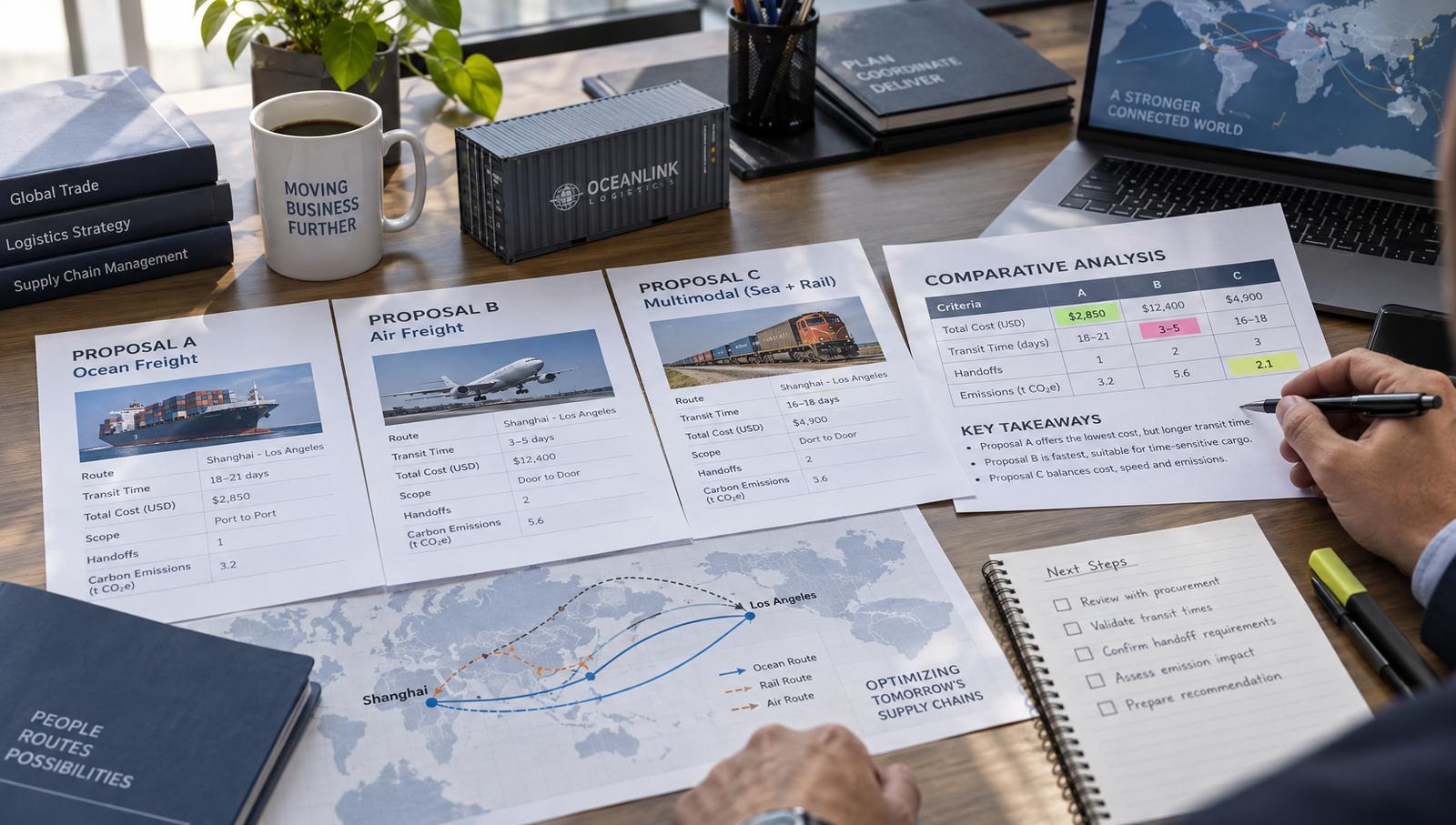
Before approval, establish when the cargo will be ready, who collects it, how the container will move, and who manages each transfer. Confirm whether delivery requires an appointment, special unloading equipment, restricted-site access, or a defined container return location. Ask each forwarder to identify included work, exclusions, quote validity, and assumptions that could require a revision. Record missing information as an open item rather than treating it as included.
This guide addresses the cost of moving cargo in a shipping container, not the purchase price of an empty container. The practical next step is to align the shipment scope and ask each quote desk to confirm the same operating conditions in writing.
Align the Quote Scope Before Comparing Prices
Review the shipment in the order a forwarding desk would need to arrange it. The cargo-ready date determines when pickup and booking can be coordinated. The route and equipment establish the main transportation plan. The destination instructions then determine what must happen after the container arrives. Use the same baseline for every proposal so that the comparison exposes real differences in service rather than missing information.
| Quote field | Who confirms it | What to check | Next checkpoint |
|---|---|---|---|
| Cargo-ready date | Supplier or shipper | Readiness and loading window | Confirm the booking plan |
| Pickup and origin handling | Supplier and forwarder | Full address, loading needs, included work | Verify pickup arrangements |
| Main route and service | Forwarder | Ports, equipment, routing, service level | Confirm the transport plan |
| Cargo and packing | Shipper or packing team | Package count, dimensions, gross weight, restrictions | Validate the load details |
| Destination handoff | Forwarder and destination agent | Handling, release, coordination, exclusions | Confirm destination scope |
| Delivery and appointment | Consignee or receiving site | Address, access, unloading, return instructions | Validate the final move |
| Quote date and conditions | Forwarder | Validity, inclusions, assumptions, revision triggers | Approve a confirmed version |
Ask the forwarder to use explicit descriptions instead of relying on broad labels such as “freight included” or “delivery available.” Those phrases do not establish which party performs each task. If a supplier has not confirmed the loading window or the consignee has not supplied delivery instructions, retain that item as unresolved and ask how the open condition affects the quote.
Use the same cargo description, container type, route, and endpoint when requesting a revised proposal. A change to any of those inputs may alter the operating plan, so the next version should identify what changed and which assumptions remain unconfirmed.
What Drives Shipping Container Costs?
Container type and loading arrangement: A full container load (FCL) uses a designated container for one shipment, while less-than-container-load (LCL) cargo shares container space with other shipments. For FCL, confirm the specified equipment size and type, the route, and the work included at both ends. For LCL, provide packed dimensions, gross weight, package count, and handling requirements. Ask the provider to state the applicable measurement basis and how the shipment will be handled at consolidation and destination.
Route and service level: The origin and destination, selected routing, planned transfer points, and required service can change the transport arrangement. A route description alone does not establish the schedule or the extent of coordination. Ask the quote desk to confirm the planned routing, service conditions, and what happens if the operating plan changes before departure.
Pickup and final delivery: Inland movement depends on the actual pickup and delivery locations, site access, loading arrangements, receiving hours, and any appointment requirements. A supplier’s street address may not identify the correct loading entrance or facility restrictions. Provide the complete locations and ask the forwarder to confirm whether the quoted transportation includes both the origin and destination legs.
Cargo characteristics: Heavy, oversized, temperature-sensitive, restricted, or otherwise nonstandard freight can require a different equipment or handling plan. Declare the cargo characteristics before the quote is approved. The forwarder can then confirm whether the planned container and route are suitable and identify any additional information needed for acceptance.
Timing and quote conditions: The cargo-ready date and required delivery window determine which service options are workable. Provider conditions can change, so the validity period and assumptions must be explicit. Ask what needs to be re-quoted if readiness, routing, equipment, or delivery requirements change.
Request the charge basis and service scope separately. A quoted amount without its equipment, routing, included handling, and delivery assumptions is not enough to establish whether the proposal fits the shipment.
Identify What the Quote Includes and Who Acts
Review each part of the movement by handoff. The forwarder should identify the work covered by its proposal, the work supplied by another party, and the items that still need confirmation. A service mentioned in a discussion is not necessarily part of the quoted scope.
- Pickup and origin handling: Ask whether collection, loading coordination, origin facility handling, and required origin-side processing are included. The supplier confirms loading readiness and site conditions; the forwarder confirms the proposed pickup scope. For an inland leg, review the trucking freight service and confirm which transportation tasks appear in the specific quote.
- Main transportation: Confirm the equipment, route, planned service, and any stated transfer points. Ask whether the quoted movement covers only the main leg or also the associated origin and destination operations. The forwarder should explain any gap between those stages.
- Destination handling and release: Ask which destination-side tasks are included and which require separate coordination. The destination agent or forwarder should identify the handoff point and any outstanding release requirements before the shipment reaches that stage.
- Customs coordination, when applicable: Confirm whether the provider is arranging customs-related documentation and coordination or merely passing shipment documents to another party. Ask who supplies the commercial information and who confirms the required scope. For a defined brokerage requirement, review the customs brokerage service and establish exactly what the shipment-specific arrangement covers.
- Final delivery: Identify the party arranging the truck, booking the receiving appointment, providing unloading equipment, and confirming the container return instructions. The consignee must verify its receiving conditions, while the forwarder confirms which delivery tasks it has actually included.
- Exceptions and unresolved work: Ask how the provider treats changes, extra handling, waiting, storage, or a revised delivery arrangement. These are conditional operating issues, not automatically included services. The forwarder should describe the relevant trigger and explain which party must authorize the next action.
Ask for a revised quote whenever the answer changes the planned route, handling, service level, or final endpoint. Keep supplier instructions, destination requirements, and provider assumptions together with the approved version so the operations team can work from one consistent scope.
Note: A freight quote is tied to the cargo, handoffs, route, service level, timing, and destination work stated in it. Carrier and handling conditions can change. Align the scope first, then request confirmation for the specific shipment.
Compare Service Options That Change the Move
Full container or shared container space: FCL is a useful comparison when the cargo plan calls for a dedicated container or requires consolidated handling under one shipment plan. LCL may be worth evaluating when the cargo does not require a full container. FCL is not automatically the better-value choice, and LCL is not automatically the better operational fit. Ask providers to quote the same cargo using the same packing details, destination scope, and delivery requirements.
Sea freight, rail, or air: For a containerized shipment whose schedule permits ocean transportation, begin with a like-for-like sea freight option and confirm the route and equipment. A rail freight option may be relevant where the route, service availability, cargo, and delivery plan support it. An air freight option can be considered when the required delivery window justifies evaluating a different mode. Each comparison must use a workable service and compatible shipment scope; the modes do not provide interchangeable operating arrangements.
Port-to-port or door-to-door: Port-to-port service may fit a buyer who already controls the collection, destination handling, and inland delivery arrangements. It is a weaker fit when no one has been assigned to coordinate those handoffs. A door-to-door service can be evaluated when the buyer needs a coordinated movement between named pickup and delivery points. Confirm the actual endpoints, destination work, and exclusions instead of assuming that the service label covers every task.
Whole shipment or an urgent portion: A buyer does not always need to change the service level of an entire container to address a time-sensitive requirement. If only a small portion of the order must move earlier, ask whether a separate express service option for that portion is workable. The forwarder must compare compatible cargo, handling, and delivery requirements rather than treating a parcel movement as a substitute for a full-container quote.
Standard container equipment or a different cargo plan: If the cargo dimensions, loading method, or handling restrictions do not fit the proposed equipment, confirm the feasibility of another loading arrangement before price approval. Depending on the cargo and route, a break-bulk shipping option may warrant a separate review. The forwarder should identify the revised loading, discharge, and delivery handoffs before presenting it as an alternative.
For every option, ask the same commercial question: what work changes, which party owns the next handoff, and which cargo or delivery fact could invalidate this comparison? Choose an option based on the shipment requirements and confirmed scope, not on a general assumption that one mode or service level is always cheaper.
Find Quote Gaps Before They Disrupt Delivery
Most preventable quote problems begin with an operating detail that never reached the person preparing the proposal. An incomplete pickup address can leave the inland movement undefined. A changed cargo-ready date can affect the booking plan. Incorrect dimensions or weight can make the original cargo basis unsuitable. A missing destination handoff can leave the consignee arranging work that nobody included in the initial scope.
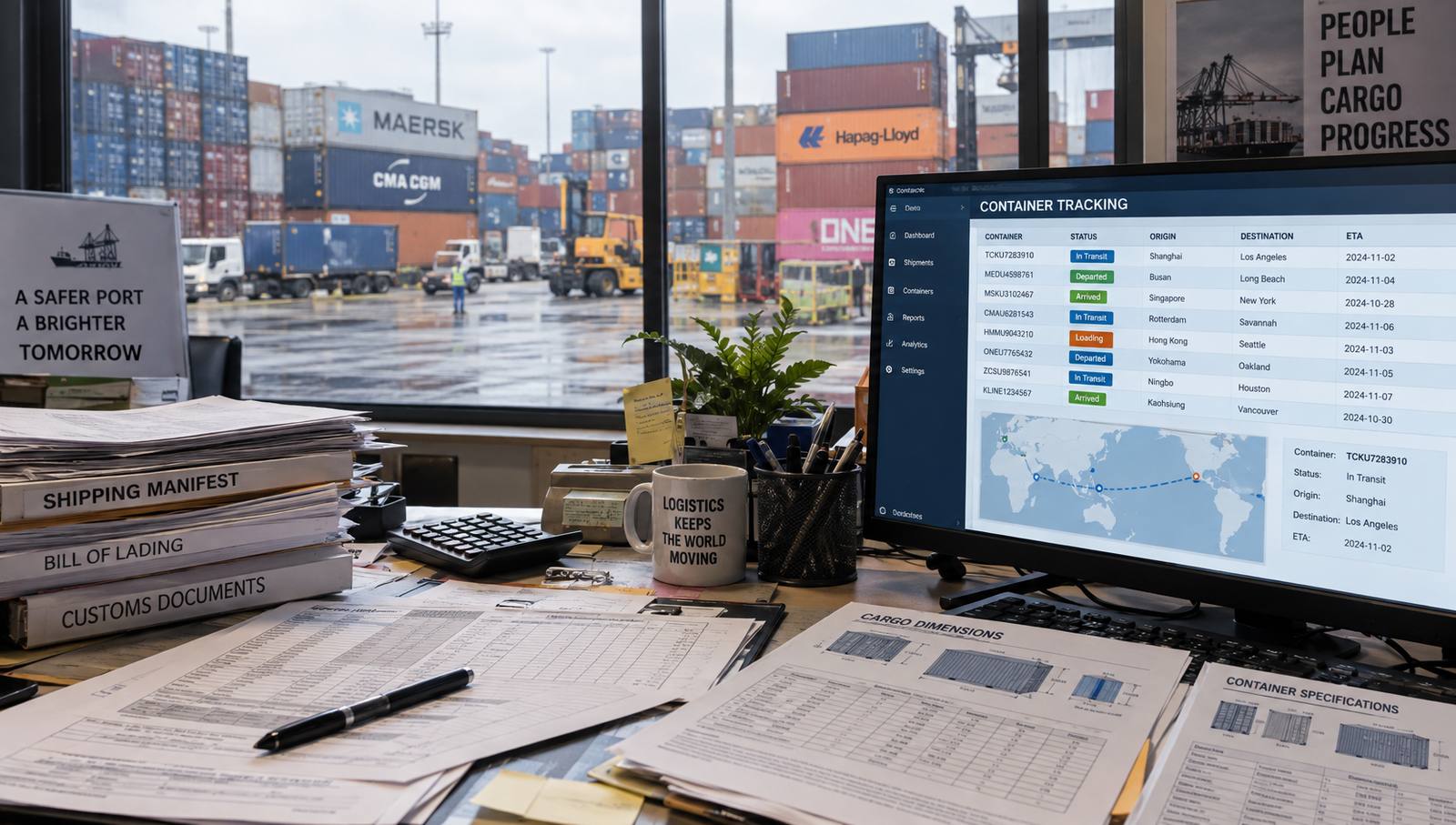
Delivery instructions deserve the same attention as transportation details. Confirm receiving hours, appointment procedures, site access, unloading equipment, and the party responsible for container return. If the receiving site cannot accept the proposed delivery arrangement, ask the forwarder to revise the plan before approval rather than leaving the issue for the delivery team.
Common mistake: Comparing a port-to-port quote against a quote that includes inland delivery, then choosing the smaller headline amount without aligning the endpoints. The correction is to request the same pickup and delivery scope from each provider or document the work the buyer will arrange separately.
If the supplier changes the cargo dimensions, loading method, readiness, or declared cargo characteristics after quotation, stop and ask the forwarder to reconfirm equipment suitability and service acceptance before relying on the existing quote.
Keep cargo protection separate from the freight scope. A transportation quote does not, by itself, establish whether cargo insurance has been arranged or what protection applies. Ask who is responsible for reviewing the cargo value and coverage requirements, and whether any proposed protection is included, separate, or left to the buyer. The cargo insurance service is a separate point to review when the shipment requires an insurance arrangement.
For each unresolved issue, record the responsible party and the decision needed. If a provider needs new information, identify who will supply it and ask whether the quote must be revised before booking or delivery arrangements proceed.
Prepare a Quote Request the Forwarder Can Use
A workable quote request assigns each input to the person best placed to confirm it. Send the available information together and identify anything that remains provisional. The forwarding desk can then validate the transport scope instead of filling gaps with assumptions.
- Cargo owner or packing team — cargo and packing: Provide the commodity description, package count, packed dimensions, gross weight, loading arrangement, and any handling restrictions. These details determine whether the proposed equipment and service fit the cargo. Ask the forwarder to flag missing specifications and confirm the required cargo basis.
- Supplier or warehouse — readiness and pickup: Provide the cargo-ready window, complete pickup address, operating hours, loading access, and site requirements. These details establish whether collection can be coordinated as quoted. Ask the forwarding desk to confirm the proposed pickup scope and identify any site information still needed.
- Importer or shipping coordinator — route and service: State the intended origin, destination, preferred mode, required delivery window, equipment needs, and any known routing constraints. Ask the forwarder to identify the available service options for the specific shipment and explain the operating differences between them.
- Consignee or receiving site — delivery: Supply the delivery address, receiving hours, appointment process, unloading arrangements, and container return instructions. These inputs establish the final handoff. Ask the forwarder to identify the receiving requirements that must be confirmed before the delivery plan is treated as workable.
- Importer — coordination beyond transportation: Specify whether the request covers only the physical move or also calls for inbound shipment coordination. If broader import-side support is needed, review the import service and ask the provider to define the work covered by the specific arrangement. This keeps coordination tasks distinct from the main transportation scope.
- Shipper and forwarder — special handling and restrictions: Declare relevant cargo restrictions, temperature requirements, unusual dimensions, or other conditions that could affect handling or acceptance. The shipper supplies accurate cargo information; the forwarder checks the proposed service. Ask for written confirmation when an operating assumption depends on a technical detail that is not yet settled.
If the delivery point is an Amazon fulfillment center, identify that destination at the outset and confirm its receiving, appointment, labeling, and packing requirements with the responsible parties. The Amazon FBA service can be reviewed as a distinct part of that destination plan; do not assume a general container delivery quote includes every fulfillment-center requirement.
Once the inputs are assembled, ask the forwarding desk for one written scope that names the cargo basis, route, pickup and delivery points, included work, exclusions, quote validity, and revision conditions. The next checkpoint is approval of that specific version, not approval of an earlier proposal whose assumptions have changed.
Recommended Quote Approach and Illustration
For a shipment that is suitable for a standard container and has no stated urgency that requires a different mode, start with a like-for-like sea freight quote based on the required equipment and the actual pickup and delivery scope. Treat that proposal as a comparison baseline, not as a promise that one option will be cheapest. Evaluate shared container space or another mode when the cargo volume, delivery requirements, or routing conditions support a meaningful alternative.
Before approval, have the forwarder confirm the cargo-ready plan, origin handoff, main route, destination work, final delivery arrangements, and every unresolved item. The default decision is to approve only a scope that can be executed under known conditions. If a major input remains uncertain, ask for a provisional proposal with the uncertainty clearly identified and a defined checkpoint for confirmation. Request a new version whenever the cargo or operating assumptions change.
Illustrative example (not a customer case): An importer has palletized cargo that may fit a full container, but the supplier has not confirmed loading readiness and the receiving site has not confirmed its delivery appointment. One proposal covers port-to-port movement, while another includes collection and inland delivery. Neither proposal is ready for a like-for-like approval until the parties align the pickup, route, destination work, and container return instructions. The importer should request a scope revision and settle the missing handoff details before authorizing the movement.
Key Takeaways
A reliable shipping decision starts with an agreed operating plan, not a headline price.
Align the scope: Match the cargo, equipment, route, service level, and delivery endpoint before comparing proposals.
Verify the basis: Confirm the container arrangement, cargo measurements, and any special handling requirements.
Assign every handoff: Identify who manages pickup, origin handling, destination coordination, delivery, and container return.
Expose open conditions: Record exclusions, provisional details, quote validity, and changes that require a new confirmation.
Approve the right version: Ask the forwarding desk to confirm the complete scope in writing before proceeding.
FAQ
What does a quoted shipping container price cover?
A quoted price covers only the transportation and handling identified in the document. Check whether the scope starts at supplier pickup or at the origin terminal and whether it ends at the destination terminal or your delivery address. Ask the quote desk to mark each handoff as included, excluded, or awaiting confirmation. The heading alone does not establish the coverage.
Why can the cost of shipping a container differ between providers?
Providers may be quoting different routes, equipment, service levels, or delivery endpoints. One may include inland transportation while another may stop at a terminal. Differences in the cargo information or assumptions can also affect the proposed operating plan. Compare the written scope line by line and ask each provider to clarify the work and conditions behind its proposal.
Is a full container always the better choice than shared container space?
No. A full container may suit a shipment that needs its own equipment or a particular loading arrangement, while shared space may suit cargo that does not require a full unit. The practical choice depends on packed volume, weight, handling, route, and delivery requirements. Ask the forwarder to compare viable options using the same cargo details and endpoint.
What cargo details should I send before requesting a quote?
Provide the commodity description, package count, packed dimensions, gross weight, loading arrangement, cargo-ready window, and any special handling restrictions. Add the complete pickup and delivery addresses, receiving instructions, and the required service level. If a detail remains unknown, label it clearly so the forwarder can identify the information needed to confirm the transport plan.
Can destination arrangements remain unconfirmed when a quote is issued?
A provider may prepare a proposal while some details remain provisional, but the open items should be identified. Confirm the destination handoff, receiving address, appointment process, and unloading arrangements before relying on the final delivery plan. Ask the quote desk which conditions still require confirmation and whether a revision is needed once the consignee provides the missing information.
What should I do if the cargo-ready date or delivery address changes?
Tell the forwarder as soon as the change is known and request confirmation of the revised operating plan. The original proposal may rely on the previous readiness window, pickup location, route, or delivery instructions. Ask which parts of the scope remain valid, which tasks need to be rearranged, and whether a revised written quote is required before the shipment proceeds.
Does a freight quote automatically include customs coordination and cargo protection?
No. Neither service should be inferred from a general transportation description. Ask whether the provider is coordinating customs-related work, which party supplies the necessary information, and whether cargo protection has been arranged separately. Confirm the scope with the relevant provider before approval, and keep those arrangements distinct from the main transportation and delivery plan.
Disclaimer: This page is general quote-planning guidance, not a binding quotation or delivery commitment. Actual charges and handoffs depend on the cargo, route, timing, provider confirmation, and destination conditions. Where duties, customs, tax, insurance, or contract questions apply, confirm them with the relevant party before booking.