Pick and pack fulfillment services help businesses process customer orders by locating the right products in inventory, checking quantities, packing items, applying shipping labels, and preparing parcels for dispatch. The service can reduce the warehouse workload for an online retailer, wholesaler, or brand, but the actual scope depends on the provider’s contract and operating setup. Storage, inventory receiving, returns processing, branded packaging, and carrier booking may be separate services rather than part of the basic pick-and-pack fee.
The main decision is whether a fulfillment provider can handle your products, order patterns, packaging requirements, and shipping handoffs at an acceptable total cost. Before moving inventory, confirm the provider’s order cutoff times, inventory accuracy procedures, charging method, technology requirements, and responsibility for errors or damaged goods. These checks matter because efficient picking alone does not guarantee accurate orders, timely dispatch, or cost-effective delivery.
How Pick and Pack Fulfillment Services Work
Pick and pack is the order-processing part of a broader fulfillment operation. The provider converts an order into a checked, packaged shipment and hands it to the agreed carrier or dispatch process. The following sequence describes a common operating model, although the contract determines which activities the provider performs.
Receive and identify inventory
The warehouse receives inbound goods, checks them against the shipment records, and records accepted quantities. The parties should agree how the warehouse handles shortages, damage, incorrect SKUs, and unannounced deliveries.
Store products and maintain stock records
The provider assigns products to storage locations and updates the inventory system. SKU codes, barcode rules, unit definitions, and storage conditions must match the shipper’s product data.
Release and pick each order
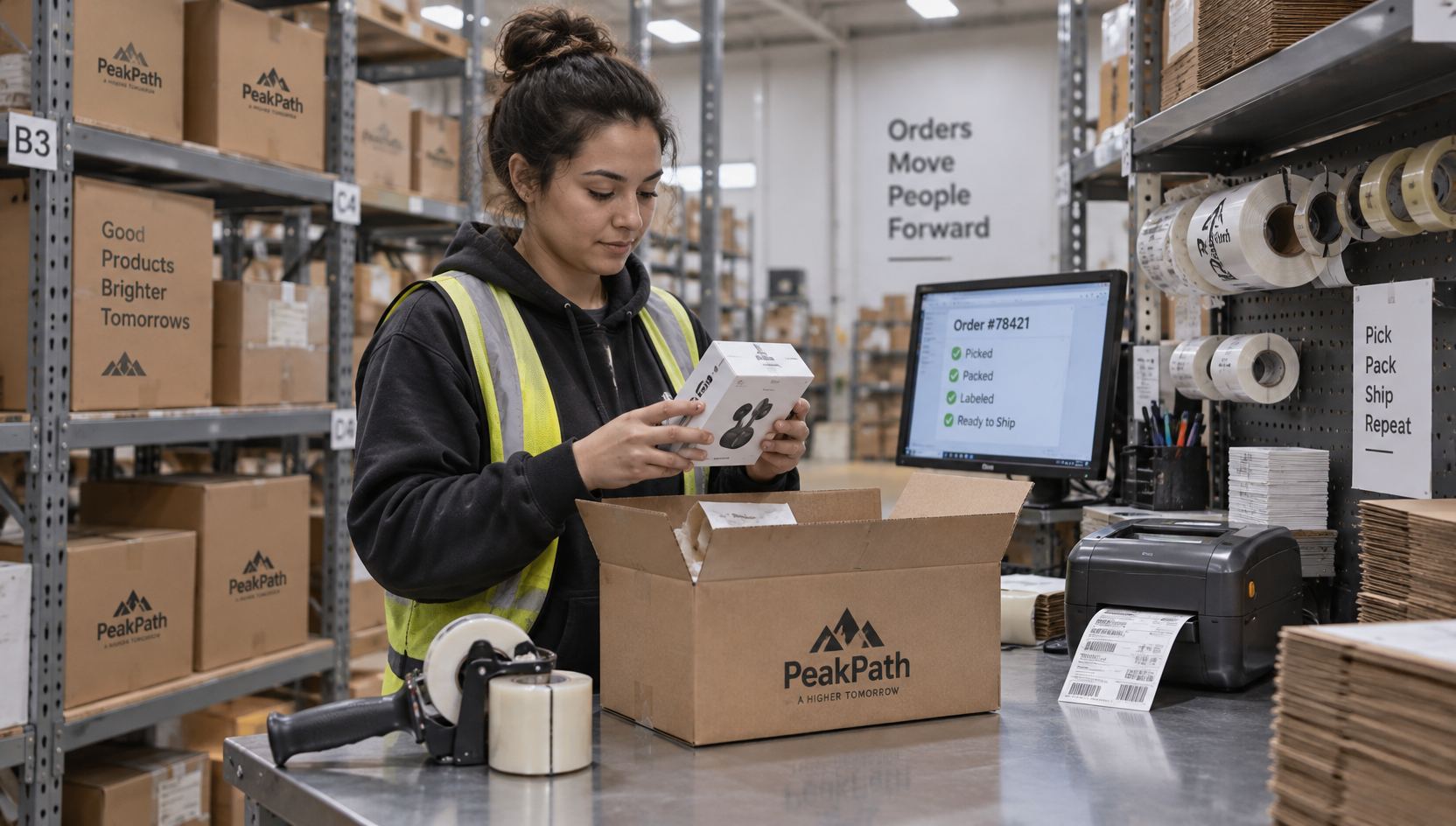
The warehouse receives an order through an agreed system or manual workflow. A picker retrieves the specified items and quantities, using location records and product identifiers to reduce selection errors.
Check, pack, and label
The operator checks the picked items, selects packaging according to the agreed instructions, and prepares the required shipment documents and labels. Gift messages, inserts, kits, and other custom tasks require explicit work instructions.
Dispatch and update the order
The warehouse transfers the parcel to the agreed carrier or collection process and records the dispatch status. The shipper should confirm when tracking becomes available, how exceptions are reported, and who handles undeliverable orders or returns.
These steps create the operational boundary between warehouse fulfillment and transportation. A parcel can be picked and packed correctly but still arrive late if the carrier misses a collection, the shipping label is invalid, or the delivery address is incomplete. The service agreement should therefore define both warehouse completion and the subsequent transport handoff.
What Does a Pick and Pack Service Actually Cover?
The term describes a core workflow, not a universal package of warehouse services. Some providers offer an integrated operation, while others charge separately for receiving, storage, special handling, or transport coordination. Review the scope line by line before comparing quotations.
| Activity | Typical scope | What to confirm |
|---|---|---|
| Receiving | Count and record inbound inventory | Unloading, inspection, discrepancies, and receiving fees |
| Storage | Assign locations and hold stock | Storage basis, minimum charges, and inventory limits |
| Picking | Retrieve ordered SKUs and quantities | Per-order, per-item, or other picking charges |
| Packing | Prepare parcels using agreed materials | Material charges, branded packaging, and special instructions |
| Dispatch and exceptions | Prepare shipment records and arrange handoff when included | Carrier charges, collection timing, tracking, and returns |
Use this breakdown to establish which party owns each task. For example, a provider may pack orders but require the seller to purchase packaging, supply shipping labels, or maintain the connection between the online store and warehouse system. A low advertised pick fee may not reflect receiving, storage, packaging, account setup, special handling, or outbound transportation.
Pick and pack warehouse services also depend on how the provider defines a billable order. A single order containing four units might generate one order-picking charge plus multiple item-picking charges. Another provider may apply a different pricing model. Ask for a sample invoice using your expected product mix and order profile rather than comparing headline fees alone.
When Outsourced Fulfillment Makes Sense
Outsourced pick and pack is most useful when the warehouse workload, geographic footprint, or operating requirements justify paying another party to handle inventory and order processing. The commercial case depends on order volume, product characteristics, service expectations, and the cost of operating the same process internally.
Growing online stores: A third-party warehouse may absorb seasonal peaks or increasing daily orders without requiring the seller to expand its own packing operation. The seller should confirm available capacity, cutoff times, and how the provider manages unusually large order volumes.
Businesses with multiple SKUs: A warehouse with suitable inventory controls may help organize products and reduce the manual effort of locating items. Products with similar packaging or easily confused variants require clear SKU identification and effective verification checks.
Brands with specific packaging requirements: A provider may be able to apply branded materials, inserts, multipacks, or product bundles when those tasks are included in its operating instructions. The shipper should verify setup fees, labor charges, quality checks, and the process for changing packaging specifications.
Marketplace sellers: Sellers preparing stock for an Amazon fulfillment program need to distinguish ordinary warehouse picking and packing from marketplace-specific preparation and delivery requirements. Review the relevant Amazon FBA shipping service scope when arranging that movement, and confirm current platform requirements, packaging rules, labels, and delivery arrangements for the intended shipment.
The model may be a weak fit when order volume is very low, products need highly specialized handling, or the provider cannot support the required systems and service levels. In those cases, compare the full outsourced cost with internal handling or a more specialized warehouse arrangement before transferring inventory.
How to Choose Between In-House and Outsourced Fulfillment
No fulfillment model is the best choice for every business. The right option depends on the operating capabilities you already have, the variability of your order volume, and the amount of control you need over inventory, labor, packaging, and dispatch.
In-house fulfillment gives the business direct control over warehouse staff, procedures, and priorities. However, the business must manage the facility, labor, equipment, stock records, packaging supplies, and workload fluctuations. Outsourcing transfers agreed tasks to a provider, but it adds dependence on the provider’s systems, capacity, contract terms, and exception handling.
Marketplace fulfillment is another option when a platform offers warehousing and order processing for eligible products and sales channels. Its rules, service scope, fees, inventory arrangements, and customer-order workflow may differ from those of an independent warehouse. Do not treat a marketplace program and a general third-party fulfillment contract as interchangeable.
Compare alternatives using the same operating assumptions: monthly order count, average units per order, SKU count, storage needs, packaging specifications, return rate, destination mix, and required dispatch window. Include setup costs, receiving charges, storage, picking, packing materials, shipping, returns, and account or technology fees wherever applicable. This produces a more useful comparison than a simple per-order price.
Selection rule: Choose the model that can meet your order and inventory requirements at a transparent total operating cost. Request written definitions of billable activities, service targets, exception fees, and the party responsible for fixing fulfillment errors.
Coordinate Inbound Inventory and Warehouse Receiving
Pick and pack can begin only after the warehouse has received usable inventory and recorded it in the relevant stock system. Businesses sourcing products from overseas should plan inbound transport around the warehouse’s receiving capacity, inventory availability date, and required documentation. The freight arrival date and the date stock becomes available for customer orders are not necessarily the same.
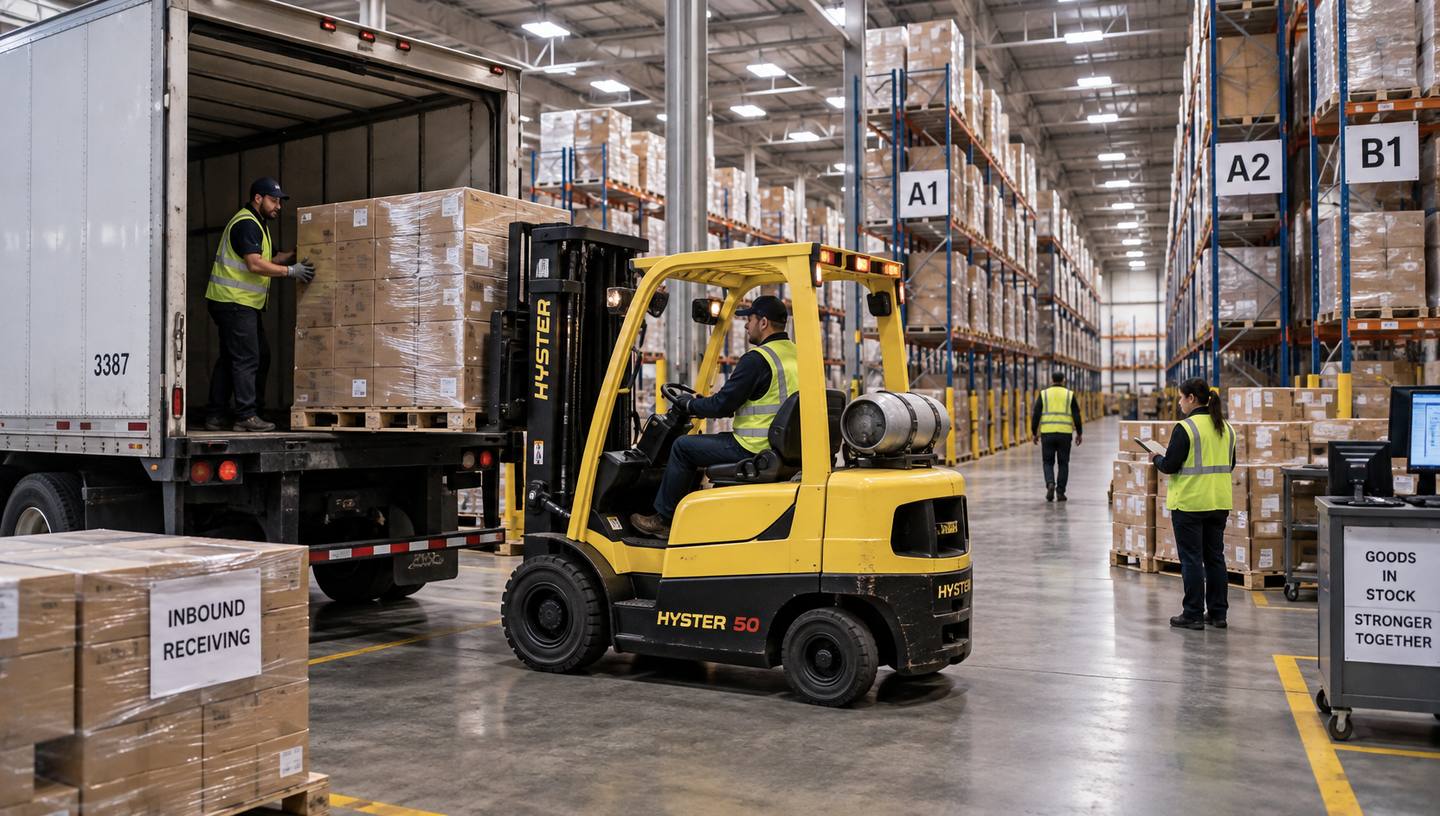
For planned replenishment, sea freight may suit shipments where transport cost and a longer planning horizon take priority over speed. Air freight may suit more time-sensitive stock movements when the shipment value and urgency justify the transport expense. Compare door-to-door lead time, handling, destination charges, and receiving schedules rather than evaluating the main transit leg in isolation.
If inventory must move from a port, airport, supplier, or another storage site to the fulfillment warehouse, confirm who arranges the domestic transfer and warehouse appointment. A trucking freight service may be relevant for that leg, but the quote should specify pickup, delivery, handling, and any appointment or waiting-time conditions.
International shipments also require a clear handoff for import documentation and customs release. The seller or its appointed representative should establish who manages each required filing and when the cargo can legally and operationally proceed to the warehouse. Review the scope of an import service separately from the scope of customs brokerage; a transport arrangement does not, by itself, establish that all import-related tasks are included.
A door-to-door shipping arrangement may simplify coordination between the origin and the designated destination when its quoted scope covers the needed legs. Confirm whether origin pickup, international transport, import handling, final delivery, and warehouse appointment arrangements are included or remain separate responsibilities.
Before tendering inbound cargo, provide the warehouse with expected arrival dates, SKU details, unit quantities, carton counts, product dimensions where required, and shipment references. Ask the receiving team how it records discrepancies and how long the process normally takes under the agreed service arrangement. These inputs help the seller plan order availability without assuming that cargo arrival automatically makes stock ready for sale.
Operational Controls to Agree Before Launch
A reliable setup depends on shared data and written operating rules. The shipper should provide accurate product and order information; the provider should confirm the format, validation checks, and workflow it can support. Both parties need a defined process for resolving mismatches before the first live order.
Start with the product master. Each SKU should have a consistent identifier, description, unit of measure, and any handling or packaging instructions that affect warehouse work. Confirm whether the provider requires barcodes, carton-level identifiers, advance shipment information, or specific inbound labels. If the shipper changes a product code or package configuration, establish how the update reaches the warehouse system.
Next, agree on the order and inventory data flow. Confirm how orders enter the warehouse, how stock updates return to the sales system, and how cancellations or address changes are handled after an order enters picking. The parties should test duplicate orders, out-of-stock lines, split shipments, and failed data transfers before relying on the process for live demand.
Finally, document the dispatch rules. Confirm order cutoffs, operating days, collection arrangements, label ownership, tracking updates, packaging standards, and notification procedures for delays or exceptions. Any promised dispatch target should specify the event that starts the clock, the applicable order conditions, and exclusions agreed by both parties.
For inbound transportation, assess cargo protection separately from warehouse operating responsibilities. A transport insurance arrangement may cover defined transit risks without covering every stage of storage, picking, or parcel handling. Review the relevant cargo insurance options and policy wording with the responsible provider or insurer, including coverage stages, exclusions, limits, and claims documentation.
Common Fulfillment Mistakes and Operator Checks
Mistake 1: Comparing picking fees without calculating total fulfillment cost. A quotation may exclude storage, receiving, packaging materials, custom work, returns, or outbound shipping. Before signing, ask the provider to price a representative month using realistic order quantities, SKU counts, and packaging requirements. The commercial comparison should use the same volume assumptions and service scope for each candidate.
Mistake 2: Sending inventory without aligning the receiving process. Unannounced arrivals, missing SKU information, and unclear carton counts can delay stock availability or create inventory discrepancies. Give the receiving team the expected shipment details in advance and establish how both parties approve discrepancies, quarantine questionable stock, and authorize inventory adjustments.
Operators should also check that the first test orders follow the complete workflow, from order import through tracking confirmation. Use a small, representative set of products and shipping destinations to check SKU accuracy, packaging, label data, inventory updates, and exception notifications. Record any failed check, assign an owner, and repeat the test after the process is corrected.
Operator check: Ask who pays for a mis-pick, a damaged parcel, a missing order, or a stock discrepancy, and how each issue must be reported. The agreement should distinguish warehouse errors from product defects, inaccurate shipper data, carrier incidents, and other events outside the provider’s agreed scope.
Disclosure: This guide provides general logistics information and may refer to services relevant to the topic. Carrier terms, customs requirements, fees, service coverage, and operating conditions can change. Confirm current requirements and responsibilities before acting.
Key Takeaways
- Define pick and pack separately from receiving, storage, returns, transportation, and any additional handling services.
- Compare providers using total operating cost and equivalent order, inventory, and packaging assumptions.
- Confirm SKU data, barcode rules, order integration, receiving records, and discrepancy procedures before launch.
- Align inbound transport, import responsibilities, warehouse appointments, and stock availability dates.
- Document dispatch targets, carrier handoffs, exception ownership, and the process for resolving fulfillment errors.
Frequently Asked Questions About Pick and Pack Fulfillment
What is fulfillment in a logistics operation?
Fulfillment is the process of making an order ready for delivery and coordinating the activities required to complete it. Depending on the operating model, it may include inventory receiving, storage, picking, packing, dispatch, tracking updates, and returns handling. The contracted scope determines which activities a provider performs.
What is included in pick and pack fulfillment services?
The core service usually covers selecting ordered items, checking the required quantities, packing them, preparing labels, and handing parcels into the agreed dispatch process. Receiving, storage, packaging materials, shipping charges, returns, and special handling may be billed separately, so verify the provider’s service schedule.
How do pick and pack fulfillment services differ from shipping?
Pick and pack prepares an order inside the warehouse, while shipping moves the prepared parcel toward its destination. One provider may coordinate both activities, but the agreement should identify the carrier, transport charges, dispatch handoff, tracking responsibilities, and any delivery commitments.
How are pick and pack fees calculated?
Providers may charge by order, item picked, package, labor time, or another agreed unit. Storage, receiving, materials, custom packaging, returns, and carrier charges may add to the total. Request a quotation based on your actual SKU mix, typical units per order, monthly volume, and special handling needs.
Are pick and pack warehouse services suitable for small businesses?
They can suit small businesses that need storage capacity, more consistent order processing, or support during demand peaks. Suitability depends on minimum charges, setup costs, inventory requirements, order volume, and the value of time saved. Compare the full outsourced cost with the cost of handling the same workload internally.
How long does pick and pack fulfillment take?
The warehouse processing time depends on the provider’s order cutoff, operating schedule, order complexity, stock availability, and workload. Transit time begins under a separate transport arrangement and varies by service and destination. Ask for the applicable dispatch target and confirm when its timing starts.
Can a fulfillment provider handle international inventory?
A provider can receive international inventory when the shipment, product, documentation, warehouse, and agreed service scope meet its requirements. Confirm who arranges transport, manages required import procedures, coordinates cargo release, and books delivery to the warehouse. International arrival alone does not establish that stock is ready for order processing.
What should a business check before choosing a fulfillment provider?
Review total charges, inventory controls, system compatibility, receiving procedures, packaging capability, order cutoffs, dispatch targets, returns handling, and responsibility for errors or losses. Test representative orders before launch and get the operating scope, exception process, and pricing units in writing.
Disclaimer: This article is general informational guidance, not a binding quotation, legal opinion, customs ruling, carrier commitment, or delivery guarantee. Requirements, charges, service terms, and responsibilities can vary by route, cargo, contract, carrier, and jurisdiction. Confirm current requirements before booking or filing.