

Reviewed by TJ Logistics Team — October 2026. TJ Logistics Team reviewed the route content, current planning references, and Philippine destination-preparation points for this month. The formal quotation and booking are prepared against the defined shipment.
Shipping from China to Philippines: Route Overview
For shipping from China to the Philippines, the TJ Logistics Team reference for China → Manila Port, Philippines FCL 20GP is $270–$330 per container with a 10–11 day planning transit. This provides a specific ocean-freight comparison for buyers considering dedicated container equipment.
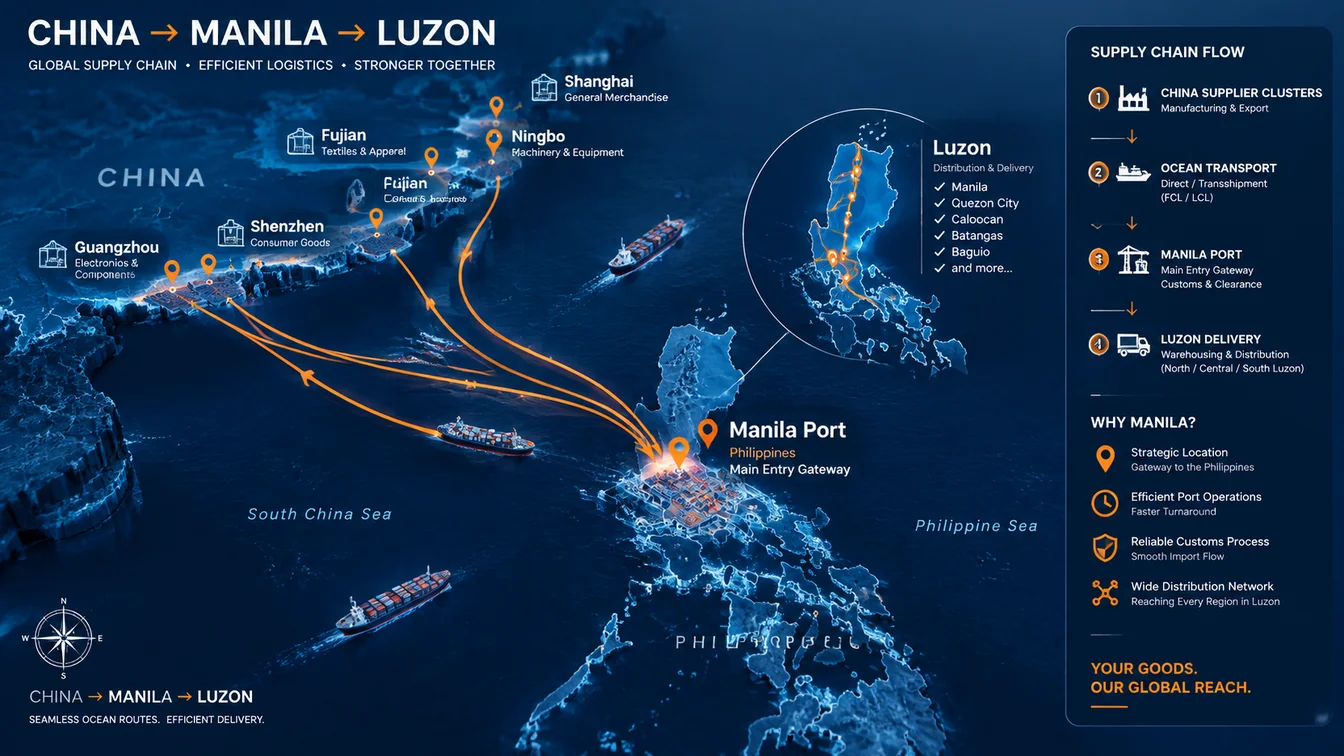
The practical route starts at the China supplier, proceeds through a suitable export gateway, and continues to the Philippine entry gateway, customs handoff, and consignee’s final delivery address. Supplier location, cargo readiness, delivery geography, and the agreed service boundary determine how those stages fit together.
China to Philippines Shipping Cost and Transit Time
Current TJ Logistics Team planning references provide route-specific China-to-Philippines prices and transit times for October 2026. Each reference applies to its named route, method, equipment or unit.
| Shipping route | Shipping method | Price | Transit time |
|---|---|---|---|
| China → Manila Port, Philippines | FCL 20GP | $270–$330 per container | 10–11 days |
| China → Manila Port, Philippines | FCL 40GP | $450–$550 per container | 10–11 days |
| China → Manila Port, Philippines | LCL | $22/CBM | 11–15 days |
| China → Philippines (airport not specified) | Air freight | $2–$4/kg | 2–4 days |
| China (excl. Guangdong & Fujian) → Philippines | Express (FedEx IPE) | $34.2/kg | 1–2 business days |
Rate scope: These TJ Logistics Team planning references apply to the shipping route, method, equipment or unit shown. They are not market averages or binding quotations. The formal quotation confirms the agreed collection, delivery, customs, and charge scope for the shipment.
How to Choose a Shipping Method from China to the Philippines
- Choose FCL ocean freight when the cargo suits a dedicated container, because the shipment can move without origin-side consolidation; loading capability and equipment requirements can change the choice.
- Choose LCL ocean freight when a shared load suits the cargo, because the shipment does not require an exclusively booked container; consolidation timing and handling requirements affect suitability.
- Choose air freight when delivery urgency justifies air-cargo handling, because it offers a different transport path from ocean freight; cargo acceptance, chargeable weight, and the arrival-airport arrangement remain material.
- Choose express when a time-critical consignment fits the service’s handling rules and originates outside Guangdong and Fujian, because the current express reference excludes those two provinces; eligibility also depends on the shipment and collection location.
- FCL ocean freight
- Use when: Cargo is suitable for exclusive container equipment and the shipper can coordinate loading. Key route check: Assign container loading, sealing, destination release, and empty-equipment return responsibilities before the shipment is dispatched. The sea freight service is the relevant service category for this planning decision.
- LCL ocean freight
- Use when: Cargo is suitable for a shared ocean-freight consignment rather than a dedicated container. Key route check: Align origin consolidation cutoffs, cargo compatibility, destination release arrangements, and the receiving party’s availability.
- Air freight
- Use when: Urgency makes air-cargo handling appropriate for the shipment’s dimensions, weight, value, and handling requirements. Key route check: The current Philippines air-freight reference does not specify an airport, so the actual arrival-airport handoff must be defined in the route plan. See the air freight service for the relevant transport category.
- Express service
- Use when: The shipment fits the express service requirements and the collection origin falls within the stated provincial scope. Key route check: Validate origin eligibility, package acceptance, required customs information, and final-delivery coverage for the actual consignment. The express service is the relevant category for this option.
Plan Your China-to-Philippines Shipment from Supplier to Final Delivery
Every supported method follows the same broad movement: supplier readiness and cargo handoff in China, export processing and international transport, arrival and Philippine customs handoff, and delivery to the agreed receiving point. The operational steps between those stages vary by method.
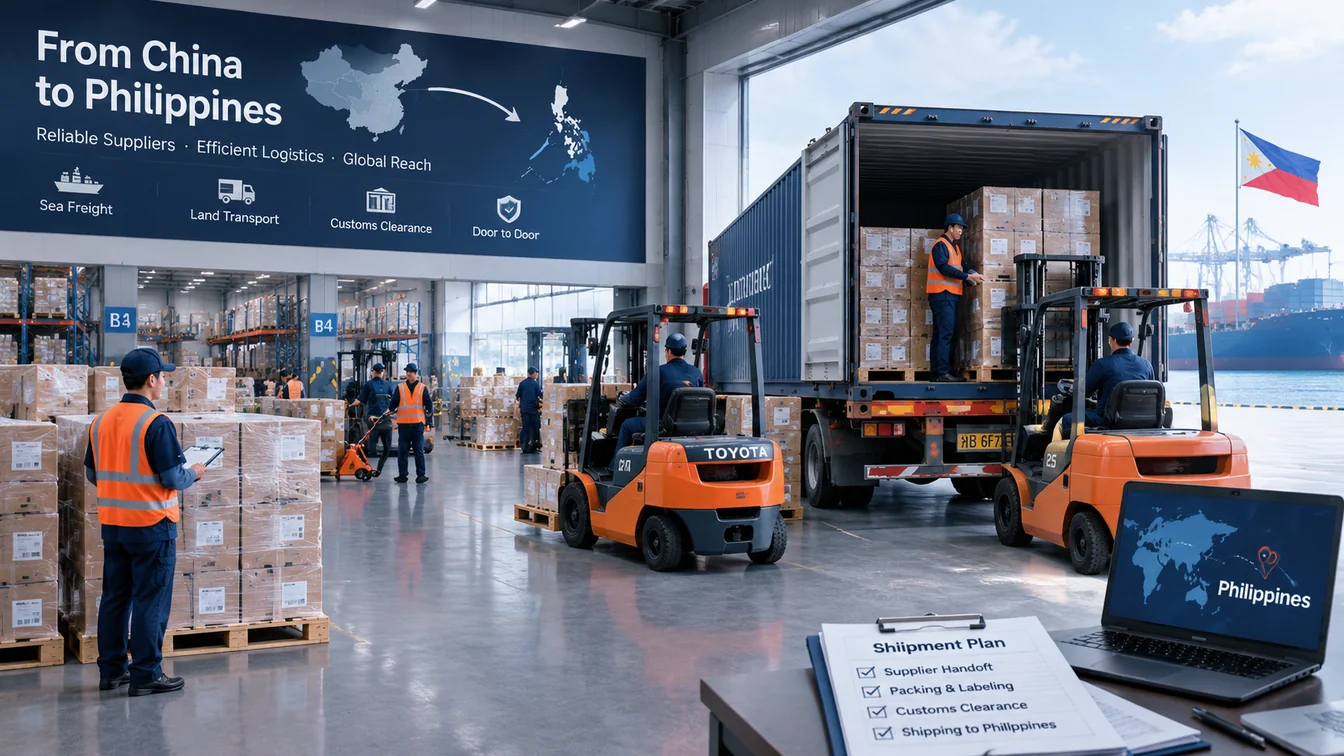
- FCL container movement
- Assign responsibility for loading, container sealing, and shipping instructions before export. At destination, the release party, collection arrangements, delivery vehicle, and empty-container return must fit the agreed service scope.
- LCL consolidation movement
- Coordinate cargo acceptance and consolidation at origin, then align destination release and any applicable deconsolidation handoff with the consignee’s receiving plan. The parties responsible for each handling stage should be recorded before the cargo is accepted.
- Air-cargo movement
- Arrange cargo acceptance and the required air-transport documentation before export, then define the actual arrival-airport handoff. Collection from the cargo facility or final delivery must match the agreed destination service boundary.
- Express movement
- Align the pickup with the eligible express service and provide shipment details required for carrier processing. The destination customs handoff and last-mile delivery must follow the service’s actual coverage and the consignee’s receiving conditions.
Execution Checks Before Booking
- For FCL, assign loading, container-release, delivery, and empty-equipment return responsibilities.
- For LCL, align the consolidation cutoff with cargo readiness and the planned destination release.
- For air freight, record the arrival airport and the agreed cargo collection or delivery handoff.
- For express, validate collection-origin eligibility and package acceptance before dispatch.
Choosing Philippine Entry Gateways and Inland Delivery Routes
The Philippines’ island geography makes the final delivery area important to route planning. The Port of Manila has multiple terminals, including the Manila International Container Terminal (MICT), so a delivery plan must distinguish the actual destination handoff from the consignee’s final address. A Manila entry reference does not by itself define onward delivery to another island or region.
| Final delivery area | Typical route pattern | Why the pattern fits | Details needed for the quote |
|---|---|---|---|
| Metro Manila and nearby Luzon | China → Manila Port, Philippines → customs handoff → agreed receiving address. | The named Manila entry reference provides an ocean-route comparison for a delivery plan focused on the Manila area. The actual terminal and final destination affect the local transport handoff. | Specify the arrival terminal, final address, postal code, access restrictions, and receiving arrangements. |
| Destinations outside the Manila delivery area | China → Manila Port, Philippines → customs handoff, followed by a separately defined onward movement when required. | A consignee in another part of Luzon, the Visayas, Mindanao, or another island may need additional movement beyond the named international entry point. | State whether the service ends at the Manila gateway or includes the onward movement to the named destination, including any required transfer and final-delivery handoff. |
Prepare a Comparable Freight Request
Provide: The China supplier or pickup point; cargo-ready timing and cargo profile, including type, packages, dimensions, weight, and CBM; loading or special-handling conditions; the Philippine final postal code and receiving conditions; the requested delivery scope and timing priority; and the relevant importer or broker arrangement.
The formal quotation should state: The pickup and final-delivery boundary; transport method, equipment or unit, and routing pattern; customs, destination-handling, and inland-delivery handoffs; material included and excluded charges; rate validity; and the conditions that can change the amount or timing.
Prepare for Philippine Customs Before Departure
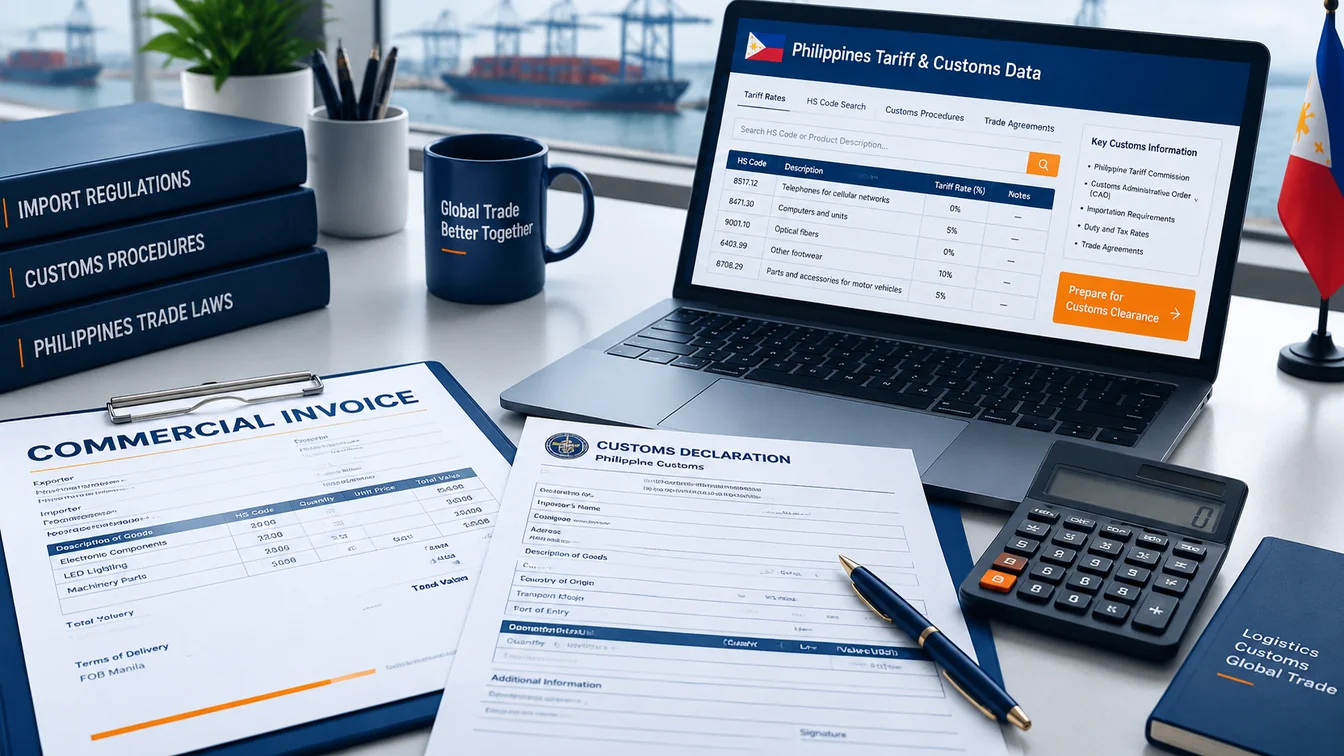
Commercial imports into the Philippines are generally subject to customs duties and taxes unless an applicable legal exemption applies, and the importer must ensure that the goods declaration and supporting information are complete. An authorized customs broker may lodge the declaration on the importer’s behalf under the applicable rules. The Philippine Bureau of Customs importation guidelines explain the current preparation and clearance process.
What You May Pay at Import
Philippine import charges can include customs duty, internal revenue taxes, trade-remedy measures, and other lawful charges where applicable. The duty treatment depends on the product’s tariff classification, customs value, origin, and eligibility for any preferential arrangement; the Philippine Tariff Finder provides product-based tariff information, including applicable tariff schedules and rules of origin.
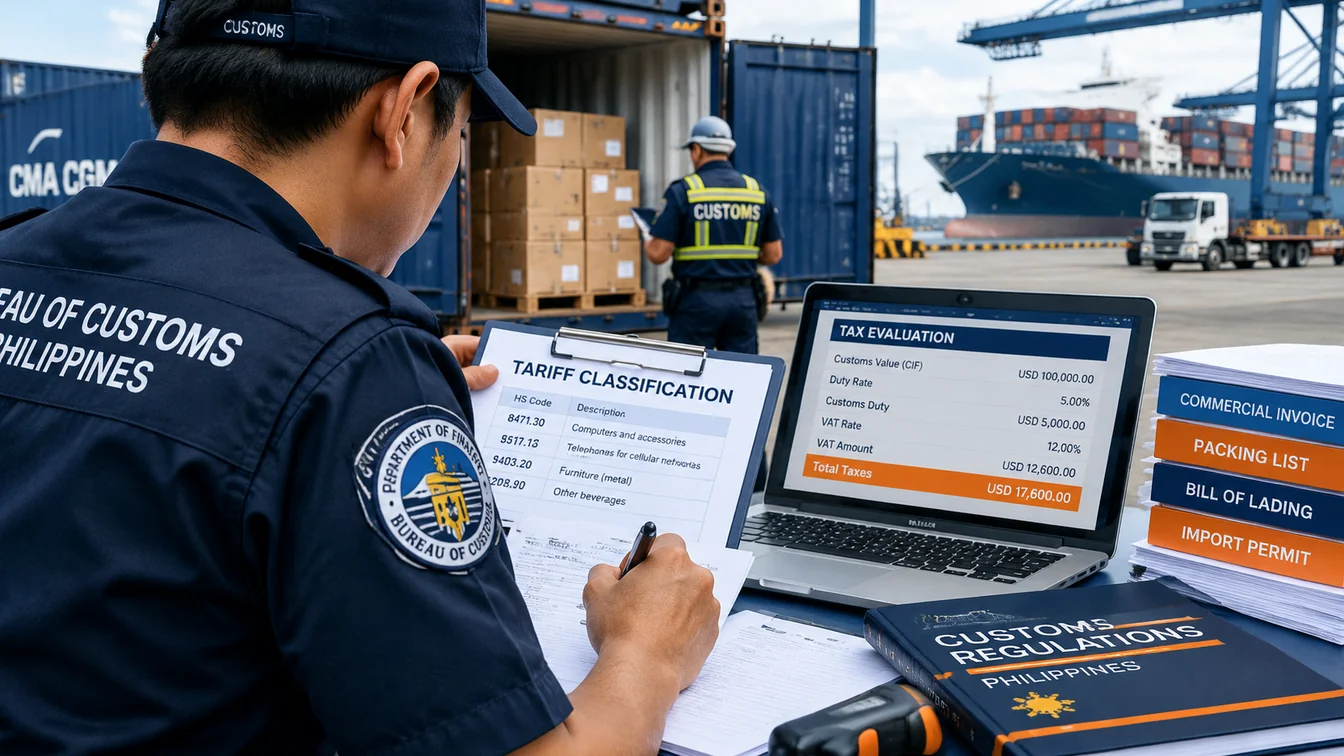
Customs Readiness Checklist
- Complete the applicable importer registration or accreditation requirements before the import transaction, taking the importer’s status and the applicable entry process into account.
- Determine the appropriate ASEAN Harmonized Tariff Nomenclature (AHTN) classification from the actual product characteristics, composition, and intended use.
- Declare the genuine customs value and retain supporting commercial records, payment evidence, and relevant freight or insurance information for valuation purposes.
- Establish the correct country of origin and prepare supporting origin documents when seeking preferential tariff treatment. Dispatch from China alone does not establish eligibility.
- Check the product against the Philippine National Trade Repository to determine whether import permits, licences, clearances, or other product-specific conditions apply.
- Arrange timely goods-declaration filing and coordinate the importer’s or authorized broker’s document handoff after arrival. Current customs filing rules include a deadline measured from discharge of the last package.
- Keep the declared description, classification, origin, quantity, value, and supporting documents consistent, and prepare any applicable labelling or product-compliance evidence.
Documents to Prepare
- Commercial invoice and packing list.
- Bill of Lading for sea freight or Air Waybill for air freight, as applicable.
- Sales contract, proof of payment, or other commercial evidence supporting the declared value, when required.
- Certificate of origin and related supporting records when an origin-based preference is claimed.
- Product import permits, regulatory clearances, licences, or certificates when required for the specific commodity.
- Additional valuation, insurance, or product-compliance documents applicable to the goods and import transaction.
The main compliance risk is a mismatch between the actual product, its declared tariff classification or value, its origin evidence, and any required import permits. Product controls and tariff treatment can change, so the importer should establish the applicable requirements for the particular goods before dispatch.
Choose the Right Delivery Scope for China-to-Philippines Shipping
| Service scope | What the scope means | Key responsibility or condition |
|---|---|---|
| Port-to-port | Port-to-port covers the agreed international movement between the named origin and destination ports. Supplier pickup and final delivery are outside that scope unless separately included. | The buyer normally arranges any excluded pickup, customs, and onward delivery responsibilities. The agreed shipping terms determine the actual handoffs. |
| Terminal-to-door | Terminal-to-door begins at the agreed destination release terminal and continues to the named receiving address. Import clearance is included only when the agreed scope explicitly allocates it. | The importer normally remains responsible for import declarations and applicable duties and taxes unless written terms provide otherwise. Terminal release and consignee access can affect the delivery handoff. |
| Door-to-door | Door-to-door coordinates pickup from the named China address through delivery to the named Philippine address. The service does not automatically transfer importer status or include duties and taxes. | The agreed service terms determine who handles customs and each transport leg. The consignee’s access, receiving hours, and unloading conditions remain material to final delivery. |
A door-to-door service arrangement can be appropriate when the buyer needs one defined pickup-to-receiving-address boundary. Import clearance, duties and taxes, regulatory compliance, and responsibility for any additional destination movement must still follow the agreed commercial terms.
Why Use a Freight Forwarder for Shipping from China to the Philippines?
A freight forwarder helps turn a shipment request into a workable movement definition, compare transport and gateway options, and coordinate the commercial and operational handoffs. Those functions are especially useful when the named international entry point and the consignee’s final Philippine destination do not represent the same delivery location.
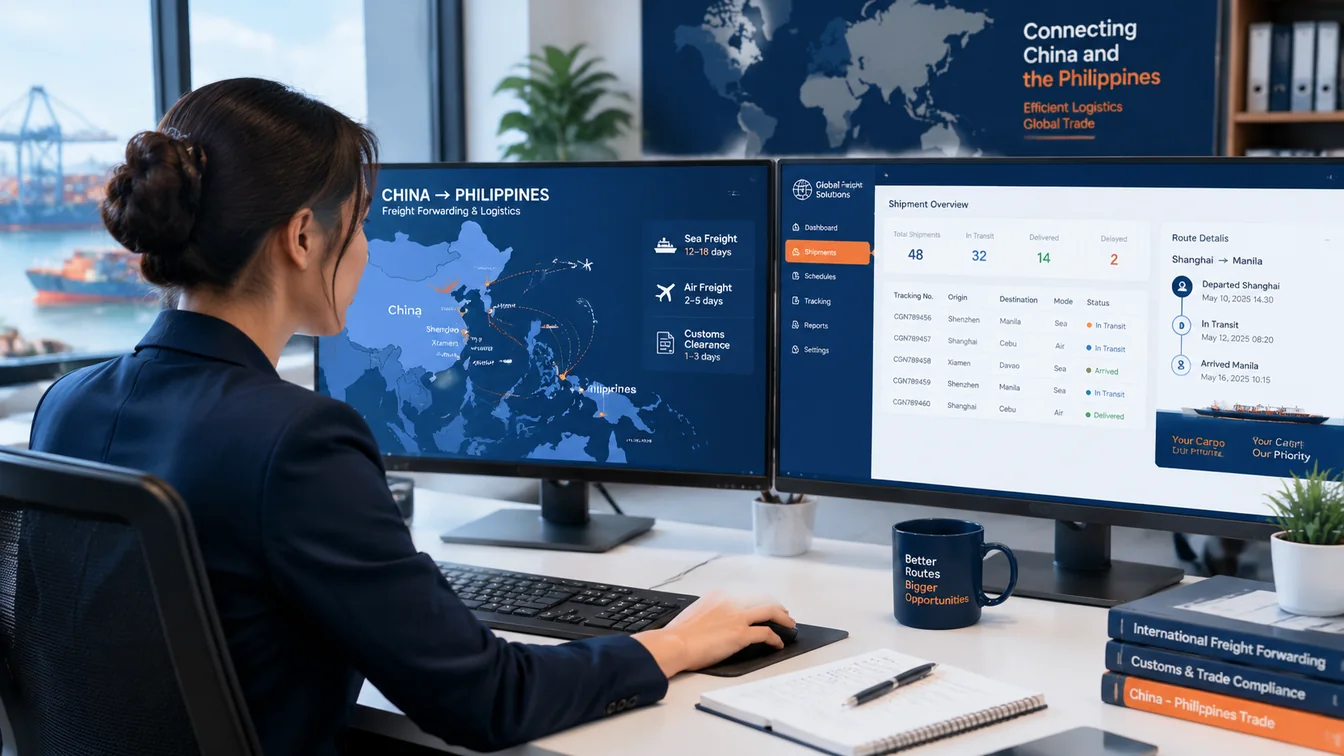
- When a shipment description leaves key decisions unresolved: A forwarder helps the buyer turn the commercial requirement into a defined movement that can be planned and compared. The delivery boundary is particularly important when the receiving location is outside the Manila area.
- When different routing proposals do not align: A forwarder helps compare the practical fit of ocean, air, and eligible express movements against the cargo’s needs. The supplier location, timing priority, and final receiving area determine which differences matter.
- When responsibility changes between parties: A forwarder helps clarify the handoffs between supplier, transport provider, importer, broker, and consignee. Cargo risk transfer is a separate consideration, so cargo insurance should not be assumed to follow automatically from the transport scope.
How TJ Logistics Team Coordinates a China-to-Philippines Shipment
- 1. Shipment-definition review
- TJ Logistics Team reviews the defined shipment request and identifies the route-specific gap that prevents the next reliable decision, such as an unresolved delivery boundary or an unspecified air-arrival airport.
- 2. Gateway and movement comparison
- TJ Logistics Team maps credible transport and gateway alternatives against supplier location, cargo handling requirements, timing priority, and the destination area. The comparison distinguishes the named Manila entry reference from any separately required onward movement.
- 3. Service-boundary record
- TJ Logistics Team records the agreed transport scope and identifies which party is responsible for the next booking, document, customs, release, and delivery handoffs before preparing the formal quotation.
- 4. Booking and change coordination
- After the buyer confirms the agreed quotation and scope, TJ Logistics Team coordinates booking information, commercial documents, and cargo handoff details. If the routing, documentation, timing, or receiving conditions change, the team identifies the affected handoff and the party responsible for the next action.
China to Philippines Shipping FAQ
How much does LCL shipping from China to the Philippines cost?
For China → Manila Port, Philippines LCL, the TJ Logistics Team planning reference is $22/CBM in October 2026. This is a volume-based reference for a shared-load movement, so use a matching cubic-metre basis when comparing proposals with comparable service boundaries.
How long does sea freight from China to the Philippines take?
For China → Manila Port, Philippines FCL 20GP ocean freight, the TJ Logistics Team planning-transit reference is 10–11 days in October 2026. Use this as the reference for the international movement, then plan the customs handoff and any separate inland or onward island delivery according to the receiving address.
Which shipping method is most cost-effective for China-to-Philippines cargo?
FCL is the first comparison for cargo suited to a dedicated container, while LCL is the shared-load alternative when consolidation fits the shipment. Air freight and express serve different urgency needs, so a meaningful cost decision must account for the shipment’s unit basis, handling requirements, and actual delivery scope rather than comparing unlike rates.
How should I route cargo to a destination outside Metro Manila?
For a Philippine destination outside the Manila delivery area, the China-to-Manila ocean reference should be distinguished from any onward movement to the final address. State whether the required service ends at the Manila entry gateway or includes an additional route to the named destination in Luzon, the Visayas, Mindanao, or another island.
What documents should be prepared before shipping from China to the Philippines?
Commercial imports to the Philippines normally require a commercial invoice, packing list, and the applicable Bill of Lading or Air Waybill, with supporting value and origin records as relevant. Product-specific permits or clearances must also be prepared before import when the commodity is regulated.
Can I ship door-to-door from China to the Philippines?
Yes, a China-to-Philippines door-to-door movement can be defined around a named supplier pickup address and receiving address. The agreed terms must distinguish transport coordination from import clearance, duties and taxes, product compliance, and any onward movement needed beyond the initial Philippine entry point.
Does the express shipping reference cover all China origins?
No, the current TJ Logistics Team express reference excludes Guangdong and Fujian. A shipment collected within either province needs a separately defined eligible service option rather than applying the existing reference to an excluded origin.
Does shipping goods from China automatically qualify for preferential import duty in the Philippines?
No, shipment from China alone does not establish eligibility for preferential Philippine import duty. The goods must satisfy the applicable rules of origin and supporting documentary requirements, so origin qualification should be resolved before a preferential rate is declared.