LTL vs FTL: Which Fits Your Shipment?
Choose less-than-truckload (LTL) when your shipment can share trailer space with other freight and the associated consolidation and handling process fits your cargo and delivery requirements. Choose full truckload (FTL) when the shipment benefits from dedicated trailer capacity, a more direct truck movement, or tighter control over loading and delivery coordination. Neither option is automatically the better choice for every shipment.
The deciding factor is how your cargo, route, service requirements, and delivery constraints interact. LTL can suit freight that does not require an entire truck, but its network may involve additional handling, terminals, or consolidation. FTL can reduce shared-freight handling and support a more direct movement, but reserving a truck for a shipment may not make commercial sense when the cargo does not need that capacity.
For an accurate LTL vs FTL cost comparison for US shippers, compare current quotes using the same cargo description, dimensions, weight, pickup and delivery locations, service boundary, and accessorial requirements. The fact most likely to change your selection is whether the shipment needs dedicated capacity or can tolerate shared-trailer operations without compromising its handling or delivery requirements.
Establish a Fair Comparison Before Requesting Quotes
Compare LTL and FTL using the same shipment assumptions. Otherwise, a quote may appear more attractive simply because it covers a narrower service or uses different cargo information. Confirm the operating details before evaluating the proposed truck arrangement.
| Comparison item | What to provide | Why it matters | What to confirm |
|---|---|---|---|
| Cargo | Commodity, packaging, weight, dimensions, and handling needs | These details influence suitability, equipment, and rating | Both providers use the same verified shipment data |
| Route | Pickup and delivery addresses, including any intermediate facilities | Lane conditions affect routing, availability, and service scope | The origin and final destination match |
| Delivery requirement | Required arrival window, receiving hours, and appointment conditions | Shared networks and dedicated movements may support different plans | The proposed service can meet the actual receiving constraints |
| Quote inclusions | Pickup, linehaul, terminal handling, delivery, and requested extras | A headline charge may not cover the same work in both quotes | Included services and separately billed items are identified |
| Responsibility | Booking party, customs roles where applicable, and delivery boundary | Transport selection does not settle every commercial responsibility | Each handoff and required service has an assigned party |
Keep the service boundary consistent as well. A terminal-to-terminal movement is not directly comparable with a service that includes collection and delivery at the named addresses. When the shipment requires collection through final delivery, review the proposed door-to-door freight service scope and confirm which transport and handling activities the quote includes.
How LTL and FTL Work in Practice
LTL freight: Shared trailer capacity
LTL combines freight from different shipments within a shared transportation network. The provider arranges the movement of your cargo alongside other freight, potentially using terminals or consolidation facilities to connect the origin with the destination. The exact route and handling sequence depend on the provider and service selected.
Best fit: LTL is worth evaluating when the shipment can share trailer capacity, the packaging can withstand the expected handling, and the delivery requirement accommodates the proposed network service. It can help a shipper move freight without arranging dedicated truck capacity for the entire shipment.
Weak fit: LTL may be unsuitable when cargo is unusually sensitive to handling, requires strict control over loading, cannot tolerate the proposed transfers, or must follow a delivery plan that the shared network cannot support.
Selection trigger: Lean toward LTL when the shipping team can document the cargo accurately, confirm packaging and handling compatibility, and accept the routing and delivery conditions in the quote. Review the available truck freight service options when you need to compare the transport arrangement with the broader requirements of the shipment.
FTL freight: Dedicated truck movement
FTL arranges a truck or trailer for a dedicated shipment movement rather than combining the shipment with unrelated freight in the same shared-trailer arrangement. Depending on the service, the truck may collect the cargo and proceed toward the destination with fewer freight-network transfers. The precise route, stops, equipment, and operating commitments still need confirmation.
Best fit: FTL is worth evaluating when the shipment requires dedicated trailer capacity, the cargo occupies or needs control of that capacity, or reduced shared-freight handling supports the handling plan. It may also fit a shipment with loading or delivery coordination requirements that are difficult to accommodate within an LTL network.
Weak fit: FTL may be a poor commercial fit when the cargo can travel safely through a shared network, no dedicated-capacity requirement exists, and the additional reservation of truck capacity does not solve a meaningful operational problem.
Selection trigger: Lean toward FTL when a dedicated movement better supports the cargo, loading plan, route, or receiving arrangement. Confirm the equipment, pickup plan, stops, delivery boundary, and any restrictions before assuming that the proposed truck will operate directly from origin to destination.
LTL vs FTL Freight: Core Decision Matrix
Use the matrix to identify which arrangement deserves a closer quote review. These are conditional selection signals, not universal guarantees about price, transit performance, or cargo safety.
| Decision factor | LTL signal | FTL signal | What to verify |
|---|---|---|---|
| Cargo and trailer use | The shipment can share space without special separation or dedicated capacity | The shipment needs a dedicated truck or trailer arrangement | Actual dimensions, packaging, loading plan, and equipment requirements |
| Handling tolerance | The cargo can tolerate the provider’s consolidation and transfer process | Reducing shared-freight handling better supports the cargo requirements | Packaging suitability, handling instructions, and transfer exposure |
| Delivery coordination | The receiving plan can accommodate the proposed network service | A dedicated movement better supports the loading or receiving arrangement | Pickup readiness, delivery appointments, facility restrictions, and routing |
| Commercial fit | Shared capacity provides an acceptable solution for the shipment | Dedicated capacity solves a defined operational or capacity need | Equivalent quote scope, charge basis, included services, and extra charges |
| Service requirements | The available LTL service meets the shipment’s actual constraints | The proposed FTL service can meet the required equipment and handling conditions | Carrier commitments, cargo restrictions, delivery coverage, and exclusions |
The practical decision is not whether a shipment is generally considered small or large. It is whether shared capacity meets the shipping requirement or whether the shipment needs a dedicated movement. The answer can change when packaging, route, equipment, delivery constraints, or the available quote scope changes.
Field note: Ask the provider to explain the proposed physical movement, including consolidation, transfers, loading, and delivery. A clear operating plan is more useful than relying on the LTL or FTL label alone.
LTL vs FTL Cost Comparison: What the Quote Actually Covers
Compare the total quoted shipment scope rather than choosing from the headline charge. LTL and FTL can use different rating approaches, and the amount you receive from a provider may cover different transportation and handling activities. The applicable charge basis must be confirmed in the current quote.
An LTL quote may depend on shipment weight, dimensions, commodity description, applicable freight classification, packaging, handling requirements, and the carrier’s rating conditions. The quote may also identify additional services or destination requirements separately. Inaccurate cargo information can undermine the comparison even when the route and delivery addresses match.
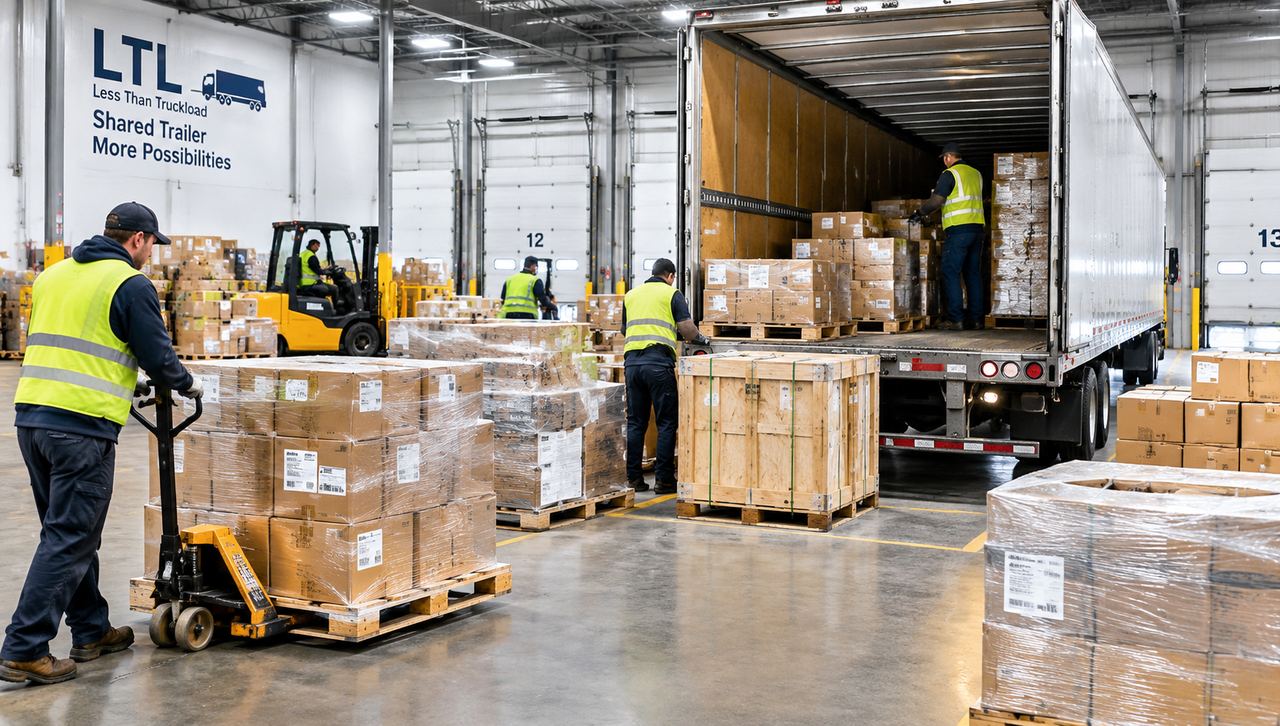
An FTL quote may reflect the lane, requested equipment, dedicated truck use, pickup and delivery conditions, operating restrictions, and the service window requested. The proposed plan may also require special handling, additional stops, or access to facilities with specific operating requirements. Confirm which of these items are included rather than assuming that a truckload quote covers every activity.
For both options, distinguish the transportation charge from the full shipment commitment. The comparison should identify collection, linehaul, terminal or transfer handling where applicable, final delivery, appointment arrangements, loading or unloading assistance, waiting or access restrictions, and other requested services. If the route crosses an international border, confirm the treatment of customs brokerage and any other cross-border services separately.
Ask both providers to state their assumptions and exclusions in writing. A quote that excludes a required service is not directly comparable with one that includes it. A change in cargo details, pickup readiness, route, equipment, or destination requirements may also change the quoted scope.
To settle the commercial comparison, supply identical shipment data and require each provider to identify the rating basis, included activities, additional services, and conditions that could change the quoted amount. If a provider cannot explain a material difference, clarify the assumption before ranking the options.
Note: Freight rates and total shipment charges change with cargo details, route, service scope, carrier conditions, timing, destination handling, and applicable responsibilities. Compare current quotes only after their scope has been aligned.
Transit Time, Handoffs, and the Complete Delivery Cycle
Compare the complete delivery cycle, not just the time the truck spends moving between locations. LTL and FTL can involve different operating sequences, and the actual result depends on the selected provider, lane, service conditions, and shipment readiness. Without those details, a generic transit range would not establish a reliable expectation.
LTL may involve pickup, movement to a consolidation facility, sorting, transfers between transportation legs, destination handling, and final delivery. These activities depend on the provider’s network and the actual route. The provider should explain which handoffs apply and what delivery estimate covers them.
FTL may provide a more direct movement because the truck is assigned to a dedicated shipment. However, dedicated capacity does not remove every potential delay. Equipment availability, pickup readiness, loading access, route restrictions, traffic conditions, driver and carrier operations, and the receiving facility’s requirements can all affect execution.
For either arrangement, distinguish the main transport estimate from the total delivery cycle. Main transport covers the planned movement between the relevant origin and destination points. The total cycle may also include booking confirmation, pickup coordination, cargo preparation, consolidation or transfers where applicable, customs clearance for cross-border shipments, destination handling, appointments, and inland delivery.
Request the provider’s estimated pickup, departure, arrival, and delivery milestones, with a clear explanation of the start and end points. Confirm whether the estimate includes terminal handling, border procedures, final-mile transport, and appointment coordination. These boundaries matter when a shipper must align inbound inventory with a receiving schedule.
Neither LTL nor FTL should be treated as a delivery guarantee simply because a quote contains an estimated arrival. Ask what conditions the estimate assumes, which party owns each handoff, and how the provider will communicate changes that affect the receiving plan.
Responsibility, Transport Scope, and Delivery Boundaries
LTL and FTL describe how truck capacity is arranged. They do not, by themselves, define every service included in a shipment or determine which party is responsible for activities outside the transport arrangement. Keep the transportation method, service boundary, customs role, and cargo protection requirements separate in the booking instructions.
| Area | What the selection establishes | What requires separate confirmation |
|---|---|---|
| Truck arrangement | Shared trailer capacity or a dedicated truck movement | Equipment, routing, handling, and carrier commitments |
| Service boundary | The transport arrangement proposed for the shipment | Pickup, terminal handling, final delivery, appointments, and exclusions |
| Customs and border roles | No automatic assignment of clearance or import responsibilities | Required documents, brokerage arrangements, and the parties responsible for each task |
| Cargo protection | No automatic confirmation of cargo insurance or claim protection | Applicable coverage, exclusions, declared cargo information, and claims procedures |
For a cross-border shipment, identify who prepares the required shipment information, who coordinates customs brokerage, and who handles the relevant import or export procedures. The customs brokerage service scope should be reviewed separately from the choice between shared and dedicated truck capacity. Confirm the actual requirements with the responsible providers rather than assuming that the transport quote includes clearance.
Also establish the precise delivery boundary. A quote that ends at a terminal does not necessarily cover transportation to the consignee’s premises. A delivery to a commercial address may still require an appointment, unloading assistance, special access, or other services. Record these requirements in the request for quotation and confirm their inclusion in the service plan.
Finally, review cargo protection separately from the freight arrangement. LTL and FTL do not, on their own, establish the insurance coverage applicable to a loss or damage event. Review the relevant cargo insurance options if protection requirements affect the shipment decision, and verify the actual coverage terms and exclusions with the responsible provider.
Selection Rules and Quote Preparation
Use the following operating conditions to narrow the choice before requesting a formal quote.
- Start with LTL when sharing is operationally acceptable. Consider it when the cargo can use shared trailer capacity, the packaging suits the expected handling, and the proposed network service satisfies the delivery requirement.
- Start with FTL when dedicated capacity solves a real need. Consider it when the loading plan, cargo characteristics, handling restrictions, or receiving arrangements justify a dedicated truck movement.
- Reassess LTL when handling becomes a constraint. Fragile, sensitive, unusually configured, or tightly controlled cargo may require a closer review of packaging, transfer exposure, and the provider’s handling capabilities.
- Reassess FTL when dedicated capacity adds little value. If the shipment can safely use the shared network and the proposed LTL service meets the required delivery conditions, compare the complete quote scope before reserving a truck.
- Change the decision when the shipment assumptions change. Different cargo dimensions, packaging, route, equipment needs, delivery requirements, or service inclusions can change which arrangement is appropriate.
Prepare a consistent request for quotation before comparing providers. The request should contain the exact pickup and delivery locations, commodity description, package count, packaging type, dimensions, total weight, handling restrictions, loading requirements, delivery constraints, and requested service boundary. Include cross-border requirements, appointment conditions, and any special access or unloading needs where applicable.

Document the shipment
Collect verified cargo details, packaging information, locations, and handling instructions. Flag any information that remains uncertain so the provider can identify its assumptions.
Request comparable plans
Ask for the proposed LTL or FTL operating sequence, equipment requirements, service boundary, estimated delivery milestones, quote inclusions, and exclusions.
Resolve the differences
Compare the written scope, operating constraints, and responsibility assignments. Clarify material differences before selecting a provider or authorizing the shipment.
Illustrative example (not a customer case): A shipper needs to move packaged components to a receiving facility with a defined appointment requirement. The cargo can tolerate shared-trailer handling, but the available LTL plan has not yet been confirmed against the receiving window. The shipper requests comparable LTL and FTL proposals using identical cargo details, addresses, and delivery requirements. If LTL can meet the operating constraints and its full scope fits the shipment needs, it remains a viable choice. If the shared network cannot support the required delivery arrangement, the shipper evaluates whether a dedicated FTL movement resolves that constraint. The final decision follows the confirmed operating plans and quote scope, not an assumed universal advantage.
Common Comparison Mistakes and How to Control Them
A sound LTL vs FTL decision depends on accurate cargo information and a comparable operating plan. Several common mistakes can distort the evaluation even when the freight options appear similar.
- Comparing different service boundaries. A quote covering only one transportation leg should not be evaluated as though it includes pickup, destination handling, and final delivery. List each required activity and verify its inclusion.
- Selecting from the headline charge alone. A lower quoted amount may reflect different assumptions, exclusions, or rating conditions. Align the quote scope and resolve unexplained differences before choosing.
- Treating shared and dedicated truck arrangements as different transport modes. LTL and FTL are both truck freight arrangements. They do not replace the separate decision about whether the overall route requires road transport or a different mode.
- Leaving destination requirements undefined. Receiving appointments, restricted access, unloading arrangements, and terminal-to-door delivery can affect what the provider must perform. State the actual destination conditions before booking.
- Submitting incomplete cargo details. Missing or inaccurate dimensions, weight, packaging, or commodity information can undermine the quote and the provider’s operating plan. Verify the shipment data against the cargo being tendered.
- Assuming transport settles customs or cargo protection. Assign cross-border tasks and confirm insurance arrangements separately when they apply to the shipment.
Common mistake: A shipper chooses a freight option before confirming that both quotes cover the same pickup and delivery work. The resulting comparison can favor an incomplete service. Ask each provider to identify the included activities, exclusions, and potential additional charges in writing.
Risk alert: A mismatch between the declared shipment details and the actual cargo can lead to rating changes, handling problems, or service disruption, depending on the provider’s conditions. Correct discrepancies before tendering the freight, and obtain confirmation if packaging or dimensions change.
Disclosure: This page provides general freight comparison guidance and may mention freight services available through this website. Actual cost, timing, service scope, customs requirements, carrier conditions, and destination handling depend on the shipment and can change. Confirm the current shipment plan before booking.
Key Takeaways
- Choose LTL when shared trailer capacity and the provider’s handling process satisfy the cargo and delivery requirements.
- Choose FTL when dedicated truck capacity or a more controlled movement addresses a specific operational need.
- Compare identical cargo details, routes, delivery boundaries, service requirements, and quote inclusions before evaluating the commercial result.
- Assess the complete delivery cycle, including applicable handling, transfers, appointments, and final delivery, rather than relying only on main transport estimates.
- Keep customs responsibilities, destination services, and cargo protection separate from the LTL or FTL selection.
- Make the final choice from verified shipment information and the provider’s confirmed operating plan, not from a general assumption about which option is better.
FAQ
What does LTL vs FTL mean in freight shipping?
LTL means less-than-truckload and generally involves sharing trailer capacity with other freight. FTL means full truckload and generally arranges a dedicated truck or trailer for a shipment movement. The right choice depends on cargo, handling, route, and delivery requirements.
Is LTL or FTL better for a shipment?
Neither is universally better. LTL can fit cargo that can use a shared network, while FTL can fit shipments that need dedicated capacity or more controlled handling. Compare the actual operating plan and service scope before deciding.
Is LTL always the cheaper shipping option?
No. The commercial result depends on cargo characteristics, the route, the provider’s rating basis, handling needs, and included services. Compare current quotes with identical shipment details and equivalent service boundaries.
Does FTL guarantee faster delivery than LTL?
No. A dedicated truck may allow a more direct movement, but delivery performance depends on the provider, route, equipment availability, pickup readiness, operating conditions, and receiving requirements. Confirm the estimated delivery cycle for the actual shipment.
When should I use LTL instead of full truckload?
Consider LTL when the cargo can share trailer space, the packaging suits the expected handling, and the proposed network service meets the delivery requirements. Review FTL as well when the shipment needs dedicated capacity or cannot accommodate the shared network’s operating process.
What information do I need to compare LTL and FTL quotes?
Provide the commodity, packaging, dimensions, weight, pickup and delivery locations, handling restrictions, delivery conditions, and required service boundary. Identify special access, unloading, appointment, or cross-border requirements so both quotes reflect the same shipment.
Are LTL and FTL different transportation modes?
No. Both are arrangements for moving freight by truck. The distinction concerns shared versus dedicated truck capacity, not a choice between road, air, sea, or rail transport.
Do LTL and FTL determine customs responsibility or cargo insurance?
No. The truck arrangement does not independently assign customs tasks, import responsibilities, or cargo insurance coverage. Confirm those responsibilities and any required protection separately for the shipment.
Disclaimer: Freight comparison information on this page is general planning guidance, not a binding quotation, carrier commitment, customs ruling, legal opinion, or delivery guarantee. Suitability depends on cargo, route, scope, timing, provider terms, and destination conditions. Confirm current shipment requirements before booking.