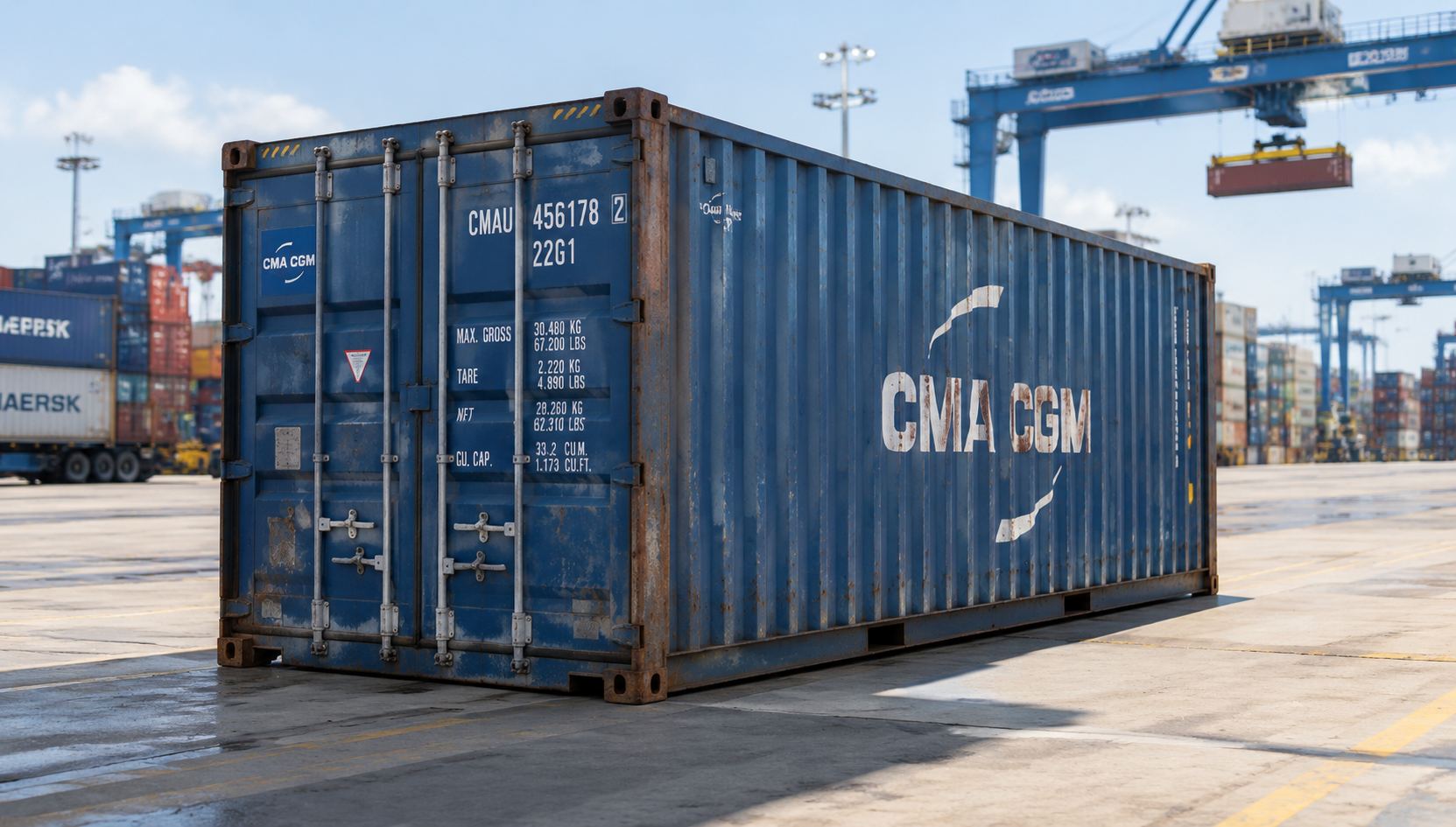
How much does a 20ft shipping container weigh? A standard dry container typically weighs about 2,200–2,400 kg (4,850–5,290 lb) when empty. This figure is its tare weight, not the total weight after loading. A commonly encountered maximum gross weight rating is 30,480 kg (67,200 lb), although the rating depends on the individual container. The actual equipment markings take precedence over a general industry estimate.
For shipment planning, separate the empty container’s weight, the cargo’s weight, and the combined gross weight. The container’s rated cargo allowance equals its maximum gross weight minus its tare weight. However, the allowable cargo load may be lower because of road weight restrictions, axle limits, rail requirements, carrier conditions, or route-specific constraints. Before loading or booking, confirm the container’s marked ratings, the planned cargo mass, and the applicable transport limits. These checks help prevent an otherwise suitable container from becoming an operational problem during pickup, transit, or delivery.
Understand the Four Main Container Weight Terms
Logistics teams use several weight figures for different purposes. Selecting the correct figure matters because an empty container’s weight cannot tell you how much cargo it can carry, and a cargo weight alone does not establish the total weight of a loaded container.
| Weight term | What it includes | Why it matters |
|---|---|---|
| Tare weight | The empty container | Establishes the starting weight before loading |
| Cargo weight | The goods loaded into the container | Helps determine the required payload and transport capacity |
| Payload capacity | The rated cargo allowance, calculated from the maximum gross weight minus tare weight | Shows the container’s theoretical cargo limit before other restrictions |
| Maximum gross weight | The container plus its contents | Sets the container’s rated upper weight limit |
Tare weight is the appropriate figure when you need to know how much an empty container weighs. Payload capacity is the relevant starting point when you need to determine how much cargo the container can accommodate. Maximum gross weight applies to the combined container and cargo, not just the goods.
Do not confuse the loaded container’s gross weight with the gross weight of the entire road vehicle. A truck combination includes the tractor, chassis, container, and cargo. Transport planning must account for the applicable limits on the complete vehicle as well as the container’s own rating.
How to Calculate the Cargo Allowance for a 20ft Container
Calculate the container’s theoretical cargo allowance by subtracting its marked tare weight from its marked maximum gross weight. Use the figures for the actual unit rather than assuming every 20ft container has identical specifications.
Calculation: Maximum gross weight − tare weight = rated cargo payload.
Hypothetical illustration: Suppose a container has a maximum gross weight rating of 30,480 kg and a tare weight of 2,300 kg. Subtracting 2,300 kg from 30,480 kg gives a rated cargo allowance of 28,180 kg. This is a mathematical illustration, not a loading recommendation for every shipment.
The calculation establishes only the container’s rated payload. It does not establish that a truck can legally carry the load, that a rail route will accept it, or that a particular carrier will permit it. Packaging materials, pallets, dunnage, and other cargo-related materials also contribute to the loaded weight. Include these items when they remain inside the container during weighing and transport.
When the cargo approaches the calculated limit, obtain the actual tare and maximum gross figures before confirming the loading plan. Then apply the lowest relevant limit among the container rating, the transport equipment, the route, and the service requirements.
Operator check: Confirm whether the cargo figure supplied by the shipper includes pallets, export packaging, and other loading materials. A net product weight may be materially lower than the total cargo mass used for transport planning.
Why the Actual Weight Varies by Container Type
The typical empty weight applies to a general standard dry container. The equipment’s construction, dimensions, fittings, and installed machinery can change its tare weight. Two containers with the same nominal length may therefore have different empty weights and cargo allowances.
Standard dry containers carry general cargo and provide the most useful baseline for a routine 20ft container shipment. Even within this category, tare weight varies by manufacturer, model, and individual unit.
High-cube containers have greater internal height than standard-height units of comparable length. Their dimensions and construction may result in different tare weights, so do not transfer a standard container’s marked figures to a high-cube unit.
Refrigerated containers include refrigeration equipment and insulated structures. These features affect the equipment’s empty weight and can reduce its cargo allowance relative to a unit with a different tare weight and the same maximum gross rating.
Specialized containers, including open-top, tank, and other purpose-built units, may have substantially different construction and operating characteristics. Their specifications should be checked individually rather than inferred from a standard dry container.
The most reliable approach is to identify the equipment type and check its own markings. If the container number is available before dispatch, ask the equipment provider or carrier to confirm the tare weight and gross rating for the assigned unit. A generic specification is useful for early budgeting, but it should not replace an equipment-specific check.
How Transport Mode Changes the Weight Decision
A container can remain within its own rating while exceeding a limit that applies elsewhere in the transport chain. The practical loading target must account for each planned movement, including the pickup, any terminal transfer, the main transport leg, and final delivery.
Ocean freight: Confirm the carrier’s container weight limits and the required verified gross mass (VGM) procedure for an export shipment. The VGM represents the verified total mass of the packed container, not merely the cargo. The booking instructions and applicable procedures determine the required submission method, responsible party, and timing. Review the specific requirements when arranging sea freight, especially when the shipper, warehouse, and booking party are different organizations.
Road transport: The tractor, chassis, container, and cargo contribute to the vehicle combination’s total weight. Axle distribution, vehicle configuration, route restrictions, and local requirements may limit the amount that can be carried. Ask the trucking provider to check the planned loaded weight against the equipment and route before dispatch. The trucking freight service scope and operating arrangements should also be confirmed for heavy or weight-sensitive loads.

Rail transport: Rail acceptance may depend on the loaded container’s weight, the equipment and handling arrangements, and the route’s restrictions. An ocean container’s rated payload does not establish that every rail movement can accommodate that load. For an intermodal shipment, check the rail operator’s requirements as part of the wider transport plan. Relevant arrangements can be reviewed when planning rail freight.
These limits address different pieces of the operation, so one approval does not replace the others. For a shipment involving multiple modes, confirm the weight allowance for every leg before the cargo is packed or the pickup is scheduled. If one leg has a lower limit, the loading plan must accommodate that restriction or the transport plan must change.
Keep Weight Figures Consistent Across Shipping Documents
Weight information often moves between the shipper, warehouse, freight forwarder, carrier, terminal, trucking provider, and customs representative. Each party needs the figure that matches its operational task. A cargo packing list, a container’s equipment markings, and a verified loaded-container weight describe different things, so their values should not be treated as interchangeable.
The shipper should provide an accurate cargo weight and clarify whether the figure includes packaging, pallets, and other materials. The party arranging loading should use the actual container tare weight when estimating the loaded total. The booking team should then confirm which weight details the carrier requires and how they must be reported.
Before customs documentation is prepared or submitted, reconcile material differences between the cargo records and the weight figures used for transport. A container’s gross weight should not be entered as though it were the weight of the goods alone. Likewise, a product’s net weight should not be substituted for a gross cargo figure when the document requires the latter. Where declarations require specialist review, coordinate with the appointed broker or confirm the scope of the customs brokerage service.
When the cargo weight remains uncertain, ask the warehouse or loading team for a confirmed figure rather than relying on a preliminary estimate. If the loaded container must be weighed, establish the weighing arrangements and reporting responsibility before the shipment reaches a cutoff or dispatch deadline. Resolving discrepancies early reduces the risk of a booking amendment, an additional handling step, or a delayed movement.
Common Weight Mistakes and Pre-Dispatch Checks
Most avoidable weight problems begin with an incorrect assumption about which weight figure applies or which party needs to verify it. A short review before loading can identify these issues while the cargo plan is still flexible.
- Using a typical tare weight as an exact value: A reference range may be suitable for an early estimate, but the assigned container’s markings should determine the final calculation.
- Calculating payload without checking inland limits: The container’s rated capacity may exceed what the planned truck, rail route, or handling arrangement can accept. Obtain confirmation for each applicable transport leg.
- Mixing net, gross, and container weights: Use the value that each booking instruction or document requests, and label estimates clearly before they are replaced with confirmed data.
- Ignoring weight distribution: Total cargo mass alone does not establish safe or acceptable loading. Cargo placement, axle loading, and equipment restrictions may also affect the loading decision.
Common mistake: Treating the calculated payload as the amount that can automatically be loaded. The formula gives the container’s rated allowance; transport restrictions and loading conditions may require a lower target.
Before releasing the load for dispatch, confirm the assigned container’s tare and maximum gross ratings, the cargo’s total loading weight, and the applicable limits for the planned route. For ocean exports, verify the VGM workflow and the relevant booking instructions. If the shipment exceeds a restriction, revise the cargo plan, split the load where practical, or arrange an alternative transport solution before dispatch.
Disclosure: This guide provides general logistics information and may refer to services relevant to the topic. Carrier terms, customs requirements, fees, service coverage, and operating conditions can change. Confirm current requirements and responsibilities before acting.
Key Takeaways
- A standard 20ft dry container typically weighs 2,200–2,400 kg (4,850–5,290 lb) when empty.
- The actual tare weight and maximum gross weight depend on the assigned container’s specifications.
- Calculate rated cargo payload by subtracting tare weight from maximum gross weight.
- Check the complete transport chain because road, rail, handling, or carrier restrictions may lower the practical loading limit.
- Keep cargo weight, container tare, loaded gross weight, and verified gross mass distinct in planning and documentation.
Frequently Asked Questions About 20ft Container Weight
How much does an empty 20ft shipping container weigh?
A standard dry 20ft container typically weighs about 2,200–2,400 kg (4,850–5,290 lb) when empty. The exact figure depends on the model and equipment markings, so confirm the tare weight of the assigned unit.
What is the maximum gross weight of a 20ft shipping container?
A commonly encountered maximum gross weight rating is 30,480 kg (67,200 lb). Individual containers may have different ratings, so use the marked maximum gross weight rather than treating this figure as universal.
How much cargo can a 20ft container carry?
Subtract the container’s tare weight from its maximum gross weight to calculate its rated cargo payload. The permitted shipment load may be lower because of vehicle limits, axle loads, route restrictions, rail requirements, or carrier conditions.
Does the weight of the shipping container include the cargo?
Tare weight covers the empty container. Gross weight covers the container and its contents together. Cargo weight describes the goods and any other loading materials included in the stated cargo figure, so the definition must be clear when reviewing shipment records.
Is a 20ft refrigerated container heavier than a standard dry container?
A refrigerated container includes insulation and refrigeration equipment that affect its tare weight. Check the specific unit’s markings before estimating payload because its empty weight and rated capacity may differ from those of a standard dry container.
Can a 20ft container carry its full rated payload on a truck?
Not necessarily. The tractor, chassis, container, and cargo must comply with the applicable vehicle and route limits. Ask the trucking provider to confirm the planned load and axle distribution before dispatch.
What is the difference between cargo weight and verified gross mass?
Cargo weight describes the goods and any included loading materials. Verified gross mass is the verified total mass of the packed container for the relevant ocean shipping process. Follow the carrier’s current instructions for measurement, submission, and responsibility.
Where can I find the exact weight of my 20ft container?
Check the container’s door markings and safety approval plate for the applicable tare and maximum gross ratings. If the information is missing or unclear, ask the equipment provider or carrier to confirm the specifications for that container before loading.
Disclaimer: This article is general informational guidance, not a binding quotation, legal opinion, customs ruling, carrier commitment, or delivery guarantee. Requirements, charges, service terms, and responsibilities can vary by route, cargo, contract, carrier, and jurisdiction. Confirm current requirements before booking or filing.