

Reviewed by TJ Logistics Team — October 2026. TJ Logistics Team reviewed the Panama route content, current planning references, and destination preparation points for October 2026. Formal quotation and booking are prepared against the defined shipment.
Shipping from China to Panama: Route Overview
For the Shanghai, China → Balboa, Panama FCL 20GP reference, TJ Logistics Team’s indicative client rate is $2,100–$4,500 per container, with a planning-transit reference of 25–35 days. This named FCL route is a starting point for container-ready cargo, while the Guangzhou City → Colón Port LCL reference serves a different shared-load requirement.
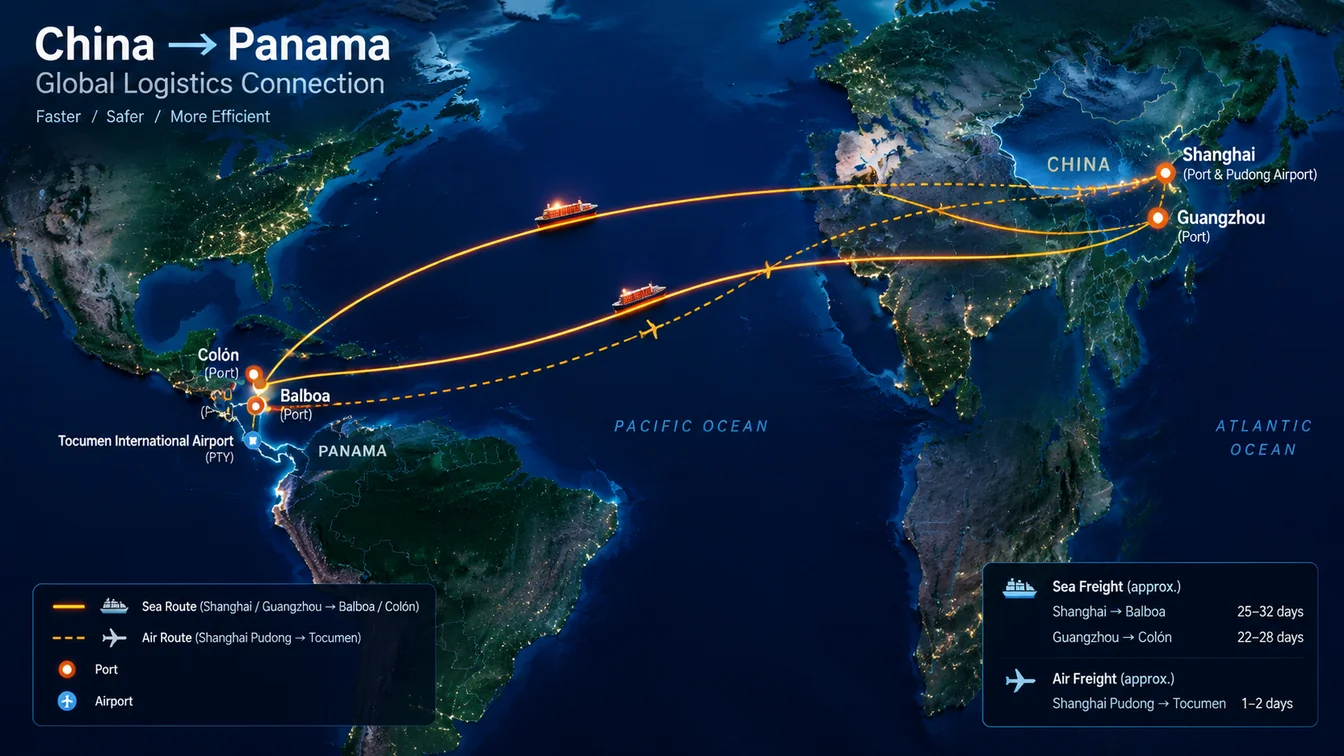
The practical shipping chain connects the China supplier and export gateway to the selected ocean, air or express movement, followed by entry into Panama, customs clearance and final delivery. Supplier location, the booked arrival gateway and the consignee’s delivery area determine which route and handoffs fit the shipment.
China to Panama Shipping Cost and Transit Time
Current TJ Logistics Team planning references provide route-specific China-to-Panama prices and transit times for October 2026. Each reference applies to its named route, method, equipment or unit.
| Shipping route | Shipping method | Price | Transit time |
|---|---|---|---|
| Shanghai, China → Balboa, Panama | FCL 20GP | $2,100–$4,500 per container | 25–35 days |
| Shanghai, China → Balboa, Panama | FCL 40GP | $2,600–$4,800 per container | 25–35 days |
| Shanghai, China → Balboa, Panama | FCL 40HQ | $3,200–$5,000 per container | 25–35 days |
| Guangzhou City, China → Colón Port, Panama | LCL | $126.30–$156.45/CBM* | 24–38 days |
| Shanghai Pudong Airport (PVG), China → Tocumen Airport (PTY), Panama | Air freight | $4.80–$5.80/kg | 6–12 days |
| China (origin not specified) → Panama (destination not specified) | Express | $9.50–$13.20/kg | 3–6 days |
Rate scope: These TJ Logistics Team planning references apply to the shipping route, method, equipment or unit shown. They are not market averages or binding quotations. The formal quotation confirms the agreed collection, delivery, customs, and charge scope for the shipment.
How to Choose a Shipping Method from China to Panama
The right method follows the shipment’s physical form, required arrival timing and delivery arrangements. Use these practical rules before selecting the route.
- Choose FCL when the cargo is ready for a dedicated container, because containerized movement suits shipments that need their own equipment; the relevant sea freight service covers the ocean-freight option.
- Choose LCL when a shared container fits the cargo, because the shipment can move without reserving a dedicated container; the consolidation and destination release arrangements must suit the cargo handoff.
- Choose air freight when delivery urgency justifies airport cargo handling, because air transport provides a different timing profile from the ocean references; the air freight service is relevant to airport-based cargo movement.
- Choose express when parcel-style pickup and delivery are suitable for a time-sensitive shipment, because courier handling may simplify small-shipment handoffs; the express service must fit the actual commodity and destination service area.
- FCL ocean freight
- Use when: The shipment is ready for a dedicated 20GP, 40GP or 40HQ container. Key route check: Match the equipment to the actual loading arrangement and the destination terminal named for the booked movement.
- LCL ocean freight
- Use when: Shared container space suits the shipment better than a dedicated container. Key route check: The Guangzhou City-to-Colón reference must match the planned consolidation, destination release point and onward delivery arrangement.
- Air freight
- Use when: The delivery requirement supports airport-based transport and the cargo is acceptable for air carriage. Key route check: The commercial reference names Shanghai Pudong Airport (PVG) and Tocumen Airport (PTY); cargo acceptance, chargeable weight and terminal handoffs remain operational considerations.
- Express
- Use when: Parcel-style handling and a time-sensitive delivery requirement suit the shipment. Key route check: The reference does not specify pickup or delivery endpoints, so actual service-area coverage and commodity acceptance must fit the shipment.
Plan a China-to-Panama Shipment from Supplier to Final Delivery
The common execution chain is supplier readiness in China → export handoff → booked international transport → arrival in Panama and customs handoff → final delivery to the consignee. Once the method is selected, each transport option requires a different set of operational handoffs.
- FCL container movement
- Agree who loads and seals the container and who coordinates arrival release, collection, delivery appointments and empty-equipment return where applicable. Inland collection and delivery may require a separately defined trucking freight service.
- LCL consolidation and release
- Align the origin consolidation cutoff with the cargo handoff, and establish the destination release or deconsolidation point specified by the booked arrangement. The next delivery leg follows the actual release arrangements rather than an assumed terminal or warehouse.
- Air cargo handoff
- For the Shanghai Pudong Airport (PVG) → Tocumen Airport (PTY) reference, cargo acceptance, airport-terminal handoffs and import release are central to execution. The named airport pair does not establish a particular flight or transfer pattern.
- Express shipment handoff
- The China-to-Panama express reference needs defined pickup and last-mile endpoints, acceptable commodity details and an assigned customs handoff before the movement can be executed against the actual shipment.
Execution Checks Before Booking
- For FCL, agree the loading and sealing responsibility and the applicable collection, appointment and empty-container return arrangements.
- For LCL, establish the consolidation cutoff and the destination release point before planning onward collection.
- For air and express, align cargo acceptance, the transport handoff and the consignee’s receiving arrangements with the selected service.
Choosing Panama Entry Gateways and Inland Delivery Routes
Panama’s Pacific-side Balboa reference and Caribbean-side Colón reference create a meaningful gateway comparison when the final delivery area changes the onward movement. The Panama Maritime Authority’s March 2026 port update reported a transition in operations at Balboa and Cristóbal; terminal-specific collection and release instructions should therefore follow the arrangements associated with the actual booking rather than historical operator assumptions.
| Final delivery area | Typical route pattern | Why the pattern fits | Details needed for the quote |
|---|---|---|---|
| Pacific-side delivery or a receiver near Balboa | Shanghai, China → Balboa, Panama is the supplied FCL reference route. | Balboa is listed as a container terminal in the official container-terminal directory. This route is a relevant FCL comparison when the destination area supports a Pacific-side arrival. | The nominated arrival terminal and the final delivery area determine the relevant release and onward collection arrangement. |
| Colón or Caribbean-side delivery | Guangzhou City, China → Colón Port, Panama is the supplied LCL reference route. | The named Colón-side reference is relevant when the consignee’s location and shared-load arrangements fit this route. It is a different commercial scope from the Balboa FCL reference. | The nominated LCL release or deconsolidation point and responsibility for onward delivery determine the final handoff. |
Prepare a Comparable Freight Request
Provide: The China supplier or pickup point; cargo-ready timing and cargo profile, including type, packages, dimensions, weight and CBM; any loading or special-handling condition; the final postal code and receiving conditions; and the requested delivery scope, timing priority and relevant importer or broker arrangement.
The formal quotation should state: The pickup and final-delivery boundary; transport method, equipment or unit, and routing pattern; the customs, destination-handling and inland-delivery handoffs; material included and excluded charges; rate validity; and the conditions that can change the amount or timing.
Prepare for Panama Customs Before Departure
Commercial imports into Panama require the customs declaration and supporting documents applicable to the import regime; when a customs-value declaration is required, the importer or legal representative remains responsible for its accuracy. Panama’s official customs dispatch guidance sets out document requirements by regime and the responsibilities associated with the customs-value declaration.
What You May Pay at Import
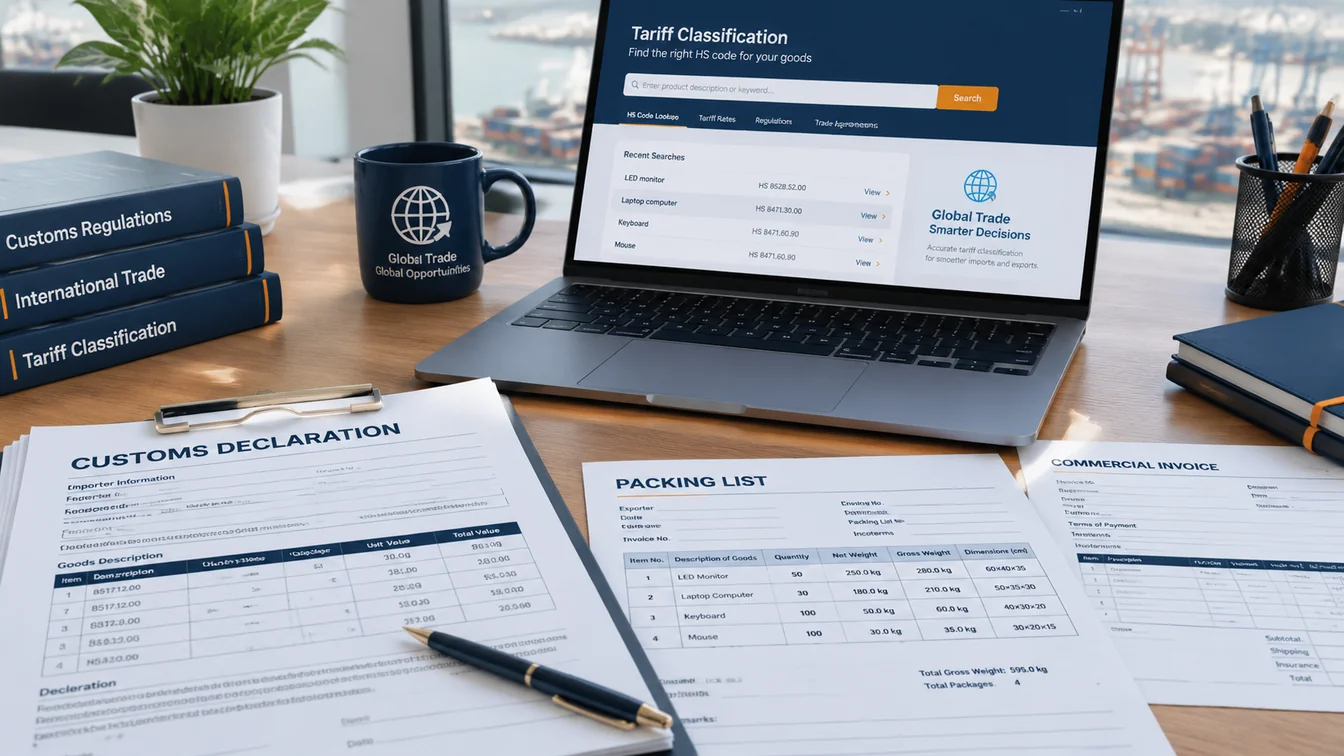
Import charges depend on the applicable tariff classification and product-specific treatment, rather than the freight method alone. Panama’s National Tariff tool provides searches by tariff code or product description; applicable duties, taxes, exemptions and regulatory controls must be evaluated for the actual goods.
Customs Readiness Checklist
- Identify the legal importer or consignee and the party authorized to submit the customs declaration, ensuring that the receiving and transport records are consistent.
- Classify each product under the applicable Panama tariff before estimating import charges; do not rely only on a broad commercial product name.
- Prepare a commercial invoice that accurately describes the goods and states the quantities, unit values and total transaction value.
- Retain supporting transaction and valuation records so the declared customs value can be substantiated when required.
- Arrange any product-specific import permit, certificate or technical authorization that applies to restricted or regulated goods before dispatch.
- Prepare origin documentation and a certificate of origin where required or where a specific origin treatment is being claimed.
- Assign responsibility for customs declarations, duty and tax payment, supporting records and communication with the customs representative.
Documents to Prepare
- A commercial invoice describing the goods, quantities and values.
- A packing list that matches the cargo packages and their contents.
- The applicable transport document: an ocean bill of lading for sea freight or an air waybill for air cargo, as appropriate to the service.
- Any required product permits, regulatory certificates or origin documents that apply to the particular goods or import treatment.
Panama’s tariff classification and product-control requirements can change the import charge or clearance path. A customs representative can support the declaration process, and TJ Logistics Team’s customs brokerage service is relevant to coordinating that handoff; the importer remains responsible for its own legal and commercial information.
Choose the Right Delivery Scope for China-to-Panama Shipping
For China-to-Panama shipments, the delivery scope defines which transport legs and handoffs are included in the agreed service. The named scope matters because port or airport arrival alone does not establish responsibility for customs clearance or final delivery.
| Service scope | What the scope means | Key responsibility or condition |
|---|---|---|
| Port-to-port | Ocean transport runs between the departure port and destination port named in the agreement. Origin collection and destination inland delivery are separate unless expressly included. | The buyer or its appointed provider typically arranges any excluded pickup, clearance and onward delivery. The written scope may allocate individual handoffs differently. |
| Airport-to-airport | Air transport runs between the named origin and destination airports. Supplier pickup, customs clearance and final delivery are not automatically part of that airport-to-airport scope. | The shipper and consignee must have a workable airport handoff and release arrangement. Additional handling or transport is included only when agreed. |
| Door-to-door | The service coordinates movement from the defined supplier pickup point to the specified final delivery address. The scope can combine international transport and agreed inland legs. | Customs clearance, duties and taxes still need a named responsible party. Door-to-door does not by itself establish a delivered-duty-paid arrangement. |
For a Panama delivery address, a defined door-to-door freight service can connect the agreed international route to final-address delivery. The importer and any appointed customs representative must still have clear responsibility for import formalities and applicable payments.
Why Use a Freight Forwarder for Shipping from China to Panama?
For China-to-Panama cargo, a freight forwarder helps turn the shipment request into a workable movement definition, match a transport route to the intended delivery area, and keep commercial and operational handoffs aligned. The practical value lies in making the route and the responsible parties clear before each stage of the shipment proceeds.
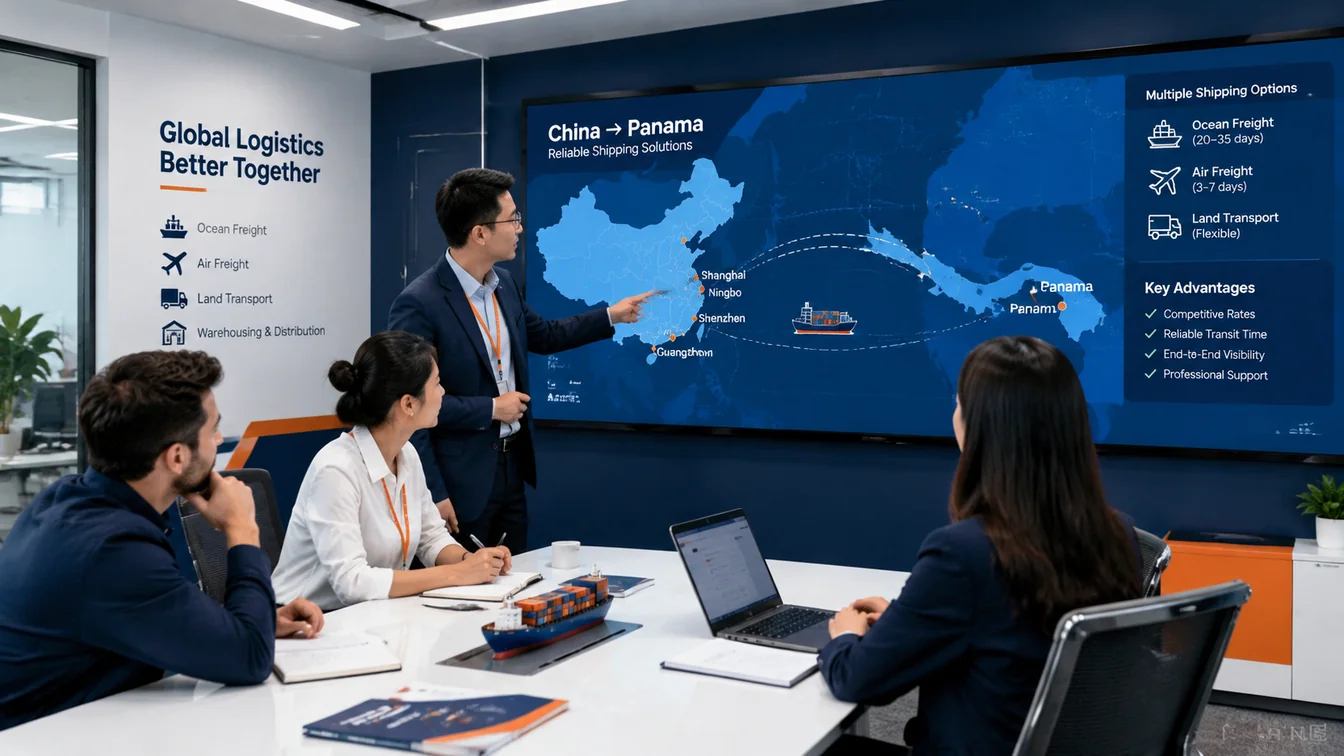
A shipment brief that cannot be compared consistently. A freight forwarder helps turn the buyer’s cargo request into a defined movement rather than a product description alone; the main decision changes when the goods require dedicated-container, shared-load, airport or parcel handling.
A route that does not fit the delivery area. A freight forwarder helps align the China origin, transport method and Panama entry area with the consignee’s destination; the Balboa FCL and Colón LCL references represent different route and load scopes, not directly comparable services.
An arrival handoff with no clear owner. A freight forwarder helps the buyer clarify which party acts at each operational handoff among the importer, customs representative, transport provider and consignee; regulatory decisions and importer obligations remain with the parties legally responsible for them.
How TJ Logistics Team Coordinates a Panama Shipment
- Define the movement
- TJ Logistics Team reviews the shipment request and flags gaps that prevent a meaningful route decision, such as an unclear transport scope or a mismatch between the selected method and the cargo’s handling needs.
- Compare workable route options
- TJ Logistics Team compares credible transport methods and gateway choices against the defined shipment and final delivery area, while keeping the named Balboa FCL, Colón LCL and PVG-to-PTY air references within their respective scopes.
- Record scope and responsibilities
- TJ Logistics Team records the agreed service boundary and the parties responsible for the next handoffs before preparing the formal quotation, including the allocation of relevant transport, customs and destination-delivery tasks.
- Coordinate booking and changes
- After the buyer confirms the quotation and agreed scope, TJ Logistics Team coordinates booking information, commercial documents and cargo handoffs, while tracking which party must act if route, timing, document or receiving conditions change. When separate protection is requested for valuable or damage-sensitive goods, the cargo insurance service is a distinct consideration from the freight movement itself.
China to Panama Shipping FAQ
How much does a 20ft container from China to Panama cost?
For the Shanghai, China → Balboa, Panama FCL 20GP reference, TJ Logistics Team’s indicative client rate for October 2026 is $2,100–$4,500 per container. This reference is intended for container-ready cargo on that named route; it is not the same commercial scope as a shared LCL shipment.
How long does sea freight from China to Panama take?
For the Shanghai, China → Balboa, Panama FCL 20GP reference, TJ Logistics Team’s October 2026 planning-transit reference is 25–35 days. Use this timing for the named FCL route when developing the shipment plan, with the agreed delivery scope determining which additional handoffs apply.
What is the most cost-effective way to ship from China to Panama?
For container-ready cargo, start with an FCL comparison; for a shipment suited to shared container space, consider LCL, while air freight and express suit different urgency and handling requirements. The FCL and LCL references have different route scopes and pricing units, so their displayed figures do not establish a universal cheapest method.
Should I use Balboa or Colón for shipping to Panama?
Use the Shanghai-to-Balboa FCL reference as the starting comparison when that named route fits the shipment and destination area; compare the Guangzhou City-to-Colón LCL reference when its shared-load scope and receiver location fit. These are different transport methods and route references, so the final delivery area and actual booked handoff matter more than ranking their displayed prices.
What documents should be prepared before shipping from China to Panama?
Prepare a commercial invoice, a matching packing list, the applicable ocean bill of lading or air waybill, and any required product permit or origin documentation. The importer or authorized representative should ensure that the declared goods description and customs value are supportable before the shipment enters the import process.
Can I ship door-to-door from China to Panama?
Yes, a door-to-door arrangement can coordinate movement from a defined China pickup point to a named delivery address in Panama when the required transport and inland legs are agreed. The importer, customs representative and service provider still need an explicit allocation of import formalities, payment responsibilities and final receiving arrangements.
When should I choose air freight instead of express from China to Panama?
Air freight is a relevant option when the planned movement uses the named Shanghai Pudong Airport (PVG) → Tocumen Airport (PTY) reference and the cargo suits airport-based handling. Express is worth comparing when parcel-style pickup and delivery better fit the shipment, provided the actual endpoints, commodity and destination service area are eligible.