


Reviewed by TJ Logistics Team — October 2026. TJ Logistics Team reviewed the route content, current planning references, and destination preparation points for October 2026. The formal quotation and booking are prepared against the defined shipment.
Shipping from China to Egypt: Route Overview
For the Shanghai, China → El Sokhna, Egypt route, the TJ Logistics Team FCL 20GP reference is $4,500 per container with a 22–28 day planning transit. This is a starting reference for container-ready cargo, while shared-load, air-freight, and express decisions depend on shipment form, urgency, and the required delivery scope.

The named sea routes reference Sokhna Port, located in the Suez–El Sokhna area. The practical shipment chain runs from supplier readiness and the agreed China export handoff through international transport, Egyptian customs clearance, and delivery to the consignee’s final address; TJ Logistics Team’s sea-freight service is relevant when planning containerized or shared ocean cargo.
China to Egypt Shipping Cost and Transit Time
Current TJ Logistics Team planning references provide route-specific China-to-Egypt prices and transit times for October 2026. Each reference applies to its named route and shipping method, with the container equipment or billing unit shown.
| Shipping route | Shipping method | Price | Transit time |
|---|---|---|---|
| Shanghai, China → El Sokhna, Egypt | FCL 20GP | $4,500 per container | 22–28 days |
| Shanghai, China → El Sokhna, Egypt | FCL 40GP | $6,480 per container | 22–28 days |
| Shanghai, China → El Sokhna, Egypt | FCL 40HQ | $6,480 per container | 22–28 days |
| Shenzhen Shekou, China → Ain Sokhna, Egypt | LCL | $76.5–$112.5/CBM | 26–34 days |
| China → Cairo International Airport (CAI), Egypt | Air freight | $5.08/kg | 3–5 days |
| China → Egypt | Express | $12.20/kg | 9–12 days |
Rate scope: These TJ Logistics Team planning references apply to the shipping route, method, equipment or unit shown. They are not market averages or binding quotations. The formal quotation confirms the agreed collection, delivery, customs, and charge scope for the shipment.
How to Choose a Shipping Method from China to Egypt
- Choose FCL when the cargo is ready for a dedicated container, because the shipment can move as a full-container load without sharing container space; equipment suitability and loading arrangements still matter.
- Choose LCL when the shipment is suitable for consolidation with other cargo, because a dedicated container is not essential; consolidation schedules, handling requirements, and measured volume affect the practical choice.
- Choose air freight when the delivery deadline justifies an air-cargo movement, because it provides a different timing profile from the named sea-freight references; chargeable weight, dimensions, and cargo acceptance determine suitability.
- Choose express when the shipment fits a carrier-managed parcel or consignment service and the requested delivery scope suits that service; package limits, commodity eligibility, and destination coverage can change the choice.
- FCL — Full Container Load
- Use when: The supplier has container-ready cargo and a dedicated 20GP, 40GP, or 40HQ arrangement fits the load. Key route check: Align the container equipment and loading plan with the agreed China export handoff and Egyptian receiving arrangements.
- LCL — Less than Container Load
- Use when: Cargo is suitable for shared-container consolidation rather than a dedicated container. Key route check: Establish the consolidation handoff, shipment cutoff, and applicable destination release arrangements for the selected service.
- Air Freight
- Use when: The delivery deadline supports an air-cargo solution and the goods are eligible for the intended service. Key route check: Match the cargo’s dimensions, actual weight, chargeable-weight basis, handling requirements, and destination collection plan; TJ Logistics Team’s air-freight service provides the relevant service category.
- Express
- Use when: The shipment’s package form and urgency suit a carrier-managed express service. Key route check: Match package dimensions, actual and chargeable weight, commodity eligibility, and final-address service conditions to the selected service; see TJ Logistics Team’s express service.
Plan a China-to-Egypt Shipment from Supplier to Final Delivery
For a China-to-Egypt shipment, the execution chain is supplier-ready cargo → agreed China export handoff → ocean, air, or express movement → Egyptian arrival and customs handoff → final delivery to the consignee. The selected method determines which operational handoffs need to be allocated before the cargo is released for movement.

- FCL — Container Loading and Release
- Agree who loads and seals the container, which export handoff is used, and who is responsible for destination release, collection, and any applicable empty-equipment return. Inland delivery planning can include TJ Logistics Team’s trucking-freight service where that service fits the agreed movement.
- LCL — Consolidation and Cargo Release
- Coordinate delivery into the origin consolidation process and record the applicable cargo cutoff. Before the shipment moves, allocate responsibility for the destination release point and onward delivery without assuming that a particular container freight station or deconsolidation arrangement is included.
- Air Freight — Acceptance and Arrival Handoffs
- The current air-freight reference names Cairo International Airport’s cargo facilities as the destination context. The operational plan should distinguish origin cargo acceptance, any transfer handling, the arrival and customs handoff, and the agreed collection or final-delivery arrangement rather than assuming a direct flight or a particular terminal service.
- Express — Network Handoff and Last Mile
- Allocate the carrier pickup or network-entry handoff and the party responsible for supplying accurate shipment data. The final-mile arrangement must fit the consignee’s address, receiving access, package restrictions, and the actual service selected.
Execution Checks Before Booking
- For FCL, match container equipment and loading capability to the supplier’s actual cargo-handling arrangements, and allocate empty-equipment return where applicable.
- For LCL, agree the consolidation cutoff and destination cargo-release arrangement before planning final collection.
- For air freight, establish cargo acceptance and the agreed collection or delivery handoff for the selected arrival arrangement.
- For express, check the contracted package limits and ensure the consignee can receive the shipment at the specified address.
Prepare for Egyptian Customs Before Departure
Egypt-bound commercial shipments require advance cargo information, with the Egyptian importer or its authorized customs broker responsible for the local filing and the foreign supplier responsible for accurate exporter and cargo details. The official Nafeza Advance Cargo Information system provides the relevant electronic submission and shipment-identification process.
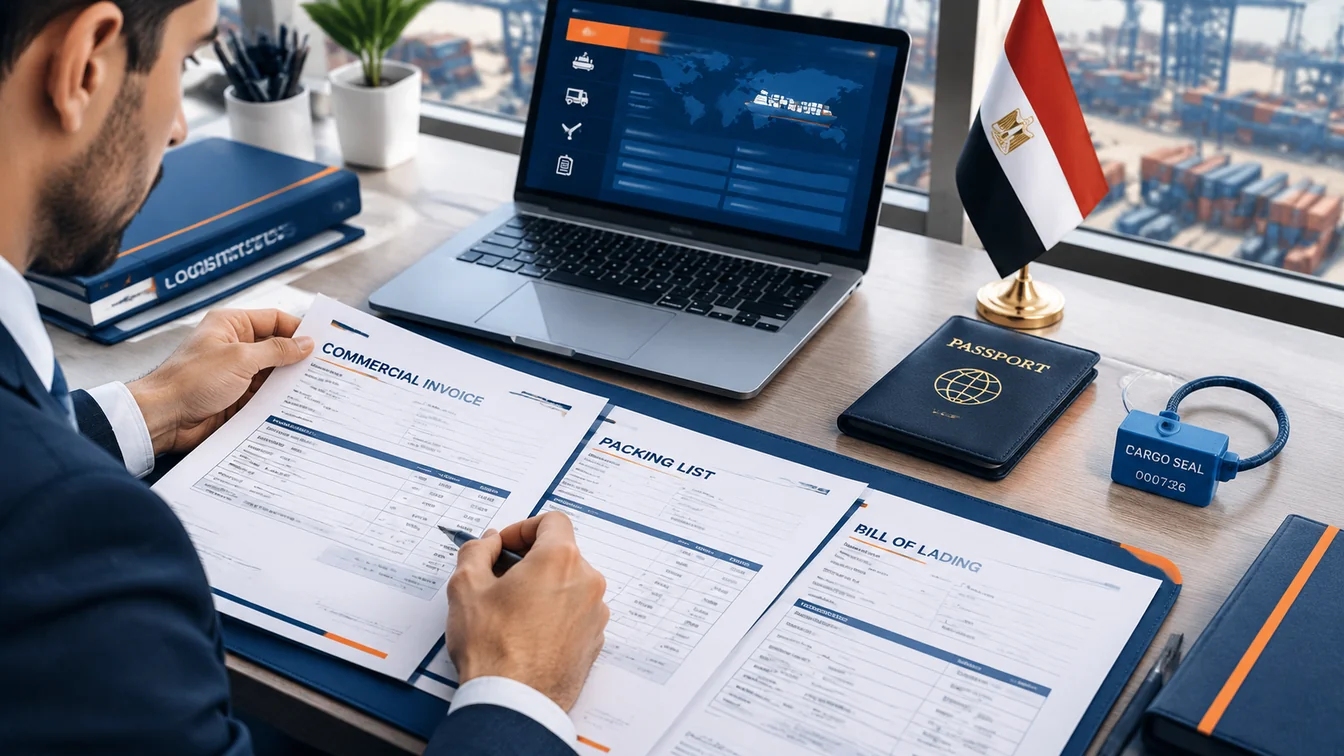
For maritime imports, the advance-data process requires the relevant cargo information and documents at least 48 hours before shipment, making the applicable ACID preparation a pre-departure task. Air cargo follows a separate aviation process: the official Nafeza Aviation ACI notice states that mandatory operation began on 1 January 2026.
What You May Pay at Import
Egyptian import charges can include customs duty, VAT on taxable imported goods, and other taxes or fees applicable to the specific commodity. The Egyptian VAT Executive Regulations address VAT on imported taxable goods, while the applicable import charge depends on the product’s tariff classification, customs value, and relevant tax treatment.
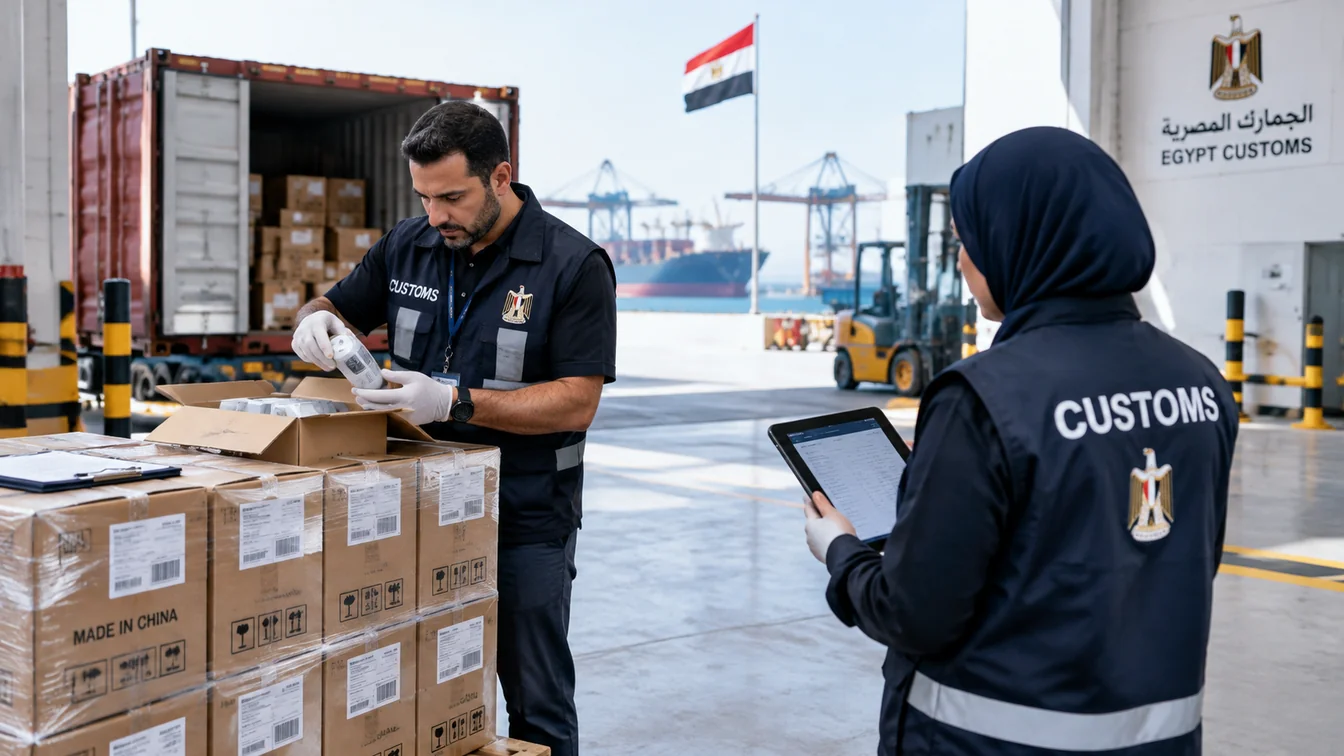
Customs Readiness Checklist
- Assign the Egyptian importer responsible for the local import process and identify the customs broker or other authorized representative, if one is appointed.
- Determine the appropriate HS classification and prepare an accurate description of the goods. The declared product, origin, quantity, and customs value should agree with the commercial records.
- Prepare the foreign exporter’s required identification and registration details together with the Egyptian importer’s relevant local information.
- Arrange the applicable ACID and advance cargo information before departure. Maritime shipments require the advance-data window stated in the official maritime process; air shipments must follow the applicable aviation process.
- Align the commercial invoice, packing list, and bill of lading or air waybill with the shipment record and required identification references. Add certificates of origin or other certificates where applicable.
- Determine whether the particular product requires a prior import approval, permit, inspection, or additional regulatory documentation before it is dispatched.
- Allocate responsibility for customs declarations, supporting valuation records, duty and tax funding, document corrections, and responses to requests from the relevant authorities.
Documents to Prepare
- A commercial invoice describing the goods, quantities, values, currency, and country of origin.
- A packing list showing the packages and their contents.
- A bill of lading for sea freight or an air waybill for air freight, with the required shipment and identification information.
- The applicable ACID and advance cargo information records, together with the required importer and foreign-exporter identification details.
- A certificate of origin when applicable, plus any product-specific permits, conformity documents, health certificates, inspection records, or other approvals required for the actual goods.
An ACID or shipment-document mismatch, or an incorrect tariff classification, can delay Egyptian import processing. Restricted products may also require approvals beyond the normal commercial shipping documents.
Where broker or import-side coordination forms part of the requested scope, TJ Logistics Team’s customs brokerage service and import service pages describe the relevant service categories. These service references do not replace the Egyptian importer’s legal responsibilities or any required local authorization.
Choose the Right Delivery Scope for China-to-Egypt Shipping
For China-to-Egypt cargo, the right delivery scope is the one that clearly assigns collection, international movement, customs responsibilities, inland delivery, and final receiving arrangements. A transport-only service and a full supplier-to-consignee movement should not be treated as equivalent scopes.
| Service scope | What the scope means | Key responsibility or condition |
|---|---|---|
| Port-to-Port | Port-to-port covers the agreed ocean transport between the specified origin and destination ports. Supplier collection, export-side arrangements, import clearance, and onward delivery are separate unless expressly included. | The parties handling pre-carriage, customs, and inland movement must be allocated in the service agreement. The actual port handoffs must match the agreed routing. |
| Airport-to-Airport | Airport-to-airport covers the agreed air-cargo movement between specified airports. It does not by itself include supplier pickup, Egyptian customs clearance, or final-address delivery. | The importer or its appointed broker remains responsible for the required import process unless the agreed scope allocates specific support. Cargo collection after release must also have an assigned party. |
| Door-to-Door | Door-to-door coordinates collection from the supplier and movement to the consignee’s named address within the agreed service scope. Customs clearance, duties, taxes, and other responsibilities must be expressly allocated rather than assumed. | The importer remains responsible for applicable local import obligations unless the agreement lawfully assigns specific duties elsewhere. Receiving access, delivery appointments, and unloading arrangements depend on the destination address and agreed service. |
| Delivered Duty Paid (DDP) | DDP allocates delivery responsibility, including import clearance and import duties and taxes, to the seller under the agreed DDP term. The allocation applies within the agreed contractual and legal framework. | The parties must establish who can lawfully perform the required Egyptian import functions. DDP does not automatically include every storage, examination, unloading, or receiving charge. |
For China-to-Egypt shipments requiring supplier collection and final-address delivery, TJ Logistics Team’s door-to-door service is a relevant scope to review. The agreed movement should specify who handles the Egyptian customs handoff and whether duties, taxes, and final receiving tasks fall within the contracted arrangement.
Why Use a Freight Forwarder for Shipping from China to Egypt?
A freight forwarder helps turn shipment facts into a workable movement definition, match credible transport choices to the supplier and destination, and keep commercial and operational handoffs aligned. For China-to-Egypt cargo, the practical differences between FCL, LCL, air freight, and express make those decisions easier to manage when each party’s responsibility is stated clearly.

- Define the actual movement. A buyer needs a consistent description of the cargo and requested service before comparing offers; the main distinction is whether the goods are container-ready, suited to shared consolidation, or shaped by a tighter deadline.
- Match the route to the supplier and consignee. A China origin label alone does not establish a particular terminal booking or connection. The selected gateway and method must fit the supplier’s actual handoff and the destination delivery requirement.
- Keep responsibilities visible. Transport, customs, and final delivery involve different parties. Naming the importer or broker, document provider, and delivery-responsible party makes the next operational decision clearer when requirements change.
How TJ Logistics Team Coordinates a China-to-Egypt Shipment
- 1. Shipment Request Review
- TJ Logistics Team reviews the requested movement and identifies information gaps that could change the choice between dedicated-container, shared-load, air-freight, or express handling. The review distinguishes known shipment facts from details still needed for a reliable next decision.
- 2. Route and Gateway Mapping
- TJ Logistics Team compares the credible transport choices against the supplier’s actual origin, the named destination-entry reference, and the requested final delivery. Where a route detail or connection is not established, it remains a decision point rather than being presented as a confirmed service.
- 3. Service Boundary and Responsibility Record
- TJ Logistics Team records the agreed transport scope and the parties responsible for export-side handoff, the Egyptian import process, and final delivery before preparing the formal quotation. The record distinguishes transport coordination from the importer’s regulatory and payment responsibilities.
- 4. Booking and Change Coordination
- After the buyer accepts the agreed quotation and scope, TJ Logistics Team coordinates booking information, commercial documents, and the planned cargo handoff. If a document, timing, route, or receiving condition changes, the team flags the affected decision and the party responsible for the next action.
China to Egypt Shipping FAQ
How much does a 20ft container from China to Egypt cost?
For Shanghai, China → El Sokhna, Egypt, the TJ Logistics Team FCL 20GP planning reference is $4,500 per container in October 2026. This is the dedicated-container reference to use when the cargo and loading arrangement suit a 20GP container; the selected delivery scope must still match the shipment’s requirements.
How long does sea freight from China to Egypt take?
For the Shanghai, China → El Sokhna, Egypt FCL 20GP route, the TJ Logistics Team planning-transit reference is 22–28 days in October 2026. Use the reference for initial movement planning and keep customs readiness and inland receipt as separate milestones rather than treating the transit figure as a guaranteed delivery date.
What is the most cost-effective way to ship from China to Egypt?
For China-to-Egypt cargo, start with FCL for container-ready loads and LCL for shipments suited to shared consolidation; air freight or express becomes relevant when deadline and shipment-handling requirements justify those methods. No universal lowest-cost method follows from container, cubic-metre, and kilogram references because their shipment scopes and units differ.
Which China origin gateway should I use for shipping to Egypt?
For sea freight to Egypt, the current TJ Logistics Team references pair Shanghai with the FCL route to El Sokhna and Shenzhen Shekou with the LCL route to Ain Sokhna. The appropriate starting point is the export handoff that fits the supplier’s real location and loading arrangement, not a city label assumed to be a confirmed terminal booking.
What documents should be prepared before shipping from China to Egypt?
China-to-Egypt commercial cargo normally needs a commercial invoice, packing list, the appropriate bill of lading or air waybill, and the applicable advance cargo information and ACID records. The Egyptian importer and foreign supplier should align the goods description, classification, identifying details, and supporting certificates before the cargo is dispatched.
Can I ship door-to-door from China to Egypt?
A China-to-Egypt shipment can be structured door-to-door when the agreed scope assigns supplier collection, export movement, customs handoff, and final-address delivery. The importer remains responsible for applicable Egyptian import requirements unless specific responsibilities are lawfully and expressly allocated elsewhere, and delivery access must fit the consignee’s address.
Does Egypt require advance cargo information for air freight?
Yes. Aviation ACI became mandatory for Egypt-bound air cargo on 1 January 2026, so the Egyptian importer or its appointed broker and the foreign supplier should align the shipment data and ACID process before departure. Air shipments must follow the applicable aviation process rather than assuming that the maritime submission procedure is identical.