Which Flatbed Rate Fits Your Load?
Flatbed truck shipping rates usually arrive as a price per billable mile or a flat price for the lane, and neither figure shows what the carrier will do for that money. One quote may cover only the trailer and the miles. Another may add fuel, tarps, chains, a second stop, or a trailer that actually fits the cargo. Before you approve either, decide which quote can move this cargo to the delivery point and what the carrier still needs from you.
This guide assumes a U.S. domestic truck move; port drayage and cross-border legs need their own scope. A usable quote starts with firm cargo dimensions and weight, a confirmed pickup window, the right equipment, and a delivery site that can unload. When one of those facts is missing, the carrier either prices around the gap or bills it later as an accessorial.
Average Flatbed Rate Per Mile: What the Benchmark Covers
According to the DAT flatbed market report published November 2, 2026, national flatbed spot linehaul rates paid to carriers averaged $2.61 per mile for the week ending October 31, 2026, excluding fuel and surcharges. Treat that figure as a market reference, not a quote. It leaves out fuel, tarping, permits, extra stops, and any provider charge beyond the carrier’s rate. It also says little about your lane: the same report shows origin-region averages that differ by more than $1 per mile.

Compare like with like. A fuel-inclusive quote cannot sit beside a linehaul-only benchmark, and a spot quote cannot sit beside a contract rate. Ask each provider whether its figure is linehaul only or all-in before you measure it against any market number.
Source: DAT Freight & Analytics, week ending October 31, 2026. Market rates change weekly, so check the current report before you use the figure in a budget.
Align the Quote Scope Before Comparing Prices
Write the shipment scope in the order a forwarding desk checks it, because each field limits the next. A flatbed truckload rate quote that skips a field rests on an assumption, and quotes built on different assumptions cannot be compared fairly.
| Quote field | What to confirm | Who supplies it | Why it changes the price |
|---|---|---|---|
| Cargo-ready date | Date the cargo can be loaded | Shipper | Sets truck availability and wait risk |
| Pickup and origin handling | Address, loading method, yard access | Shipper | Affects loading time and driver assistance |
| Route and rate basis | Lane, billable miles or flat price, spot or contract | Forwarder or carrier | Sets the line-haul basis |
| Cargo and weight basis | Dimensions, weight, piece count, stacking | Shipper | Decides trailer type, permits, securement |
| Destination handoff | Unloading equipment and site access | Consignee | Affects unloading time and delivery method |
| Delivery point and appointment | Address, receiving hours, appointment rules | Consignee | Drives waiting time and redelivery risk |
| Validity and included work | Expiry, repricing triggers, fuel, tarps, stops | Forwarder or carrier | Defines what the price covers |
Treat every blank cell as a quote variable that needs an owner, and hold the comparison until the fields match across providers.
What Drives Flatbed Shipping Rates on a Load
Flatbed quotes rest on a rate per billable mile or a flat lane price, and each basis reacts differently when the route, stops, or pickup point changes. Ask the carrier which basis it used and how it counts miles, because map distance does not automatically equal billable distance.
In variable terms, line haul equals the quoted rate multiplied by billable miles, or it equals the flat lane price. Total transportation cost then equals line haul plus fuel surcharge, accessorial lines, and any permit or special-equipment lines. The quote should show which lines sit inside the base price.
Short hauls often carry a higher figure per mile than long hauls, because loading time, waiting, and the truck’s return trip spread over fewer miles, so compare lane totals when distances differ. Also ask whether the provider quotes the leg as a standalone trucking freight service or as part of a longer shipment, since that changes which handoffs the price covers.
Market timing moves the price of the same lane. A spot quote reflects current truck availability, while a contract rate reflects terms agreed for a set period, so confirm which one you hold. A pickup needed within a day or two has fewer truck options than one booked ahead, and lane direction and seasonal construction or industrial activity can shift open-deck capacity.
Equipment follows the cargo. A standard flatbed suits pieces within the legal dimensions and weight limits for the route. A step deck has a lower main deck that gives taller cargo more vertical clearance, and a removable gooseneck trailer usually sits lower still for heavy machinery that drives on. The two are not interchangeable, so ask the carrier to confirm the trailer type, usable deck dimensions, and any permit or escort requirement before dispatch.
Securement and weather protection depend on the cargo’s weight, shape, and tie-down points. Straps, chains, edge protection, and dunnage may sit inside the price, appear as separate lines, or fall to the shipper. A standard tarp does not guarantee watertight cover, so state the protection level a weather-sensitive load needs and ask whether it calls for a rolling-tarp trailer or enclosed equipment.
Loading method matters too. Flatbeds usually load from the side or from above, so a forklift or crane must be available at both ends. Oversize pieces add permit, escort, and routing questions. When one also passes through a port, ask whether the terminal handles it as break bulk cargo; that handling falls outside the truck quote and needs its own scope.
Field note: A quote that arrives without a single question about the cargo or the sites probably rests on default assumptions. Ask the provider to list them before you compare it with a quote that asked.
What a Flatbed Quote Includes and Who Confirms Each Line
A flatbed quote contains three kinds of lines: work the price includes, work it excludes, and work nobody has addressed. The third kind causes most friction at pickup and delivery, and flatbed shipping accessorial costs often fall into it. The list below maps each line to its handoff and to the party who confirms it.
Line haul and fuel. The carrier states the billable miles or lane covered, whether fuel is included or a separate surcharge, and whether that surcharge can change during the quote’s validity.
Loading and unloading. The shipper and consignee describe the equipment at their sites, and the carrier states whether the price assumes driver assistance.
Securement and tarping. What does this line include, and who supplies the straps, chains, and tarps? The carrier answers, and the forwarder records the answer in the quote.
Permits and escorts. The party arranging the truck leg confirms whether the load needs them, who applies, and whether they appear as separate lines.
Stops and delivery. The quote lists every stop and the appointment it assumes, and the consignee confirms receiving hours.
Waiting, TONU, storage, and redelivery. The carrier states free time, when waiting starts, and how it bills. A truck-ordered-not-used (TONU) charge can apply when a booked truck leaves without a load, so ask what triggers it and who approves each added charge.
Repricing triggers. The forwarder lists which changes require a new quote, such as cargo size, weight, pickup date, address, or trailer type.
When the flatbed leg belongs to a longer move, check where the quote starts and stops. A price built as door-to-door service puts pickup through final delivery under one set of lines, while a terminal-based scope leaves the first and last handoffs for someone else to arrange.
For imported cargo, the import service scope should show who books the terminal pickup appointment and who confirms release. Until someone owns that step, treat the flatbed price as provisional.
Note: A freight quote is tied to the cargo, handoffs, route, service level, timing, and destination work stated in it. Carrier and handling conditions can change. Align the scope first, then request confirmation for the specific shipment.
Flatbed Options and Alternatives for Different Loads
No option is cheaper in every case. Quote each choice on the same cargo, pickup, and delivery scope, and use the weak-fit conditions to rule options out early.
Standard flatbed, full truckload. This fits cargo within legal dimensions and weight limits that justifies a dedicated truck, and it is a weak fit for oversize pieces and loads too small to use the trailer well. Ask whether the quote assumes your cargo rides alone.
Step deck or removable gooseneck. These fit taller or heavier machines that a standard flatbed cannot legally carry, but they add nothing for cargo that fits a standard trailer and can be harder to source on short notice. Ask for the trailer type, deck height, and permit plan.
Partial load. A smaller shipment may share a trailer, which divides the truck’s cost, but time-critical cargo is a poor fit because other freight can add stops. Ask which stops are planned and how a firm delivery date is protected.
Rail for the long leg. Heavy cargo on a long inland corridor may suit rail freight when both ends connect to rail, while sites without rail access or with tight pickup windows are a weak fit. Ask who covers the first and last truck legs.
Ocean cargo with an inland flatbed leg. Cargo that crosses an ocean may finish on a flatbed, so sea freight and the truck leg need one aligned scope. Ask where the ocean quote ends, where the flatbed quote begins, and who books the pickup appointment between them.
Where Flatbed Quotes Go Wrong and What Can Grow
Most quote problems trace to a fact that changed or never reached the carrier. An incomplete pickup address can send a truck to a site that cannot load it, a moved cargo-ready date can leave a booked truck idle, and a weight or dimension mismatch can force a different trailer. Paperwork that disagrees with the quote on weight, piece count, or consignee can trigger a refusal or a reprice at pickup. Each gap can become rebooking, waiting time, storage, or a revised price, depending on the carrier’s terms.
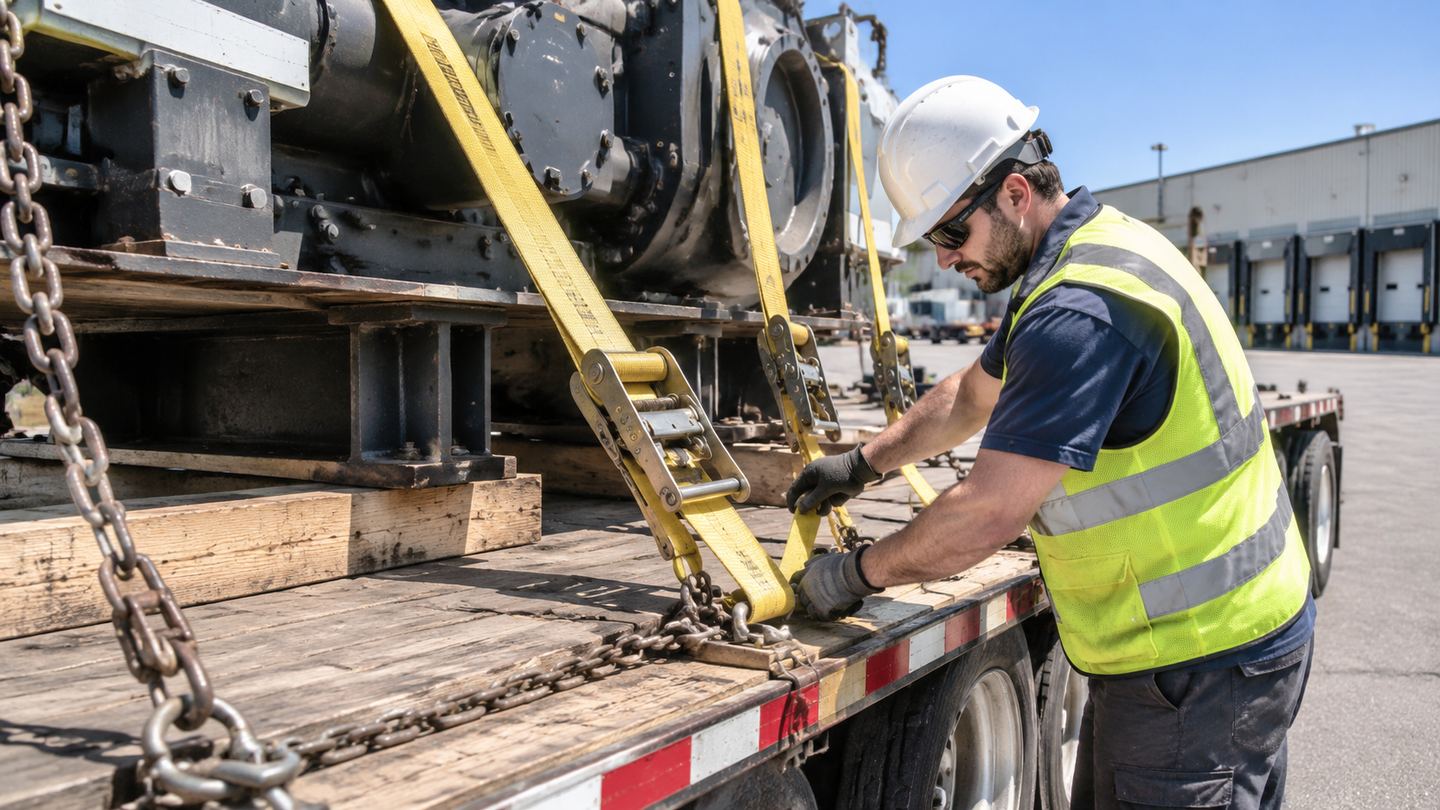
Common mistake: Comparing two quotes by price alone when one assumes a standard trailer and the other a step deck, or when one includes fuel and the other does not. The cheaper-looking quote may become the more expensive one once those lines match. Ask both providers to state trailer type, fuel treatment, and securement lines first.
For imported cargo, the truck’s pickup depends on release from the terminal. If a hold delays release, the pickup window slips while the flatbed stays booked. Ask who coordinates customs brokerage status with the carrier and what happens to the truck booking if release comes late.
Transit damage raises a separate question: carrier liability can sit well below the cargo’s replacement value, depending on the contract. Check the declared value and decide whether separate cargo insurance fits the shipment.
Risk alert: If the truck arrives and the pickup site cannot load the cargo, or the receiver cannot unload it, the truck may wait or leave. Waiting time, a TONU charge, or a second dispatch can follow, depending on the carrier’s terms. Confirm the loading and unloading method in writing before dispatch.
What to Send With a Flatbed Freight Quote Request
Flatbed freight quote requirements are easier to meet when one person collects the inputs in sequence, because each answer limits the next question. The six groups below show who supplies each input and what the forwarding desk verifies next.
Cargo and packing
The shipper provides piece count, dimensions, weight per piece, stacking, and photos or drawings. These decide trailer type and securement, and the desk flags any piece that may need a permit.
Cargo-ready date and pickup
The shipper supplies the cargo-ready date, pickup address, loading method, and site restrictions. The desk asks what should be re-quoted if the date slips.
Route and service
The forwarder confirms the lane, rate basis, spot or contract pricing, and whether the load rides alone. The desk verifies that every provider quotes the same lane and service.
Delivery address and appointment
The consignee provides the address, receiving hours, unloading equipment, and appointment rules. The desk confirms them before dispatch, since limited access creates waiting time.
Commercial scope
The buyer and seller state who arranges and pays for loading, the truck leg, and unloading. That split decides which lines appear in the quote and who approves added charges.
Special handling and restrictions
The shipper flags fragile surfaces, weather sensitivity, tie-down limits, high value, or carrier restrictions, and the desk checks the equipment and cargo-protection implications with the carrier.
Once the six inputs are ready, submit a quote inquiry with all of them in one message, so the desk can request prices against a single cargo specification and flag any open field.
Recommendation: What to Request and Compare First
Request an itemized quote built on one confirmed cargo specification. Compare the line-haul basis and billable miles first, then trailer type, securement, fuel treatment, permits, and extra stops, and last the waiting, cancellation, and validity terms.
The practical default is a standard flatbed with straps and tarps listed explicitly, for cargo that fits legal dimensions and moves between one pickup and one delivery. Cargo size or weight changes that default: once a piece exceeds what a standard trailer can carry, request step deck or removable gooseneck pricing and ask about permits first. A receiver that cannot unload changes it too, because the delivery plan needs revision before anyone compares totals.
Illustrative example (not a customer case): Two providers quote the same machine on the same lane. Provider A states a per-mile line haul with fuel and tarping on separate lines. Provider B states a flat lane price that includes fuel but is silent on tarping and the extra stop. Neither quote can be ranked yet. The buyer asks both providers to restate their prices with the same equipment, fuel treatment, tarping, stops, and waiting terms, and only then compares totals.
Key Takeaways
Scope comes first. Align cargo, pickup, route, delivery, and included work before you compare any price.
A benchmark is not a quote. A market average covers one rate basis, so match fuel treatment and spot or contract status before you use it.
Equipment follows the cargo. Dimensions and weight decide the trailer, the securement, and whether permits apply.
Accessorials need triggers and owners. Each waiting, TONU, storage, or redelivery line should name its trigger and the party who approves it.
Changes call for a revised quote. A moved date, a new address, or an updated cargo specification should produce a new price, not a surprise charge.
FAQ
Why do two flatbed trucking quotes differ for the same load?
The quotes often differ in scope more than in price. One may include fuel, tarps, chains, or a second stop, while the other prices only the truck and the miles. Ask each provider to state trailer type, fuel treatment, securement, stops, and waiting terms in writing, then compare both on the same cargo and addresses.
Can average flatbed rates predict my shipping cost?
Only as a rough market reference. An average blends many lanes, trailer types, and rate bases, and it may exclude fuel, so it cannot show what your pickup, equipment, and delivery access require. Ask the carrier for a lane total and a breakdown that separates line haul, fuel, and accessorial lines.
Do flatbed trucking rates include fuel?
Not always. Some quotes fold fuel into the total, others show a separate surcharge, and some market benchmarks exclude it. Ask whether the figure is line haul only or all-in, how any surcharge is calculated, and whether it can change before delivery. Comparing a base rate with an all-in rate misleads.
Which accessorial charges can appear on a flatbed shipment?
Common categories include waiting time, layover, a truck ordered but not used, extra stops, tarping, permits, escorts, storage, and redelivery. Not every shipment triggers each one. Ask which categories apply to your cargo and sites, what event triggers each, and who approves it before the charge is incurred.
Does a flatbed quote include tarps and straps?
Not automatically. Some quotes include basic straps, chains, and tarps, some list them separately, and some leave them to the shipper. Ask what the line covers, who supplies the materials, and whether the cargo needs weather protection beyond a standard tarp. A written answer avoids a dispute at pickup.
When should I ask for a step deck or removable gooseneck trailer?
Ask when the cargo’s height or weight exceeds what a standard flatbed can legally carry on your route, or when a machine must drive on to load. The carrier can confirm the fit from your dimensions and weight. Also ask about permits or escorts, which can change the quote and the schedule.
How long does a flatbed quote stay valid?
The quote should state its own validity conditions, and they vary by provider. Ask whether the price depends on the cargo-ready date, the cargo specification, the addresses, or a booking confirmation, and which changes would trigger a revised quote. That way a moved date or a larger piece does not surprise you later.
Disclaimer: This page is general quote-planning guidance, not a binding quotation or delivery commitment. Actual charges and handoffs depend on the cargo, route, timing, provider confirmation, and destination conditions. Where duties, customs, tax, insurance, or contract questions apply, confirm them with the relevant party before booking.