

To answer “how big is a shipping container” for a real shipment, start with its type. A standard 20-foot container measures about 20 feet long, 8 feet wide, and 8 feet 6 inches high externally. A standard 40-foot container is roughly twice as long, while a 40-foot high-cube container adds about one foot of external height. These are nominal outside dimensions, not the space available for cargo.
The practical capacity depends on internal dimensions, door openings, cargo weight, packaging, and the way the load fits. A shipment can fit within a container’s published volume yet fail to pass through the doors or exceed an applicable weight limit. Before booking, compare the packed cargo measurements with the actual equipment specifications and confirm any road, rail, terminal, and delivery-site restrictions that apply to the route.
How Big Is a Shipping Container for Cargo Planning?
Most general-purpose dry containers used in international freight planning fall into three familiar categories: 20-foot standard, 40-foot standard, and 40-foot high cube. Their nominal external footprints are generally 8 feet wide, but their lengths and heights differ. Internal measurements are smaller because the walls, floor, roof, and doors occupy space.
| Container type | External dimensions (L × W × H) | Internal dimensions (L × W × H) | Approximate internal volume |
|---|---|---|---|
| 20-foot standard | 20 ft × 8 ft × 8 ft 6 in (6.06 × 2.44 × 2.59 m) | 19 ft 4 in × 7 ft 8.5 in × 7 ft 10 in (5.90 × 2.35 × 2.39 m) | 33 m³ |
| 40-foot standard | 40 ft × 8 ft × 8 ft 6 in (12.19 × 2.44 × 2.59 m) | 39 ft 6 in × 7 ft 8.5 in × 7 ft 10 in (12.03 × 2.35 × 2.39 m) | 68 m³ |
| 40-foot high cube | 40 ft × 8 ft × 9 ft 6 in (12.19 × 2.44 × 2.90 m) | 39 ft 6 in × 7 ft 8.5 in × 8 ft 10 in (12.03 × 2.35 × 2.69 m) | 76 m³ |
These figures are planning estimates, not guaranteed specifications for every unit. Manufacturer, container design, age, repairs, and internal fittings can change the available space. Ask the freight forwarder or equipment provider for the dimensions of the intended container when the cargo has tight clearances.
The internal volume figures describe the approximate geometric space inside an empty container. They do not represent the volume of cargo that can necessarily be loaded. Cartons may leave gaps, pallets take up space, and securing materials may reduce the area available for freight.
Door openings create another important limit. The opening is usually narrower and lower than the internal space. A tall machine, crated component, or rigid item may fit inside the container’s dimensions but still be impossible to load through its doors. Check the opening width and height separately from the internal measurements.
How to Choose the Right Container Size
The right container is the unit that accommodates the packed cargo, complies with the applicable weight limits, and works across the planned transport route. Total cubic volume is only one part of that decision. The shape, density, stackability, and loading method can matter just as much.
Choose a 20-foot container when the load fits its footprint and weight limits
A 20-foot container can suit compact shipments, including some dense or heavy cargo that does not require a longer loading space. However, cargo weight can reach an applicable limit before the container is full. The shipper and booking provider should check the unit’s payload and maximum gross weight, along with any route-specific road, rail, or terminal limits.
Consider a 40-foot container for longer or higher-volume cargo
A standard 40-foot container provides substantially more floor length than a 20-foot unit. It may suit shipments with many cartons, long items, or multiple pallets, provided their dimensions and loading arrangement work. A load that occupies twice the floor length does not automatically use the available volume efficiently; pallet layout, access space, and securing requirements affect the result.
Use a high cube when additional height solves a real constraint
A 40-foot high-cube container offers approximately one extra foot of external height compared with a standard 40-foot container. The extra internal height can help with tall cartons, bulky goods, or cargo that stacks more effectively vertically. It does not increase the floor area, and it does not remove restrictions imposed by door openings, loading equipment, or transport infrastructure.
Compare the options using the same shipment data. For ocean freight, discuss the packed volume, dimensions, total weight, handling method, and shipment frequency during sea-freight planning. A dedicated container may be worth evaluating for a suitable full-container load, while a shared-container arrangement may be more practical for a smaller shipment if it is available on the route. The decision should reflect the complete handling and transport requirements, not volume alone.
Measurements to Confirm Before Booking
The shipper should provide measurements for the cargo in its final transport-ready condition. Measuring the product before adding cartons, crates, protective materials, or pallets can understate the space required. A freight forwarder can then use those figures to evaluate equipment suitability and identify information that still needs confirmation.
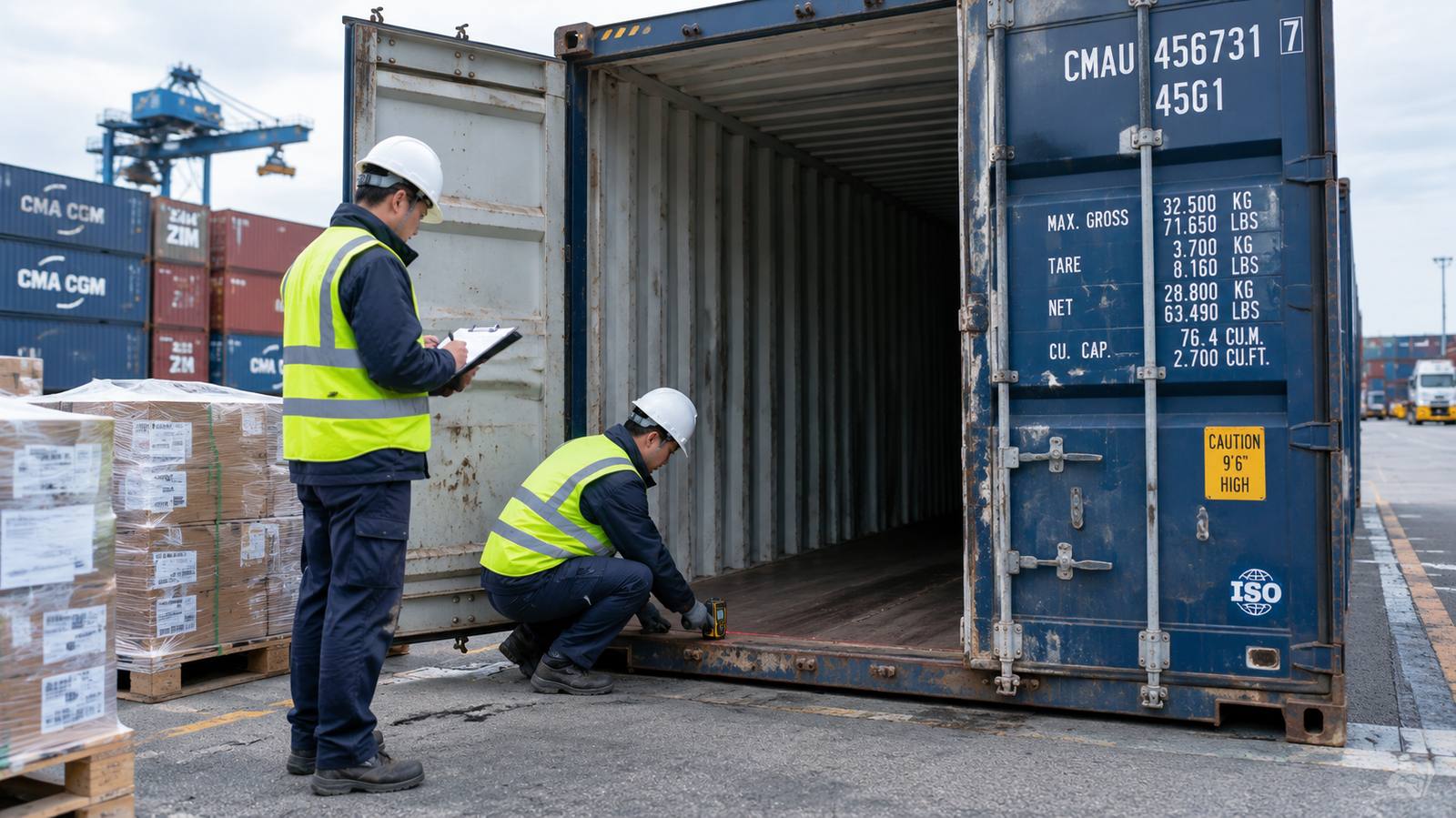
Prepare the following shipment details before selecting the equipment:
- Finished dimensions: Record the length, width, and height of each packed unit, including any parts that protrude beyond the main package.
- Quantity and arrangement: State the number of cartons, crates, pallets, or other handling units. Include stacking limits and whether the units can be rotated or loaded in more than one orientation.
- Total and unit weights: Provide accurate cargo weights and identify unusually heavy pieces that may affect weight distribution or loading methods.
- Loading and unloading method: Identify whether workers, a forklift, a crane, or other equipment will handle the cargo. Confirm the available opening and access clearances for the chosen method.
- Securing requirements: Allow for dunnage, blocking, bracing, and other materials needed to stabilize the shipment. Do not assume that the full internal volume can be filled with cargo.
- Delivery constraints: Confirm the receiving site’s access, unloading area, equipment, and operating hours with the party responsible for final delivery.
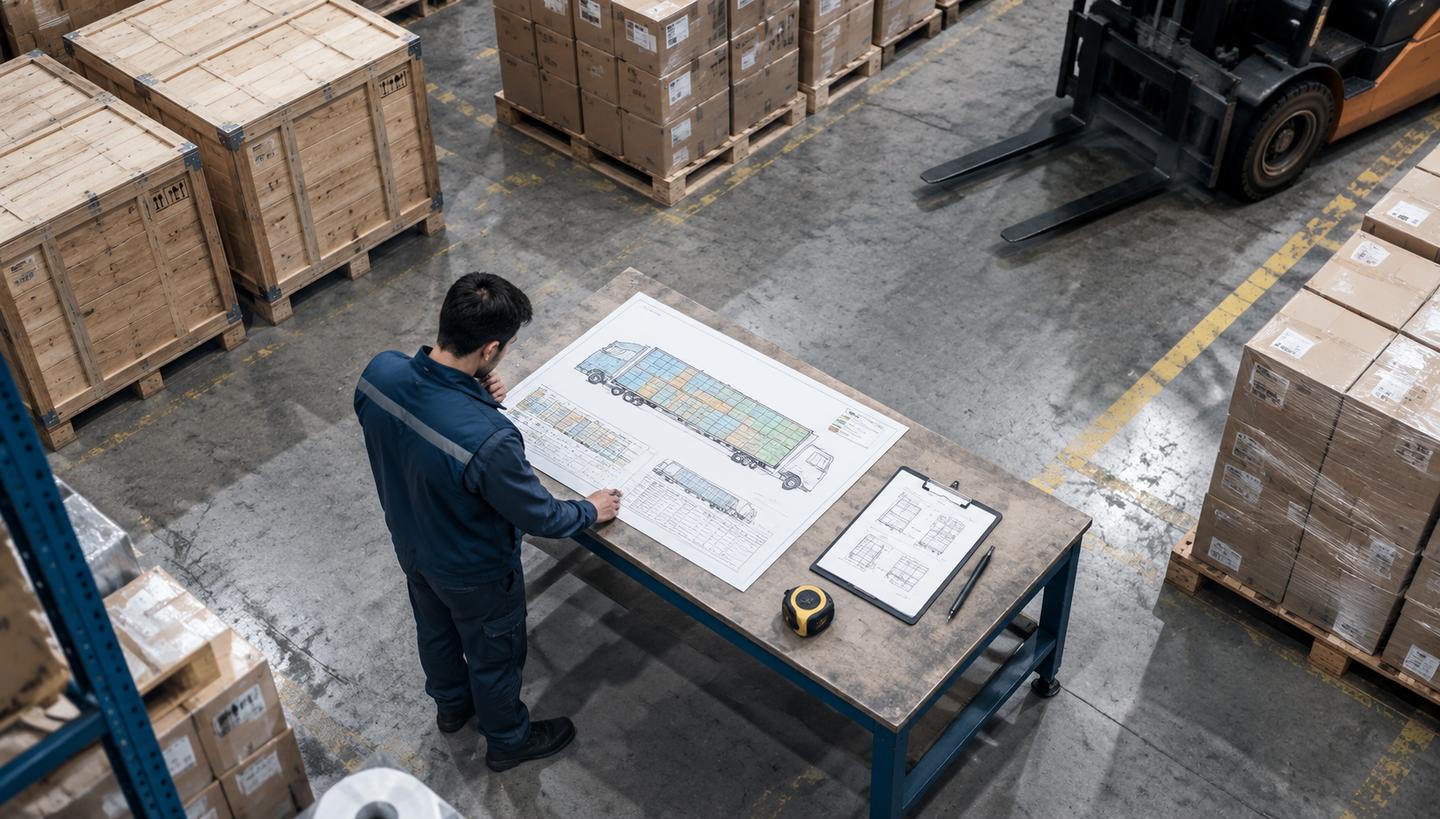
The loading plan should account for the largest packed unit as well as the total shipment. For example, a group of cartons may fit within the nominal volume, while one oversized crate prevents the load from passing through the door or leaves unusable gaps between units. A simple dimension list or loading diagram can expose that problem before the container is dispatched.
Container suitability must also hold across the full route. A container that fits at the origin may still present a delivery problem if the truck, chassis, access road, unloading area, or transfer equipment cannot handle it. For road transport, confirm the equipment and route constraints with the party arranging trucking freight. Where the shipment includes a rail leg, the transport coordinator should confirm the equipment and handling requirements with the relevant operator as part of rail-freight planning.
When one or more cargo pieces cannot be loaded safely within the available container dimensions, do not try to solve the issue by relying on the nominal cubic capacity. Ask the forwarder to assess whether different equipment, a revised packing arrangement, or an alternative handling method is appropriate. For cargo that does not fit a suitable container, break-bulk shipping may be worth discussing, subject to cargo characteristics, route availability, and handling requirements.
A shipment involving several transport legs needs one coordinated equipment check. When a single provider manages pickup, international transport, and final delivery, ask the coordinator to confirm container suitability and handoffs across the complete door-to-door shipping plan rather than validating only the main freight leg.
Common Sizing Mistakes and Operator Checks
Two errors account for many avoidable equipment mismatches: treating an advertised volume as usable loading space and treating nominal external dimensions as proof that the entire transport route can accommodate the container.
Common mistake: measuring cargo against internal dimensions only. A rigid item may fit within the container’s internal length, width, and height but fail at the door. The shipper should compare the largest packed unit with the actual door opening and confirm the handling equipment can position it safely. If the loading method requires clearance for forklift tines or other equipment, include that requirement in the check.
Operator check: Before confirming equipment, match the packed cargo list to the container specification, verify payload and gross-weight limits, review the loading arrangement, and confirm access at pickup and delivery. The booking provider should identify any outstanding equipment or route checks rather than treating an approximate volume calculation as final approval.
Responsibility should remain clear at each handoff. The shipper supplies accurate cargo dimensions, weights, packaging details, and handling restrictions. The forwarder or booking provider confirms the planned equipment and advises which specifications or route conditions require verification. The carrier, haulier, terminal, or receiving facility confirms requirements within its own part of the move. The party coordinating the shipment should resolve gaps before equipment assignment or dispatch.
If measurements change after booking, notify the transport coordinator before loading. Revised packaging, additional pallets, a heavier piece, or a change in delivery location can affect equipment suitability even when the container type remains the same. A prompt recheck gives the responsible parties an opportunity to revise the plan before the mismatch causes handling delays or additional costs.
Disclosure: This guide provides general logistics information and may refer to services relevant to the topic. Carrier terms, customs requirements, fees, service coverage, and operating conditions can change. Confirm current requirements and responsibilities before acting.
Key Takeaways
- A standard 20-foot container is about 20 × 8 × 8 feet 6 inches externally; a standard 40-foot unit is about 40 × 8 × 8 feet 6 inches.
- A 40-foot high cube provides additional height, but its suitability depends on cargo dimensions, door clearance, loading methods, and route restrictions.
- Use internal volume as an initial planning estimate, not as a promise of how much cargo will fit.
- Check packed dimensions, quantity, weight, stacking requirements, securing space, and the largest individual item before booking.
- Confirm equipment specifications and transport constraints with the parties responsible for the relevant shipment legs and final delivery.
Shipping Container Dimensions: FAQs
How big is a shipping container internally?
A typical 20-foot standard container has an internal volume of about 33 cubic meters, while a 40-foot standard unit holds about 68 cubic meters. A 40-foot high cube provides roughly 76 cubic meters. Actual internal measurements vary by equipment, and cargo packaging, loading gaps, and securing materials reduce the usable space.
Is a 40-foot container exactly twice as large as a 20-foot container?
A standard 40-foot container is approximately twice as long externally, and its nominal internal volume is about twice that of a 20-foot unit. The cargo capacity of a specific load will not necessarily double because pallet layout, item dimensions, weight, and loading restrictions influence how efficiently the space can be used.
How tall is a high-cube shipping container?
A common 40-foot high-cube container is approximately 9 feet 6 inches high externally, compared with about 8 feet 6 inches for a standard dry container. Its internal height is lower than its outside height. Confirm the actual specification and door opening before booking tall cargo.
Are all shipping containers the same size?
No. Standard 20-foot and 40-foot dry containers are common, but high-cube units and specialized equipment may have different dimensions. Even units within the same category can vary in internal measurements and door clearances, so the equipment specification matters when a shipment has tight tolerances.
How much cargo can fit in a 20-foot container?
A typical 20-foot standard container provides about 33 cubic meters of internal volume, but that figure does not determine the quantity of cargo that can actually be loaded. Carton dimensions, pallet patterns, stacking restrictions, cargo weight, door clearance, and required securing space all affect the final load. Use the packed shipment details to build the loading plan.
What is the difference between external dimensions and internal dimensions?
External dimensions describe the container’s overall length, width, and height, which matter for handling and transport clearances. Internal dimensions describe the approximate space inside the container. The door opening is a separate measurement because the access space may be smaller than the interior.
Does container size determine the maximum cargo weight?
No. Dimensions describe physical space, while the permitted load depends on the specific container’s payload and gross-weight ratings, cargo distribution, and applicable transport limits. Ask the booking provider to confirm the relevant figures for the equipment and route rather than selecting a container by volume alone.
What should I measure before booking a shipping container?
Measure each unit after packaging, including any pallet or crate, and record its length, width, height, and weight. Provide the shipment quantity, stacking limitations, loading method, and any handling restrictions. The forwarder should compare those details with the internal dimensions, door opening, weight limits, and transport conditions of the planned equipment.
Disclaimer: This article is general informational guidance, not a binding quotation, legal opinion, customs ruling, carrier commitment, or delivery guarantee. Requirements, charges, service terms, and responsibilities can vary by route, cargo, contract, carrier, and jurisdiction. Confirm current requirements before booking or filing.