Short Answer for Shippers
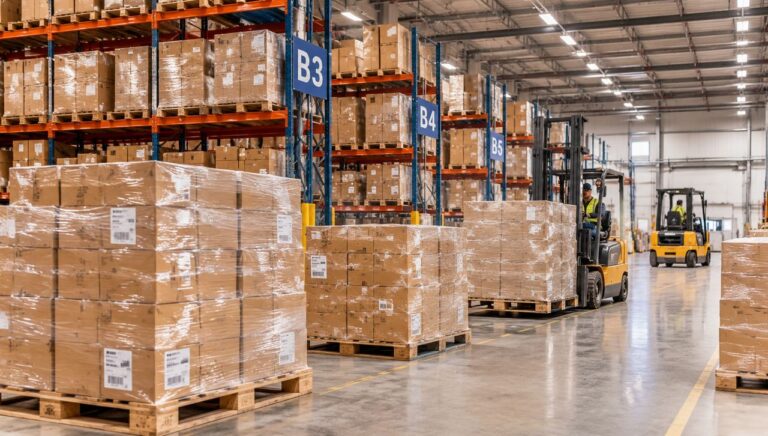
Choose a fulfillment center when inventory leaves as individual customer orders, and choose a distribution center when it leaves as cases or pallets bound for retailers, wholesalers, stores, or other warehouses. In the fulfillment center vs distribution center decision, the outbound unit is the fact most likely to change the answer, because the same imported goods may need item-level handling for online buyers and pallet-level handling for a retail account. A fulfillment center stores stock by item, picks and packs each order, and hands parcels to a carrier. A distribution center receives bulk inventory and ships it onward in larger units with fewer touches per unit.
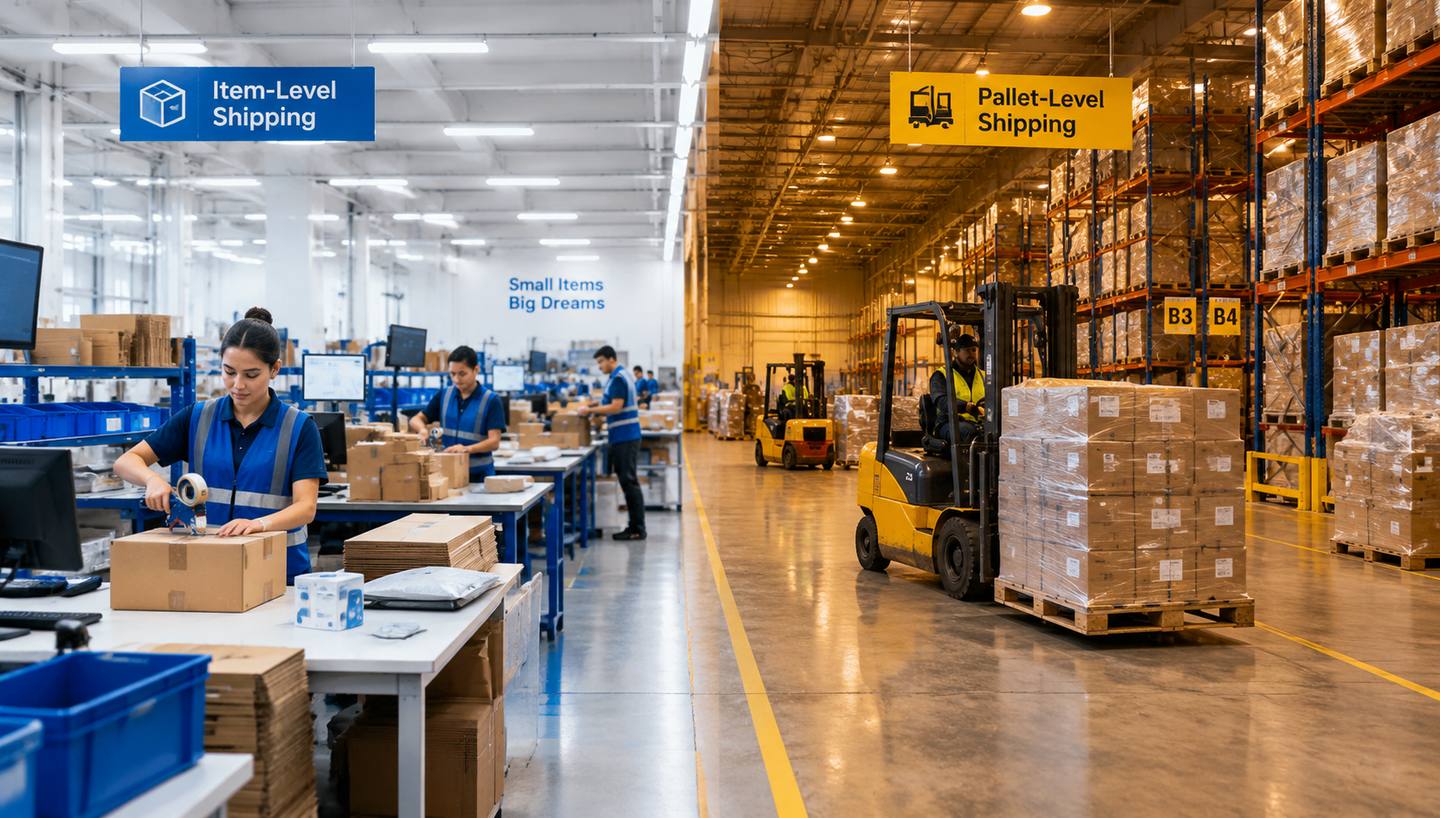
Many importers eventually use both, with a distribution center feeding smaller fulfillment nodes. Before comparing providers, confirm the inbound shipping format, the order mix, and who handles customs release. The sections below show how to align those inputs so quotes can be compared on the same basis.
Building a Fair Comparison Basis
A fair comparison starts with the same shipment facts on both sides. A fulfillment center and a distribution center can both receive containers and store stock, so their quotes look similar until the outbound unit and the service scope are fixed.
| Condition | What to Confirm | Why It Matters |
|---|---|---|
| Order profile | Mix of single-item parcels, multi-line orders, and retail replenishment | Decides whether item picking or bulk handling dominates |
| Inventory unit | Item, carton, pallet, or a mix | Shapes storage layout and handling touches |
| Inbound handoff | Port, airport, rail ramp, or the facility dock | Determines who unloads, sorts, and books the appointment |
| Customs role | Who files entry and who acts as importer | Controls when stock can be released to the facility |
| Service scope | Storage only, pick and pack, kitting, returns, or outbound freight | Defines which charges the quote actually covers |
| Outbound destination | Consumers, stores, other warehouses, or a marketplace network | Sets carrier mix and packaging requirements |
If a provider cannot answer these rows in writing, treat its quote as incomplete rather than cheap. Where a fact is still unknown, such as the final order mix, ask each provider to state the assumption it used so you can see exactly where the quotes diverge.
Who Each Facility Fits
Fulfillment center
By fulfillment center definition, this facility is a warehouse built to process individual customer orders from stored inventory. Looking at how fulfillment centers work makes the fit easier to judge. Stock arrives in cartons or on pallets and is received against an item record. Staff put it away in pick locations, the sales channel sends orders into the warehouse system, and pickers collect each order’s items. Packers box the order, apply the carrier label, and hand it to a parcel carrier. Returns come back to the same site for inspection and restocking.
This format suits sellers whose orders are small, frequent, and customer-facing, especially when delivery promises depend on firm order cut-offs and consistent packing. It fits poorly when most volume moves as full cartons or pallets to retail accounts, because item-level handling adds touches that bulk customers do not need. The selection trigger is a large number of separate orders relative to the units in each order. A marketplace-managed network adds its own receiving rules, so sellers weighing that route can review the Amazon FBA shipping service before choosing between a marketplace network and an independent fulfillment center.
Distribution center
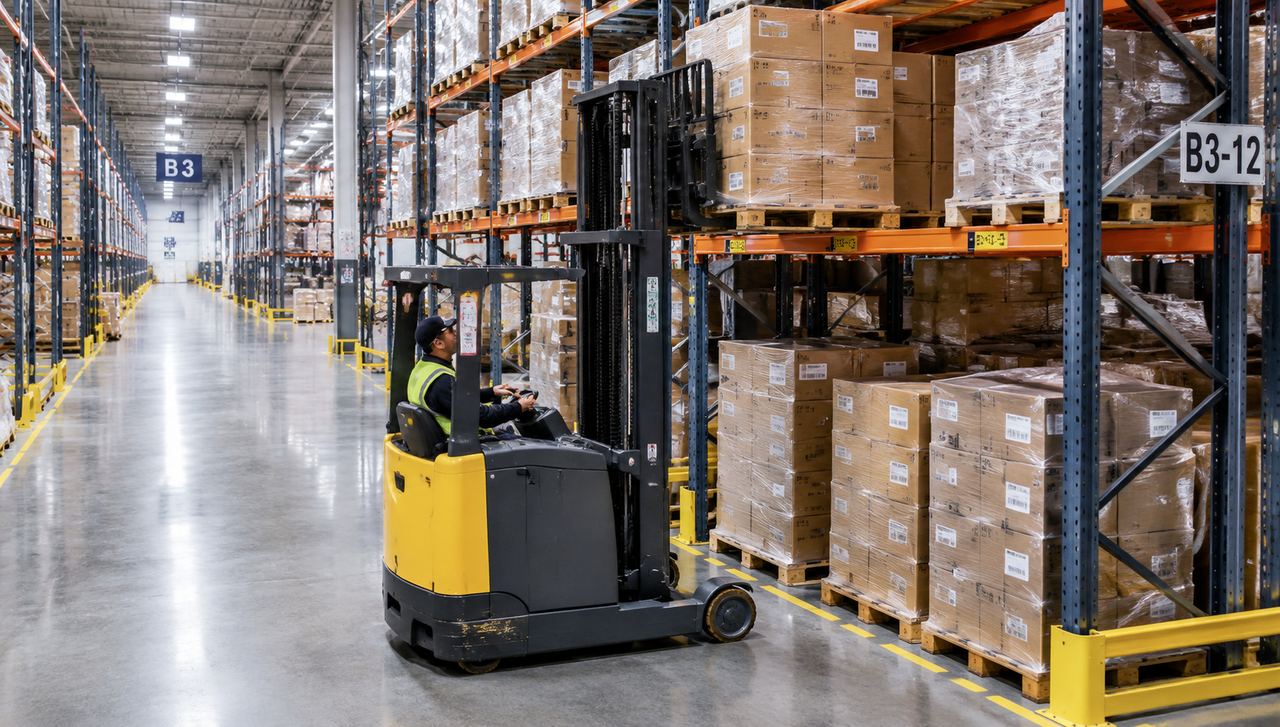
A distribution center receives bulk inventory, stores it in pallet or case locations, and ships it onward in larger units. Typical destinations include retail stores, wholesale customers, regional warehouses, and fulfillment nodes. Operators may cross-dock inbound loads that need little storage, and they often consolidate outbound loads to reduce the number of transport legs. Pickers work by case or pallet, so labor per unit stays low when the outbound unit is large.
This format suits importers who replenish retailers, wholesalers, or their own downstream sites on a planned schedule. It fits poorly when most outbound volume consists of single-item consumer parcels, since the site may lack packing lines, carrier integrations, and returns processing. The selection trigger is a customer base that orders by the case or pallet and expects compliant labeling and delivery appointments. Importers filling a distribution center with planned, non-urgent stock often rely on sea freight for the main transport leg, provided the replenishment schedule can absorb a longer ocean transit.
Core Decision Matrix: Fulfillment Versus Distribution Centers
| Option | Strong Fit | Weak Fit | Main Trade-Off | What to Verify |
|---|---|---|---|---|
| Fulfillment center | Many small customer orders from item-level stock | Pallet-level retail replenishment | Strong order service, more touches per unit | Order cut-off, packing standards, returns process |
| Distribution center | Case and pallet outbound on a planned schedule | Single-item consumer parcels | Efficient bulk handling, limited parcel capability | Appointment rules, labeling needs, outbound carrier access |
| Distribution center feeding fulfillment | Both retail and direct customer demand | Small catalog with one sales channel | Added transfer step, finer inventory control | Transfer scope, inventory visibility, handoff ownership |
Read the matrix from the outbound unit backward. If customers order single items, start with a fulfillment center and test whether the provider can meet your packing and cut-off needs. If customers order cases or pallets, start with a distribution center and test its appointment and labeling process. If both order types exist, ask whether a combined network justifies its extra transfer step or whether one site can serve both reliably.
Field note: Ask each provider to walk through one sample order, from dock receipt to carrier handoff, using your real item types. The answer shows which steps the provider performs routinely and which it handles as exceptions.
Cost Drivers and Quote Scope
Fulfillment charges usually attach to each order and each unit handled. Typical lines cover receiving, storage, picking, packing, packaging materials, carrier postage, and returns. Distribution charges more often attach to pallets, cases, storage positions, loading, and any cross-docking. Both models may add lines for labeling, kitting, special handling, or system integration.
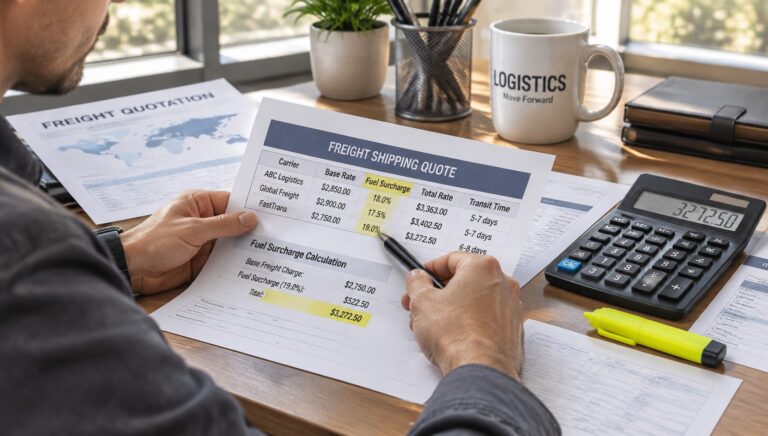
A headline charge rarely reflects total scope. A low storage line can sit beside generous handling lines, and an attractive handling line can exclude packaging or returns. Compare the full list of included and excluded services, not the most visible number.
The point at which one model becomes cheaper than the other depends on the order mix, unit size, storage duration, returns volume, carrier mix, and the provider’s own pricing structure. No fixed breakeven applies across shipments. Request quotes against the same sample profile, listing item dimensions, weights, expected order pattern, and storage period, so the providers price identical work.
Note: Freight rates and total shipment charges change with cargo details, route, service scope, carrier conditions, timing, destination handling, and applicable responsibilities. Compare current quotes only after their scope has been aligned.
Timing, Handoffs, and the Delivery Cycle
No stable timing range applies to this comparison, because the facility type does not set transit time. Route, mode, customs status, and the receiving process do. Separate the main transport leg from the total delivery cycle, since stock is not sellable or shippable until the facility has received and recorded it.
Inbound booking
The shipper books the main transport leg and confirms the facility’s receiving window, because a load without an appointment may wait at the gate.
Customs release
Entry filing and release must finish before cleared cargo can move to the facility.
Receiving and put-away
The warehouse unloads, counts against the packing list, and records stock in its system. Inventory becomes available only after this step closes.
Allocation
The system assigns stock to customer orders or to replenishment requests from stores and other sites.
Picking and packing
A fulfillment center picks and packs by item, while a distribution center picks by case or pallet and stages loads.
Outbound handoff
A carrier collects parcels, or a truck arrives for a scheduled pallet pickup or delivery appointment.
When a launch or restock date is fixed and the cargo is light for its volume, air freight can shorten the main transport leg, although receiving and put-away still decide when stock becomes usable. For small top-ups of fast-moving items bound for a fulfillment center, express service may suit the cargo better than a full air consolidation. Inland moves between port, distribution center, and fulfillment nodes usually run by road, and the trucking freight service page explains that leg and its handoff points.
Responsibility and Service Boundaries
Keep five questions separate: how the cargo travels, what kind of warehouse receives it, where the transport quote ends, who handles customs, and who delivers to the final customer. A quote that blends them hides gaps. For example, a transport price that ends at the facility gate does not cover unloading, and a warehouse price does not cover duties or entry filing.
For imported inventory, name the importer and the party filing entry before the cargo ships. The import service page shows how an import move is organized, and a licensed broker should confirm the legal responsibilities for your case. Where a broker is needed to clear cargo before it reaches the warehouse, review the customs brokerage scope so the filing responsibility does not fall between the forwarder and the facility.
A door-to-door quote ends at a named delivery address. When that address is a warehouse, confirm whether the quote ends at the dock or includes unloading and appointment handling. The door-to-door service page describes that scope, which helps when you compare it with a port-to-port quote plus separate inland delivery.
Selection Rules and Quote Preparation
Default for direct customer sales: Start with a fulfillment center. Reconsider if most volume shifts to pallet orders from business customers.
Default for retail and wholesale supply: Start with a distribution center. Reconsider if direct parcels grow into a large share of outbound orders.
Weak fit for a distribution center: Frequent single-item orders with tight cut-offs, since the site may not run parcel packing or returns.
Weak fit for a fulfillment center: Planned bulk shipments to stores, where item-level handling adds cost without customer benefit.
Changing fact: A shift in the sales channel mix, the inbound shipping format, or the customs arrangement can reverse the default, so recheck the choice whenever one of them moves.
To apply these rules, gather the following inputs before requesting quotes: item types and dimensions, unit weights, the expected order pattern and its seasonal peaks, returns expectations, the inbound shipping format, the origin and destination regions, delivery constraints, and the customs arrangement. Providers can price comparable work only when each receives the same list.
Illustrative example (not a customer case): A hypothetical importer sells small items through its own online store and also supplies a few retail accounts that order by the pallet. Online orders arrive in a steady, mixed pattern, while retail orders arrive in planned batches. The importer receives bulk stock at a distribution center for the retail accounts and transfers replenishment stock to a fulfillment center for online orders. This setup adds a transfer step but avoids item-level handling for pallet customers and pallet storage for parcel orders. If the retail business disappeared, a single fulfillment center would likely be the simpler choice.
Common Mistakes and Controls
The most frequent error is choosing a facility by its label instead of its operating model. Some warehouses use both names loosely, so ask what the site actually does with an inbound pallet and an outbound order. Other frequent errors include comparing quotes with different scopes, ignoring destination handling after cargo reaches the dock, and starting quotes before the cargo and order facts are complete.
Common mistake: Comparing a fulfillment quote that includes picking, packing, and returns with a distribution quote that covers only storage and pallet handling, then choosing the lower headline. The difference reflects scope, not efficiency. Align the service list first, then compare.
Risk alert: Cargo that arrives in a format the facility cannot receive, such as floor-loaded cartons at a site set up for palletized receiving, may trigger extra handling, delay put-away, or force a rebooked appointment. Confirm the receiving format in writing before booking the inbound move.
Disclosure: This page provides general freight comparison guidance and may mention freight services available through this website. Actual cost, timing, service scope, customs requirements, carrier conditions, and destination handling depend on the shipment and can change. Confirm the current shipment plan before booking.
Key Takeaways
Outbound unit decides: Item-level orders point to a fulfillment center, and case or pallet orders point to a distribution center.
Scope before price: Compare quotes only after the included services, handling lines, and exclusions match.
Combined networks cost a transfer step: Use one only when both demand types are large enough to justify the extra handoff.
Separate the responsibilities: Transport, warehousing, customs, and final delivery should each have a named owner in the quote.
Prepare the same inputs for every provider: Item data, order pattern, inbound format, destination, and customs arrangement drive a usable comparison.
FAQ
What is the main difference between a fulfillment center and a distribution center?
A fulfillment center processes individual customer orders from stored stock, while a distribution center moves bulk inventory onward in cases or pallets. The difference lies in the outbound unit and the handling it requires.
What is a fulfillment center in plain terms?
It is a warehouse that stores inventory and handles the steps after a customer places an order: picking, packing, carrier handoff, and usually returns. Sellers use one to avoid packing and shipping orders themselves.
How do fulfillment centers work day to day?
They receive stock, record it by item, and put it away. When orders arrive from a sales channel, staff pick the items, pack them, label the parcel, and release it to a carrier. Returned items are inspected and restocked or set aside.
Can one warehouse act as both?
Some sites run both bulk and order-level operations. Ask the provider to show each workflow separately, including its labor, systems, and carrier handoffs, instead of accepting the dual label.
Does a distribution center ship directly to consumers?
Usually not as its main function. Some sites can handle limited parcel work, but a fulfillment center is built for that task. Confirm the provider’s parcel capability before assuming it.
Which setup suits an online seller with many small orders?
A fulfillment center usually fits best, because its workflow centers on item-level picking, packing, and returns. A seller who also supplies retail accounts should test whether a combined network is worth the added transfer step.
Who handles customs when imported inventory goes into a warehouse?
The answer depends on the arrangement. The quote should name the importer and the party filing entry, and a licensed customs broker can confirm the responsibilities that apply.
What should I send providers to get comparable quotes?
Send item dimensions and weights, the expected order pattern, the inbound shipping format, the destination region, any delivery constraints, and the customs arrangement. Identical inputs let you compare scope as well as price.
Disclaimer: Freight comparison information on this page is general planning guidance, not a binding quotation, carrier commitment, customs ruling, legal opinion, or delivery guarantee. Suitability depends on cargo, route, scope, timing, provider terms, and destination conditions. Confirm current shipment requirements before booking.