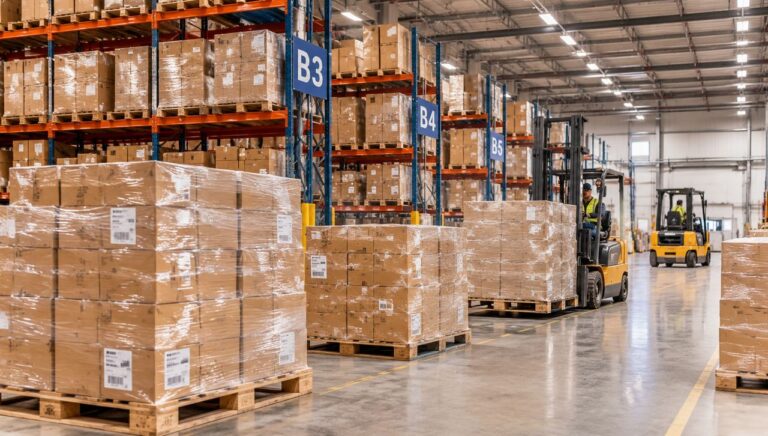
A 3PL for FBA is a third-party logistics provider that manages selected steps in preparing and moving an Amazon seller’s inventory before it enters Amazon’s fulfillment network. Depending on the service agreement, a provider can receive products, store inventory, inspect cartons, apply specified labels, consolidate supplier shipments, arrange freight, coordinate import clearance, and organize final delivery. The main benefit is having one logistics partner manage the tasks that would otherwise require separate suppliers, warehouses, and transport providers.
A 3PL is not the same as Amazon FBA, an FBA prep center, or a freight forwarder. Amazon FBA handles fulfillment activities for eligible inventory received into Amazon’s network. A prep center focuses on preparing products for the required destination, while a freight forwarder primarily coordinates transportation. A 3PL may combine several of these logistics functions, but the contracted scope determines what it actually provides. Sellers should compare providers by their handling capabilities, total costs, operating process, and responsibility for each handoff rather than by the 3PL label alone.
What Is an Amazon FBA 3PL?
An Amazon FBA 3PL supports the inbound supply chain that moves inventory from a supplier to an Amazon-designated receiving location. It can act as a coordination point between the manufacturer, warehouse, freight provider, customs broker, and final-mile carrier. Sellers can use a full-service arrangement or purchase only the tasks they need.
The distinction matters because the parties perform different jobs. Amazon’s FBA-related logistics service may help coordinate inventory delivery, but sellers still need to understand their account obligations and the receiving instructions for each shipment. A provider’s ability to transport cargo does not automatically mean it can prepare products, create account-level shipment details, act as the importer, or resolve every receiving discrepancy.
Use this comparison to identify which type of provider fits the work you need to outsource.
| Provider or program | Primary role | Typical scope | Main limitation |
|---|---|---|---|
| Amazon FBA | Fulfillment after receiving | Eligible inventory storage, order fulfillment, and related customer-facing operations | Does not replace the seller’s entire inbound logistics chain |
| Third-party logistics provider | Coordinated logistics operations | Storage, receiving, preparation, consolidation, transportation, or delivery | Services depend on the provider’s capabilities and contract |
| FBA prep center | Inventory preparation | Specified inspections, packaging, labeling, and shipment preparation | International freight and customs support may be outside its scope |
| Freight forwarder | Transportation coordination | Freight booking, routing, and coordination of transport-related handoffs | Warehousing, product preparation, and detailed inspection may be excluded |
These categories can overlap. A 3PL may operate its own warehouse, outsource transportation, and coordinate with a separate customs broker. A prep center may also offer freight services. Sellers should therefore compare the actual work performed rather than assume that every provider in a category offers an identical package.
What Services Does an FBA 3PL Provide?
Most FBA-focused logistics arrangements cover some combination of receiving, storage, preparation, transportation coordination, and final delivery. The right combination depends on where the seller’s current process breaks down.
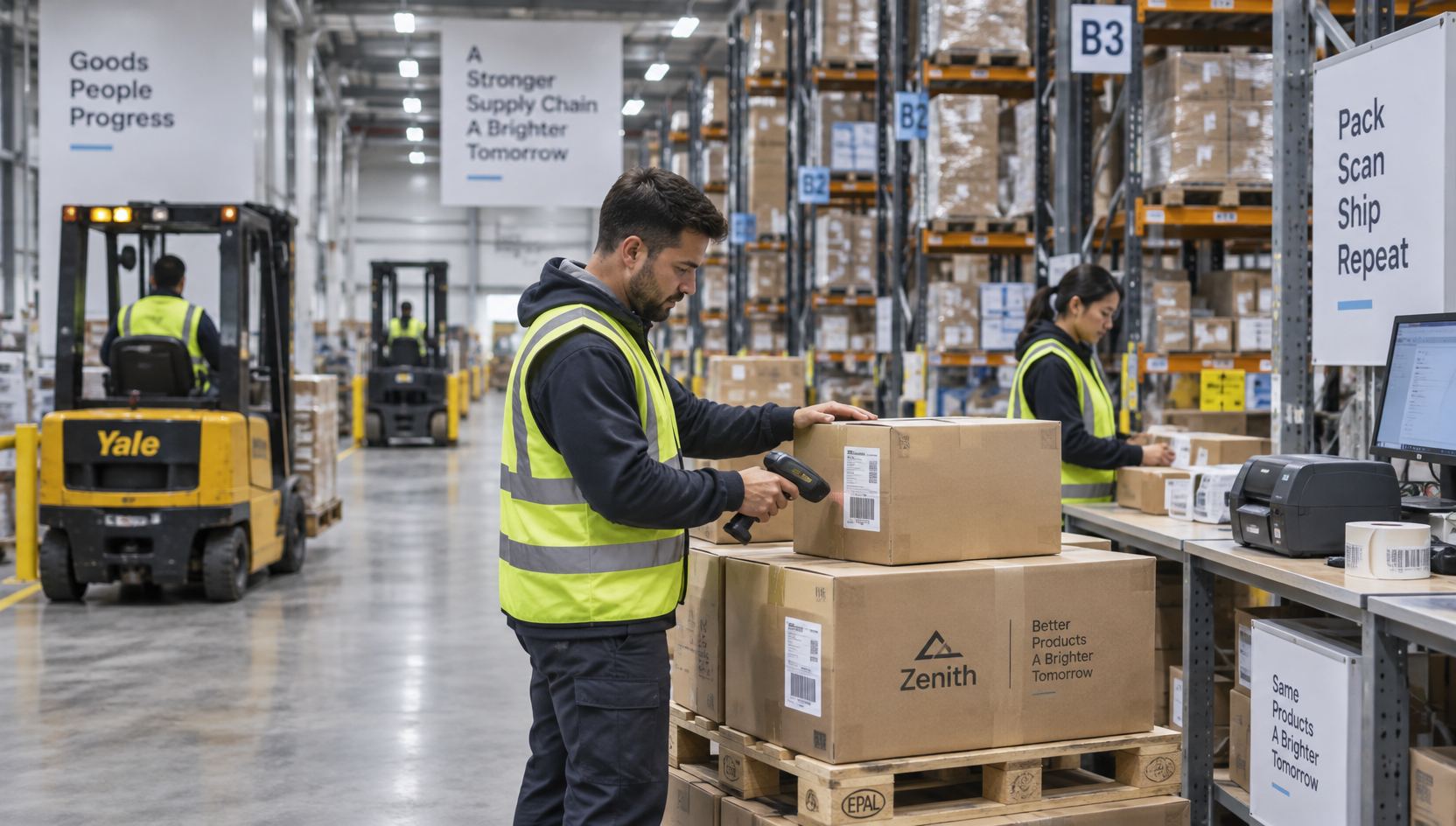
- Receiving and storage: The warehouse receives cartons or pallets, records the quantities it accepts, and stores inventory for an agreed period. Receiving records should identify shortages, visible damage, and discrepancies in the information supplied.
- Inspection and product preparation: The provider performs only the inspection and preparation work included in the agreement. Sellers should specify the inspection standard, permitted rework, photographic evidence, and approval process for products that fail a check.
- Packaging and labeling: The provider may apply agreed product or carton labels, repack products, or prepare shipping units. The seller must supply the correct requirements and confirm who checks the completed work.
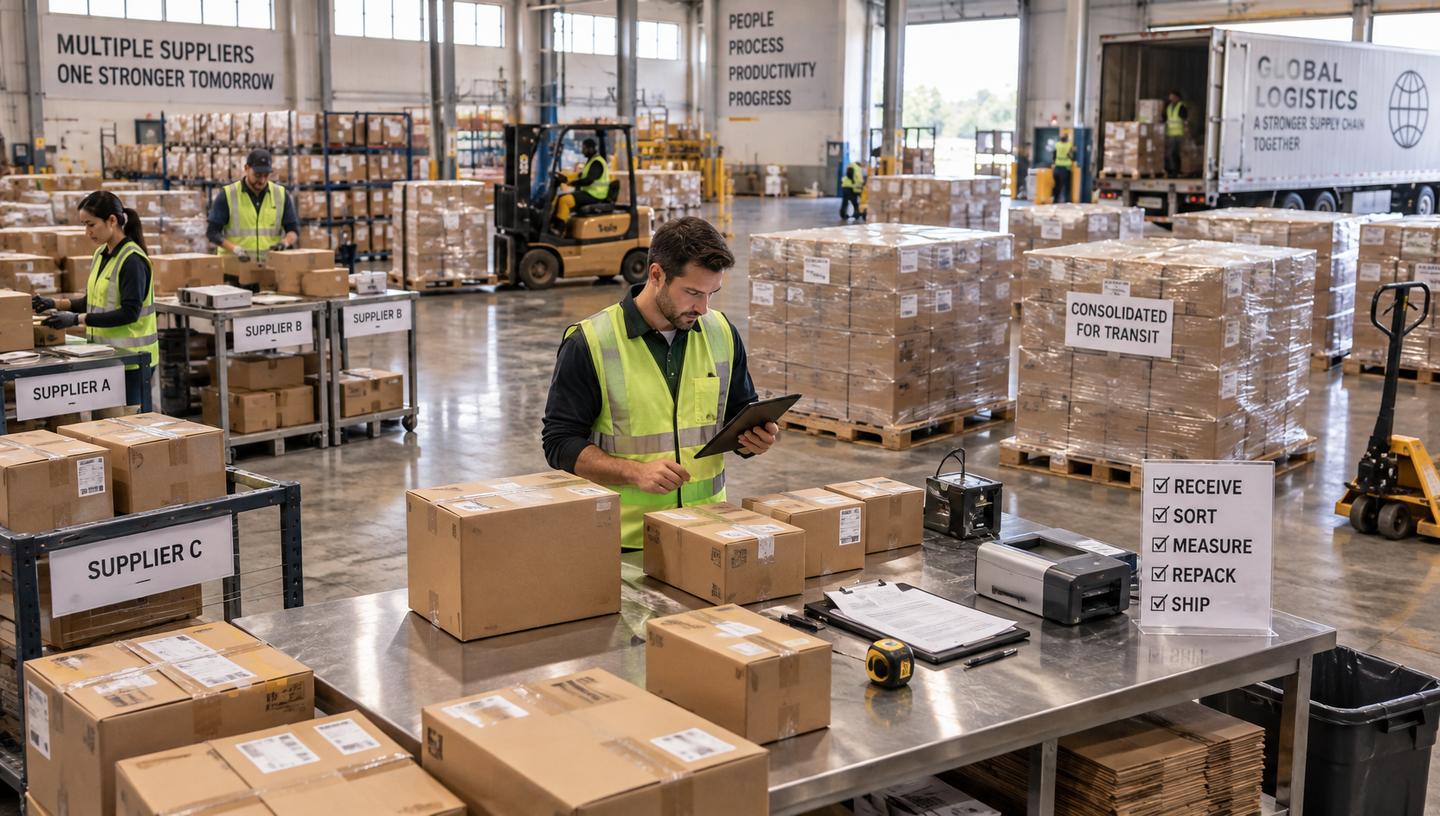
- Supplier consolidation: The warehouse receives goods from multiple suppliers and coordinates their release as one logistics plan when cargo compatibility, shipment instructions, and timing permit.
- Freight and delivery: The provider may arrange international transportation, import-related coordination, and the final delivery leg. The seller should verify the origin, destination, included services, and charges before booking.
Do not assume that receiving includes a product quality inspection or that labeling includes correcting inaccurate product information. Define each task, its acceptance criteria, and the party that authorizes additional work before the first shipment arrives.
How Does an FBA 3PL Workflow Work?
A typical inbound workflow starts with supplier coordination and ends with delivery evidence and inventory reconciliation. The exact sequence can change with the origin, shipment size, preparation requirements, and transportation route.
Confirm the shipment plan
The seller confirms the intended destination, shipment details, product requirements, timing, and responsibilities. The parties agree on the services, expected costs, and information needed before pickup.
Send inventory to the warehouse
The manufacturer or supplier dispatches the goods to the designated facility. The seller provides the relevant packing information and tells the supplier how to identify the shipment.
Receive and reconcile the cargo
The 3PL records the cartons or pallets received and compares available quantities and visible condition with the supplied records. The seller receives notice of material discrepancies that require a decision.
Complete agreed preparation
The provider carries out contracted inspections, repacking, labeling, or other preparation. The responsible parties resolve identified problems before the goods are released for transportation.
Book freight and prepare documents
The seller and logistics provider confirm final cargo measurements, transportation details, shipment instructions, and required documents. The party responsible for account-level shipment setup completes or approves the relevant information.
Coordinate import and final delivery
The designated parties manage the agreed transport and import-clearance steps, then arrange delivery to the specified receiving location. The seller confirms that the delivery plan matches the current receiving instructions.
Retain records and reconcile arrival
The provider supplies the available delivery records and reports any known transport issues. The seller checks the shipment status and investigates quantity or receiving discrepancies using the relevant records.
Hypothetical example: A seller buys inventory from three manufacturers, but each supplier has different dispatch dates and packaging practices. A suitable 3PL can receive the separate deliveries, reconcile carton counts, complete contracted preparation, and coordinate a consolidated transportation plan if the goods and receiving instructions allow it. The seller still needs to approve the final shipment details and account for the additional warehouse handling and storage costs.
When Should You Use a 3PL for FBA?
A 3PL is worth considering when it solves a specific operational problem that the seller, manufacturer, or existing freight provider cannot manage efficiently.
- Multiple suppliers: Consolidation can simplify coordination when goods are ready at different facilities or on different dates.
- Limited supplier preparation: A warehouse can perform agreed labeling, repacking, or inspection before dispatch when the manufacturer does not offer those services.
- Temporary inventory storage: Storage can help align supplier readiness with freight schedules, although longer dwell time adds cost.
- Recurring international shipments: A consistent logistics partner can coordinate repeat bookings, documentation handoffs, and shipment records.
- More complex inventory flows: A 3PL may help organize shipments that require separate preparation, consolidation, or delivery arrangements.
A separate 3PL may be unnecessary when one supplier handles compliant preparation, shipments are straightforward, direct delivery works reliably, and no intermediate storage or consolidation is needed. In that situation, a freight-only arrangement may meet the seller’s requirements with fewer handling stages.
The decision should come down to the cost and control of the complete workflow. Compare the provider’s charges with the labor, coordination, storage, and error-recovery costs that the seller would otherwise incur. Include the extra handoffs a warehouse introduces when assessing whether the service solves more problems than it creates.
How Much Does an Amazon FBA 3PL Cost?
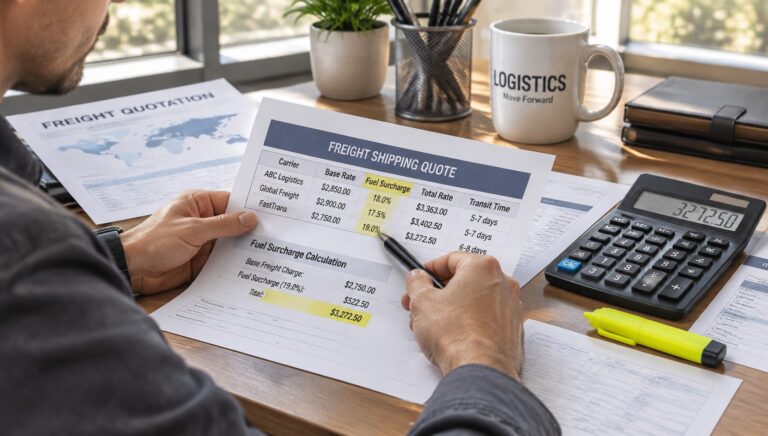
There is no meaningful standard price for an FBA 3PL without knowing the shipment profile and contracted services. A quote may combine warehouse fees, preparation labor, freight, customs-related charges, and final delivery, or it may price those services separately. Sellers should request an itemized estimate based on their actual products, quantities, dimensions, storage needs, origin, and destination.
| Cost category | What may trigger the charge | Question to ask |
|---|---|---|
| Receiving and handling | Carton counts, pallet handling, unloading, or inbound processing | What unit or labor basis determines the fee? |
| Storage | Space occupied and time in the warehouse | When does billing begin, and how is stored volume measured? |
| Preparation and inspection | Labeling, repacking, checks, photographs, or rework | Which tasks are included, and what creates extra labor charges? |
| Freight and delivery | Transport mode, route, cargo measurements, and destination handling | Which transport and destination charges are excluded? |
| Import and additional services | Brokerage, duties and taxes, inspections, special handling, or storage extensions | Who pays each charge, and which amounts remain provisional? |
For inventory shipped internationally, freight is only one component of the total cost. Compare receiving, consolidation, preparation, transport, clearance arrangements, destination handling, and final delivery on the same scope. Ask whether quoted amounts are fixed or estimates and how adjustments are handled when actual cargo measurements differ from the booking data.
Other charges may apply when the provider also handles pick-and-pack orders for other sales channels, returns, pallet storage, container unloading, detailed quality inspection, or specialized cargo. Include these items only when they match the service you need. Avoid comparing one provider’s basic transportation quote against another provider’s full-service estimate.
How to Choose an Amazon FBA 3PL
The best provider is the one that can perform the required work at an acceptable total cost with clear records and accountable handoffs. Ask each candidate the same questions so the answers are comparable.
| Selection factor | What to confirm | Useful evidence |
|---|---|---|
| Warehouse operations | Receiving methods, storage basis, and inventory records | Sample receiving report and fee schedule |
| Preparation capability | Labeling, repacking, inspection scope, and approval rules | Written work instructions and sample inspection records |
| Freight planning | Available routes, modes, schedules, and delivery scope | Itemized quote with assumptions and exclusions |
| Customs responsibilities | Importer, broker, document owner, and payment responsibilities | Written handoff and responsibility matrix |
| Issue management | Escalation contacts, discrepancy handling, and claims process | Documented procedures and reporting commitments |
Ask whether the provider can support your product type, expected shipment frequency, storage profile, and destination. Confirm who enters or approves shipment information in the seller’s account and what authorization that work requires. A logistics provider should not be assumed to have account permissions merely because it handles physical inventory.
Also evaluate how the provider documents exceptions. Receiving discrepancies, damaged cartons, missed collections, and delivery changes are easier to investigate when the operating procedure specifies who reports the problem, what evidence is retained, and who can approve additional charges or corrective action.
For international cargo, confirm the transport mode and each handoff. Sea freight may suit larger shipments with a flexible inventory schedule, while air freight may fit more time-sensitive replenishment when the total cost is justified. The choice depends on the route, actual cargo data, delivery schedule, and included charges rather than a general claim that one mode is best.
Finally, establish the import and final-delivery arrangements before cargo leaves the origin. Confirm who supplies the required documents, who coordinates with the customs broker, and which party pays duties, taxes, and clearance-related fees. Review the actual scope of customs brokerage and, where applicable, the agreed door-to-door delivery service instead of assuming that either is automatically included in the freight price.
Common Mistakes and Pre-Dispatch Checks
Two avoidable errors create unnecessary cost and delay: releasing cargo with inconsistent shipment information and assuming that a broad service description covers every preparation or delivery task.
Common mistake: Treating product labels, carton labels, and carrier labels as interchangeable. Before dispatch, the seller should compare the current requirements with the physical packaging and identify who supplies, applies, and checks each required label.
The seller and provider should also reconcile the final quantities, carton dimensions, weights, shipment details, and destination before booking. If any of those inputs changes, the responsible parties should review the quote, transport plan, documents, and receiving instructions affected by the change.
Use this release checklist to catch gaps before the shipment moves:
- Confirm that the receiving destination and shipment instructions match the current seller-account records.
- Match final packing information to the actual carton count, weight, and dimensions.
- Confirm preparation standards, required labels, and authorization for additional work.
- Document the transport plan, import-clearance handoff, delivery endpoint, and cost exclusions.
- Record the escalation contact and identify which documents will support discrepancy or damage claims.
Do not release cargo while a material discrepancy could change acceptance, documentation, booking, or delivery. Resolving the issue at the origin is often more manageable than correcting it after the shipment enters the transportation network, although the time and cost of any correction depend on the circumstances.
Disclosure: This guide provides general logistics information and may refer to services relevant to the topic. Carrier terms, customs requirements, fees, service coverage, and operating conditions can change. Confirm current requirements and responsibilities before acting.
Key Takeaways
- A 3PL for FBA coordinates selected inbound logistics tasks; it does not automatically replace Amazon FBA, a prep center, or a freight forwarder.
- Choose services that address a defined operational need, such as supplier consolidation, preparation, storage, or transport coordination.
- Compare itemized total costs using equivalent cargo details, routes, services, and delivery endpoints.
- Assign ownership for account-level shipment information, preparation, customs handoffs, and final delivery before dispatch.
- Use written work instructions, receiving records, and a documented exception process to manage discrepancies.
Frequently Asked Questions About 3PL for FBA
How much does an Amazon FBA 3PL cost?
The cost depends on receiving, storage, preparation, handling, freight, import-related services, and final delivery. Request an itemized quote using your actual shipment details, then check the assumptions, exclusions, and charges that may change with storage time or additional labor.
What is the difference between an FBA prep center and a 3PL?
An FBA prep center focuses on preparing inventory for shipment to Amazon, while a 3PL may combine preparation with warehousing, consolidation, freight coordination, and delivery. Some providers offer both types of service, so compare the contracted tasks instead of relying on the company label.
Can a 3PL ship directly to Amazon FBA from a supplier?
A 3PL can coordinate a direct shipment or arrange an intermediate warehouse step when the route, preparation status, shipment instructions, and service scope support that plan. Confirm the receiving destination, required labels, documentation, and party responsible for account-level shipment setup before dispatch.
Does an FBA 3PL provide storage?
Many 3PLs offer short-term or longer-term storage, but availability, capacity, billing units, and charges vary. Confirm when storage billing starts, how the provider measures occupied space, and what happens if inventory remains longer than planned.
Can an FBA 3PL inspect products before shipping?
Some providers offer product inspections, carton checks, or photographic reporting. The seller should define the inspection standard, sample size or coverage, acceptance criteria, and process for handling failed checks. Receiving inventory alone does not mean the provider has performed a quality inspection.
Who creates the Amazon FBA shipment?
The seller or an appropriately authorized account operator generally handles the required account-level shipment information. A 3PL may provide logistics data or perform agreed administrative tasks when authorized, but sellers should confirm access, approval responsibilities, and the division of work before shipment creation.
Can a 3PL act as the importer of record?
That depends on the jurisdiction, transaction, provider capabilities, and applicable requirements. Sellers should identify the intended importer and confirm the legal and contractual responsibilities with qualified customs professionals before shipping. A freight or brokerage service does not by itself establish that the provider will act as the importer.
How should sellers choose an Amazon FBA 3PL?
Compare warehouse capability, preparation standards, transport coverage, itemized pricing, document handling, reporting, and issue-resolution procedures. Ask each candidate the same questions and verify the proposed workflow, responsibilities, and exclusions against your actual products and shipment frequency.
Disclaimer: This article is general informational guidance, not a binding quotation, legal opinion, customs ruling, carrier commitment, or delivery guarantee. Requirements, charges, service terms, and responsibilities can vary by route, cargo, contract, carrier, and jurisdiction. Confirm current requirements before booking or filing.