Find the Right Form and Verify Origin Before Completing It
Use an official template to organize a USMCA certification of origin, but establish the product’s eligibility before completing the origin criterion. The United States-Mexico-Canada Agreement does not prescribe one mandatory certificate layout. It requires nine minimum data elements and a specific certification statement. The certifier must have a valid basis for the statements, and the importer must have the required certification available when making a claim for preferential tariff treatment.
Start with the official U.S. Customs and Border Protection (CBP) suggested certification template. For Canadian imports, review the Canada Border Services Agency (CBSA) field guidance and valid examples. Both resources help explain the required information, but neither template nor a completed form proves that a product qualifies.
Before signing, identify the applicable product-specific origin rule, confirm the goods’ six-digit Harmonized System (HS) classification, collect supporting production and material records, and reconcile the certification with the commercial documents. Resolve uncertain product facts before the importer or broker relies on the certification.
Which USMCA Certificate of Origin Form Should You Use?
A USMCA certificate of origin form is a way to present a certification of origin, not a separate license or proof of eligibility. The certification can appear on an appropriate invoice or another document if it contains the required data and meets the applicable procedures. A fillable USMCA certificate of origin form can simplify data collection, but the certifier must still verify every statement.
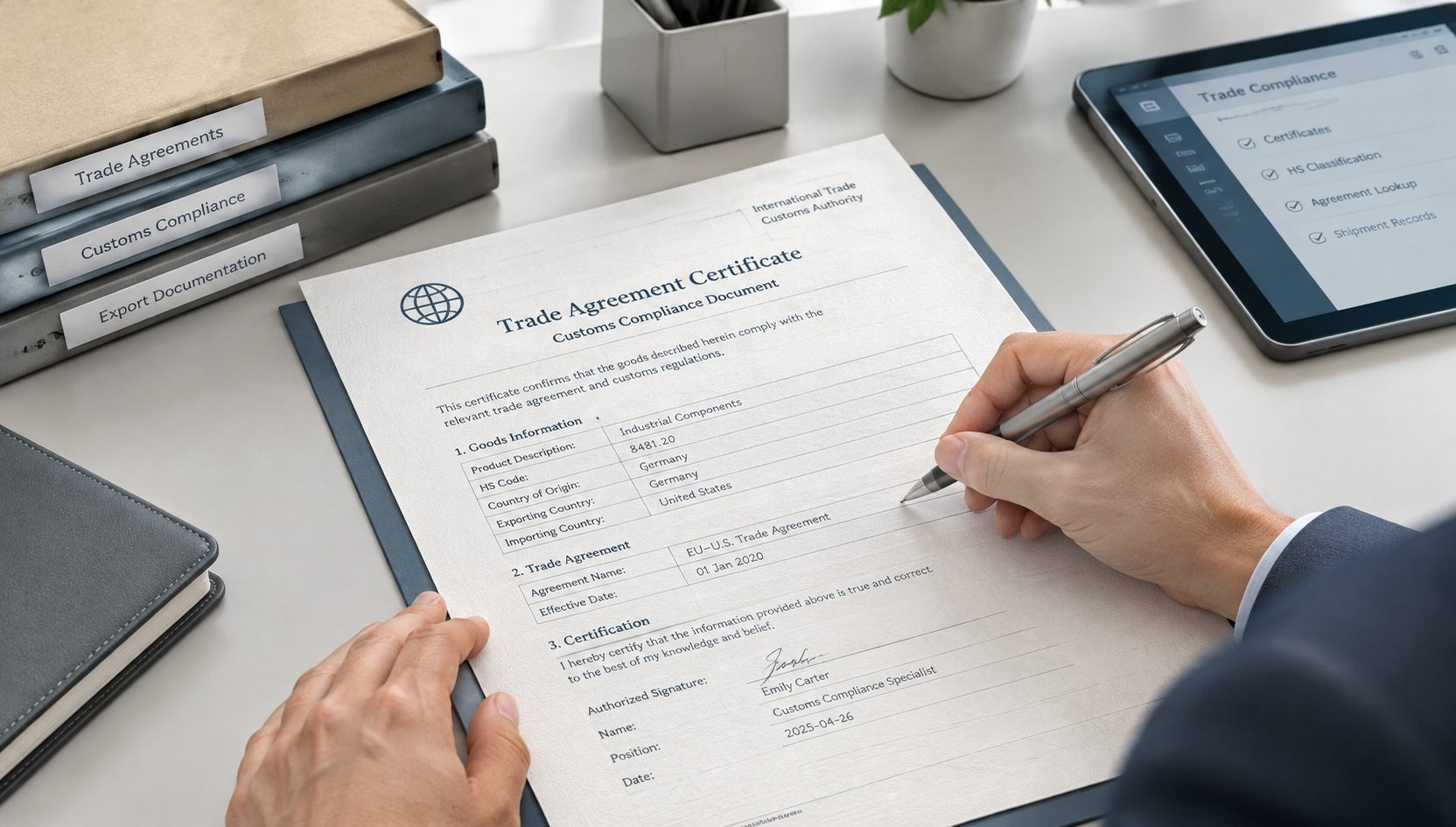
Article 5.2(4) establishes an important document restriction: a certification of origin must not be provided on an invoice or any other commercial document issued in a non-Party. At the same time, a claim cannot be rejected solely because the invoice itself was issued in a non-Party. When a third-country entity issues the commercial invoice, prepare the certification as a separate document and confirm the destination country’s implementation requirements. See the official USMCA Chapter 5 origin procedures.
USMCA is the agreement’s common name in the United States; Canada uses CUSMA. A CUSMA certificate of origin and a USMCA certification serve the same agreement-related purpose, although the importing country’s administrative guidance may differ. Do not assume that a standard non-preferential certificate of origin satisfies the requirements for a preferential claim.
Before selecting a blank USMCA form, establish the intended import country and the exact goods. The classification, manufacturing process, material sourcing, transaction details, and importer arrangements can change the preparation requirements. If the transaction is a Canadian import, use CBSA’s instructions for fields such as unknown exporter or producer information. For U.S. imports, consult the current U.S. rules and official guidance.
How to check whether the goods qualify
Complete the origin assessment before selecting the criterion for the form. Article 4.2 identifies the principal bases for originating status, while Annex 4-B contains product-specific rules. The applicable rule depends on the product and its classification, not simply on where it is shipped or sold.
- Wholly obtained or produced goods: Verify that the product meets the relevant conditions for goods wholly obtained or produced in one or more USMCA territories.
- Goods produced entirely from originating materials: Confirm that the materials qualify as originating and that the applicable requirements are met.
- Goods using non-originating materials: Identify the product-specific rule. Depending on the product, it may require a tariff classification change, regional value content, or another specified condition.
- Special cases: Check the provisions that apply to the actual goods before relying on an exception or alternative method.
For U.S. imports, search the current U.S. International Trade Commission Harmonized Tariff Schedule, including the relevant USMCA provisions in General Note 11. For Canadian or Mexican imports, confirm the applicable destination-country classification and origin guidance. If the classification or production facts are uncertain, refer the issue to the responsible specialist before completing the certification.
Who Completes and Reviews the Certification?
The importer, exporter, or producer may act as the certifier under the applicable agreement provisions. The selected party must have a valid basis for the information it provides. Each party should understand what it supplies, what it reviews, and who will handle the import claim.
| Party | Main responsibility | Information or action | Control point |
|---|---|---|---|
| Producer | Supports the origin assessment | Production, material, and supplier records | Evidence relates to the actual product |
| Exporter | Coordinates product and commercial data | Certification details and shipment records | Distinguishes verified facts from assumptions |
| Importer | Coordinates the preference claim | Certification and import instructions | Holds a valid certification when making the claim |
| Customs broker | Reviews information within its engagement | Entry data and outstanding questions | Does not replace missing origin evidence |
| Forwarder or carrier | Coordinates the agreed shipment | Transport records and operational handoffs | Does not determine originating status |
Article 5.4 requires the importer to have a valid certification in its possession when making the statement that supports a preferential tariff claim, subject to the agreement’s exceptions. The importer must provide the certification to the importing country’s customs administration upon request. The importer must also identify who can obtain supporting evidence if a question arises.
An exporter that is not the producer may rely on its own information, including documents demonstrating originating status, or reasonably rely on the producer’s written representation under Article 5.3. An importer certifying the goods must have information, including documents, that demonstrates the goods are originating. A freight forwarder or broker should not be assigned manufacturing or origin-substantiation responsibilities unless the relevant scope and source information support that role.
When assistance is needed with the import-side handoff, review the stated scope of the import service arrangement and confirm whether customs brokerage is included or separately arranged. Define who collects records, checks the data, coordinates corrections, submits instructions, and responds to follow-up questions.
How to Complete the Nine Required Data Elements
Annex 5-A sets out nine minimum data elements for a certification of origin. Use the instructions below to prepare the fields, then check them against the official template and any destination-specific guidance. Do not infer a missing fact merely to make the form look complete.
1. Certifier role
Identify whether the certifier is the importer, exporter, or producer. Select the role that matches the party completing the certification and confirm that the party has the information or records needed to support its statements. Preparing a shipping document or transmitting a form does not automatically make a party the appropriate certifier.
2. Certifier details
Provide the certifier’s name, title, address including country, telephone number, and email address. Use current business details and make sure the person signing can answer questions about the certification. The certifier’s corporate contact address and the relevant exporter or producer location are different data points; complete each field according to its own instructions.
3. Exporter details
Provide the exporter’s name, address including country, email address, and telephone number if different from the certifier’s. The exporter’s address must identify the place of export in a USMCA Party’s territory. Under Annex 5-A, the exporter’s details are not required when the producer completes the certification and does not know the exporter’s identity. For Canadian imports, CBSA instructs users in that situation to enter “Unknown.” Confirm the applicable procedure for the destination.
4. Producer details
Provide the producer’s name, address including country, email address, and telephone number if different from the certifier’s or exporter’s. The address must identify the place of production in a USMCA Party’s territory. If multiple producers are involved, enter “Various” or provide a list of producers. Where permitted under Annex 5-A, a certifier who needs to keep the information confidential may enter “Available upon request by the importing authorities.” CBSA guidance also addresses the use of “Unknown” when the producer is unknown.
5. Importer details
Provide the importer’s name, address, email address, and telephone number if known. The importer’s address must be in the territory of a USMCA Party. Confirm the actual importing entity rather than automatically using the consignee, warehouse, notify party, or delivery contact. If the importer is unknown when the certification is prepared, check the applicable destination instructions for completing the field.
6. Product description and HS classification
Describe the goods in enough detail to identify the products covered by the certification. Enter the HS classification at the six-digit level and verify that it fits the product’s actual characteristics. For a certification covering a single shipment, include the related export invoice number if known. Separate products when their classification or applicable origin rule differs.
7. Origin criterion
Specify the criterion under which the goods qualify, as set out in Article 4.2, and apply the relevant product-specific rule where required. The criterion must reflect the actual classification, materials, and production facts. Depending on the applicable rule, the analysis may concern wholly obtained goods, goods made from originating materials, or goods using non-originating materials that satisfy specified requirements.
Do not enter “Made in USA,” “Made in Canada,” or “Made in Mexico” as a substitute for the applicable criterion. A shipment’s dispatch country, the seller’s address, and the brand’s nationality do not independently establish originating status. If the classification, materials, or manufacturing details remain uncertain, complete that analysis before certifying the goods.
8. Blanket period, if applicable
Enter the start and end dates when one certification covers multiple shipments of identical goods. The blanket period cannot exceed 12 months. Do not use a blanket period merely because products share a supplier or product category. Verify that all goods covered by the certification meet the applicable requirements and that the certification remains appropriate for the intended shipments.
9. Authorized signature, date, and certification statement
Complete the required certification statement, signature, and date. Annex 5-A includes the statement below. Copy it accurately into the certification instead of replacing it with a generic country-of-origin declaration.
I certify that the goods described in this document qualify as originating and the information contained in this document is true and accurate. I assume responsibility for proving such representations and agree to maintain and present upon request or to make available during a verification visit, documentation necessary to support this certification.
The certifier must be able to substantiate the claims in the statement. USMCA permits electronic completion and submission and requires the Parties to accept electronic or digital signatures. Follow the importing country’s applicable procedures for the actual transaction.
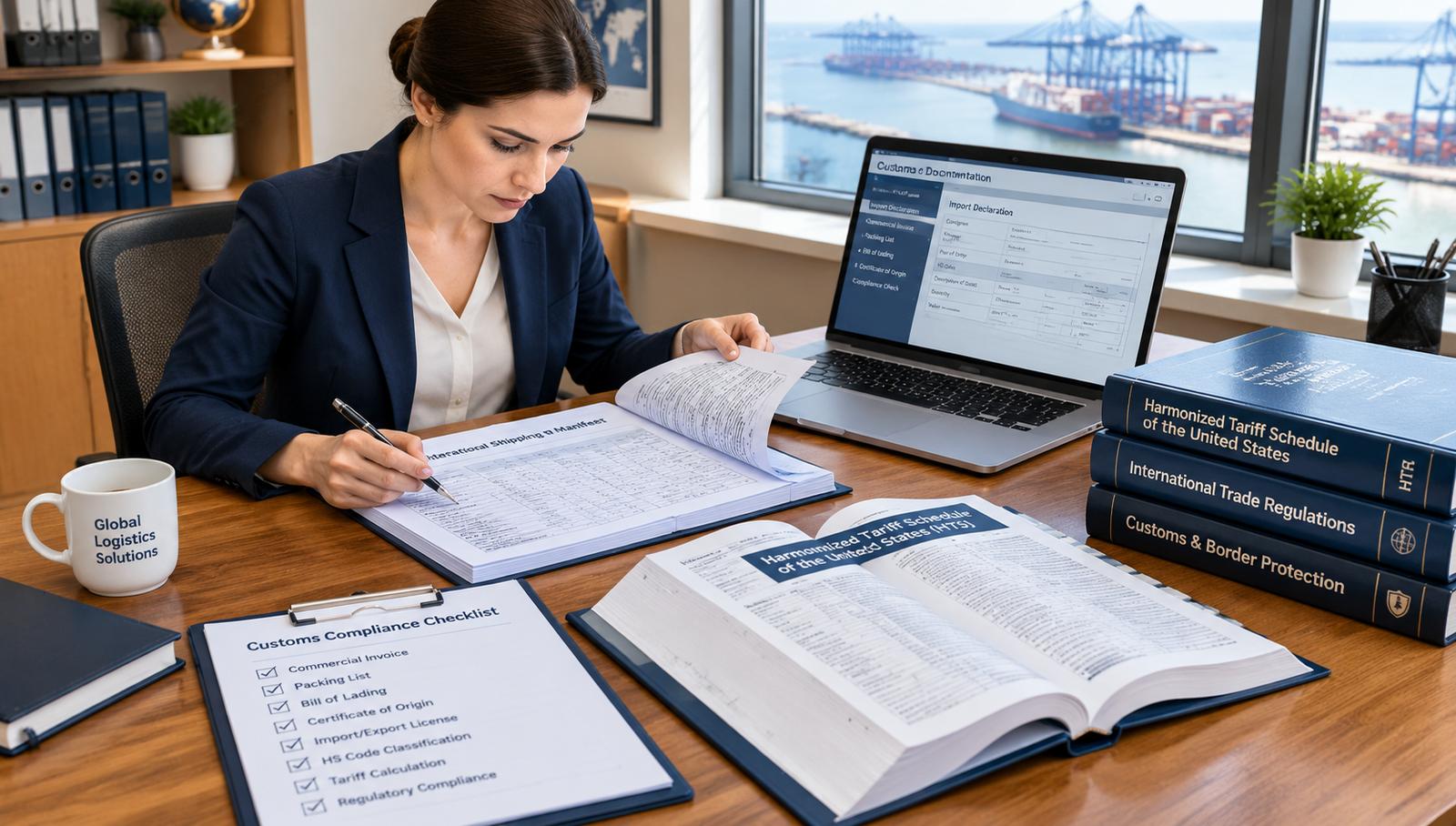
Field note: If the producer information must remain confidential, use the wording permitted by Annex 5-A rather than leaving the field blank without explanation. If a producer or exporter is unknown, verify the destination-specific instructions. A permitted data-entry convention does not remove the need to substantiate the goods’ origin.
USMCA Certificate of Origin: Completed Example
The following worked example adapts a certification example published in CBSA’s official guidance. It demonstrates how the nine fields fit together; it is not a customer case or a template to reuse for unrelated goods. The example’s blanket period is historical, and the classification and origin criterion apply only to its stated product facts.
Example transaction and parties
Certifier role: Exporter and producer.
Certifier: Pedro Sanchez, President, Belt-R-Up Company, 123 Buckle Street, El Paso, Texas, USA 39812; telephone 111-111-1111; email pedrosanchez@beltrup.com.
Exporter: Same as the certifier. The exporter address identifies the place of export in a USMCA Party’s territory.
Producer: Same as the certifier. The producer address identifies the place of production in a USMCA Party’s territory.
Importer: Jack Johnson, Owner, The Old Sod Shanty, 5754 32nd Ave., Calgary, Alberta, T3J 3N9, Canada; telephone 555-555-5555; email jackjohnson@oldsodshanty.com.
Example goods and origin criterion
Product description: Leather belts, Model 2725 “Western King,” dark brown, and Model 2726 “Western Queen,” light brown.
HS classification: 4203.30, expressed at the six-digit level as 420330.
Origin criterion: Article 4.2(b), as stated in the CBSA example. That example applies a product-specific rule requiring a change to heading 42.03 through 42.06 from any other chapter. Do not use this criterion or rule for a different product without independently checking its classification, materials, production facts, and applicable rule.
Blanket period: September 1, 2020, through August 31, 2021, as shown in the published example. This period has expired and must not be copied into a current certification.
Example certification statement and signature
Certification statement: Use the exact statement in Annex 5-A, reproduced in the preceding section. The completed certification must identify the authorized certifier and date.
Authorized signer: Pedro Sanchez.
Name, title, and company: Pedro Sanchez, President, Belt-R-Up Company.
Example date: September 1, 2020, as used in the published illustration.
For a real shipment, replace the example details with verified data, establish the correct origin criterion, use the appropriate current certification period where relevant, and reconcile the form with the commercial invoice and supporting production records. The official CBSA valid certification examples provide additional illustrations of other certifier arrangements.
What Documents Support the Certification?
The nine minimum data elements do not mean every shipment requires an identical attachment package. The responsible parties should retain the records needed to substantiate the chosen origin criterion and relate the certification to the goods being imported.
- Commercial invoice: Check the seller, buyer, product description, and invoice reference against the certification.
- Packing list: Reconcile package counts, contents, product identifiers, and quantities with the shipment file.
- Product and classification file: Retain the relevant product specifications and the basis for the proposed HS classification.
- Origin evidence: Retain applicable bills of materials, supplier information, production records, written producer representations, or other evidence supporting the selected rule.
- Transport and entry records: Keep the records needed to identify the shipment and support the import claim, including transit or transshipment information when relevant to the applicable requirements.
USMCA Article 5.8 sets out recordkeeping obligations for importers, exporters, and producers. An importer claiming preferential tariff treatment must generally keep the relevant import documentation, including the certification, for at least five years from the date of importation. An exporter or producer that completes a certification, or a producer that provides a written representation, must generally retain the applicable origin-supporting records for five years after the certification was completed, unless the relevant Party specifies a longer period.
These periods have different starting points. Do not apply the importer’s date of importation to every party’s records. The agreement also provides that recordkeeping obligations apply even if a certification requirement is waived. Confirm the requirements for the relevant jurisdiction and transaction, and keep records retrievable for review.
Follow a Six-Step Preparation Workflow
Use this sequence to connect the origin assessment to the completed certification and import claim. The person responsible for each step should identify unresolved questions before passing the file to the next party.
Confirm the Transaction
Identify the importing country, importer, exporter, producer, goods, and intended preference claim. Establish who will certify and who will coordinate the import review.
Verify Classification
Check the product characteristics and proposed six-digit HS classification. Resolve material uncertainty before relying on a product-specific origin rule.
Substantiate Origin
Find the applicable rule and collect the production, material, supplier, or other evidence needed to support the selected origin criterion.
Complete the Nine Fields
Use an official template or an equivalent document. Complete the data elements, insert the required statement, and obtain the authorized signature and date.
Review the Import Claim
The importer confirms possession of a valid certification when making the claim. The broker reviews the information within the agreed scope and raises unresolved questions.
Retain and Maintain Records
Connect the certification to the product evidence and import records. Reassess the origin information when a material fact changes and retain the applicable versions.
Reduce Filing and Documentation Exposure
Incomplete or inconsistent origin data can lead to requests for clarification, corrective documentation, or delays in processing the preference claim. The actual effect depends on the transaction, the importing country’s procedures, and the issue under review. Early reconciliation helps the parties identify gaps before the importer relies on the information.
Before the claim is made, confirm that the importer has the valid certification, that the goods are identified accurately, and that the origin criterion is supported. If a classification, material, or production question remains unresolved, assign an owner and obtain the appropriate review. Do not treat completion of the form as confirmation that customs authorities will accept the claim.
Transport coordination remains a separate task. Match the invoice, packing list, consignee, and relevant transport records, but do not treat a bill of lading or dispatch country as proof of originating status. Confirm destination delivery arrangements and any separate brokerage, receiving, storage, or handling responsibilities with the parties that have accepted those tasks.
Common Errors and Prevention Checks
Most preventable certification problems involve inaccurate product data, unsupported origin statements, incomplete party information, or unclear ownership of the next step.
- Incorrect origin criterion: Check the actual product-specific rule and supporting facts instead of choosing a criterion based on the country of export.
- Unverified classification: Resolve classification uncertainty when it could change the applicable origin rule.
- Conflicting product descriptions: Compare the certification, invoice, packing list, and product specifications. Investigate discrepancies instead of changing wording simply to force a match.
- Unsupported producer information: Obtain material and production facts from a knowledgeable source, and keep the relevant supporting records.
- Incorrect party details: Verify the exporter, producer, importer, and certifier separately. Do not assume that the consignee is the importer.
- Incorrect document format: Ensure the certification is not provided on an invoice or other commercial document issued in a non-Party.
- Outdated certification data: Recheck the product, producer, origin evidence, and any blanket period before reusing a prior certification.
Common mistake: Treating a completed USMCA cert as conclusive proof that goods qualify. The certification records the certifier’s statement; the applicable origin rule and supporting facts determine whether there is a valid basis for that statement. Retain the evidence connected to the exact products being claimed.
Stop and verify: If the producer cannot substantiate the proposed criterion or the classification remains uncertain, do not treat the certification as ready. Refer the unresolved issue to the importer and the appropriate classification or origin specialist before the preference claim is made.
Disclosure: This page provides general logistics and customs-preparation information and may mention freight services available through this website. Actual requirements, authority decisions, duties, taxes, document obligations, service scope, and delivery conditions depend on the shipment, jurisdiction, commodity, transaction, and current rules. Confirm current requirements before booking or filing.
Final Preparation Checklist Before Filing
The file is ready for review when the responsible parties can connect the proposed certification to the actual goods, the applicable origin rule, and the supporting evidence. Use this checklist to identify open issues before assigning the next step.
Confirm the origin basis. Establish the relevant HS classification, product-specific rule, and evidence supporting the criterion.
Complete all nine data elements. Check party details, goods description, classification, origin criterion, applicable blanket period, and the required statement.
Reconcile the supporting file. Compare the certification with the invoice, packing list, product records, and applicable origin evidence.
Confirm the import handoff. Identify who holds the certification, coordinates the claim, and responds to requests for information.
Document unresolved issues. Assign an owner for any classification, production, material, document, or destination-procedure question that remains open.
Illustrative example (not a customer case): An exporter has completed the product fields, but a third-country trading company issued the commercial invoice. The team checks the origin evidence, keeps the invoice in the commercial file, and prepares the certification as a separate document. The importer and broker then verify the required data and filing arrangements without assuming that the document format establishes eligibility.
Key Takeaways
- Use the official suggested template or another suitable document containing all nine minimum data elements.
- Determine the applicable product-specific origin rule before completing the origin criterion.
- Copy the required certification statement accurately and complete the authorized signature and date.
- Apply the non-Party commercial-document restriction and confirm the importing country’s procedures.
- Retain supporting evidence and follow the recordkeeping requirements applicable to each responsible party.
FAQ
Where can I get a USMCA certificate of origin form?
CBP provides a suggested certification template for U.S.-related trade, and CBSA provides instructions and valid examples for Canadian imports. The agreement does not prescribe a single mandatory layout. Choose a format that contains the nine minimum data elements and follows the applicable document requirements, then verify the information before the certifier signs or completes the certification.
Is a fillable USMCA certificate of origin form enough to claim preferential treatment?
No. A fillable form organizes information but does not establish that the goods qualify. The certifier needs a valid basis for the origin statements, and the importer must meet the applicable import requirements. Check the product’s classification, applicable origin rule, material and production facts, and supporting records before relying on the completed certification.
What is the required USMCA certification statement?
Annex 5-A contains the required statement beginning “I certify that the goods described in this document qualify as originating.” It continues with the certifier’s responsibility for proving the statements and maintaining and presenting supporting documentation. Use the full official wording, then complete the authorized signature and date in accordance with the applicable procedures.
Who can certify the origin of the goods?
The importer, exporter, or producer may certify under the applicable agreement provisions. The responsible party must have a valid basis for its statements. An exporter that is not the producer may use its own supporting information or reasonably rely on the producer’s written representation, as provided by the agreement. Confirm the applicable destination rules before completing the certification.
Can I put the certification on an invoice issued outside the USMCA countries?
No. The certification must not be provided on an invoice or another commercial document issued in a non-Party. However, a claim cannot be rejected solely because the invoice itself was issued in a non-Party. Prepare the certification as a separate document and confirm that it contains the required data elements and meets the applicable import procedures.
Can one certification cover multiple shipments?
Yes, when the certification covers multiple shipments of identical goods for a specified period. Under Article 5.2, the period cannot exceed 12 months. Verify that the products remain within the certification’s scope and that the origin information remains accurate. A prior certification should not be reused automatically when product, materials, production, or other relevant facts change.
Is a USMCA certification always required?
Article 5.5 provides exceptions, including qualifying importations valued at no more than US$1,000 or the equivalent in the importing Party’s currency, unless a higher amount is established, and certain importations for which the importing Party has waived certification. A Party may still require a written representation. Check the current destination requirements; an exception does not itself establish origin eligibility.
How long must the certification and supporting records be retained?
Article 5.8 generally requires an importer claiming preferential treatment to retain relevant import documentation for at least five years from the date of importation. An exporter or producer that completes a certification, or a producer that provides a written representation, generally retains supporting origin records for five years from the date the certification was completed, unless the relevant Party specifies a longer period.
Disclaimer: This page is general operational guidance, not legal, customs, tax, insurance, product-safety, regulatory, classification, or licensing advice. Requirements, authority decisions, responsibilities, charges, and deadlines depend on the controlling documents, product, jurisdiction, transaction, service terms, and current official guidance. Confirm current shipment requirements with the relevant authority, licensed broker, carrier, or qualified adviser.