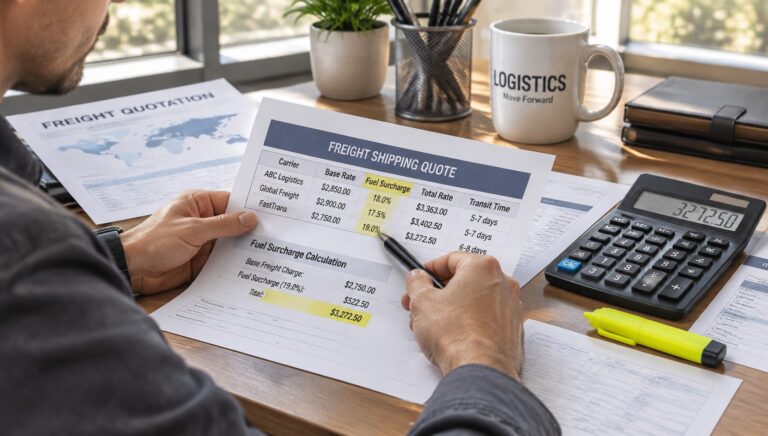
A freight forwarder organizes the movement of goods from origin to destination on behalf of a shipper. The forwarder coordinates transportation, bookings, shipping documents, cargo handoffs, and other services included in the agreed shipment scope. Rather than operating every vehicle or vessel, a forwarder often works with carriers, terminals, warehouses, and other logistics providers. The exact role depends on the service agreement, route, cargo, and applicable requirements.
For importers and exporters, the main benefit is having one party coordinate multiple shipment activities instead of managing every provider separately. However, a freight forwarder does not automatically assume responsibility for customs decisions, cargo insurance, every additional charge, or final delivery. Before booking, confirm what the quotation includes, who handles each document and handoff, and which party is responsible when a shipment changes or encounters a problem. These checks help procurement and logistics teams compare offers on an equivalent basis and avoid gaps between the services purchased and the services required.
What Freight Forwarding Covers From Booking to Delivery
Freight forwarding connects the separate activities required to move a shipment. A forwarder assesses the shipment details, selects suitable transport options, books capacity with relevant providers, coordinates the transfer of cargo, and tracks progress against the planned movement. The scope may also include consolidation, warehousing, export documentation, customs brokerage coordination, cargo insurance arrangements, and final delivery.
Most shipments follow four operational stages, although the actual handoffs depend on the route and service arrangement.
Define the shipment and service scope
The shipper provides the origin, destination, cargo description, package count, dimensions, weight, readiness date, and delivery requirements. The forwarder uses these details to assess routing options, capacity, handling needs, and likely charges. For planned, larger-volume shipments, the shipper may evaluate sea freight options alongside other feasible routes.
Arrange pickup and transportation
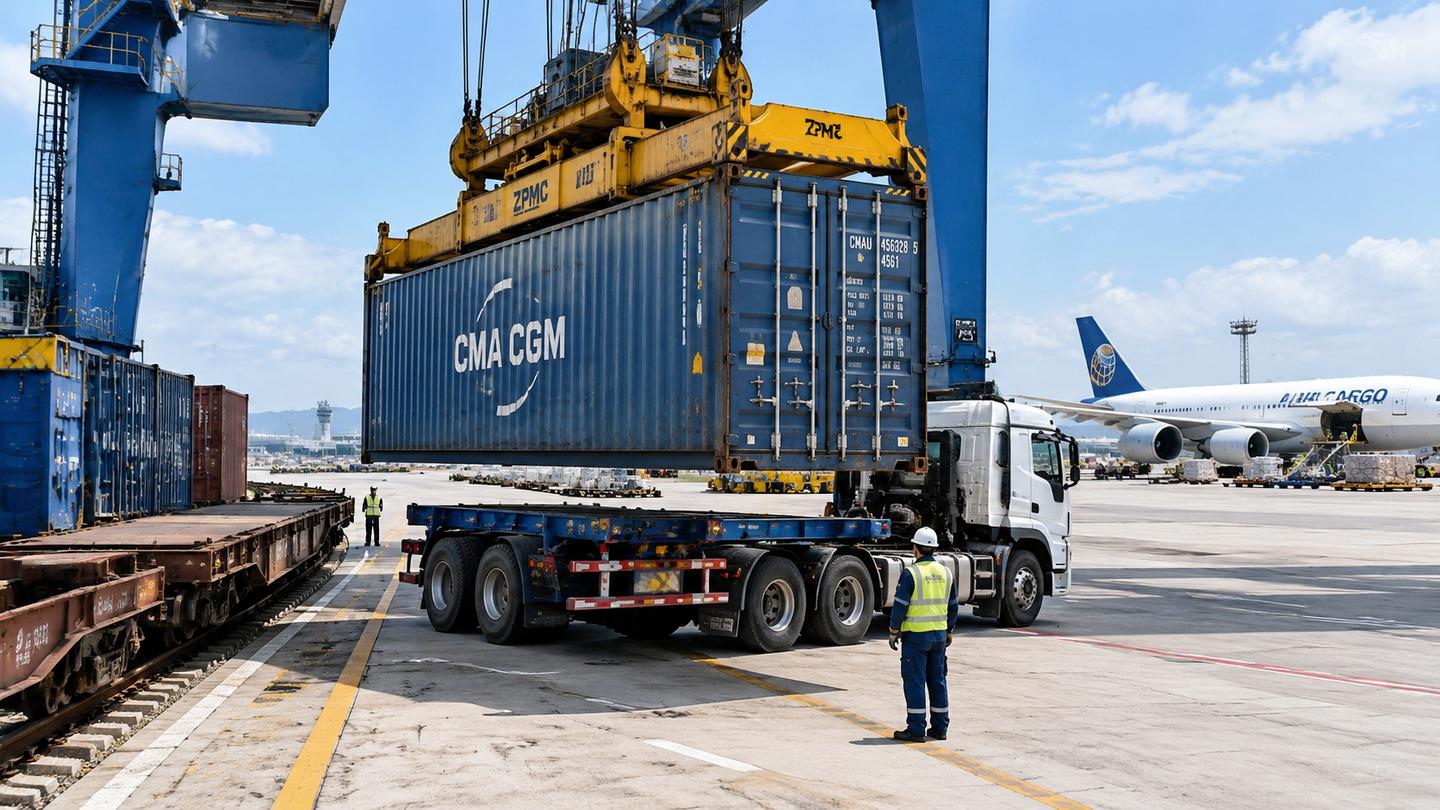
The forwarder coordinates cargo collection, origin handling, carrier booking, and any required transfers. Road transport may connect the shipper’s facility with a port, airport, rail terminal, warehouse, or consignee. Confirm whether trucking arrangements are included in the quotation or priced as a separate service.
Coordinate documents and shipment handoffs
The shipper and forwarder check that shipment instructions, cargo details, and transport documents agree. Where customs formalities apply, the responsible party must provide the required information and authorize the appropriate filing. The forwarder coordinates the relevant handoffs, but the precise filing responsibilities depend on the transaction and service agreement.
Monitor arrival and complete delivery
The forwarder tracks milestones, coordinates destination handling, and arranges the next transport leg when included in the scope. The shipper should confirm who pays destination charges, handles exceptions, and obtains proof of delivery. A completed carrier movement does not necessarily mean the full shipment service is complete.
These stages create a coordinated workflow, not an unconditional delivery commitment. Carrier schedules, customs reviews, terminal availability, cargo readiness, and other external factors may change the plan. The forwarder should explain the applicable service conditions and identify which party will handle exceptions.
How a Freight Forwarder Differs From Other Providers
A freight forwarder, freight broker, carrier, and customs broker can participate in the same shipment, but their functions are not interchangeable. The practical distinction is the work each provider agrees to perform, the capacity in which it acts, and the responsibilities established by the relevant contract or authorization.
| Provider | Typical function | What to confirm |
|---|---|---|
| Freight forwarder | Coordinates shipment planning, transport bookings, documents, and logistics handoffs. | Included services, contractual role, exclusions, and responsibility for each transport leg. |
| Freight broker | Typically arranges transportation capacity between a shipper and a carrier, particularly in domestic trucking markets. | Covered lanes, carrier arrangements, service scope, and applicable contractual responsibilities. |
| Carrier | Performs an agreed transportation movement or undertakes to transport cargo under its contract. | Equipment, collection and delivery terms, cargo handling, liability conditions, and service exceptions. |
| Customs broker | Handles designated customs-entry and clearance activities within the applicable authorization and jurisdiction. | Filing authority, importer or exporter responsibilities, required records, and any excluded services. |
What does a freight broker do in practice? A broker typically connects transportation demand with available carrier capacity, while a freight forwarder may coordinate a wider shipment involving several transport legs, document handoffs, and destination services. This is a useful general distinction rather than an absolute boundary. Providers can offer overlapping services, and a forwarder may also act in another contractual capacity. Shippers should identify the role specified in the agreement rather than infer responsibility from the provider’s name.
The key question is not simply which company books the transport. It is which party controls each handoff, which party must provide the required information, and which contract governs delays, loss, damage, additional charges, and service changes.
When Hiring a Freight Forwarder Makes Sense
Freight forwarding is particularly useful when a shipment requires several providers, international transport coordination, specialized handling, or a combination of origin and destination services. The value depends on the complexity of the movement and the amount of coordination the shipper wants to retain internally.
Multimodal or international shipments. A forwarder can coordinate handoffs between road, rail, ocean, and air transport. For supported corridors, rail freight may be another option to evaluate against other modes. The appropriate choice depends on route availability, cargo characteristics, total transit time, handling requirements, and the complete quoted cost.
Time-sensitive cargo. Air freight may fit shipments for which the required timing justifies its cost. Small, urgent parcels may instead suit an express shipping service. Compare the actual collection, transit, clearance, and delivery scope rather than assuming that a particular mode guarantees an arrival date.
Import operations requiring coordinated support. Importers that need help organizing transport, documents, and delivery can evaluate an import service. The importer should still identify who supplies the commercial documents, who provides clearance instructions, and who pays charges at each stage.

Special handling or delivery requirements. Cargo that cannot move in standard container equipment may require a different loading and transport arrangement, such as break-bulk shipping. Businesses sending inventory to fulfillment facilities may also need to evaluate an Amazon FBA shipping service when preparation, labels, appointments, or receiving requirements form part of the delivery plan. In both cases, confirm the actual handling tasks, equipment, and destination requirements before booking.
A forwarder may add less value when a shipper already has a suitable carrier contract, stable routing, sufficient internal logistics resources, and a narrow transportation requirement. In that situation, direct carrier booking or a focused brokerage arrangement may meet the need with less coordination overhead. Compare the full service scope and total cost before deciding.
What Determines Freight Forwarder Fees?
Freight forwarder fees depend on the shipment, route, transport mode, selected service, handling requirements, and providers involved. A quotation may combine the forwarder’s service charges with carrier transportation, terminal handling, documentation, customs-related services, and other third-party costs. Some items appear as separate line charges, while others may be incorporated into a bundled price.
Review the quotation by charge category rather than comparing only the headline freight rate. Common items include:
- Origin charges: Pickup, export handling, receiving, consolidation, documentation, or other origin-side work, when applicable.
- Main transportation: The charge for the principal movement, calculated according to the applicable mode, route, cargo details, and carrier pricing basis.
- Destination charges: Handling, terminal or warehouse fees, document release, and other destination services specified in the quote.
- Customs and administration: Brokerage, filing, or document-related charges where those services are included or arranged separately.
- Additional services and exceptions: Storage, inspections, special handling, waiting time, delivery changes, cargo insurance, or other charges when applicable under the agreed terms.
The quoted amount can change when the declared cargo details differ from the actual shipment. Incorrect dimensions, gross weight, package count, commodity information, or cargo readiness can lead to revised pricing or additional handling. The shipper should provide accurate data and ask the forwarder to identify any assumptions in the quote.
Request a like-for-like comparison using the same origin, destination, cargo description, package dimensions, gross weight, shipment readiness date, service level, pickup and delivery scope, and customs-service assumptions. Ask each provider to distinguish confirmed charges from estimates, identify exclusions, state how additional charges will be approved, and explain which charges may arise at destination. A lower initial rate is not necessarily the lower total cost if the offers cover different activities.
Procurement check: Ask for the expected total under the stated shipment assumptions, a breakdown of included and excluded services, the basis for variable charges, and the process for notifying you of a cost change. Confirm who must authorize extra work before it proceeds.
Documents, Customs, and Responsibility Handoffs
Accurate shipping instructions help the forwarder book the correct service, prepare transport documents, and coordinate the shipment with other parties. The required paperwork depends on the route, cargo, transaction, transport mode, and applicable rules. A forwarder can explain what it needs, but the shipper remains responsible for supplying accurate business and cargo information within its assigned role.
For relevant export transactions, a shipper’s letter of instructions (SLI) provides directions from the shipper or exporter to the forwarder. Depending on the transaction and the form used, it may identify the parties, describe the goods, provide shipment details, set out document instructions, and address authorization for designated export-filing activities. The SLI is an instruction document; it does not replace every commercial, transport, or customs document that the shipment may require.
Before releasing cargo, the shipper and forwarder should reconcile the shipment instructions against the booking and the available supporting records. At a minimum, check the following information where applicable:
- Shipper, consignee, notify-party, and delivery details are accurate and consistent.
- The cargo description, quantity, dimensions, gross weight, and packaging details match the actual shipment.
- Commercial invoices, packing lists, transport-document instructions, and required permits or supporting records are available to the responsible parties.
- The authorized party for each required filing is identified, and the party supplying the data understands its responsibilities.
Customs clearance is a separate responsibility that may be performed by an authorized customs broker or another qualified party under the applicable arrangement. A forwarder may coordinate this work or offer related services, but booking transportation alone does not establish that customs filing or clearance is included. Review the scope of customs brokerage services and confirm who submits the relevant information, responds to questions, and pays the associated charges.
Importers should also verify who manages destination handoffs and what happens after arrival. A door-to-door service may bring pickup, international transportation, and final delivery under a coordinated scope, but the shipper still needs to confirm the boundaries of that scope, including customs-related responsibilities, unloading, and any site-specific delivery conditions.
Insurance requires a separate check. A forwarder may arrange coverage when requested, but the existence of a freight booking or carrier liability provision does not by itself establish that the cargo has the insurance protection the shipper needs. Review the proposed cargo insurance coverage, including covered risks, exclusions, valuation, deductibles, and claims requirements, with the responsible provider before relying on it.
The operational endpoint should be explicit. Determine what counts as completion, which proof of delivery or release documents are required, and who receives notice if cargo is held, delayed, damaged, or delivered with a discrepancy. These handoffs should be agreed before dispatch rather than reconstructed after a problem occurs.
Common Mistakes and Operator Checks
Two preventable problems frequently undermine a forwarding plan: incomplete shipment information and assumptions about what the quote covers. Both can be addressed before cargo leaves the origin.
Check the cargo facts before booking. If the shipper supplies estimated dimensions, an incomplete commodity description, or an unconfirmed ready date, the forwarder may select a service or price the shipment using assumptions that later prove incorrect. Reconcile the booking data with the packing details and flag special handling or documentation needs before the cargo is collected.
Check each handoff before releasing the shipment. If the forwarder assumes that the shipper has arranged clearance, insurance, or destination delivery while the shipper assumes the opposite, the shipment may incur extra charges or miss its next available movement. Assign an owner to each task and obtain confirmation that the required provider, document, and delivery arrangements are in place.
Common mistake: Treating the quotation as proof that every transport and destination cost is included. The prevention is to review exclusions, variable charges, third-party services, and responsibility boundaries in writing, then confirm any unresolved item before booking.
Keep the final quotation, shipping instructions, booking confirmation, approved changes, and delivery records together. These records help the shipper check invoices against the agreed scope and establish a clear timeline if an exception requires investigation.
Disclosure: This guide provides general logistics information and may refer to services relevant to the topic. Carrier terms, customs requirements, fees, service coverage, and operating conditions can change. Confirm current requirements and responsibilities before acting.
Key Takeaways
- A freight forwarder coordinates transportation and related shipment activities within an agreed scope; it does not automatically perform or assume responsibility for every service.
- Distinguish the forwarder’s role from the roles of the carrier, freight broker, and customs broker by checking the relevant agreements and authorizations.
- Compare freight forwarder fees against the same shipment facts and service scope, including destination charges and potential extras.
- Provide accurate shipping instructions and assign clear owners for documents, filings, insurance, cargo handoffs, and final delivery.
- Before booking, confirm exclusions, variable charges, responsibility boundaries, and the procedure for handling delays or other exceptions.
Freight Forwarder FAQs
What is a freight forwarder in simple terms?
A freight forwarder organizes the movement of goods on a shipper’s behalf. It coordinates transport providers, shipment documents, and agreed logistics services, while its precise responsibilities depend on the contract and the shipment.
What is freight forwarding?
Freight forwarding is the coordination of cargo transportation from origin to destination. It may involve carrier bookings, pickup, consolidation, documentation, customs-service coordination, destination handling, and final delivery, depending on the services purchased.
What does a freight broker do compared with a forwarder?
A freight broker typically arranges transport capacity between a shipper and a carrier, while a freight forwarder may coordinate a wider shipment with multiple transport legs and related logistics tasks. The distinction varies by market and provider, so verify the actual contractual role and scope.
Does a freight forwarder own its trucks, ships, or aircraft?
Not necessarily. Many forwarders arrange transportation through external carriers rather than operating every transport asset themselves. Ask which providers will handle the shipment and which party is contractually responsible for each leg.
How much do freight forwarder fees cost?
The cost depends on the route, mode, cargo details, service scope, and applicable handling or documentation charges. Request an itemized quotation based on confirmed shipment facts, and check exclusions, variable charges, and potential destination costs before comparing offers.
What is a shipper’s letter of instructions?
A shipper’s letter of instructions gives the forwarder directions for handling a shipment and may include cargo details, party information, document instructions, and relevant filing authorizations. Its contents and use depend on the transaction. Confirm the required form and information with the responsible forwarder or filing party.
Does a freight forwarder handle customs clearance?
A forwarder may coordinate customs clearance or arrange services through an authorized customs broker, but the service is not automatically included with every booking. Confirm who files the required information, who supplies supporting records, and who handles any resulting charges or requests.
Who is responsible if cargo is delayed, lost, or damaged?
Responsibility depends on the circumstances, the relevant contracts, the party’s role, and applicable law. Review the forwarder’s contractual terms, the transport documents, any applicable liability conditions, and the available cargo insurance. Report the issue promptly and follow the relevant notice and claims procedures.
Disclaimer: This article is general informational guidance, not a binding quotation, legal opinion, customs ruling, carrier commitment, or delivery guarantee. Requirements, charges, service terms, and responsibilities can vary by route, cargo, contract, carrier, and jurisdiction. Confirm current requirements before booking or filing.