


Reviewed by TJ Logistics Team · October 2026. TJ Logistics Team reviewed the route content, current planning references, and destination preparation points for October 2026. Formal quotation and booking are prepared against the defined shipment.
Shipping from China to Haiti: Route Overview
The Shanghai (Yangshan/Waigaoqiao), China → Port-au-Prince, Haiti FCL 20GP reference is $9,300–$9,500 per container with a 44–45 day planning transit. This named ocean reference is a starting point for container-ready cargo; shared-load shipments, urgent deliveries, and destinations in northern Haiti may require a different movement plan.
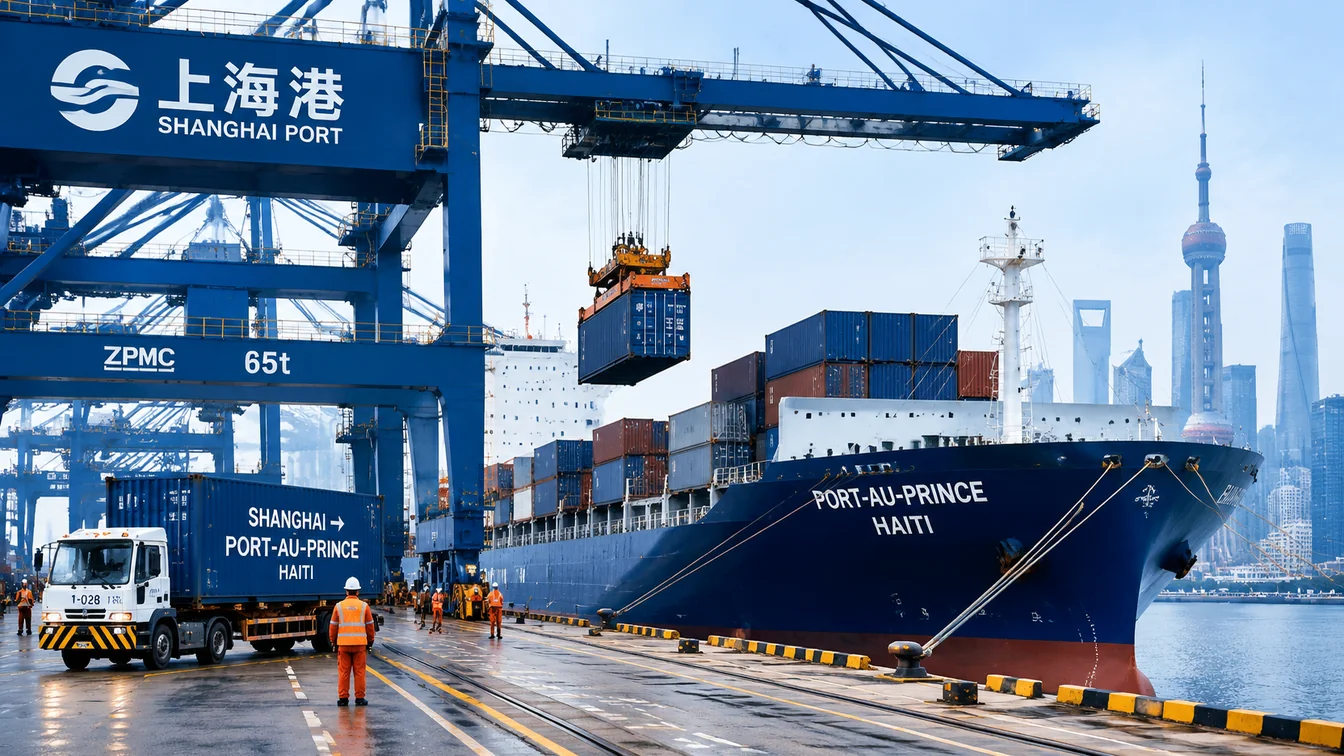
A practical China-to-Haiti shipment links supplier readiness and export handling in China with ocean, air, or express transportation, Haitian import clearance, and delivery to the agreed final address. The destination gateway and the feasibility of the final road leg are important parts of the decision, particularly when delivery extends beyond Port-au-Prince.
China to Haiti Shipping Cost and Transit Time
Current TJ Logistics Team planning references provide route-specific China-to-Haiti prices and transit times for October 2026. Each reference applies to its named route, method, equipment or unit, and transit times are planning guides rather than delivery guarantees.
| Shipping route | Shipping method | Price | Transit time |
|---|---|---|---|
| Shanghai (Yangshan/Waigaoqiao), China → Port-au-Prince, Haiti | FCL 20GP | $9,300–$9,500 per container | 44–45 days |
| Shanghai (Yangshan/Waigaoqiao), China → Port-au-Prince, Haiti | FCL 40GP | $9,500–$9,700 per container | 44–45 days |
| Shanghai (Yangshan/Waigaoqiao), China → Port-au-Prince, Haiti | FCL 40HQ | $9,500–$9,700 per container | 44–45 days |
| Xiamen, China → Port-au-Prince, Haiti | LCL | $116/CBM | 57 days |
| China → Haiti | Air freight | $15.28/kg | 2–3 days |
| China → Haiti | Express | $24.46/kg | 2–4 days |
Rate scope: These TJ Logistics Team planning references apply to the shipping route, method, equipment or unit shown. They are not market averages or binding quotations. The formal quotation confirms the agreed collection, delivery, customs, and charge scope for the shipment.
How to Choose a Shipping Method from China to Haiti
FCL is the starting point for container-ready cargo requiring dedicated equipment, LCL suits goods that can travel as shared ocean freight, and air or express suits shipments where speed is a priority. Cargo dimensions, actual and chargeable weight, volume, commodity acceptance, supplier location, and the final delivery address determine which option fits the shipment.
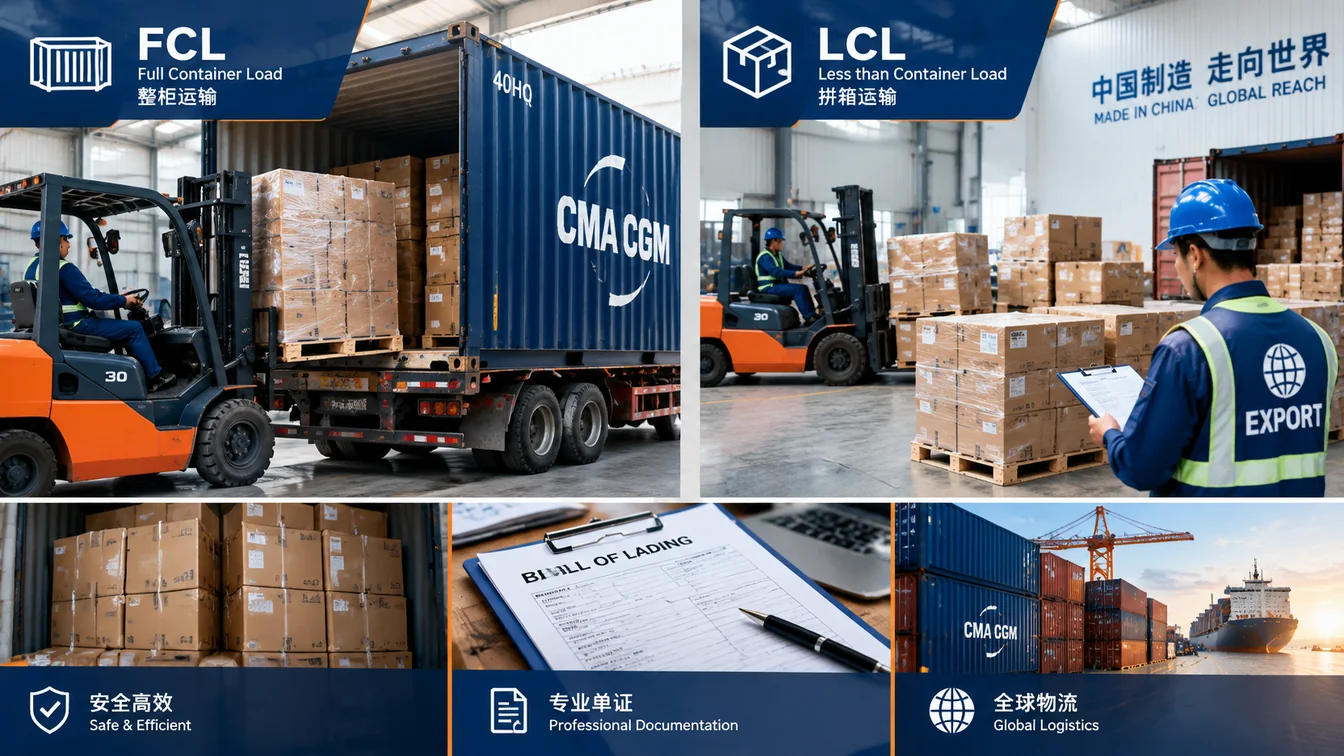
- Choose FCL when the cargo needs a dedicated container and can be loaded and received as a container unit, because the shipment follows one equipment plan; loading access, container suitability, and final-delivery access can change that choice.
- Choose LCL when cartons or pallets can share ocean space, because the cargo can move without requiring a dedicated container; consolidation cutoffs, handling requirements, and destination release arrangements affect suitability.
- Choose air freight when delivery urgency or cargo value justifies airport-based transportation, because it avoids the ocean leg; the actual cargo-acceptance rules, available routing, and arrival airport must fit the shipment.
- Choose express when the shipment is suitable for a courier parcel service and integrated pickup and delivery are important, because the courier coordinates multiple parcel-network handoffs; destination coverage, parcel dimensions, commodity restrictions, and the receiving address remain decisive.
- FCL — Full Container Load
- Use when: Cargo needs dedicated container equipment and the supplier and consignee can accommodate container handling. Key route check: Match the 20GP, 40GP, or 40HQ equipment to the cargo and receiving arrangements, using the relevant sea freight service scope as the starting point.
- LCL — Less than Container Load
- Use when: Cargo can move as a shared ocean load rather than occupying dedicated equipment. Key route check: Determine whether the consolidation and destination-handling arrangements fit the cargo’s dimensions, packaging, and release requirements.
- Air Freight
- Use when: The shipment’s delivery priority justifies airport cargo handling and an air-based movement. Key route check: Assess the shipment against actual chargeable weight, dimensions, commodity acceptance, and a workable arrival-airport routing; see the air freight service for the relevant mode.
- Express
- Use when: A parcel or small shipment fits a suitable courier service and coordinated delivery is more important than ocean consolidation. Key route check: The shipment must meet the selected service’s destination coverage, packaging, dimensional, and commodity conditions; review the express service scope against those requirements.
Plan a China-to-Haiti Shipment from Supplier to Final Delivery
The common shipment chain runs from supplier cargo readiness through export handling in China, the selected international transport service, Haitian import clearance, and release for the agreed final delivery. The method determines the physical handoffs, while the destination address and receiving arrangements determine the final delivery plan.

- FCL Container Movement
- Container loading takes place under the agreed shipper, supplier, or loading-party arrangement before the shipment enters its nominated export-terminal process. Record responsibility for arrival release, container collection, delivery, and empty-equipment return where applicable.
- LCL Consolidation Movement
- Cartons or pallets pass through origin consolidation before ocean dispatch, with destination deconsolidation and cargo-facility handling determined by the booked service. The actual consolidation cutoff and destination release procedure are important handoff details.
- Air Freight Movement
- Air cargo must meet the selected service’s acceptance requirements and follow an actual routing with an eligible arrival airport and cargo-terminal handoff. The China-to-Haiti planning reference does not establish a direct flight, a particular airport pair, or a guaranteed arrival connection.
- Express Parcel Movement
- The parcel enters the selected courier’s pickup and network-handling process, followed by the applicable Haitian customs handoff and last-mile service. The receiving address, recipient availability, and accepted commodity category affect the final delivery arrangement.
Execution Checks Before Booking
- For FCL, verify that the loading site can accommodate the selected equipment and that the agreed delivery arrangement addresses equipment collection and return.
- For LCL, establish the applicable consolidation cutoff and the release process for the destination cargo facility.
- For air and express, establish the actual cargo-acceptance handoff and the arrival or last-mile service included in the selected routing.
- Make sure the receiving location can accept the planned vehicle or delivery method and that an appointment or access arrangement is available where required.
When supplier pickup is part of the movement, the China-side collection can be coordinated with the relevant trucking freight service before the export handoff.
Choosing Haiti Entry Gateways and Inland Delivery Routes
For Haiti, the final delivery area can change whether the Port-au-Prince sea-route reference or a separately verified northern air-cargo routing is the more practical comparison. The October 23, 2026 Haiti Logistics Sector update reports that the country’s main ports remain operational but access restrictions may occur, and that Cap-Haïtien remains an international air gateway, particularly for flights to and from the United States. Road transport remains possible on main routes despite security constraints, so an operational status report should inform the decision rather than be treated as a guarantee for a specific delivery.
| Final delivery area | Typical route pattern | Why the pattern fits | Details needed for the quote |
|---|---|---|---|
| Port-au-Prince metropolitan area | Use the named Shanghai or Xiamen ocean route to Port-au-Prince as the starting reference, followed by Haitian customs clearance and the agreed local delivery leg. | Port-au-Prince is the destination named in the FCL and LCL planning references. Local access restrictions can affect the movement from cargo release to the final receiving location. | The receiving site’s actual location, delivery access, and any vehicle or appointment restrictions that affect the final leg. |
| Northern Haiti | Compare the Port-au-Prince ocean reference plus onward delivery with a separately verified air-cargo routing to a suitable northern entry point. Cap-Haïtien is an international air gateway, but a specific China-origin cargo connection is not established by that fact alone. | A different arrival point may change the final movement needed to reach a northern consignee. Cargo acceptance, routing availability, and road access must support the selected pattern. | The destination municipality, feasible cargo-arrival gateway, actual freight service availability, and the onward delivery and receiving arrangements. |
Prepare a Comparable Freight Request
Provide: The China supplier or pickup point; cargo-ready timing and cargo profile, including type, packages, dimensions, weight, and CBM; any loading or special-handling condition; the final postal code and receiving conditions; and the requested delivery scope, timing priority, and relevant importer or broker arrangement.
The formal quotation should state: The pickup and final-delivery boundary; transport method, equipment or unit, and routing pattern; customs, destination-handling, and inland-delivery handoffs; material included and excluded charges; rate validity; and the conditions that can change the amount or timing.
Prepare for Haiti Customs Before Departure
Commercial imports into Haiti require a customs declaration through the Administration Générale des Douanes (AGD), and the AGD customs-clearance guidance states that commercial declarations made on behalf of another party must be prepared and signed by an approved customs commissionnaire. The Haitian importer remains responsible for ensuring that the goods and import arrangements meet the applicable entry requirements, with the authorized local representative handling the declaration within the agreed scope.
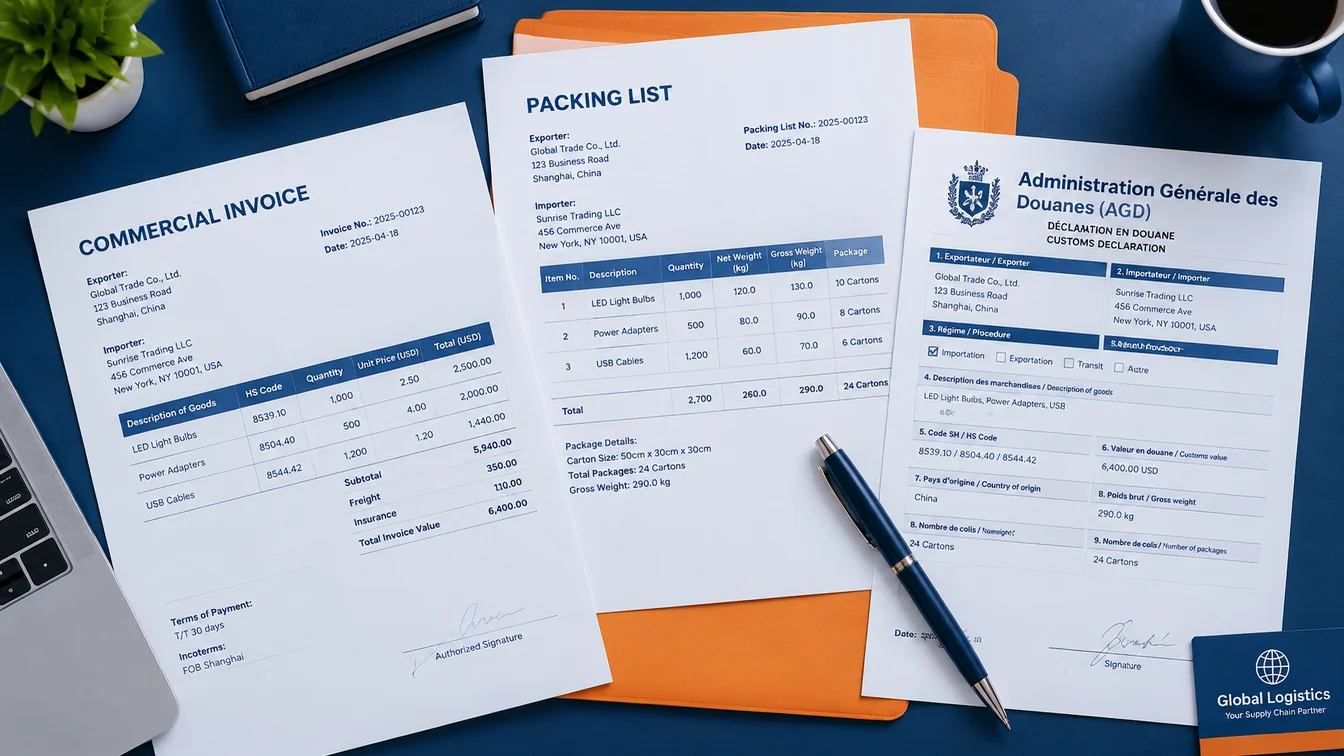
TJ Logistics Team can coordinate the document handoff with the buyer’s designated representative. The customs brokerage service overview describes the service category but does not replace the appointment of an appropriately authorized Haitian customs representative.
Customs Readiness Checklist
- Agree the tariff classification for each product line with the customs representative before finalizing the commercial description.
- Prepare a detailed commercial invoice and packing list with consistent descriptions, quantities, declared values, currency, and country of origin.
- Keep the transport document and freight-cost evidence consistent with the cargo manifest and commercial documents.
- Have the importer and customs representative establish the applicable customs valuation, duties, and taxes for the goods rather than assuming a uniform import rate.
- Determine whether a Déclaration préalable d’importation (DPI), verification attestation, or another pre-import formality applies to the commodity and declared value before dispatch.
- Obtain the required product permissions and certificates before shipping regulated goods. Agricultural products, animal products, food, and pharmaceutical products may have additional requirements.
- Agree who submits the declaration, pays assessed charges, responds to any inspection request, and authorizes release for onward delivery.
Documents to Prepare
The U.S. Commercial Service’s Haiti import guidance describes additional permits and certificates for specified product groups, so ordinary shipping paperwork should be kept separate from conditional regulatory documents.
- Commercial invoice and packing list.
- Bill of lading for ocean freight or airway bill for air and express shipments.
- Freight invoice or other relevant freight-cost documentation.
- Certificate of origin when required for the shipment.
- DPI, verification documentation, or other pre-import paperwork when required under the rules applicable to the goods and their value.
- Applicable import permits, phytosanitary or zoosanitary certificates, laboratory documents, or other product-specific certificates when required.
Haitian pre-import formalities and product-control requirements should be checked against the shipment’s actual commodity and value. The importer and authorized customs representative should resolve any DPI, verification, or permit requirement before the cargo leaves China.
Choose the Right Delivery Scope for China-to-Haiti Shipping
| Service scope | What the scope means | Key responsibility or condition |
|---|---|---|
| Port-to-port | Ocean transportation between the specifically named departure and arrival ports. The agreed scope ends at the destination port boundary. | The consignee or its appointed representative ordinarily arranges destination clearance and collection unless those tasks are expressly included elsewhere. |
| Airport-to-airport | Air transportation between the specifically agreed departure and arrival airports. Destination-terminal handling, customs clearance, and final delivery are separate unless included in the agreed scope. | The receiving party must arrange the agreed destination handoff and release process. Any terminal or delivery service included in the booking must be expressly defined. |
| Door-to-door | Coordinates cargo collection at the defined China address through delivery to the agreed Haiti address. The contracted service boundary determines which transport and handoff activities are included. | The importer normally remains responsible for import duties, taxes, and legal compliance unless a valid, expressly agreed arrangement provides otherwise. |
| DDP — Delivered Duty Paid | Under an applicable agreed DDP arrangement, the seller bears the assigned transport, import-clearance, duty, and tax responsibilities under the governing trade terms. DDP does not remove product-specific regulatory requirements or override Haitian law. | The named party must be legally able to perform the assigned import obligations. The arrangement must account for local importer and compliance requirements rather than assume that every shipment can use DDP. |
A door-to-door service can coordinate the defined China pickup and Haiti final-address delivery where the agreed route and receiving access are workable. The delivery scope should distinguish transport coordination from the importer’s statutory obligations and the authority responsible for customs release.
Why Use a Freight Forwarder for Shipping from China to Haiti?
A freight forwarder helps turn shipment details into a usable movement definition, match credible transport options to the delivery destination, and coordinate the commercial and operational handoffs. For Haiti, those decisions also need to account for whether the destination-side route is workable when the cargo becomes available for release and onward movement.
1. Turning an unclear shipment request into a movement plan
A supplier’s description may not be enough to determine equipment, handling, or the contractual endpoint. A defined shipment scope helps establish whether a dedicated container, shared ocean load, air movement, or parcel service is appropriate.
2. Matching the international movement to the actual delivery area
A suitable origin gateway does not automatically make the entire route workable. The chosen international service must fit the cargo, urgency, and intended Haitian destination, particularly when northern delivery may require a different arrival or onward-movement plan.
3. Making responsibility clear at each handoff
Unclear ownership of documents, customs filing, cargo release, or final collection can leave the shipment without a defined next action. A documented division of responsibility helps the buyer, supplier, importer, and authorized representative understand their respective tasks.
How TJ Logistics Team Plans a China-to-Haiti Shipment
- 1. Shipment Definition and Gap Review
- TJ Logistics Team reviews the defined shipment request and flags route-specific information gaps that prevent a reliable next decision. For higher-value goods, the team can also record a separate cargo insurance consideration rather than assume that insurance forms part of the transport scope.
- 2. Transport and Gateway Comparison
- TJ Logistics Team compares the named Shanghai FCL and Xiamen LCL planning references with the air or express requirements where those methods fit the shipment. Destination entry and onward delivery are evaluated against the requested final address without treating an unverified alternative as an available service.
- 3. Service Boundary and Responsibility Record
- Before preparing the formal quotation, TJ Logistics Team records the agreed pickup and delivery boundaries, transport scope, customs representative, and parties responsible for the next cargo-release and delivery handoffs.
- 4. Booking and Operational Handoff Coordination
- After the buyer accepts the agreed quotation and scope, TJ Logistics Team coordinates booking information, commercial-document handoffs, and cargo readiness. If routing, documentation, timing, or receiving conditions change, the team flags the change and the party responsible for the next operational decision.
China to Haiti Shipping FAQ
How much does it cost to ship a 20ft container from China to Haiti?
For the Shanghai (Yangshan/Waigaoqiao), China → Port-au-Prince, Haiti FCL 20GP reference, TJ Logistics Team’s planning range is $9,300–$9,500 per container in October 2026. This is the dedicated-container reference to evaluate when the cargo and receiving arrangements call for a 20GP rather than shared ocean space or a different container size.
How long does sea freight from China to Haiti take?
For Shanghai (Yangshan/Waigaoqiao), China → Port-au-Prince, Haiti FCL 20GP, TJ Logistics Team’s planning-transit reference is 44–45 days in October 2026. This ocean-route planning reference does not include an independently established duration for customs clearance or the final inland delivery leg.
What is the most cost-effective way to ship from China to Haiti?
For cargo requiring dedicated container equipment, compare FCL first; for cartons or pallets that can share ocean space, compare LCL. Air freight and express are better evaluated when urgency, handling needs, or parcel-service requirements justify their different transport and charging structures, rather than ranking their unlike units as a single price comparison.
Which China gateway should I use when shipping to Haiti?
Use the closest suitable origin gateway that can support the selected service: Shanghai (Yangshan/Waigaoqiao) is the named FCL origin reference, while Xiamen is the named LCL origin reference in TJ Logistics Team’s October 2026 planning information. The supplier’s actual location, cargo form, and feasible transport service determine which comparison is practical.
Which gateway should I compare for delivery to northern Haiti?
For northern Haiti, compare the Port-au-Prince ocean reference plus onward delivery with a separately verified cargo routing to a suitable northern entry point. The October 23, 2026 Haiti Logistics Sector update identifies Cap-Haïtien as an international air gateway, but international passenger flights alone do not establish an available China-origin air-cargo service or its acceptance conditions.
What documents should be prepared before shipping from China to Haiti?
Haiti commercial import preparation normally starts with a detailed commercial invoice, packing list, transport document, and customs declaration. The importer and authorized customs representative should also determine whether the shipment requires a DPI, verification paperwork, or product-specific permits and certificates before cargo dispatch.
Can I ship door-to-door from China to Haiti?
Yes, a door-to-door arrangement can coordinate China collection through delivery to a defined Haitian address when the selected service supports both ends of the movement. The agreed scope must distinguish transport coordination from Haitian customs obligations, and destination access must be workable for the intended delivery location.