


Reviewed by TJ Logistics Team — October 2026. TJ Logistics Team reviewed the route content, current planning references, and Qatar destination-preparation points for October 2026. The formal quotation and booking are prepared against the defined shipment.
Shipping from China to Qatar: Route Overview
For the Shenzhen, China → Hamad Port, Qatar FCL 20GP reference, TJ Logistics Team lists $1,530–$2,160 per container with a planning transit time of 16–22 days. This reference provides a starting point for buyers considering a dedicated-container ocean movement.
The practical shipping chain is China supplier readiness → a suitable export gateway → ocean, air, or express movement into Qatar → import customs clearance → delivery to the consignee’s final address. For containerized ocean cargo, the named destination gateway is Hamad Port, Qatar, while the shipment’s mode and agreed delivery scope determine the subsequent handoffs.
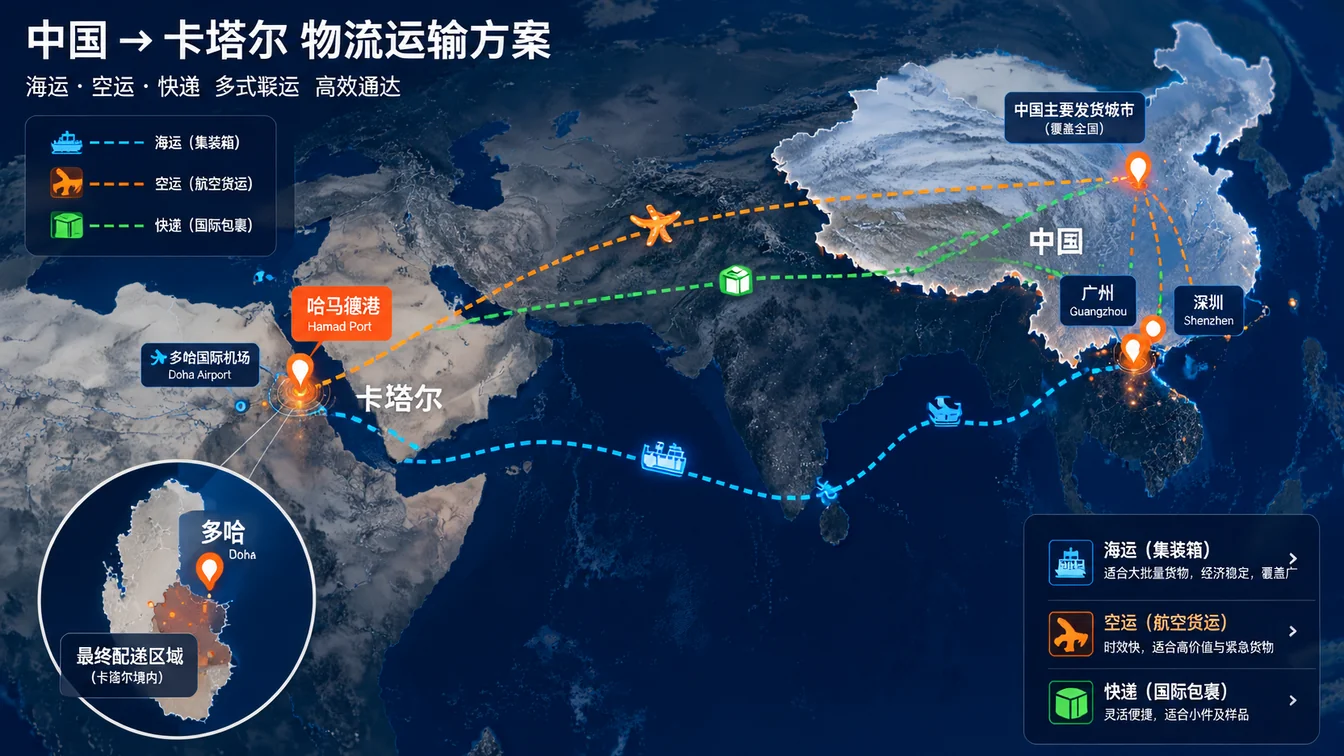
China to Qatar Shipping Cost and Transit Time
Current TJ Logistics Team planning references provide route-specific China-to-Qatar prices and transit times for October 2026. Each reference applies to its named route, method, equipment or unit.
| Shipping route | Shipping method | Price | Transit time |
|---|---|---|---|
| Shenzhen, China → Hamad Port, Qatar | FCL 20GP | $1,530–$2,160 per container | 16–22 days |
| Shenzhen, China → Hamad Port, Qatar | FCL 40GP | $2,340–$3,420 per container | 16–22 days |
| South China (Shenzhen/Guangzhou), China → Hamad Port, Qatar | FCL 40HQ | $2,610–$3,240 per container | 18–28 days |
| Shenzhen, China → Doha, Qatar | LCL | $108–$198/CBM | 30–45 days |
| China → Doha Airport (DOH), Qatar | Air freight | $3.17/kg | 3–4 days |
| China → Qatar | Express | $5.08/kg | 3–5 days |
Rate scope: These TJ Logistics Team planning references apply to the shipping route, method, equipment or unit shown. They are not market averages or binding quotations. The formal quotation confirms the agreed collection, delivery, customs, and charge scope for the shipment.
How to Choose a Shipping Method from China to Qatar
- Choose FCL when the shipment needs dedicated-container capacity or separate handling, because the commercial unit is a specified container; equipment suitability and the consignee’s unloading arrangements can change the choice.
- Choose LCL when cargo can be consolidated safely with other shipments, because the listed charging unit is CBM; consolidation acceptance, cutoff timing, and cargo compatibility can change its practicality.
- Choose air freight when cargo urgency and handling requirements favour an air movement, because the commercial reference is weight-based; chargeable weight, package dimensions, and cargo acceptance affect suitability.
- Choose express when a parcel-oriented shipment needs courier-network handling and delivery to a final address, because the service is organized around a courier movement; commodity restrictions, package dimensions, and destination coverage can change availability.
- FCL — Full container load
- Use when: Cargo requires dedicated-container handling or cannot be combined appropriately with other shipments. Key route check: Loading responsibility, container suitability, consignee unloading, and any empty-equipment return must fit the planned movement; see the TJ Logistics Team sea freight service for the related service category.
- LCL — Less than container load
- Use when: Cargo can travel as a shared load without requiring an exclusive container. Key route check: The shipment plan must identify the consolidation cutoff and whether destination deconsolidation or container freight station handling is involved.
- Air freight
- Use when: Urgency, shipment value, or handling requirements favour air cargo over a sea movement. Key route check: The actual origin airport, chargeable-weight basis, cargo acceptance requirements, and arrival handoff must be defined; see the TJ Logistics Team air freight service for the relevant service category.
- Express
- Use when: The shipment is suitable for a courier network and requires coordinated parcel handling through final delivery. Key route check: The selected courier must accept the commodity and dimensions and serve the Qatar consignee’s address; see the TJ Logistics Team express service for the related service category.
Plan a China-to-Qatar Shipment from Supplier to Final Delivery
The common China-to-Qatar shipment chain is supplier readiness and export handoff in China → international transport by the selected sea, air, or express method → Qatar arrival and customs handoff → inland delivery to the consignee’s final address. Each method has different acceptance, transfer, and release steps within that chain.
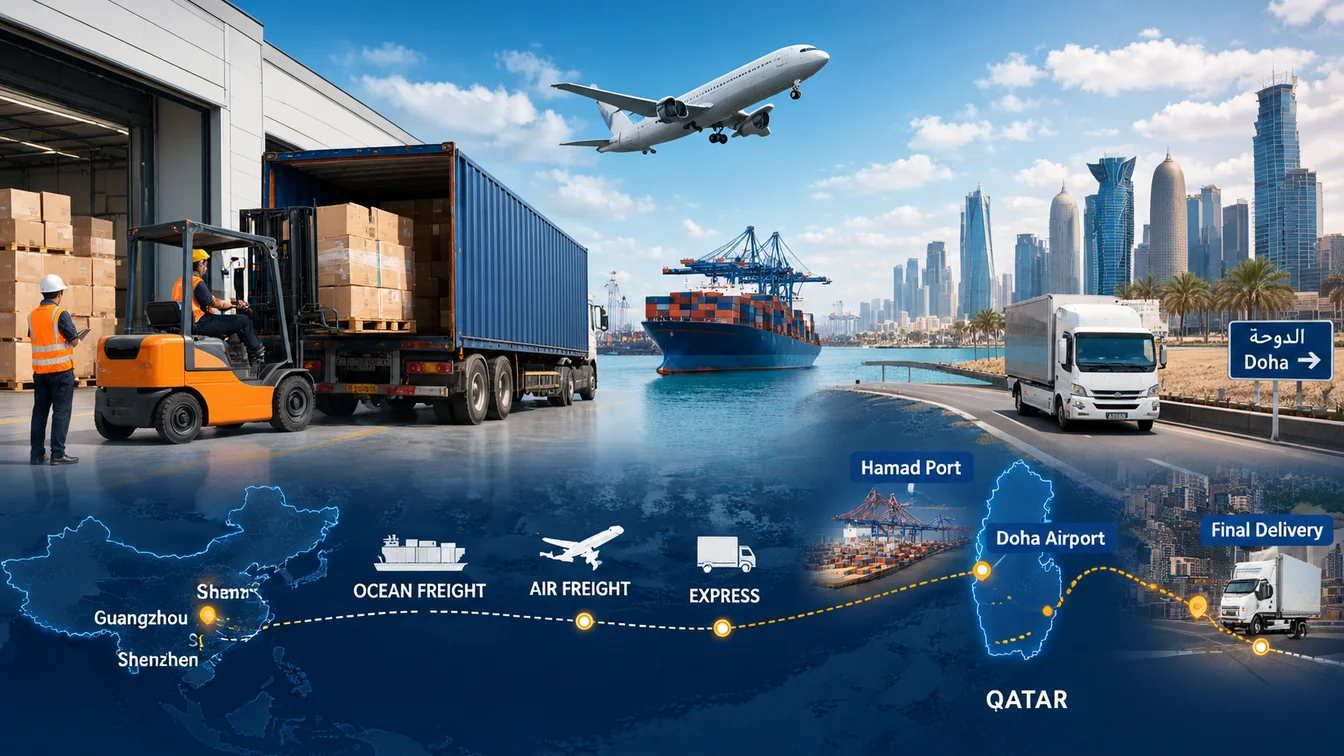
- FCL container movement
- The origin loading responsibility and container suitability must be assigned before export handoff; the arrival plan then defines port release, collection, inland trucking, and empty-equipment return where applicable. The ocean reference names Hamad Port as its Qatar destination gateway.
- LCL consolidation movement
- Cargo enters the origin consolidation process after acceptance and measurement; any destination deconsolidation or container freight station handling must be identified before release and onward delivery are arranged.
- Air freight movement
- Air cargo follows the relevant origin acceptance, cargo-terminal transfer, and destination-release handoffs. The China-to-DOH reference does not specify a China-side airport, so the actual origin airport and transfer pattern must form part of the executable routing.
- Express parcel movement
- Courier pickup is followed by the selected network’s export and import handoffs and then address-level delivery; commodity acceptance, package dimensions, consignee contact details, and site access can affect the final leg.
Execution Checks Before Booking
- For FCL, assign who loads and secures the container and who arranges equipment return where applicable.
- For LCL, record the consolidation cutoff and whether destination deconsolidation or container freight station handling is part of the movement.
- For air and express, align cargo acceptance requirements with the actual airport-terminal or courier handoff before tender.
- For an inland truck leg, record unloading access and receiving appointments where required; the TJ Logistics Team trucking freight service is the related service category.
Prepare for Qatar Customs Before Departure
Commercial imports into Qatar require an electronic customs/import declaration completed by the importer, its representative, or an authorized customs broker; restricted goods may need approvals from competent authorities. The official importation procedure explains the standard declaration and document process.
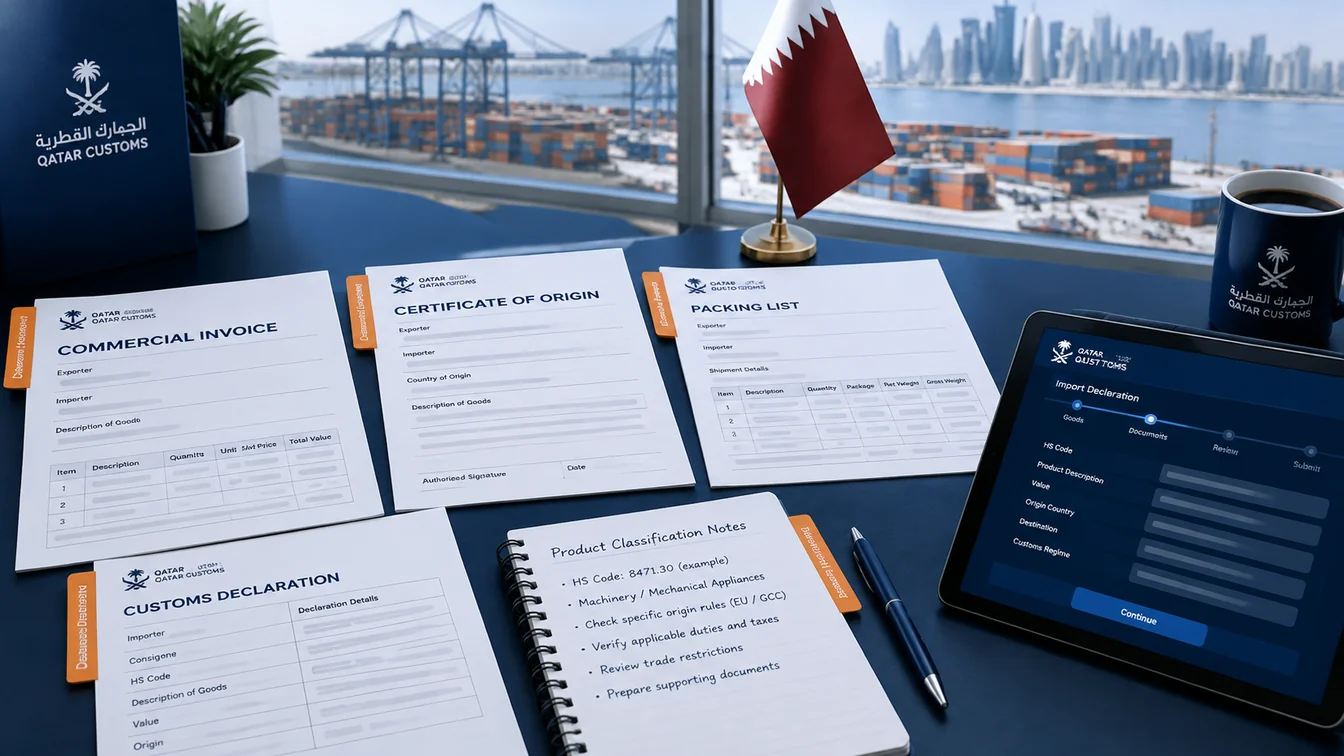
What You May Pay at Import
Qatar import charges are determined by the applicable customs tariff and other applicable fees; the product’s classification and any relevant exemption or special measure affect the duty treatment. The customs-tariff law sets out the general tariff basis and the usual connection between the applicable tariff and the date the customs declaration is registered.
Customs Readiness Checklist
A workable Qatar import file starts with a clearly identified importer, consistent commercial descriptions, and the correct commodity classification.
- Assign the Qatar commercial importer before dispatch and check the customs-code arrangements required for its commercial activity.
- Determine the appropriate Harmonized System (HS) classification and use a consistent product description in the declaration and supporting records.
- Align the declared customs value and country of origin with the commercial records and the goods actually shipped.
- Determine whether the commodity is restricted, prohibited, or subject to conformity requirements or approval from a competent authority before export.
- Assign responsibility for the electronic declaration, customs submissions, applicable payment, and any required customs-broker instructions.
- Keep original documents available and arrange Arabic translations when the customs office requests them.
Documents to Prepare
- A detailed commercial invoice and certificate of origin.
- A packing list for multi-item cargo, with HS codes and the relevant international codes for chemicals or hazardous goods where required.
- The applicable bill of lading or air waybill and arrival delivery order, according to the actual transport and release arrangements.
- The electronic customs/import declaration completed by the importer, its representative, or an authorized customs broker.
- Commodity-specific import permits, conformity certificates, or approved laboratory reports when the relevant product rules require them.
Qatar’s restricted-goods controls are commodity-specific, and some items require prior approval or conformity evidence. Screen the exact product against the official restricted-goods list before the cargo is tendered.
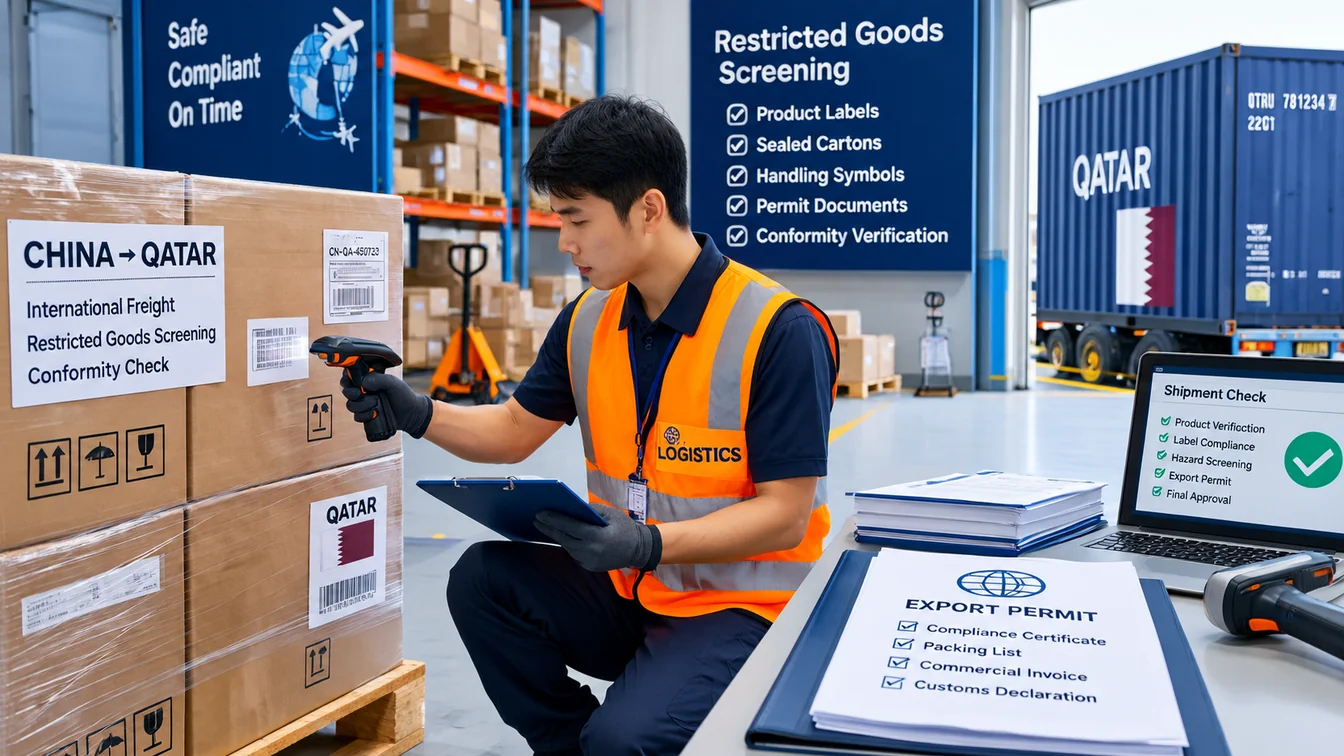
Choose the Right Delivery Scope for China-to-Qatar Shipping
| Service scope | What the scope means | Key responsibility or condition |
|---|---|---|
| Port-to-port | Port-to-port covers the agreed sea movement between the origin and destination ports named in the service scope. Collection before the origin port and delivery after destination release are separate unless included. | The buyer arranges the landside legs unless the agreed service scope assigns them to another party. |
| Airport-to-airport | Airport-to-airport covers the agreed air movement between the named origin and destination airports. Origin collection and final delivery are separate unless added to the service scope. | The buyer or its nominated providers handle pre-airport delivery and post-arrival collection unless those tasks are included. |
| Door-to-door | Door-to-door coordinates collection from the defined China pickup address through delivery to the named Qatar consignee address. Customs and release handoffs are coordinated within the service plan but do not guarantee release. | The Qatar importer remains responsible for required importer-side obligations; the agreed scope should specify who coordinates declarations, broker instructions, and delivery handoffs. |
For China-to-Qatar shipments where collection, international transport, and delivery to a final address need to be coordinated as one service scope, TJ Logistics Team’s door-to-door shipping page describes the relevant service category. Import clearance, product permissions, and consignee receiving arrangements must remain explicit responsibilities rather than being assumed from a final-address description.
Why Use a Freight Forwarder for Shipping from China to Qatar?
A freight forwarder helps a China-to-Qatar buyer turn a shipment request into a defined movement, match transport choices to the actual cargo and delivery need, and keep commercial and operational handoffs aligned. This coordination matters when container-priced sea freight, volume-priced consolidation, and weight-priced air or express services serve different shipment profiles.

- Turn the request into one movement definition
- An incomplete shipment definition makes different transport offers difficult to compare; a freight forwarder helps establish a usable service boundary before the buyer selects a method, especially when dedicated-container handling and LCL consolidation are not interchangeable.
- Match the route to the actual cargo
- A suitable method must fit supplier location, cargo handling, and delivery urgency; the buyer needs a route that works for the shipment rather than a headline price detached from its charging unit or service scope.
- Give every handoff a responsible owner
- A movement can stall when freight documents, importer tasks, and consignee receiving steps have no clear owner; the forwarder helps record who acts next, while the TJ Logistics Team import service page describes the related service category.
How TJ Logistics Team Plans the Qatar Shipment Handoffs
- Shipment request review
- TJ Logistics Team reviews the defined shipment request and flags any route-specific information gap that prevents a reliable next decision about method, gateway, or delivery scope.
- Route and gateway mapping
- TJ Logistics Team maps the supplier location, shipment form, transport method, arrival handoff, and final delivery area against the credible service scopes being compared, recording any transfer detail that remains unresolved.
- Service boundary and responsibility record
- TJ Logistics Team records the agreed collection and delivery boundary and the parties responsible for export documents, Qatar declaration instructions, arrival release, and inland delivery before preparing the formal quotation.
- Booking and change coordination
- After the customer accepts the quotation and agreed scope, TJ Logistics Team coordinates booking information, commercial documents, and cargo handoff, then identifies the next action when routing, timing, documentation, or receiving conditions change.
China to Qatar Shipping FAQ
How much does it cost to ship a 20ft container from China to Qatar?
For the Shenzhen, China → Hamad Port, Qatar FCL 20GP reference, the TJ Logistics Team planning range is $1,530–$2,160 per container in October 2026. Keep the equipment and named origin scope unchanged when comparing another offer, because a container rate is not directly comparable with a CBM- or kilogram-based reference.
How long does sea freight from China to Qatar take?
For the Shenzhen, China → Hamad Port, Qatar FCL 20GP reference, the TJ Logistics Team planning-transit reference is 16–22 days in October 2026. Use this route-specific planning window to align the cargo-ready date and purchasing calendar.
Which shipping method is most cost-effective for China-to-Qatar cargo?
Container-ready cargo that needs dedicated space should be compared with FCL first, while cargo suitable for consolidation should be compared with LCL; urgent or parcel-oriented shipments may justify air freight or express. There is no supportable universal cheapest method because the references use different charging units and shipment scopes.
Which China gateway should I use for shipping to Qatar?
For ocean freight, the current planning references define Shenzhen as the origin for FCL 20GP and FCL 40GP, while the FCL 40HQ reference covers South China (Shenzhen/Guangzhou) to Hamad Port. Start with the supplier’s actual pickup region, then align the selected export gateway with the shipment’s equipment and delivery requirements.
What documents should be prepared before shipping from China to Qatar?
For a commercial import into Qatar, prepare a detailed commercial invoice, certificate of origin, packing list for multi-item cargo, the applicable transport document and arrival delivery order, plus any product-specific permits or conformity records. The importer, its representative, or an authorized customs broker handles the electronic import declaration, and original documents or Arabic translations may be requested.
Can I ship door-to-door from China to Qatar?
Door-to-door China-to-Qatar shipping can be defined from the China collection point to the named Qatar consignee address when the agreed service scope includes both legs. The shipment plan should allocate import-clearance coordination and receiving responsibilities while preserving the Qatar importer’s required obligations.
Do all goods need an import permit in Qatar?
No, Qatar’s import controls distinguish ordinary goods from restricted or prohibited categories, and prior approval or conformity evidence is required when the applicable commodity rules trigger it. Screen the actual product classification and relevant approval requirements before the cargo is dispatched.
Why can two China-to-Qatar freight quotes differ?
Two China-to-Qatar freight quotes can differ because they may price a container, CBM, or kilogram and may cover different handling, gateway, customs-support, and delivery responsibilities. Compare the offers only after the method, charging unit, equipment where applicable, and agreed movement boundaries match.