

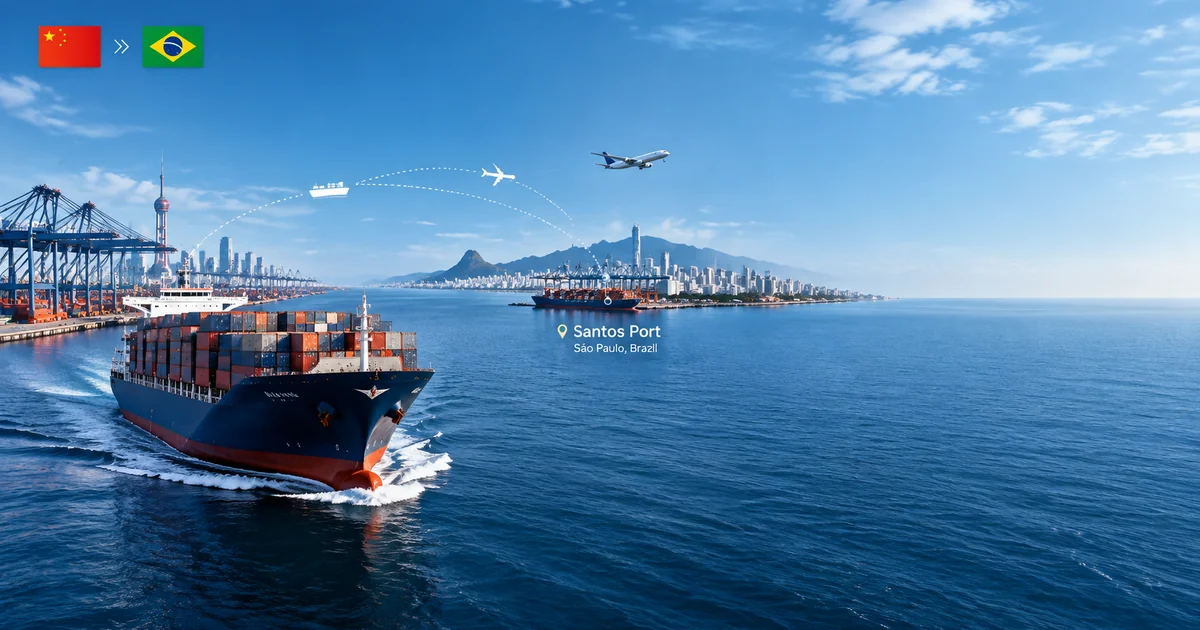
Reviewed by TJ Logistics Team — October 2026. TJ Logistics Team reviewed the route content, current planning references, and destination preparation points for October 2026. The formal quotation and booking are prepared against the defined shipment.
Shipping from China to Brazil: Route Overview
For ocean freight, the Shanghai, China → Santos, Brazil FCL 20GP reference from TJ Logistics Team is $4,725–$4,995 per container, with a planning transit of 29–36 days. This reference provides a starting point for comparing containerized ocean cargo with shared-load, air-freight, and express options for Brazil.
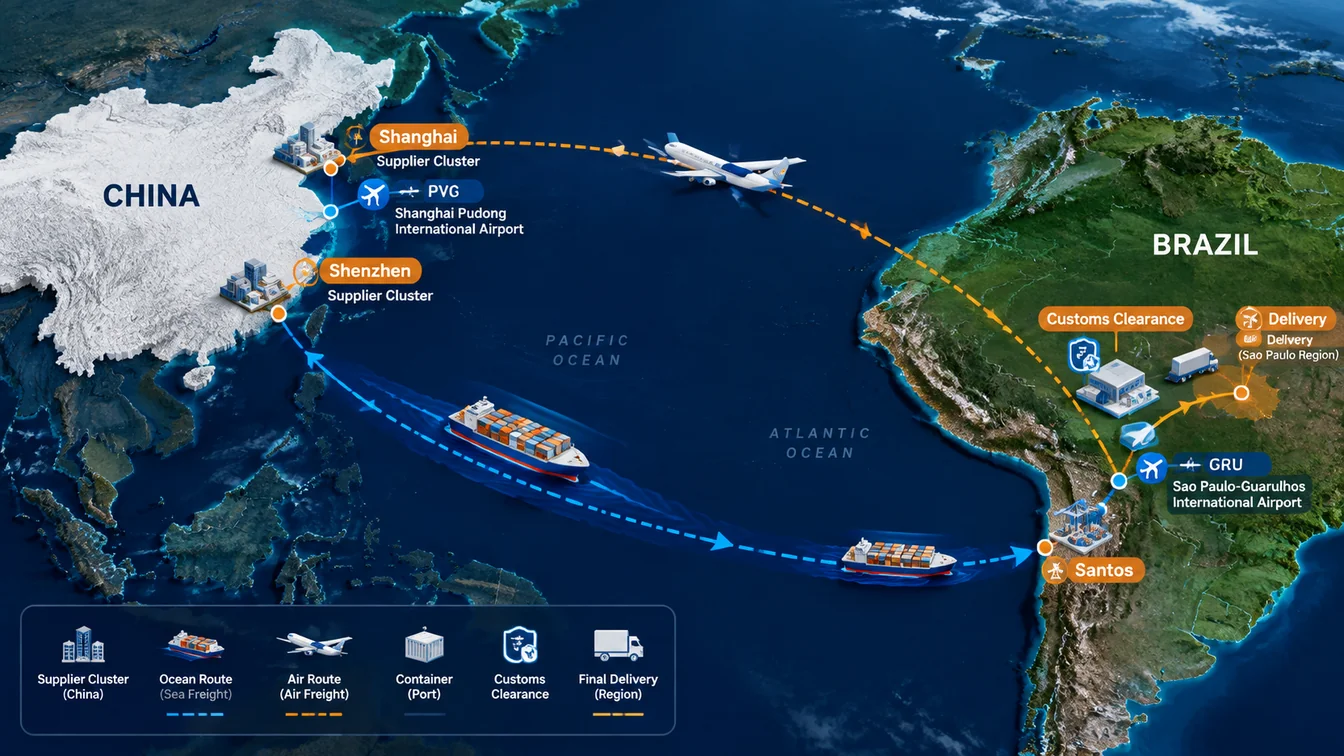
The practical route decision connects the China supplier and its origin arrangements with the appropriate transport method, a suitable Brazilian entry point, customs clearance, and delivery to the consignee’s final address. The named ocean references end at Santos, while the air-freight reference identifies Shanghai Pudong (PVG) to São Paulo–Guarulhos (GRU); the final delivery area determines the remaining inland plan.
China to Brazil Shipping Cost and Transit Time
Current TJ Logistics Team planning references provide route-specific China-to-Brazil prices and transit times for October 2026.
Each reference applies to its named route, shipping method, equipment or unit.
| Shipping route | Shipping method | Price | Transit time |
|---|---|---|---|
| Shanghai, China → Santos, Brazil | FCL 20GP | $4,725–$4,995 per container | 29–36 days |
| Shenzhen, China → Santos, Brazil | FCL 40HQ | $5,625–$5,895 per container | 30–38 days |
| China (origin port unspecified) → Santos, Brazil | LCL | $90–$117/CBM | 40–48 days |
| Shanghai Pudong (PVG), China → São Paulo–Guarulhos (GRU), Brazil | Air freight | $7.65–$10.35/kg | 5–8 days |
| China (origin unspecified) → Brazil (destination unspecified) | Express | $9.00–$12.15/kg | 4–6 days |
Rate scope: These TJ Logistics Team planning references apply to the shipping route, method, equipment or unit shown. They are not market averages or binding quotations. The formal quotation confirms the agreed collection, delivery, customs, and charge scope for the shipment.
How to Choose a Shipping Method from China to Brazil
The best starting point is the shipment’s physical form and required delivery timing, not a comparison of unlike price units.
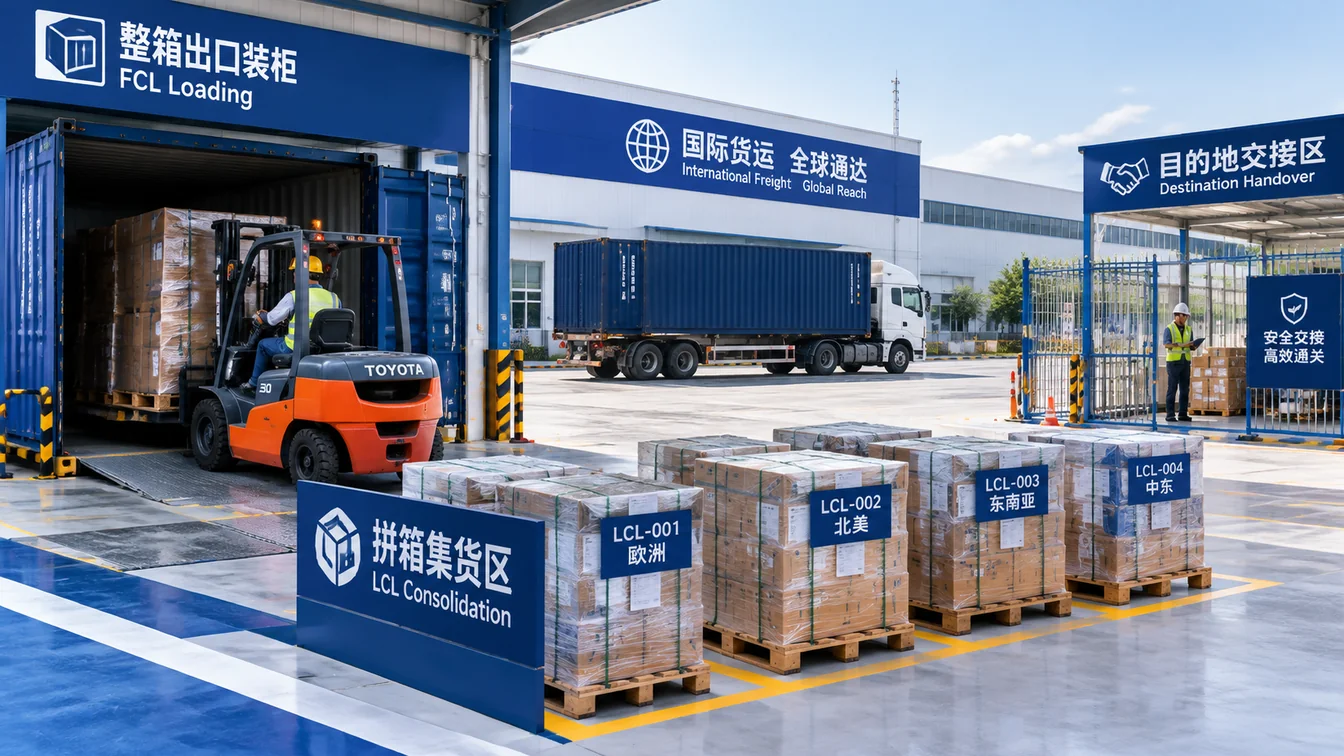
- Choose FCL when the cargo is suitable for a dedicated container, because containerized movement provides a defined equipment and loading arrangement. Supplier loading capability, container size, and the receiving location can change the fit. TJ Logistics Team’s sea freight service is relevant to this route.
- Choose LCL when the cargo is suitable for consolidation and does not require a dedicated container, because the shipment shares container space with other cargo. Consolidation cutoffs, packaging, and destination release arrangements affect operational suitability.
- Choose air freight when delivery urgency justifies airport-based cargo handling and the shipment meets acceptance requirements, because the named reference connects Shanghai Pudong (PVG) with São Paulo–Guarulhos (GRU). Chargeable weight and the final delivery location can change the practical choice. See TJ Logistics Team’s air freight service.
- Choose express when a time-sensitive consignment fits a courier product’s size, weight, packaging, and destination coverage, because express uses a different service model from containerized freight. The exact origin, Brazilian delivery address, and carrier acceptance rules determine which service is suitable. TJ Logistics Team’s express service is relevant when evaluating this option.
- Full container load (FCL)
- Use when: the shipment suits a dedicated container and the supplier can support the agreed loading arrangement. Key route check: define loading responsibility, equipment availability, export-terminal arrangements, destination release, and empty-equipment return where applicable.
- Less than container load (LCL)
- Use when: cargo is suitable for a shared container rather than a dedicated unit. Key route check: obtain the consolidation cutoff and the applicable destination handling, deconsolidation, release, and collection instructions.
- Air freight
- Use when: the delivery schedule and cargo profile justify an airport-based service. Key route check: the PVG-to-GRU reference identifies the airports but does not establish a particular flight or transfer pattern; the actual cargo-terminal handoffs and post-release collection must be defined for the booked service.
- Express
- Use when: a parcel or other eligible consignment fits the selected courier product. Key route check: establish the service’s origin and destination coverage, packaging limits, customs handoff, and final-mile delivery arrangements.
Plan the China-to-Brazil Route from Supplier to Final Delivery
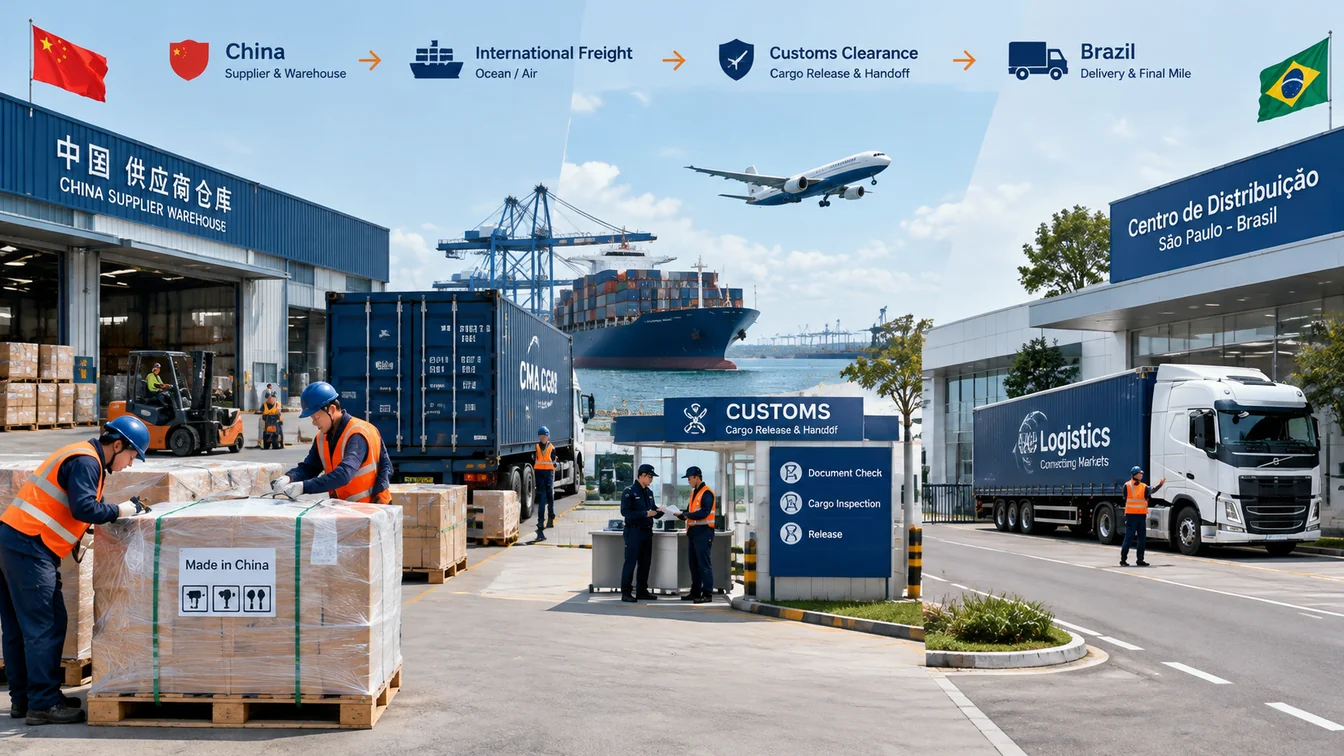
The common shipment chain is supplier readiness and handoff in China → export movement → arrival and Brazilian customs handoff → cargo release and inland delivery to the consignee’s final address. Once the method is selected, the operational plan must define the responsibilities that differ between container, consolidated, air, and express movements.
- FCL container movement
- Assign responsibility for loading the container and handling the booked export-terminal handoff, then document the destination release and collection process. The agreed movement should also identify the applicable empty-equipment return requirements, including any deadline or designated return location.
- LCL consolidated movement
- Arrange cargo acceptance and consolidation at the origin facility specified by the service, then obtain the destination handling and release instructions. The actual consolidation location, applicable cutoffs, and cargo-collection arrangements must match the booked service.
- Air-cargo movement
- Align cargo acceptance and terminal handling with the named Shanghai Pudong (PVG) to São Paulo–Guarulhos (GRU) route reference. The actual transfer pattern, arrival handling, release procedure, and collection or onward delivery arrangements must be defined by the parties handling the shipment.
- Express movement
- Arrange the courier pickup and network handoff under the selected service, then align the Brazilian customs handoff with the courier’s delivery procedure. The actual destination address, delivery eligibility, and recipient availability determine the last-mile arrangements.
Execution Checks Before Booking
- For FCL, document the loading arrangement, collection responsibility, and empty-equipment return conditions where applicable.
- For LCL, obtain the consolidation cutoff and the specific destination release and collection instructions.
- For air and express, align cargo acceptance, the actual operational handoffs, and the consignee’s receiving availability with the selected service.
Choosing Brazil Entry Gateways and Inland Delivery Routes
For deliveries in the São Paulo metropolitan area, the route references distinguish ocean cargo associated with Santos from air cargo on the named Shanghai Pudong (PVG) to São Paulo–Guarulhos (GRU) route. For other Brazilian destinations, the final municipality and onward delivery arrangement become central to the gateway decision.
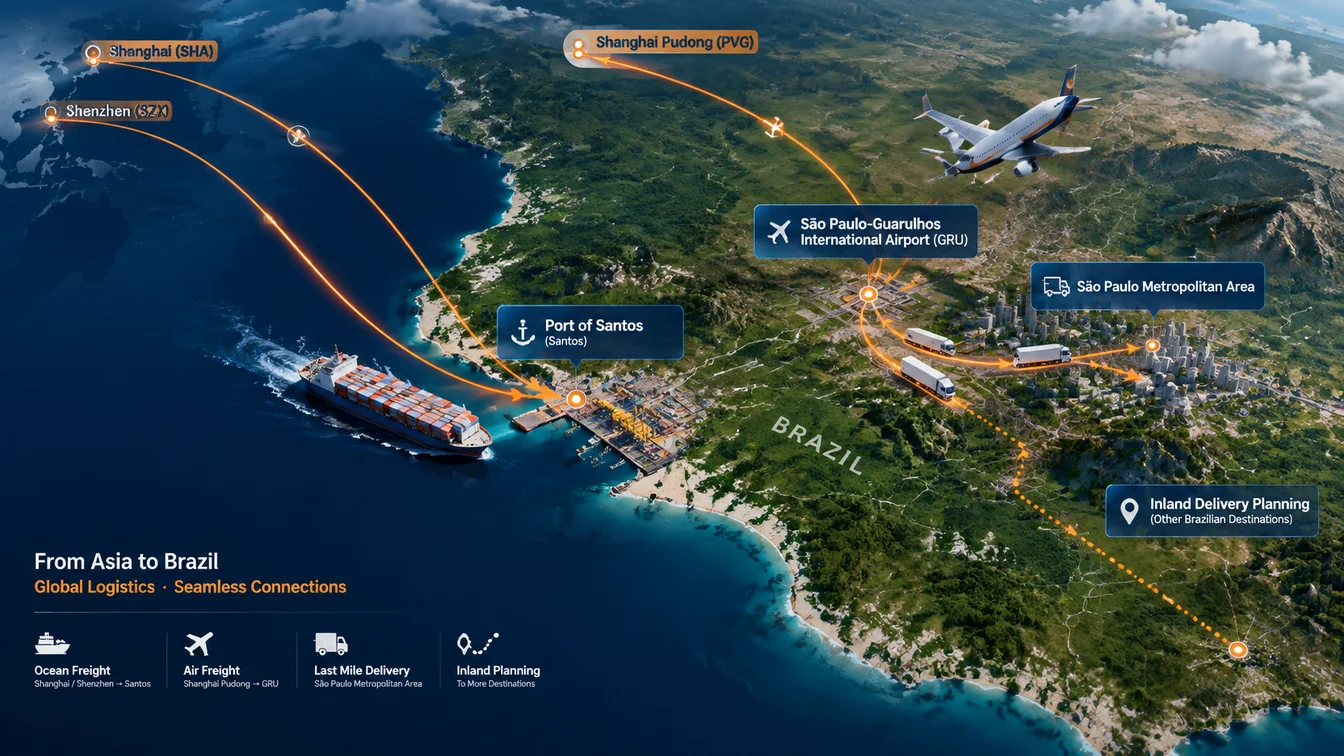
The Port of Santos authority describes a multipurpose port complex that handles containers and other cargo, supporting Santos as the ocean destination named in the current FCL and LCL references.
The GRU Airport cargo terminal information identifies a dedicated cargo terminal at the airport named in the Shanghai Pudong air-freight reference.
| Final delivery area | Typical route pattern | Why the pattern fits | Details needed for the quote |
|---|---|---|---|
| São Paulo metropolitan area | The ocean references name Santos as the destination, while the air reference names Shanghai Pudong (PVG) to São Paulo–Guarulhos (GRU). These are distinct entry patterns rather than interchangeable endpoints. | The ocean and air references identify different Brazil-side entry points, so shipment urgency, handling suitability, and final delivery location determine which pattern fits. | The exact municipality, postal code, receiving-site type, and delivery access conditions define the final delivery requirements. |
| Destinations outside metropolitan São Paulo | Santos remains the named ocean destination in the current FCL and LCL references; any onward inland leg must be planned to the actual final municipality. | The TJ Logistics Team sea references do not establish a destination-specific inland route for every Brazilian state, so location and receiving access can change the delivery arrangement. | The receiving municipality, state, postal code, and any unloading or delivery-appointment restrictions are needed to scope the inland leg. Where road transport forms part of the planned movement, TJ Logistics Team’s trucking freight service is a relevant service reference. |
Prepare a Comparable Freight Request
Provide: the China supplier or pickup point; cargo-ready timing and cargo profile, including type, packages, dimensions, weight, and CBM; any loading or special-handling condition; the final postal code and receiving conditions; and the requested delivery scope, timing priority, and relevant importer or broker arrangement.
The formal quotation should state: the pickup and final-delivery boundary; transport method, equipment or unit, and routing pattern; customs, destination-handling, and inland-delivery handoffs; material included and excluded charges; rate validity; and the conditions that can change the amount or timing.
Prepare for Brazilian Customs Before Departure
Commercial importers in Brazil must meet the registration and system-access requirements applicable to their operation before completing the relevant import procedures. The applicable process can vary with the import workflow, and Receita Federal’s current registration guidance explains the relevant system requirements and procedures.
The Brazilian importer remains responsible for its import declaration, accurate product information, applicable duties and taxes, and any required permits. An authorized customs broker can handle work within its appointed role, while the exporter supplies accurate commercial records, the carrier or transport provider handles the contracted carriage, and TJ Logistics Team coordinates freight information and handoffs within the agreed scope. TJ Logistics Team’s customs brokerage service and import service describe relevant service categories without replacing the importer’s legal responsibilities or the authority’s decisions.

Customs Readiness Checklist
Brazilian customs preparation starts with the correct importing entity and product classification, followed by any product-specific administrative requirements.
- Importer registration: establish that the Brazilian importing entity has the registrations and system access applicable to the operation, and arrange any required representative authorization before filing.
- Product classification: determine the appropriate NCM (Nomenclatura Comum do Mercosul) classification using accurate product specifications. Classification affects the applicable tax treatment and administrative controls.
- Import authorization: use the current Siscomex import treatment guidance to establish whether the product and transaction require licensing, permits, certificates, or other administrative procedures. Complete any required pre-shipment authorization before cargo dispatch when the applicable rule requires it.
- Customs value and origin: ensure that the commercial transaction, declared value, country of origin, and supporting records are accurate and consistent. Any origin-based treatment must be supported by the relevant records and applicable rules.
- Broker and filing responsibilities: identify the party authorized to prepare or submit the customs declaration and respond to information requests. The importer remains accountable for the accuracy and compliance of its import operation.
- Tax and payment responsibility: allocate responsibility for assessed import taxes, customs-related payments, and any applicable destination charges. The amounts and required procedures depend on the goods and the particular transaction.
Documents to Prepare
Brazilian import preparation normally starts with the commercial transaction records and the transport document, with additional documents required only when the applicable shipment or product rules call for them.
- Commercial invoice: provide a consistent description of the goods, commercial values, seller, buyer, and transaction details.
- Transport document: prepare the applicable bill of lading for ocean freight, air waybill for air freight, or relevant transport document for the selected service.
- Packing list: provide the package breakdown and contents when applicable to the shipment and customs procedure.
- Conditional supporting records: provide proof of origin, product licenses, permits, certificates, testing records, or labeling information when required by the product or applicable rules. The official Brazilian import declaration document guidance identifies the documents used to support the customs procedure.
Regulatory note: Brazil’s import controls and declaration procedures can change with product classification, the applicable authorization regime, and the current implementation of import systems. Screen the actual goods and transaction under the current official requirements before dispatch; freight coordination does not guarantee customs release.
Choose the Right Delivery Scope for China-to-Brazil Shipping
| Service scope | What the scope means | Key responsibility or condition |
|---|---|---|
| Port-to-port | When contracted as port-to-port, the service covers ocean carriage between the agreed origin and destination ports. Destination handling, customs clearance, and inland delivery are outside that scope unless separately included. | The designated destination party normally arranges import clearance and post-release collection; a different allocation must be stated in the agreed service scope. |
| Airport-to-airport | When contracted as airport-to-airport, the service covers the agreed air-cargo movement between the named origin and destination airports. Final-address delivery and customs responsibilities remain separate unless included in the contract. | The importer or its appointed representative normally coordinates destination clearance and collection; any included onward delivery must be expressly defined. |
| Door-to-door | Door-to-door coordinates cargo collection from the agreed pickup address through transport to the named final delivery address. Import declaration, duties, taxes, and product-compliance responsibilities still follow the agreed terms and applicable law. | The Brazilian importer or an expressly appointed party remains responsible for its required import obligations unless a lawful, agreed arrangement allocates specific tasks elsewhere. |
A door-to-door arrangement is useful when the buyer needs the pickup and final-address handoffs coordinated under one defined scope; TJ Logistics Team’s door-to-door service is relevant to that requirement. Cargo insurance remains a separate risk-transfer decision rather than a delivery endpoint, and its terms should be evaluated independently when appropriate.
Why Use a Freight Forwarder for Shipping from China to Brazil?
A freight forwarder helps turn the shipment request into a defined movement, match credible transport choices to the cargo and final destination, and keep commercial and operational handoffs aligned. On the China-to-Brazil route, those functions are especially useful when the selected ocean entry and the consignee’s eventual inland destination require different arrangements.
- Turning cargo requirements into a workable movement: the buyer needs one clear shipment definition rather than disconnected supplier, packing, loading, and delivery assumptions. A forwarder helps align those requirements before the transport arrangement is selected, particularly when dedicated-container and shared-load handling differ.
- Matching the route to the destination: a suitable international movement does not automatically settle how cargo reaches the consignee after Brazilian arrival. A forwarder helps match the chosen method and entry point to the actual delivery area and the required onward handoffs.
- Keeping responsibilities visible: supplier records, transport instructions, importer or broker actions, and consignee receiving arrangements can involve different parties and separate decision points. A forwarder helps keep those handoffs coordinated while treating cargo protection as a separate risk decision; TJ Logistics Team’s cargo insurance service is relevant when the buyer needs to evaluate insurance scope.
How TJ Logistics Team Plans a Brazil Shipment
- 1. Define the shipment request
- TJ Logistics Team reviews the stated shipment requirements and flags any route-specific information gap that prevents a reliable next decision, such as an unresolved origin or destination handoff.
- 2. Map the applicable route
- TJ Logistics Team compares the relevant FCL, LCL, air, or express planning reference against the defined cargo movement and destination arrangements. Unverified gateways, transfer patterns, and service connections remain subject to confirmation by the responsible provider.
- 3. Record the service boundary
- TJ Logistics Team records the agreed movement scope and identifies which parties are responsible for the next commercial, customs, transport, and delivery handoffs before the formal quotation is prepared.
- 4. Coordinate the approved handoffs
- After the buyer accepts the agreed quotation and scope, TJ Logistics Team coordinates the relevant booking information, commercial documents, and cargo handoff with the assigned parties. If the timing, route, documentation, or receiving conditions change, the team flags the resulting operational decision for the responsible parties.
China to Brazil Shipping FAQ
How much does it cost to ship a 20ft container from China to Brazil?
For the Shanghai, China → Santos, Brazil FCL 20GP reference, the TJ Logistics Team planning range is $4,725–$4,995 per container in October 2026. This reference is the relevant starting point for a 20GP ocean-freight comparison; it should not be treated as a price for other container sizes or destinations.
How long does sea freight from China to Brazil take?
For the Shanghai, China → Santos, Brazil FCL 20GP reference, TJ Logistics Team’s planning-transit reference is 29–36 days in October 2026. Use this for preliminary ocean scheduling while treating Brazilian customs clearance and the final inland delivery plan as separate operational decisions.
Which shipping method is most cost-effective for China-to-Brazil cargo?
For Brazil-bound cargo suitable for a dedicated container, compare FCL first; LCL fits eligible shared cargo, while air and express are relevant when delivery urgency justifies those service models. A meaningful cost decision must account for cargo form, the required route, and the actual delivery scope rather than ranking unlike container, volume, and weight units by their displayed numbers.
Should I compare Shanghai or Shenzhen for ocean freight to Brazil?
For the named Santos ocean references, TJ Logistics Team pairs Shanghai, China with FCL 20GP and Shenzhen, China with FCL 40HQ. Start with the supplier’s actual pickup area and the required equipment size, then define the booked origin-terminal arrangements rather than assuming that the city label establishes a particular facility or sailing.
What documents should be prepared before shipping from China to Brazil?
Prepare a commercial invoice, the applicable transport document, and a packing list when applicable, then add proof of origin and product-specific permits or certificates where required. The product’s NCM classification and the applicable import-control requirements determine whether additional approvals must be completed before dispatch.
Can I ship door-to-door from China to Brazil?
Yes, a China-to-Brazil door-to-door arrangement can be defined from an agreed supplier or pickup address to a named Brazilian delivery address. The scope must allocate import-clearance and tax responsibilities explicitly, because door-to-door coordination alone does not establish duty-paid treatment or remove the importer’s applicable obligations.
Does a Santos sea-freight reference include inland delivery throughout Brazil?
No, a Santos ocean-destination reference does not by itself establish an inland delivery arrangement for every Brazilian state. For cargo intended for a destination outside the immediate delivery area, the receiving municipality and the required onward movement determine the inland leg that must be planned.