Choose a Quote That Covers the Entire Shipment
A partial truckload quote should tell you whether the proposed service can move your cargo from its actual pickup location to the required delivery point, not simply what the linehaul transportation costs. Before approving a quote, check the pallet count, dimensions, total weight, cargo-ready date, pickup conditions, delivery requirements, and work included at each handoff. A price without these details may not describe a shipment that your warehouse can release or your consignee can receive.
Two partial truckload shipping quotes are not directly comparable until they cover the same cargo, route, service level, pickup and delivery scope, and accessorial requirements. One partial truckload carrier may quote transportation between terminals, while another may include pickup, destination handling, and final delivery. Those are different operating arrangements even when the quoted amounts appear similar.
The practical decision is whether the proposed service matches your shipping schedule and receiving operation. Ask the forwarder to confirm who collects the freight, where the carrier takes custody, which handling charges are included, and who arranges the final delivery appointment. Request a revised quote whenever the cargo details or handoff requirements change before booking.
Align Shipment Scope Before Comparing Partial Truckload Pricing
Start with cargo readiness and work outward through the route. A forwarding desk needs enough information to identify the equipment and service arrangement, establish the transportation basis, and determine which party handles each stage. The following checklist provides a practical baseline for comparing partial truckload services.
| Check order | Information required | Why it matters | Confirmation owner |
|---|---|---|---|
| Cargo readiness | Ready date and loading window | Determines pickup feasibility | Shipper or warehouse |
| Pickup and origin | Full address, access, loading method | Defines first-mile work | Shipper and forwarder |
| Main transportation | Route, service level, carrier arrangement | Establishes the transport scope | Forwarder or carrier |
| Cargo basis | Pallet count, dimensions, weight, stackability | Affects capacity and handling | Shipper or packing team |
| Destination handoff | Terminal, warehouse, or delivery address | Identifies the final service boundary | Forwarder and consignee |
| Delivery conditions | Appointment, unloading, site access | Identifies additional delivery work | Consignee |
| Quote and inclusions | Issue date, validity, included services | Defines the approval basis | Forwarder |
Cargo-ready date: Confirm when the freight will actually be available for collection. A requested pickup date does not establish that packing, labeling, and warehouse release will be complete.
Pickup and origin handling: Provide the complete pickup address and loading conditions. The forwarder should identify whether the quoted service includes collection, loading assistance, terminal handling, and any required transfer to the main carrier.
Main route and service: Confirm the transportation origin, destination, planned carrier arrangement, and service level. A terminal-to-terminal movement and a shipment with scheduled residential or commercial delivery require different operating arrangements.
Cargo and weight basis: Supply actual dimensions and weight for every pallet or handling unit. The forwarder needs these details to check capacity, freight classification requirements where applicable, handling restrictions, and the carrier’s rating basis.
Destination and delivery: Identify the receiving facility and its operating conditions. Ask whether the quote ends at a destination terminal, a commercial dock, or the consignee’s specified location.
Quote date and included work: Ask when the offer was prepared and which shipment assumptions support it. The forwarder should identify exclusions and confirm whether the offer remains applicable after a change in cargo, schedule, or destination conditions.
A useful comparison starts with one shared shipment specification. If two quotes use different pallet dimensions, pickup arrangements, or delivery endpoints, request scope corrections before evaluating the commercial difference.
Understand the Charge Basis and Operational Cost Drivers
Partial truckload pricing depends on the space, weight, handling requirements, route, and service arrangement that the carrier accepts. The quoted amount is meaningful only when the carrier has the correct cargo information and the forwarder has identified the work required at both ends.
Pallet dimensions, weight, and trailer capacity
Multiple pallets can occupy substantial trailer space even when their combined weight is relatively modest. Conversely, dense freight can create a different capacity and handling constraint. The carrier may assess the shipment using its applicable weight, space, freight classification, or other rating conditions.
The shipper should provide the outside dimensions and actual gross weight of each pallet, including packaging. The shipper should also confirm whether pallets can be stacked and whether any handling restrictions prevent other freight from being loaded above or beside them.
The forwarding desk can use these details to check the proposed equipment and carrier acceptance conditions. Ask the carrier to confirm which cargo measurements it uses for rating and whether a later measurement or inspection could change the quoted basis.
Partial truckload pricing versus LTL for multiple pallets
The choice between partial truckload and less-than-truckload (LTL) service depends on the shipment’s physical profile and delivery requirements. LTL generally moves freight through a network that consolidates shipments from multiple customers. Partial truckload arrangements can offer a different transportation and handling pattern when a shipment occupies more capacity than a typical LTL movement or needs a different service configuration.
Neither service is automatically the better commercial choice for multiple pallets. A shipment with dimensions that fit the LTL carrier’s acceptance rules may suit an LTL network. A larger or less convenient pallet group may justify requesting a partial truckload alternative, particularly when the buyer wants to compare handling arrangements and delivery control.
Ask the forwarder to obtain comparable quotes using the same pallet data, collection point, delivery address, cargo-ready date, and service requirements. Confirm whether either option involves additional terminal transfers, rehandling, or delivery coordination.
Pickup, handling, and delivery access
First-mile and last-mile work can change the quote even when the main transportation route stays the same. A warehouse with a suitable loading dock may require less special coordination than a location with restricted vehicle access or no forklift. The consignee’s unloading arrangements can create a similar difference at delivery.
Tell the forwarder whether the shipper and receiver have loading docks, forklifts, suitable vehicle access, and operating-hour restrictions. Confirm whether liftgate service, inside delivery, limited-access handling, or a scheduled appointment is required and whether the carrier has accepted each request.
Service level and route conditions
Standard transportation, expedited movement, and specially coordinated delivery should not be treated as interchangeable services. Transit expectations, carrier availability, pickup windows, routing, and delivery control can differ. The forwarder should confirm the actual service offered rather than relying on a general description of transit speed.
A route with additional transfers or limited carrier coverage may also require a different operating arrangement. Ask whether the quote assumes direct transportation, terminal handling, or a coordinated transfer between providers. Confirm what happens if the original pickup window or delivery appointment becomes unavailable.
Special cargo and handling requirements
Fragile, oversized, unusually shaped, temperature-sensitive, or restricted freight may need specific equipment or handling approval. Pallet dimensions alone do not establish that a carrier can accept the shipment. Packaging, loading orientation, securing requirements, and cargo restrictions also affect acceptance.
Provide product descriptions and handling instructions before the forwarder requests a firm carrier confirmation. Ask which restrictions apply and whether the carrier needs photographs, packaging specifications, or additional documents before accepting the freight.
Request confirmation of the carrier’s rating basis and accepted cargo profile in writing. A quote based on estimated pallet dimensions may need revision after the carrier receives verified measurements or checks the actual shipment.
Check What the Partial Truckload Quote Includes
A complete quote review identifies the party responsible for every transportation handoff. Do not assume that a charge described as freight includes pickup, loading, destination handling, or final delivery. Ask the forwarder to separate included work from excluded services and items that still require confirmation.
| Shipment stage | Scope to check | Who verifies it | Approval question |
|---|---|---|---|
| Pickup | Collection and loading conditions | Shipper and carrier | Is pickup included? |
| Origin handling | Terminal transfer and handling | Forwarder and carrier | Which origin work is covered? |
| Main transport | Accepted route and service | Carrier or forwarder | What movement is quoted? |
| Destination handling | Terminal and transfer charges | Destination provider | Are destination charges included? |
| Final delivery | Address, appointment, unloading | Consignee and delivery carrier | Where does the service end? |
| Additional services | Special access and storage | Forwarder and relevant provider | What triggers additional charges? |
Pickup and origin handling
The shipper should confirm whether the cargo will be ready for the carrier’s collection vehicle and whether loading equipment is available. The forwarder should confirm whether pickup and origin handling appear in the offer or remain separate arrangements.
If the shipment requires a dedicated local collection arrangement before the main truck movement, review the trucking freight service scope to establish the intended pickup and transportation handoff.
Main transportation and destination handling
The forwarder should identify the carrier’s transportation scope and explain whether the quoted movement includes terminal handling at either end. Ask who receives the freight after the main movement and who coordinates any transfer to the final delivery provider.
Destination handling may be included, billed separately, or arranged directly with another provider. The buyer should obtain confirmation before approving a quote that stops short of the actual receiving location.

Final delivery and accessorials
The consignee should confirm the delivery address, operating hours, appointment process, vehicle restrictions, and unloading facilities. The forwarder should check whether the delivery provider accepts these conditions and whether the quoted service includes any requested special equipment or additional handling.
Ask the forwarder to identify potential accessorials, including liftgate service, limited-access delivery, inside delivery, waiting time, redelivery, or storage where applicable. These items should appear as included, excluded, or subject to confirmation rather than being left ambiguous.
Optional cargo protection
Carrier transportation liability and separately arranged cargo insurance are different considerations. The buyer should confirm the available protection, coverage conditions, exclusions, and insured value with the relevant provider before shipment release. Review the cargo insurance options if the shipment requires separate financial protection.
Ask for a written scope breakdown that identifies the pickup endpoint, main transportation, destination handoff, and final delivery endpoint. Each stage should have a named provider or an identified party responsible for confirmation.
Note: A freight quote is tied to the cargo, handoffs, route, service level, timing, and destination work stated in it. Carrier and handling conditions can change. Align the scope first, then request confirmation for the specific shipment.
Choose the Transportation Option That Fits the Cargo
The right transportation arrangement depends on how much capacity the pallets occupy, how quickly the consignee needs them, and how much control the buyer needs over pickup and delivery. Compare options against the same shipment specification rather than choosing from a service label alone.
Partial truckload or LTL
Partial truckload may fit shipments that occupy a meaningful portion of trailer capacity or require an arrangement outside a standard LTL network’s preferred handling profile. The buyer should compare the carrier’s proposed handling pattern, transit expectations, and pickup and delivery arrangements.
LTL may fit smaller pallet shipments that meet the carrier’s network acceptance conditions and can move through its regular consolidation process. It may be a weak fit when freight dimensions, handling restrictions, or delivery requirements create complications for that network.
Ask the forwarder to explain the equipment or network arrangement behind each option, identify additional transfers, and confirm whether both quotes include equivalent pickup and delivery work.
Partial truckload or dedicated truckload
A partial truckload arrangement may suit a shipment that does not need exclusive use of a vehicle. Dedicated truckload service may be more appropriate when the cargo requires exclusive equipment, tighter control of loading sequence, specialized handling, or a movement that cannot accommodate shared capacity.
A dedicated vehicle can change the cost and operating commitment because the buyer is requesting a different use of transportation capacity. Ask the forwarder to confirm whether exclusive equipment is necessary or whether the carrier can accept the cargo under a shared-capacity arrangement.
Standard or expedited service
Standard service may fit a flexible receiving schedule. Expedited service may be worth considering when the cargo-ready date, production requirement, or customer delivery commitment leaves little room for a longer transit arrangement.
Expedited service is a weak fit when the consignee cannot receive freight outside normal operating hours or when pickup readiness remains uncertain. Ask the carrier to confirm the available service, actual transit expectations, and whether the receiving appointment can support the proposed movement.
Terminal-to-terminal or door-to-door
Terminal-to-terminal transportation may fit buyers who already have collection and delivery arrangements at both ends. It gives the shipper and consignee more direct responsibility for coordinating the first and last transportation legs.
Door-to-door coordination may fit buyers who want one forwarding contact to arrange collection, main transportation, and final delivery. The buyer should still identify which services are performed by the forwarder and which are handled by local carriers or other providers.
Review the door-to-door freight arrangement when the shipment needs coordinated pickup and delivery rather than a transportation quote that ends at a terminal.
Identify Quote Gaps Before They Become Shipment Problems
Most avoidable quote changes begin with a mismatch between the information used for pricing and the conditions the carrier encounters during collection or delivery. The buyer should review the following triggers before authorizing the shipment.
Incomplete pickup information
An incomplete address or missing loading instruction can prevent the carrier from confirming the correct vehicle and collection arrangement. The shipper should provide the complete address, contact details, loading hours, and equipment availability. The forwarder should update the pickup scope before requesting carrier acceptance.
Changed cargo dimensions or weight
Different measurements can affect the carrier’s capacity assessment, handling plan, and charge basis. The packing team should verify the final outside dimensions and gross weight before dispatch. The forwarder should request a revised quote if the confirmed measurements differ from the information originally submitted.
Missing delivery requirements
A quote for commercial dock delivery may not cover a restricted-access location, a residential destination, or a site that requires special unloading equipment. The consignee should disclose these conditions before booking. The forwarder should confirm the delivery provider’s acceptance and identify any additional service requirements.
Appointment and receiving failures
A missed appointment or unavailable receiving team can interrupt the planned delivery. The consignee should confirm receiving hours, appointment procedures, unloading capacity, and contact availability. The forwarder should establish how the carrier handles a failed delivery attempt and whether rebooking, waiting, or storage could create additional exposure.
Rebooking and schedule changes
A delayed cargo-ready date can make the original pickup arrangement unsuitable. The shipper should notify the forwarder as soon as readiness changes. The forwarder should check whether the original carrier arrangement remains available and request confirmation of any revised transportation conditions.
Special cargo restrictions
Freight that contains restricted materials, unusual packaging, or special handling requirements may need carrier approval before collection. The shipper should provide an accurate product description and relevant handling information. The forwarder should confirm acceptance before the cargo is released.
Common mistake: Approving a partial truckload quote based only on the total pallet count. Pallet count does not establish the actual space required, stackability, weight distribution, or delivery conditions. Submit verified dimensions and weight before treating the quoted amount as an approval basis.
If the consignee cannot accept delivery during the proposed receiving window, stop the booking approval and confirm an alternative appointment or delivery arrangement. Otherwise, an unsuccessful delivery attempt may create rebooking, waiting, or storage exposure.
Prepare a Complete Partial Truckload Quote Request
A useful quote request gives the forwarding desk enough information to check cargo acceptance, identify the transportation arrangement, and confirm both ends of the movement. Assign each detail to the person who can verify it rather than asking the forwarder to estimate missing shipment facts.
Cargo and packing information
Supplier or packing team: Provide the product description, total pallet count, dimensions of each pallet, gross weight, packaging details, and stackability. Include photographs or handling instructions when the freight has unusual dimensions or requires special treatment.
Forwarding desk: Check whether the proposed carrier can accept the cargo profile and whether the shipment needs additional capacity or handling approval. Confirm the rating basis with the carrier.
Cargo-ready date and pickup details
Shipper or warehouse: Confirm the expected release date, collection address, loading hours, dock availability, forklift access, and site contact. Identify any vehicle restrictions or special collection procedures.
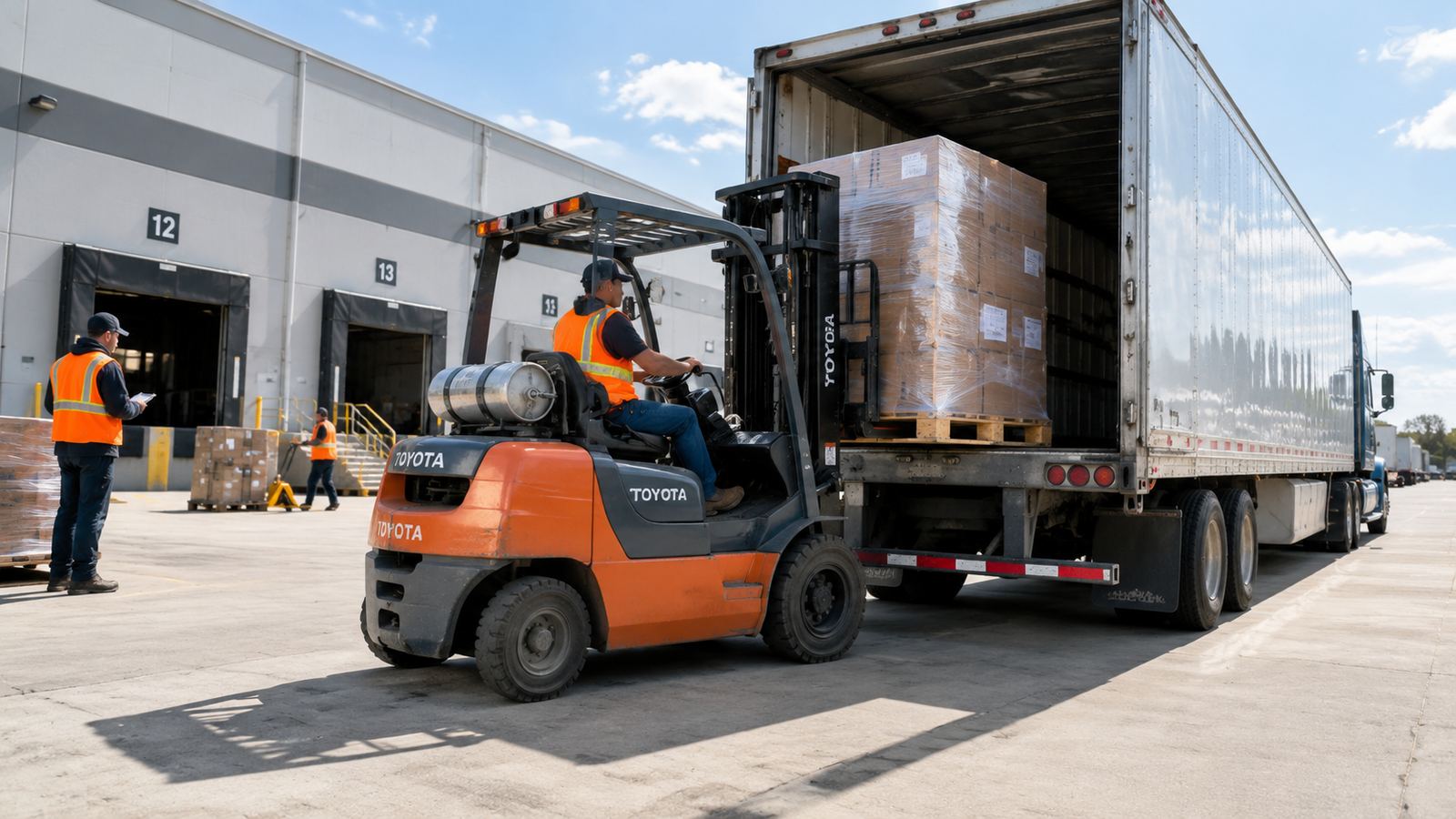
Forwarding desk: Check the pickup window, local collection arrangement, and origin handoff. Request revised confirmation if the cargo-ready date changes.
Route and transportation service
Buyer or logistics coordinator: Identify the origin and destination, preferred service level, transit requirement, and whether shared or exclusive equipment is acceptable. Explain any operational reason for requesting a specific carrier arrangement.
Forwarding desk: Confirm the proposed route, carrier acceptance, transportation scope, expected service, and transfer points. Identify any route or service condition that remains subject to provider confirmation.
Delivery address and receiving appointment
Consignee or receiving warehouse: Provide the complete delivery address, receiving hours, appointment process, unloading equipment, vehicle access restrictions, and delivery contact details. Confirm whether the location requires liftgate or inside delivery.
Forwarding desk: Check the final-mile provider’s service scope and confirm the delivery endpoint. Identify any special handling or appointment requirements that are not included in the original transportation offer.
Commercial scope and approval
Buyer or purchasing team: Specify whether the requested quote should include pickup, origin handling, main transportation, destination handling, and final delivery. Identify any separately arranged services and provide the required internal approval contact.
Forwarding desk: Provide a scope breakdown, identify exclusions and unconfirmed items, state the quote’s validity conditions, and explain what shipment changes would require a revision. Confirm the proposed booking process and the information still needed before carrier acceptance.
Special handling and restrictions
Shipper or product team: Disclose fragile cargo, hazardous characteristics, temperature requirements, unusual dimensions, securing requirements, or restrictions on stacking and orientation. Supply relevant supporting documents when requested.
Forwarding desk: Check the carrier’s acceptance requirements and obtain confirmation before booking. Do not assume that a general partial truckload service can accommodate every cargo type.
Ask the forwarding desk to return one consolidated quote revision showing the confirmed cargo profile, transportation scope, included work, exclusions, delivery requirements, and outstanding approvals. This creates a usable record for purchasing and warehouse teams.
Recommended Quote Review and an Illustrative Example
For multiple pallets, request a partial truckload option alongside an LTL alternative when both service types can accept the cargo. Compare them using identical pallet measurements, pickup conditions, route, delivery address, service level, and included handling. This gives the buyer a practical view of both the commercial difference and the operational trade-off.
A partial truckload arrangement is a reasonable option to investigate when the shipment occupies substantial trailer capacity, requires a particular handling arrangement, or does not fit the preferred LTL service profile. A conventional LTL movement may remain suitable when the cargo meets network acceptance conditions and the consignee can work with its delivery process.
The recommendation changes when cargo dimensions, stackability, weight, route availability, delivery restrictions, or timing make one option unsuitable. The forwarder should confirm these points before the buyer authorizes the shipment. The next checkpoint is a revised quote based on verified cargo details and a clearly defined delivery endpoint.
Illustrative example (not a customer case): An importer needs to move several pallets from a supplier’s warehouse to a commercial receiving facility. The pallets have verified dimensions, but the receiver requires an appointment and has limited unloading equipment. The buyer requests both partial truckload and LTL options. The forwarding desk checks carrier acceptance, confirms pickup and destination handling, and identifies the delivery equipment required. If the LTL network cannot accommodate the delivery conditions, the buyer can evaluate a partial truckload arrangement against the same shipment scope. The approval decision depends on confirmed carrier acceptance and the complete handoff requirements, not the service label alone.
Key Takeaways
Verify cargo details first. Confirm pallet dimensions, gross weight, stackability, and cargo-ready date before comparing offers.
Align the delivery endpoint. Check whether each quote covers terminal delivery, commercial dock delivery, or the consignee’s specified address.
Compare equivalent services. Use the same route, pickup conditions, service level, and handling scope for partial truckload and LTL alternatives.
Identify charge ownership. Ask which provider handles pickup, origin work, destination handling, and final delivery.
Disclose access requirements. Confirm appointments, unloading equipment, vehicle access, and special handling before booking.
Approve a defined quote scope. Obtain written confirmation of included services, exclusions, validity conditions, and revision triggers.
FAQ
What is a PTL shipment?
PTL means partial truckload. It describes a freight movement in which a shipment uses part of a truck’s available capacity rather than requiring the entire vehicle. The actual carrier arrangement can vary, so buyers should confirm whether the service involves shared capacity, additional transfers, and specific pickup or delivery handling.
What information does a partial truckload quote require?
A forwarding desk needs the origin and destination addresses, cargo-ready date, pallet count, outside dimensions, gross weight, packaging details, and handling restrictions. The buyer should also provide pickup access, delivery appointments, unloading arrangements, and the required service level. Missing information can prevent the carrier from confirming the shipment’s actual transportation requirements.
Is partial truckload better than LTL for multiple pallets?
Not in every situation. Partial truckload may suit shipments that occupy more trailer capacity or need a different handling arrangement. LTL may work well when the pallets meet the carrier’s network requirements. The buyer should compare both services using identical cargo measurements, route details, pickup conditions, and delivery scope.
Does a partial truckload quote include pickup and delivery?
Not necessarily. Some offers cover only the main transportation movement, while others include collection and final delivery. The buyer should ask the forwarder to identify the pickup point, origin handling, destination handoff, and final delivery address. The quote should also identify any special equipment or accessorial services that remain outside the stated scope.
How do pallet dimensions affect a PTL quote?
Pallet dimensions influence the amount of trailer space the shipment occupies and can affect carrier acceptance and handling requirements. Weight, stackability, packaging, and loading orientation also matter. The shipper should submit verified outside measurements for every handling unit so the forwarder can confirm the carrier’s rating basis and capacity requirements.
Can partial truckload freight include special delivery requirements?
Special delivery requirements may be available when the carrier and final-mile provider accept them. Examples include scheduled appointments, liftgate service, restricted-access delivery, and additional unloading assistance. The consignee should disclose these conditions before booking, and the forwarder should confirm whether each requested service is included or requires separate coordination.
When should a partial truckload quote be revised?
Request a revision whenever a material shipment detail changes. Relevant changes include pallet dimensions, total weight, cargo-ready date, pickup address, destination address, handling requirements, or delivery appointment conditions. The forwarder should check whether the original carrier arrangement remains valid and obtain updated confirmation before the buyer approves the revised movement.
What does a complete partial truckload quote tell the buyer?
A complete quote identifies the cargo assumptions, route, service level, transportation basis, pickup and delivery scope, included handling, exclusions, and applicable validity conditions. It also identifies outstanding carrier confirmations and the party responsible for each handoff. This information allows the buyer to compare operationally equivalent options and make an informed approval decision.
Disclaimer: This page is general quote-planning guidance, not a binding quotation or delivery commitment. Actual charges and handoffs depend on the cargo, route, timing, provider confirmation, and destination conditions. Where duties, customs, tax, insurance, or contract questions apply, confirm them with the relevant party before booking.