What Is a Lumper Fee—and Who Pays?
A lumper fee is a charge for third-party labor used to unload or handle freight at a warehouse, distribution center, or other receiving facility. The receiving party may pay the labor provider directly, or the driver or carrier may advance payment and seek reimbursement under the agreed shipping terms. A broker or shipper may also authorize direct payment.

The person who pays at the dock is not necessarily the party that ultimately bears the agreed expense. A trucking quote includes unloading labor only when the written scope or agreed rate confirmation clearly establishes that treatment. The phrase “delivery included” does not, by itself, confirm that third-party labor is covered.
Before dispatch, ask the receiver whether a lumper service is required, which provider or arrangement it accepts, who can authorize the expense, and how payment will be handled. Confirm the approved estimate or spending limit and the documents required for settlement or reimbursement. If any of these items remains unresolved, record it as an open quote condition. The forwarding desk can then clarify the scope before the carrier commits to the delivery.
Who Pays a Lumper Fee? Common Payment Arrangements
The payment arrangement should be explicit in the written quote or rate confirmation. The receiving facility’s process, the parties’ agreement, and any applicable legal requirements can affect the arrangement. Use the following scenarios to identify what your shipment needs before approving delivery.
| Arrangement | How payment works | What to confirm |
|---|---|---|
| Receiver pays directly | The consignee or receiving facility arranges payment with the labor provider. | Confirm that the receiver accepts the arrangement and whether the driver must advance any money. |
| Driver or carrier advances payment | The driver or carrier pays for the service and seeks reimbursement when the agreed terms permit it. | Confirm written authorization, the approved limit, the submission process, and required supporting records. |
| Broker or shipper authorizes payment | The broker or shipper arranges direct payment or authorizes an agreed payment method. | Identify the authorized approver, payment route, and process for handling an amount above the approved estimate. |
| Service included in the agreed rate | The written quote expressly includes the specified unloading service in the agreed amount. | Confirm which work is covered and whether separately incurred labor or additional handling requires separate approval. |
Keep three questions separate: who arranges the service, who pays the provider upfront, and who bears the agreed cost. A carrier may advance payment without accepting the expense as its own responsibility. Likewise, a broker’s authorization to pay does not automatically establish that every additional service is covered.
For covered U.S. interstate motor-carrier transportation, 49 U.S.C. § 14103 addresses loading and unloading assistance. When a shipper or receiver requires assistance within the statute’s scope, the provision addresses responsibility for providing that assistance or compensating the vehicle owner or operator for the associated costs. It also addresses specified forms of coercion. Its application depends on the circumstances; it should not be treated as a universal rule for every shipment or jurisdiction.
For U.S. interstate shipments, review the applicable statutory requirements alongside the shipment agreement and payment records. For other transportation arrangements, confirm the relevant local rules and contractual terms with the appropriate party.
What Affects a Lumper Fee and How to Confirm the Amount
The lumper service cost depends on the unloading work required and the receiving facility’s pricing and operating process. Do not assume that a standard amount applies to every facility or shipment. Ask the receiving facility or its authorized service provider for an estimate that identifies both the service and the conditions used to determine the amount.
Confirm the charging basis
The provider may assess the work by load, freight unit, labor time, or another facility-specific method. These are possible pricing approaches, not a universal fee formula. Ask which basis applies to the current delivery and what information supports it. If the provider cannot confirm the applicable basis before dispatch, record that uncertainty in the quote review.
Identify what the estimate covers
Ask whether the estimate includes the required unloading tasks and whether separate work could generate additional charges. Minimum charges, restacking, sorting, special handling, or other services may be relevant when the facility or provider specifies them. Confirm each applicable item rather than assuming that an estimate covers all work performed at the dock.
Set an approval limit
The person authorizing payment should know whether the stated amount is an estimate, a confirmed charge, or an approved spending limit. Record the approval in writing and name the person who can authorize an amount above that limit. If the actual service differs materially from the approved scope, the driver or carrier should follow the agreed escalation process instead of assuming that reimbursement will be automatic.
Agree on the supporting evidence
Confirm the documentation required to establish what the provider performed and what the payer approved. An itemized receipt or unloading ticket may support the service record, while delivery confirmation may be required to connect the expense to the shipment. The payer should identify the accepted documents before delivery and explain how any discrepancy will be reviewed.
Ask the quote desk to record the unloading method, charging basis, approved amount or limit, authorized approver, and required proof of service. This information makes the fee easier to evaluate and provides a clear checkpoint when the final payment request arrives.
What the Trucking Quote Includes and Who Must Act
A usable trucking quote separates the transport service from destination labor and other work performed at the receiving facility. Each item needs a clear scope, a responsible contact, and an approval process. The quote desk should identify what is confirmed, what is excluded, and what remains subject to the receiver’s instructions.
Pickup and origin handling: The shipper confirms the collection address, cargo-ready status, package count, loading method, and site access. The forwarder checks whether the requested collection service covers the required origin work. Do not infer that loading at pickup includes unloading at the destination.
Main transportation: The forwarder or carrier confirms the route and the agreed trucking service. The buyer checks whether the quoted amount includes only transportation or also covers specified handling services. If the shipment requires domestic pickup and delivery, compare the actual collection and delivery scope against the proposed trucking freight service.
Destination unloading: The consignee confirms whether its staff will unload the cargo or whether it requires outside labor. The quote desk asks whether that work is included, separately arranged, or subject to prior approval. If the carrier must advance payment, dispatch must know the approved payment method and the contact who can resolve a problem at the receiving facility.
Final delivery and accessorials: The consignee confirms the delivery address, appointment process, dock access, and special handling requirements. The forwarder checks whether the delivery service covers those conditions. Waiting time, storage, rebooking, restacking, or other work should be identified separately unless the provider expressly includes it in the agreed scope.
Broker coordination and reimbursement: The broker, shipper, or designated payer confirms who can authorize the service and which documents support payment. The forwarder can coordinate those instructions without assuming that it must pay every destination expense. The carrier should know who to contact when the facility requests payment outside the approved arrangement.
Approve the quote only after the delivery scope and unloading arrangement are clear enough for the intended service. If the buyer changes the delivery point, cargo presentation, or labor requirement, the forwarder should review the affected line items and issue an updated scope when necessary.
Note: A freight quote is tied to the cargo, handoffs, route, service level, timing, and destination work stated in it. Carrier and handling conditions can change. Align the scope first, then request confirmation for the specific shipment.
Choose an Unloading Plan That Fits the Cargo
The best delivery arrangement depends on the cargo’s loading condition, the receiving facility’s capabilities, and the control the buyer needs over approvals. Compare options using the same cargo details and delivery point. A different handling method is useful only when the receiver accepts it and the associated cost and responsibilities are clear.
Receiver labor versus a third-party crew
Receiver-provided labor may fit a facility that has confirmed staffing and accepts the planned delivery window. It is a poor fit when the receiver requires an approved external labor provider or cannot commit staff to unloading. A third-party crew may meet the site’s requirements, but the buyer must establish who arranges the crew, approves the expense, advances payment, and supplies proof of service.
Palletized versus floor-loaded freight
Palletized freight may simplify handling when the receiving facility accepts the pallet configuration and has suitable equipment. Floor-loaded cartons or loose pieces may need a different unloading plan, depending on the facility’s procedures. Cargo presentation alone does not establish the fee. The shipper must provide accurate packing details, and the receiver must confirm the method it will accept.
Delivery to an address versus a wider handoff service
A transportation quote that ends at a terminal or another handoff point does not describe the same scope as a service that coordinates delivery to the consignee’s address. For a shipment requiring coordinated collection, transportation, and final delivery, review the proposed door-to-door service scope. Confirm separately whether third-party unloading labor is included; delivery to an address does not establish that detail by itself.
For inbound stock intended for an Amazon fulfillment center, the receiving appointment and facility instructions also need to match the shipment plan. Review the relevant Amazon FBA service scope alongside the destination’s unloading and payment requirements. A fulfillment-center delivery arrangement does not, by itself, confirm that a separate labor expense is covered.
Choose the option that the receiver can support and that the carrier can execute under written instructions. If the proposed method changes the labor requirement, ask for an updated scope before authorizing the delivery.
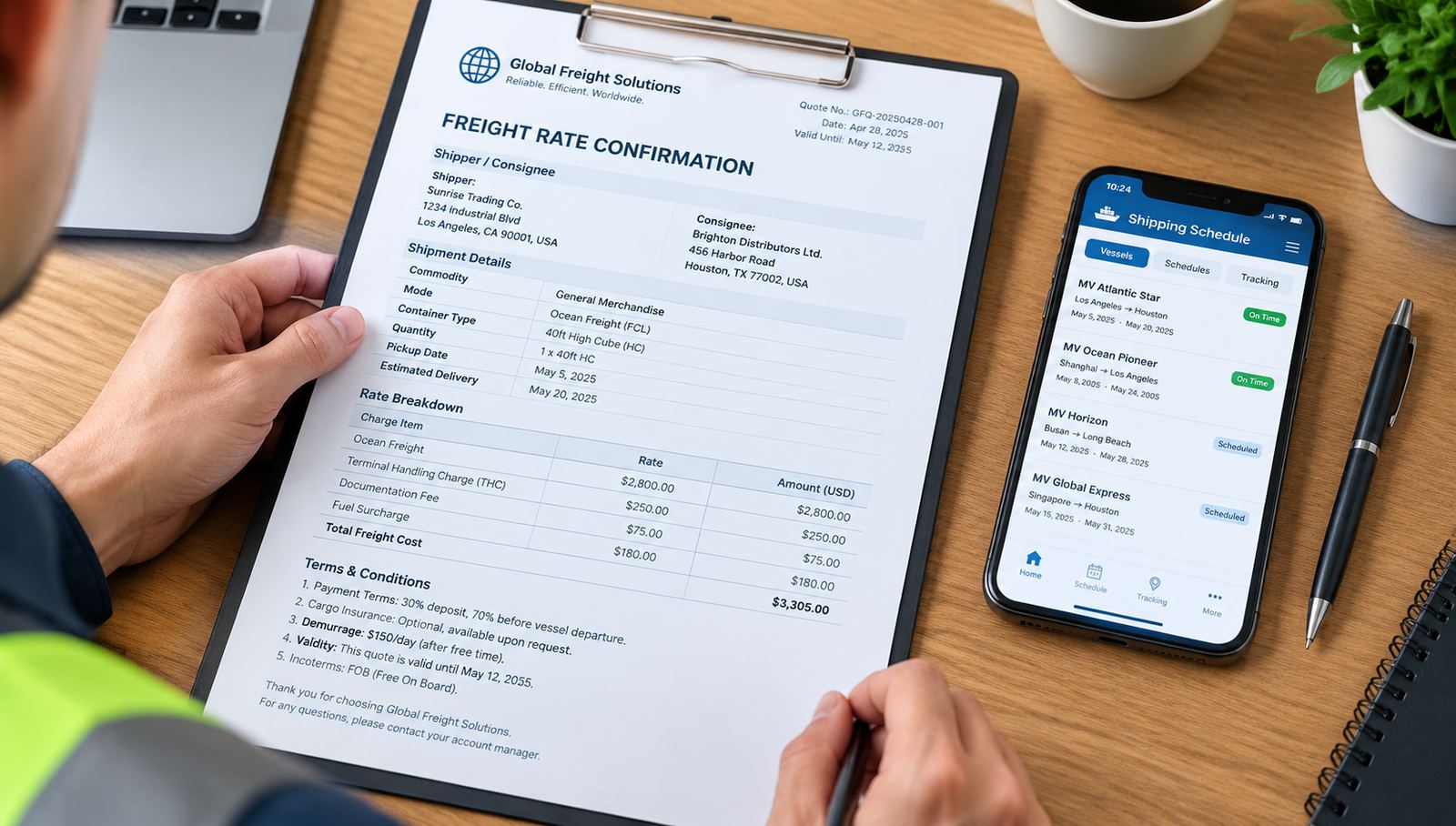
Prevent Unapproved Fees and Delivery Disruptions
Most quote gaps become harder to resolve when the driver is already at the receiving facility. Review the operational conditions that could change the unloading plan and agree on the response before dispatch.
Changed cargo or loading information: A revised piece count, floor-loaded cargo instead of pallets, or an inaccurate packing description can change the work required. The shipper must correct the cargo information, and the forwarder should check whether the revised handling needs a new estimate or authorization.
Missing receiver instructions: An accurate address does not establish the required unloading method, approved labor provider, or payment process. The consignee should confirm the facility’s instructions, and dispatch should make those details available to the driver before delivery.
Appointment or access failure: A missed appointment, restricted dock access, or unavailable receiving staff can disrupt the planned delivery. The consignee and dispatcher should confirm the appointment and access requirements. They should also identify how any resulting waiting, rescheduling, or additional service will be reviewed and approved.
Work outside the original scope: Sorting, restacking, storage, waiting time, and rebooking are distinct from unloading labor unless the provider’s written scope says otherwise. Ask what event triggers each additional item, who can authorize it, and what supporting record the payer requires. Do not treat one unloading approval as blanket authorization for all work at the destination.
Disputed payment or missing records: A reimbursement request may be difficult to reconcile if the shipment file does not show the service performed or the approved amount. The carrier should retain the required receipt or service ticket, and the designated payer should check those records against the agreed approval before settling the request.
Common mistake: Assuming that “delivery included” means unloading labor is included. That wording may describe transportation to the receiving address without covering a third-party crew. Request a written statement that identifies the unloading service, its payment arrangement, and any exclusions.
If the receiving facility requires a designated labor provider or advance authorization, do not release the truck under generic delivery instructions alone. Confirm the required provider, authorized approver, payment method, and documentation process before dispatch.
What to Confirm Before Dispatch
Use this three-stage check to close the most important information gaps without repeating the full quote review. Each stage has a clear owner and a specific result that the forwarding desk can verify.
Confirm Cargo and Receiving Requirements
The shipper supplies the cargo description, piece count, packing condition, dimensions, and loading information, along with the cargo-ready status and pickup details. The consignee confirms the delivery address, appointment, unloading method, and any required labor provider. The forwarding desk checks whether these facts support the proposed transport and handling scope.
Confirm the Amount and Payment Authority
The provider or receiving facility confirms the applicable fee basis and current estimate. The designated payer identifies who may authorize the service, who pays upfront, and whether reimbursement applies. The quote desk records the included or excluded scope, approved amount or limit, and the escalation route for an amount above the authorization.
Confirm Records and Written Instructions
The payer and carrier agree on the receipt, unloading record, and delivery confirmation required for settlement. They also identify where the documents must be submitted and the agreed submission deadline. The forwarding desk records the completed arrangement in the quote or rate confirmation and identifies any remaining condition that needs approval before dispatch.
Keep one shipment record containing the final quote, written authorization, receiving instructions, and accepted proof-of-service requirements. If a material detail changes, the responsible party should send the revised information to the forwarder and request confirmation of the affected scope.
Sample Lumper Fee Clause for a Trucking Quote
A written clause should distinguish the transportation rate from unloading labor and state how the parties will approve and document any separately arranged service. The following wording provides a practical starting point for a quote that excludes unloading labor unless the written scope expressly includes it.
Suggested quote wording
Lumper service: Third-party unloading labor is excluded from the transportation rate unless the written quotation expressly identifies the service as included. Any required unloading service must be authorized in writing by the designated approver before payment, except where the parties have agreed to a different documented procedure.
The written authorization must identify the approved estimate or spending limit, the party responsible for arranging payment, and whether the carrier may advance the expense and seek reimbursement. Any amount above the approved limit requires further authorization under the agreed approval process.
Reimbursement requires the supporting receipt or unloading record and delivery confirmation specified in the rate confirmation. The record must also identify the agreed recipient and submission procedure. Waiting time, detention, restacking, storage, and other additional services are separate unless the written scope expressly includes them.
Before using the clause, align it with the actual quote, applicable contract, and relevant legal requirements. The wording should not suggest that an excluded service is included, or that reimbursement is available without the agreed authorization and supporting evidence.
Illustrative example (not a customer case): A shipment is booked for delivery to a warehouse, but the quote identifies transportation without specifying who will unload the cargo. The receiver confirms that its own staff cannot perform the required work and identifies an accepted third-party labor arrangement. The buyer then obtains written authorization for the service, confirms the payment method and approved limit, and specifies the receipt required for settlement. The forwarder updates the delivery instructions and clarifies the quote scope. If the provider’s actual request exceeds the approved limit, the responsible approver must review the difference before the expense is treated as authorized under the agreed process.
The practical recommendation is to resolve the receiving facility’s requirements first, compare equivalent delivery scopes second, and approve the payment route before dispatch. If the facility changes the labor requirement or the estimate no longer reflects the requested work, seek a revised authorization rather than relying on the original transportation quote.
Key Takeaways
- Distinguish who arranges unloading, who pays upfront, and who bears the agreed expense.
- Confirm whether unloading labor is included, excluded, or subject to written approval.
- Verify the service basis, estimate, spending limit, and procedure for approving additional work.
- Give the carrier accurate cargo details, receiving instructions, and appointment information before dispatch.
- Agree on the required receipts, service records, delivery confirmation, and reimbursement process.
- Request a written quote revision whenever the cargo or unloading scope changes materially.
FAQ
What is a lumper charge, and what does it cover?
A lumper charge covers third-party labor used to unload or handle freight at a receiving facility. The covered work depends on the facility’s procedures and the cargo presented for delivery. Check whether the service includes only unloading or also specified additional handling. The written quote should identify the agreed scope rather than leaving the buyer to infer it from the delivery description.
Who pays the lumper fee?
The receiver may pay the provider directly, or the driver or carrier may advance payment and seek reimbursement under the agreed terms. A broker or shipper may also arrange payment. The upfront payer is not necessarily the party that bears the agreed expense. Confirm the payment route, authorized approver, and applicable responsibilities before dispatch.
Is the lumper fee included in a trucking quote?
The fee is included only when the written quote or agreed rate confirmation expressly covers the unloading service. A statement that delivery is included does not necessarily cover third-party labor at the receiving facility. Ask the provider to identify the included work, exclusions, and approval process for services outside the agreed scope before comparing quotes.
How do I confirm the lumper service cost before delivery?
Request an estimate from the receiving facility or its authorized provider. Ask what unloading work the estimate covers, which pricing basis applies, and whether additional handling could be assessed separately. Record whether the amount is an estimate or an approved limit, and identify who can authorize a difference before the carrier commits to additional work.
Which documents support lumper fee approval and reimbursement?
The required records depend on the agreed payment process. Common supporting evidence includes an itemized labor receipt, unloading ticket, and delivery confirmation when required. Confirm which records the payer accepts, who must submit them, and how the expense will be matched to the shipment authorization. The carrier should know these requirements before reaching the receiving facility.
Is a lumper fee the same as detention or waiting time?
No. A lumper fee relates to unloading or handling labor, while detention or waiting-time charges relate to time spent waiting under the applicable service terms. These items may arise during the same delivery, but they describe different services or events. Ask the provider to document the work performed and distinguish each item in the agreed quote scope.
Disclaimer: This page is general quote-planning guidance, not a binding quotation or delivery commitment. Actual charges and handoffs depend on the cargo, route, timing, provider confirmation, and destination conditions. Where duties, customs, tax, insurance, or contract questions apply, confirm them with the relevant party before booking.