What Freight Forwarder Fees Usually Include
Freight forwarder fees are not a single standardized charge. A shipping quote may combine the main transport cost, origin and destination handling, documentation, forwarding service fees, and applicable surcharges or additional services. Customs brokerage, duties, taxes, and cargo insurance may be listed separately or included under specifically defined terms.
The total depends on the shipping route, transport mode, cargo dimensions and weight, equipment requirements, pickup and delivery arrangements, and the work included in the offer. Some amounts pay for services provided directly by the forwarder. Others represent costs from carriers, terminals, truckers, warehouses, or other service providers that the forwarder arranges or collects.
To compare freight forwarder fees fairly, identify what each line item covers, how the provider determines its billing basis, where the service begins and ends, and which costs remain unconfirmed. A quote with fewer line items is not necessarily more comprehensive, and a quote with more line items does not automatically represent a higher total cost for equivalent work. This guide explains common fee categories, the conditions that affect them, and the checks to complete before approving a shipment.
What Fees Are Included in a Freight Forwarder Quote?
Start by separating the main transport charge from handling, documentation, forwarding services, and costs that arise only under specific conditions. Providers may bundle several services into one line or itemize them separately. The categories below describe common items to check, not a mandatory list for every shipment.
| Fee category | Common examples | What to verify | Who can confirm |
|---|---|---|---|
| Main transport | Ocean, air, rail, or road freight | Route, transport segment, service level, and billing basis | Freight forwarder or carrier |
| Origin charges | Pickup, origin handling, terminal handling, export preparation | Which collection, handling, and origin activities are included | Forwarder, shipper, or origin service provider |
| Destination charges | Terminal handling, deconsolidation, release processing, local delivery | Where the quoted service ends and which destination tasks remain | Forwarder or destination provider |
| Documentation and forwarding services | Booking, shipment coordination, transport documents, administrative handling | What each service covers and whether it is already included elsewhere | Forwarder or document issuer |
| Transport surcharges | Fuel-related, security, peak-season, or congestion-related adjustments | Which adjustments apply and how the provider determines them | Forwarder or relevant carrier |
| Additional services | Storage, waiting time, special equipment, rebooking, extra handling | What event triggers the service and how its scope is confirmed | Forwarder or provider performing the work |
| Customs and other separate items | Brokerage, government duties and taxes, cargo insurance | Which service or payment is included, separate, or arranged by another party | Broker, relevant authority, insurer, or contracting party |
Terminal Handling Charge (THC) generally refers to handling associated with a transport terminal. The relevant terminal and service stage matter, so confirm whether the quoted item relates to origin or destination handling and which activities it covers.
Container Freight Station (CFS) and deconsolidation fees may arise when less-than-container-load cargo passes through facilities used to receive, consolidate, separate, or release shared shipments. Ask whether the quotation includes the applicable facility handling and destination release work. Do not treat one general handling line as proof that every warehouse or terminal activity is included.
Bill of Lading (B/L) and Air Waybill (AWB) fees relate to transport documentation or its processing. The document issuer, forwarder, or another provider may define the relevant service. Ask which document is covered, whether amendments or reissuance fall within the stated scope, and whether another documentation item has already included the same work.
Fuel-related adjustments and other surcharges may reflect carrier or service-provider conditions. A term such as Bunker Adjustment Factor (BAF) is associated with fuel-related adjustments in ocean transport, but its application depends on the relevant provider and quote. Ask for the charge basis and applicable conditions instead of assuming that a familiar label applies uniformly across routes.
Duties and taxes must remain distinguishable from the cost of forwarding services. A forwarder or broker may arrange payment under an agreed scope, but that does not make a government-imposed amount the forwarder’s own service fee. Confirm which amounts have been determined, who will verify them, and whether the offer includes any separate payment-handling service.
Likewise, do not infer that cargo insurance is included merely because a shipment has been quoted. Ask whether cover is included, separately available, or arranged by another party. Review the cargo insurance service where appropriate, and confirm the applicable coverage terms and exclusions before relying on the proposed protection.
Quote-desk check: For every line item, identify the service, the party providing it, the billing basis, and the shipment stage it covers. If a fee appears under more than one heading, ask the forwarder to reconcile the entries before approval.
Align the Shipment Details Before Comparing Totals
A fee breakdown is only useful when each provider is pricing the same shipment. Give every forwarder the same core information, then check that its offer reflects the actual pickup point, cargo, transport plan, destination handoff, and delivery requirements.
| Check in order | Information required | Why it matters | Next action |
|---|---|---|---|
| Cargo-ready date | Expected readiness and collection window | Changes may affect booking and transport arrangements | Ask the supplier to confirm readiness |
| Pickup and origin handling | Full address, loading access, and required origin work | The quote may not include every collection activity | Confirm scope with the forwarder |
| Route and service level | Mode, proposed routing, and service requirements | Different services do not cover equivalent work | Align the proposed transport services |
| Cargo and billing basis | Packed dimensions, gross weight, pieces, and equipment needs | The assessed shipment may differ from the preliminary details | Verify the final packing information |
| Destination handoff | Receiving terminal, warehouse, broker, or local provider | An unassigned handoff can leave work outside the quote | Name the receiving party and scope limit |
| Delivery point | Full address, receiving hours, appointment, and access rules | The final delivery arrangement must fit the actual site | Obtain requirements from the receiver |
| Quote conditions | Issue date, stated validity, inclusions, and exclusions | The offer may depend on assumptions that need confirmation | Ask the forwarder to confirm the current scope |
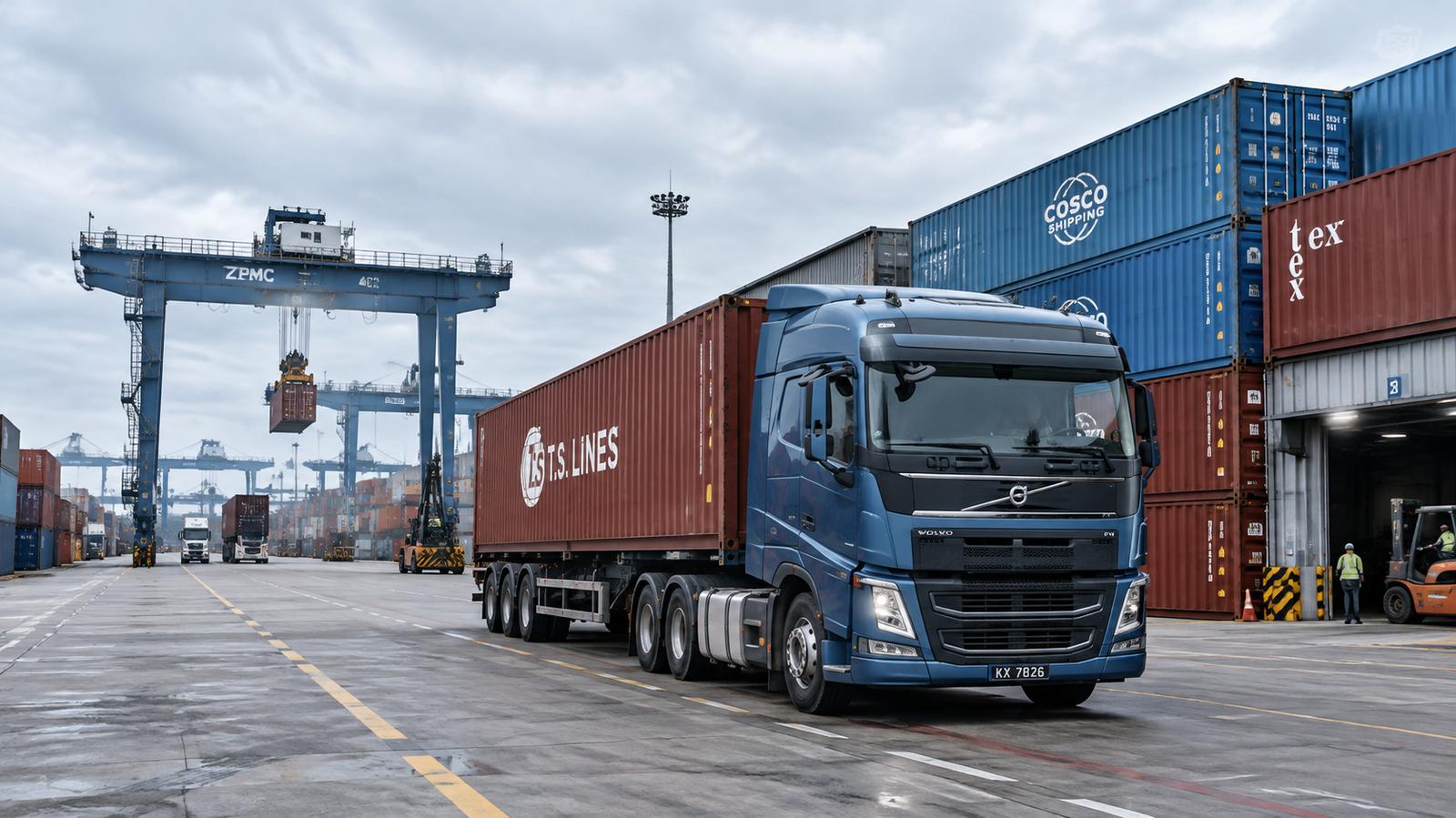
A pickup from a staffed loading dock can require a different operating arrangement from a collection at a site with restricted access or limited loading equipment. For inland transport, review the proposed trucking freight service and establish whether the quoted work includes collection, loading arrangements, and delivery to the specified endpoint.
Give the receiver’s actual address and site requirements to the forwarding desk. Some receiving facilities require advance appointments, specific delivery arrangements, or defined cargo preparation. For shipments intended for an Amazon fulfillment center, verify the receiving requirements and the relevant Amazon FBA shipping service scope before treating the final delivery arrangements as confirmed.
The result should be a shared shipment specification that the buyer, supplier, receiver, and forwarder can use. An unknown field should remain explicitly unconfirmed rather than being treated as an included service or settled shipment condition.
What Affects Freight Forwarding Costs?
The billing basis explains how a provider assesses a service. It does not, by itself, identify the final amount or prove that two offers cover the same work. Confirm the applicable basis for the selected mode and check that each provider has used the same shipment information.
| Shipment or service | Common basis | Input that matters | Question for the forwarder |
|---|---|---|---|
| Full-container load (FCL) | Container type and quantity | Equipment, loading plan, and route | Which equipment and handling stages are included? |
| Less-than-container load (LCL) | Provider-defined weight or measurement basis | Packed dimensions, gross weight, and piece count | Which measurements determine the assessed shipment? |
| Air and express freight | Applicable chargeable-weight basis | Actual weight, packed dimensions, and service method | Which billed weight did the quote use? |
| Road transport | Vehicle, distance, shipment, or agreed service scope | Pickup, delivery, load, and access conditions | Which journey and additional tasks are covered? |
| Documentation and service work | Specified document, shipment, or service item | Required documents and requested actions | Is this task already included under another item? |
Full-container and consolidated cargo
A full-container-load (FCL) quote generally reflects the selected equipment and the associated transport arrangement. Confirm the container type, loading location, origin work, destination handling, delivery plan, and any relevant equipment-return arrangements. A total that excludes a necessary equipment handoff is not directly comparable with an offer that includes it.
Less-than-container-load (LCL) cargo moves with other shipments and may be assessed using a provider’s weight-or-measurement method. Supply final outer dimensions and gross weight for each packed piece. Ask the forwarder to identify the measurements used and explain whether the quoted basis will need reassessment if the packing changes.
Air freight and express services
Air freight commonly uses chargeable weight rather than gross weight alone. The applicable method depends on the service and quotation conditions. Check the packed dimensions and actual weight used in the assessment, then ask the provider to confirm the chargeable weight. A change to carton dimensions may affect the assessed shipment even when the piece count and cargo description remain unchanged.
Express services may use a different operating and billing arrangement from a general air freight movement. Check the actual service level, pickup and destination scope, cargo acceptance requirements, and billing basis under the proposed express service. Do not compare the two offers solely by looking at a transport label.
Road transport and special cargo
Road transport may be assessed by vehicle, distance, shipment, or a defined combination of services. Pickup location, delivery access, loading needs, and the required equipment can change what the provider must arrange. Ask which activities the transport quote covers and whether waiting or special equipment requires separate confirmation.
Unusually large, heavy, or irregular cargo may need a different loading and transport plan from standard containerized freight. Supply the cargo dimensions, weight, packing arrangement, and handling restrictions before selecting a service. Where standard container handling is unsuitable, ask whether a break-bulk freight arrangement warrants assessment and which handling stages it would require.
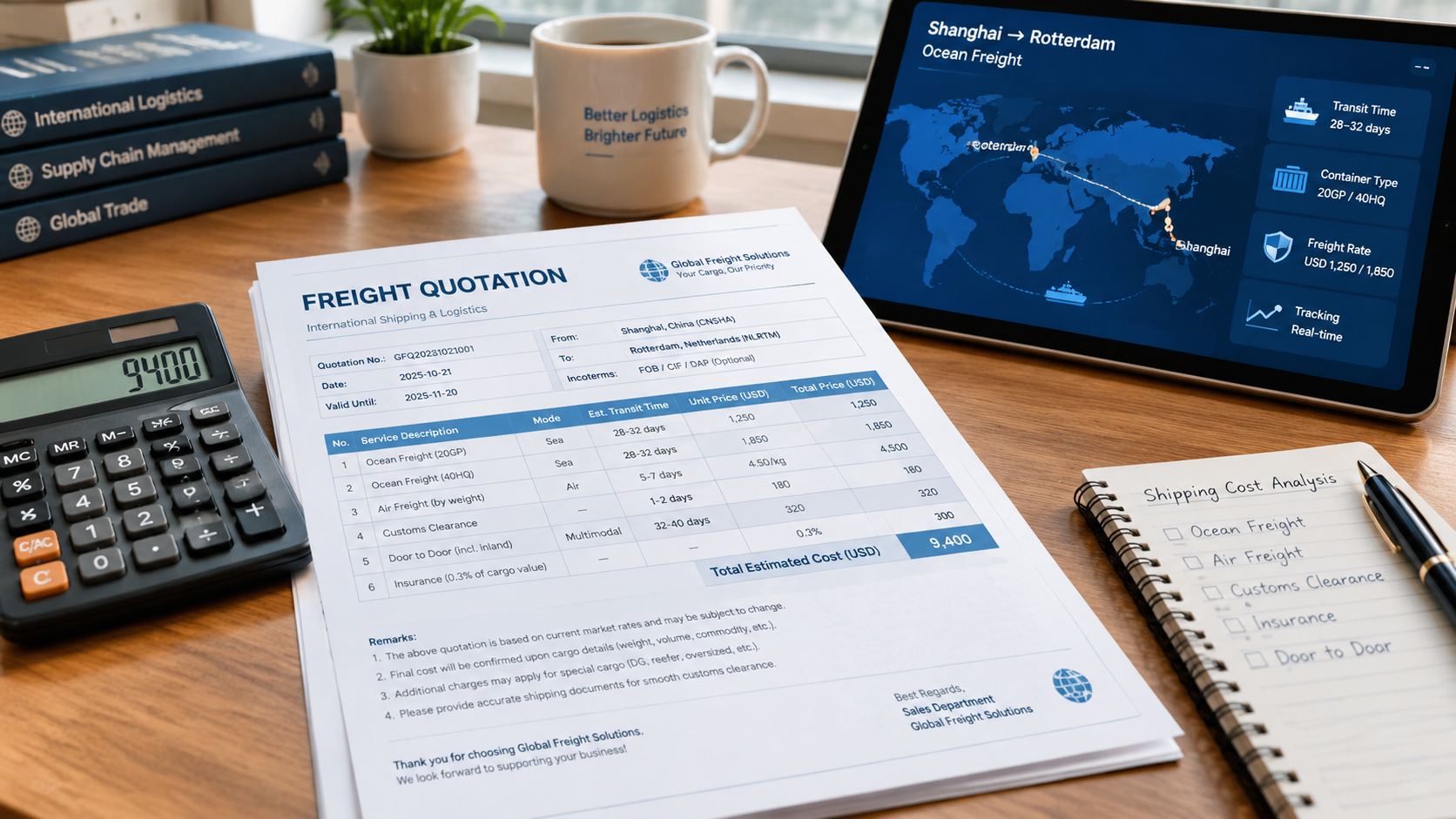
The route and delivery scope also affect which providers must act. Sea freight, air freight, and rail freight differ in routing and handoffs, while a local delivery leg may need separate coordination. Review the proposed sea freight service, air freight service, or rail freight service according to the intended movement, then have the forwarder confirm the actual route and included services.
Measurement checkpoint: Ask who supplied the cargo measurements, whether the figures describe the final packed cargo, and which basis the quotation uses. If the documents and physical shipment do not match, request a revised assessment before proceeding.
Separate Included Services from Third-Party Costs
A freight quote should show which work the forwarder will arrange and which tasks remain with another party. The distinction matters because a forwarder may coordinate a service, charge for its own work, or pass through an amount from another provider. Those roles are not interchangeable.
Origin handling: Ask whether pickup, cargo receiving, consolidation, export preparation, and terminal handling are included. The shipper confirms cargo readiness and site access; the forwarder confirms the planned origin activities and any work outside its scope.
Main transport: Confirm the proposed route and the start and end points of the quoted transport segment. The forwarder should identify any handoff to a carrier, terminal, or local operator, along with any associated transport work that is excluded.
Destination processing: Establish whether terminal handling, cargo release, deconsolidation, warehouse work, and local delivery are included or need separate arrangements. The destination provider or forwarder can verify local service scope. If inbound coordination is required, review the import service and confirm the specific activities included in the offer.
Customs brokerage: Distinguish coordination from performing a declaration or other brokerage task. Ask who will prepare or submit the required information, who will review the documents, and which services the quotation covers. Where relevant, verify the scope of the customs brokerage service with the provider performing that work.
Duties and taxes: Confirm which party will establish the amounts, arrange payment, and provide the necessary information. Do not assume that a freight quote includes government payments simply because the forwarder coordinates delivery or import-related services.
Delivery, storage, and equipment: Confirm the receiving address, appointment process, unloading requirements, and any special access needs. Ask who will coordinate waiting, storage, rebooking, or equipment return if circumstances change. The relevant provider must confirm its own conditions; a general delivery line does not settle every possible additional task.
Group the quotation into three practical categories: work confirmed as included, work confirmed as excluded, and items awaiting confirmation. If a missing service could change the buyer’s decision or leave a shipment stage unassigned, ask for clarification or a revised written offer before approval.
Note: A freight quote is tied to the cargo, handoffs, route, service level, timing, and destination work stated in it. Carrier and handling conditions can change. Align the scope first, then request confirmation for the specific shipment.
Choose a Freight Service That Fits the Shipment
The right service is the one whose confirmed scope matches the cargo, timing requirements, and receiving arrangement. Compare the trade-offs rather than assuming that one mode or service label will always produce a better outcome.
Sea, air, rail, or express
Sea freight may fit a shipment that can work with the proposed sailing and handling plan. Air freight may suit cargo that needs a different transit arrangement or handling schedule, while rail can be considered when a suitable route and service are available. Express may suit shipments that require a defined express service. Each option can involve different billing bases, transport stages, and destination activities, so ask the forwarder to compare equivalent scope.
Terminal-to-terminal or door-to-door
A terminal-to-terminal service can fit a buyer that already has suitable parties arranged for collection and destination handling. It may be a weak fit when the buyer expects the forwarder to coordinate the entire movement. A door-to-door freight service can cover a broader route, but the name alone does not establish that every destination task or third-party cost is included. Confirm the named pickup and delivery points, handoffs, exclusions, and site requirements.
Dedicated equipment or shared cargo space
FCL can fit a shipment requiring dedicated container equipment or a specific loading arrangement. LCL can fit compatible cargo that can move through consolidation. LCL introduces additional consolidation and deconsolidation handling, while FCL requires the parties to coordinate equipment, loading, and the applicable destination arrangements. Ask the provider to describe the relevant stages and how the cargo will be assessed.
For every alternative, request the same cargo specification and delivery endpoint. Then identify the operational trade-off, such as consolidation handling, equipment needs, the number of handoffs, or the work your own team must arrange. The quote should make that difference visible before the buyer selects a service.
Prepare a Freight Forwarder Quote Request
Send the same shipment specification to every provider. A useful request identifies the cargo, readiness, pickup and delivery details, preferred service, required scope, and any known restrictions. Assign each field to the person who can verify it instead of leaving missing information for the forwarder to infer.
- Cargo and packing — supplier or shipper: Provide the commodity description, packing type, piece count, packed outer dimensions, gross weight, and handling requirements. These details help the forwarder select a workable service and confirm the applicable billing basis.
- Readiness and pickup — supplier or shipper: Confirm the cargo-ready status, full pickup address, available collection window, loading method, and site contact. Ask the forwarder to identify any origin work or access condition that remains unresolved.
- Route and service — buyer and forwarder: State the required destination, preferred transport mode, desired service scope, and any material transit constraints. Ask the desk to define the proposed routing, service level, handoffs, and alternative options.
- Delivery and appointment — receiver or consignee: Supply the full receiving address, operating hours, appointment process, unloading arrangements, and access restrictions. The forwarder should confirm that the quoted final leg matches those requirements.
- Commercial scope — buyer: Identify which services the forwarder should arrange and which activities the supplier, broker, or local provider already handles. Where customs services, duties, taxes, or insurance are relevant, name the responsible party and request a separate scope confirmation when needed.
- Special handling — supplier and buyer: Disclose unusual dimensions, fragile packaging, equipment needs, or cargo restrictions before the forwarder selects a transport plan. Ask which missing details or supporting documents must be supplied before the quotation can be confirmed.
Request a written breakdown of the main transport, origin and destination work, forwarding or documentation services, applicable surcharges, additional services, exclusions, and unresolved items. Ask the provider to identify each relevant billing basis and the conditions attached to the offer.
Before issuing the booking instruction, compare the accepted scope with the final packing and receiving information. If a material field changes, return it to the forwarder for confirmation rather than assuming that the earlier offer still describes the planned shipment.
How to Compare Two Freight Forwarder Quotes
Compare the scope line by line before deciding whether the totals represent equivalent services. The following illustration uses hypothetical scope conditions only. It does not represent a live quotation or a market price.
| Quote item | Provider A | Provider B | Buyer verification |
|---|---|---|---|
| Main transport | Included to destination terminal | Included to destination terminal | Confirm the same route and transport scope |
| Supplier pickup | Excluded | Included | Determine who will arrange pickup under A |
| Origin handling | Requires confirmation | Included in the stated scope | Check whether the same activities are covered |
| Destination handling | Excluded or unconfirmed | Included in the stated scope | Identify any facility and release work still needed |
| Final delivery | Excluded | Included to the named warehouse | Verify the delivery address and site conditions |
| Brokerage and other separate items | Not included | Not included | Confirm who will arrange the required services |
In this illustration, Provider A describes a narrower movement than Provider B. The buyer should not compare their headline totals as though both offers cover the same work. The buyer first needs to determine the missing pickup, origin, destination, and delivery arrangements, then ask the relevant providers to confirm those items in writing.
The buyer should also check whether either offer has bundled charges that need separate identification. An item does not become included merely because the quotation does not list it. Conversely, a separate line does not necessarily indicate duplicate billing; the provider must clarify which service it represents.
Make the Decision on a Confirmed Shipment Scope
Start by confirming the cargo and the required delivery point. Then compare the main transport, relevant origin and destination charges, service fees, billing basis, and any conditions that could create additional work. The practical default is to select an offer that documents the required movement clearly and assigns each necessary handoff to a named party.
The preferred option may change when a verified fact changes the operating plan. Different packed dimensions may affect the cargo assessment, a restricted receiving site may change the delivery arrangement, and a revised readiness window may require new coordination. Ask for the specific revision and review it against the same shipment specification before approval.
Confirm the cargo facts
Obtain final packing information, cargo readiness, pickup details, and the receiving site’s requirements. Ask the relevant party to verify any field that remains incomplete.
Reconcile the fees and scope
Identify the main freight, handling, documentation, forwarding service fees, surcharges, additional services, and exclusions. Ask the provider to clarify duplicate-looking or unexplained entries.
Approve or request revision
Choose an offer that fits the verified service requirements. Keep approval open if an important cost, handoff, or cargo detail remains unresolved, and obtain confirmation before proceeding.
Illustrative example (not a customer case): A buyer compares a terminal-to-terminal offer with a second offer that includes supplier pickup and delivery to a receiving warehouse. The final packed dimensions still need confirmation, and the warehouse has an appointment process. The buyer asks both providers to confirm the applicable cargo basis, identify the destination handling included in each offer, and clarify who will arrange the delivery appointment. The buyer makes the decision only after the service scope and shipment facts are aligned.
This method keeps the approval decision tied to the actual movement rather than the number of line items or the headline total. The accepted quotation should identify the work the provider will arrange, any separate services, the basis used to assess the shipment, and the conditions that require a new review.
Key Takeaways
- Separate main transport, origin and destination handling, forwarding services, surcharges, additional work, and government payments.
- Confirm the billing basis against the final packed dimensions, gross weight, piece count, and equipment needs.
- Check exactly where each provider’s scope begins and ends, including pickup and final delivery.
- Ask who provides each service and whether its cost is included, excluded, or still unconfirmed.
- Request a revised assessment when cargo details, readiness, route, or delivery conditions materially change.
FAQ
What fees does a freight forwarder usually charge?
A freight forwarding quote may include main transport, origin and destination handling, documentation, shipment coordination, and applicable surcharges. Additional services, customs brokerage, cargo insurance, duties, and taxes may be handled separately. Review the actual line items to establish which work the provider has included, which items come from third parties, and what remains unconfirmed.
Are freight forwarding costs the same as freight charges?
Not necessarily. Freight charges commonly refer to the transport of cargo, while a forwarder’s quotation may also cover handling, documentation, coordination, and other services. Some providers bundle several items, while others show them separately. Compare the scope of each line rather than assuming that two similarly named totals include the same services.
What does a terminal handling charge cover?
A terminal handling charge generally relates to work performed in connection with cargo handling at a transport terminal. The relevant activities and service stage depend on the shipment and provider. Ask whether the item applies at origin or destination, which terminal work it includes, and whether other handling or release activities remain outside the quoted scope.
Why can air freight use chargeable weight instead of gross weight?
Air freight commonly considers the space a packed shipment occupies as well as its actual weight. This means dimensions can affect the assessed billing basis. Give the provider the final outer dimensions and gross weight, then ask which chargeable weight the quotation uses. A change in packing can require a new assessment even when the cargo description remains the same.
What is the difference between demurrage, detention, and storage?
Demurrage commonly relates to a container remaining at a terminal beyond the applicable permitted period, while detention commonly relates to equipment being retained outside the terminal beyond the relevant period. Storage concerns cargo or equipment kept at a facility. Definitions and billing conditions depend on the relevant provider and location, so confirm the terms for the shipment.
Does a door-to-door quotation include every shipment expense?
No. The service description identifies a broad movement but does not prove that every handling task, third-party service, government payment, or additional activity is included. Confirm the pickup and delivery points, the work performed at each end, and any separate arrangements. The provider should identify the services covered and the tasks that remain with another party.
Which freight forwarding fees may be negotiable?
Negotiability depends on the nature of the item and who controls it. A provider’s own service fee may be open to discussion, while carrier, terminal, or other third-party amounts may follow separate conditions. Ask the forwarder to identify the source of each relevant item and explain which parts of the proposed service scope can be adjusted.
How can I avoid unexpected items on a freight invoice?
Provide accurate cargo measurements, confirm pickup and delivery arrangements, and request a breakdown of included services, exclusions, and conditional work before approving the shipment. Ask who will verify each unresolved item and how changes will be communicated. Compare the final packing and receiving details with the accepted scope so that any necessary reassessment happens before the shipment proceeds.
Disclaimer: This page is general quote-planning guidance, not a binding quotation or delivery commitment. Actual charges and handoffs depend on the cargo, route, timing, provider confirmation, and destination conditions. Where duties, customs, tax, insurance, or contract questions apply, confirm them with the relevant party before booking.