Calculate the weight basis before approving an air freight quote
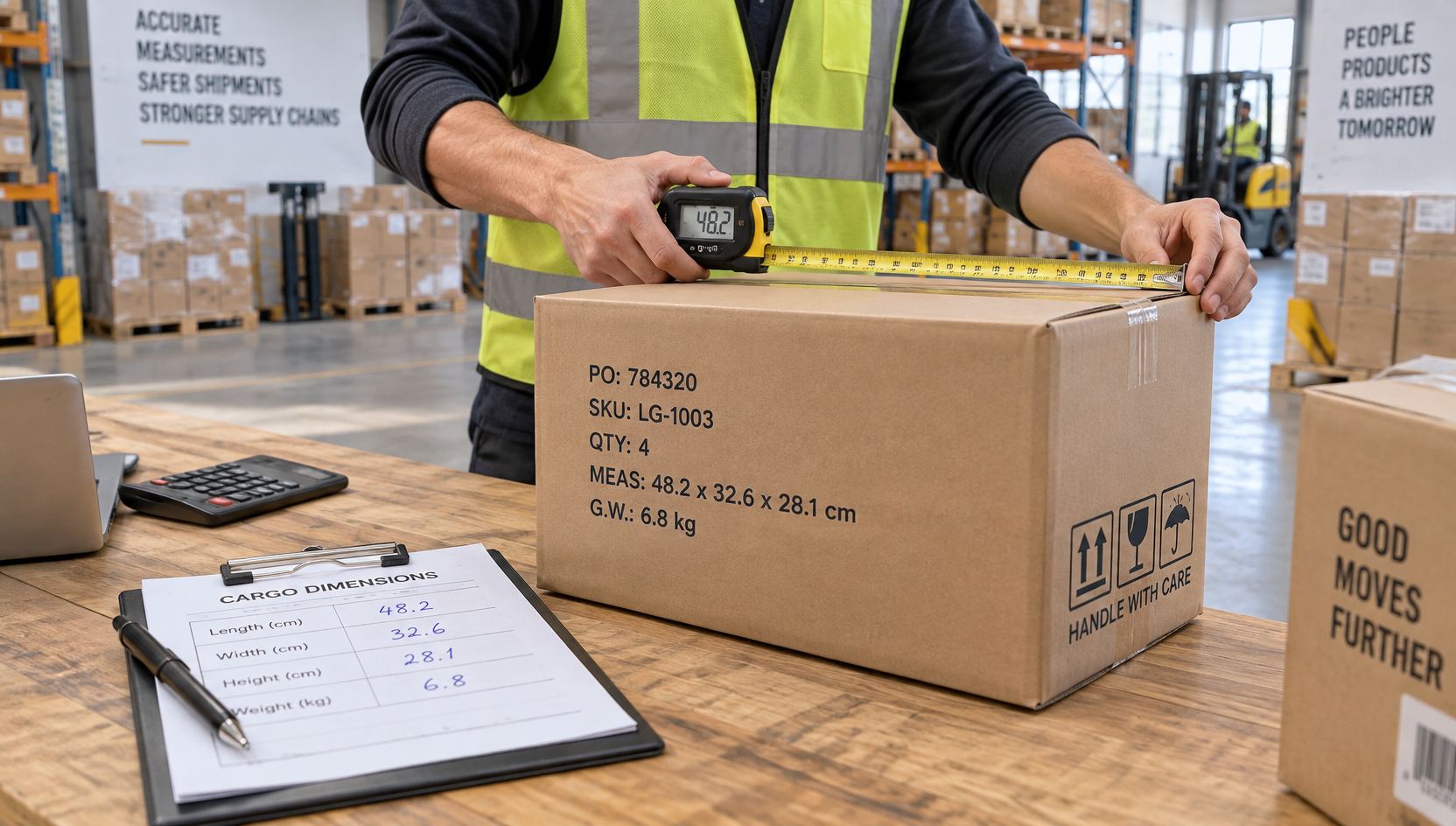
Use an air freight chargeable weight calculator to estimate the billable weight of your shipment and check whether a forwarder’s quotation uses the correct cargo measurements. The calculation starts with two inputs: the packed shipment’s actual gross weight and its volumetric weight. For services that rate on the greater of these two figures, the higher value becomes the preliminary chargeable weight before any applicable rounding or service-specific adjustments.
For example, a shipment can weigh relatively little but occupy substantial aircraft space. Its volumetric weight may therefore exceed its actual weight. Incorrect carton dimensions, unfinished palletization, or an unconfirmed conversion divisor can make the estimate unreliable.
The calculation is only the first checkpoint. The buyer must also confirm the pickup point, proposed route, destination handoff, and included delivery work. Two offers can use the same chargeable weight yet cover different services. Use the formula and worked example below to check the weight basis manually, then ask the forwarder to confirm the method, rounding rules, and full shipment scope before approving the quote.
Confirm the shipment data before calculating
The forwarding desk needs reliable cargo information before it can confirm the rating basis. Collect these details in the order shown so that preliminary measurements do not become the basis for an approval that the final shipment cannot support.
| Input | What to provide | Who confirms it | Why it matters |
|---|---|---|---|
| Cargo-ready date | Expected date when packed cargo is available | Supplier or shipper | Supports pickup planning and service confirmation. |
| Packing details | Piece count, outer dimensions, and package type | Warehouse or shipper | Establishes the volume used in the calculation. |
| Actual gross weight | Total packed shipment weight | Warehouse or shipper | Provides the physical-weight comparison. |
| Pickup and origin handling | Collection address, access, and required handling | Shipper and forwarder | Identifies the first handoff and included work. |
| Route and service | Departure and arrival points, service level, and transfers | Forwarder | Determines which rating method and operating scope apply. |
| Delivery and quote conditions | Receiving address, appointment needs, quote date, and exclusions | Consignee, buyer, and forwarder | Defines the destination endpoint and the conditions for revision. |
Do not combine estimated cargo data with a quote that assumes final packing without making the difference explicit. Ask the warehouse to confirm the measurements it supplied, and ask the forwarder whether any unfinished packing detail prevents a firm rating confirmation.
How to calculate air freight chargeable weight
Volumetric weight represents the space occupied by the packed cargo under the conversion method used for the selected service. Actual gross weight represents the physical weight of the packed shipment. The applicable service rules determine how the forwarder compares these values and applies rounding or other adjustments.
Volumetric weight for identical packages: Length × width × height × quantity ÷ divisor.
Volumetric weight for mixed package sizes: Add the individual package volumes using consistent units, then apply the confirmed conversion method. The provider may require specific package-level calculations or rounding, so confirm the required calculation sequence before finalizing the estimate.
When the service uses the greater of actual gross weight and volumetric weight, the initial comparison is:
Preliminary chargeable weight = the greater of actual gross weight and volumetric weight.
For a calculation using centimeters and kilograms, the divisor must use compatible units of cubic centimeters per kilogram. Never assume that one divisor applies to every air freight or express service. Ask the quote desk to confirm the applicable divisor, measurement units, package aggregation method, and rounding rules for the specific shipment.
Worked example: gross weight versus volumetric weight
The following example is hypothetical and uses an illustrative divisor for calculation practice only. It is not a live rate, a universal carrier rule, or a guarantee of the chargeable weight in a booking.
| Calculation item | Input or operation | Result |
|---|---|---|
| Package dimensions | 60 × 50 × 40 cm per carton | 120,000 cm³ per carton |
| Carton quantity | 10 identical cartons | 1,200,000 cm³ total volume |
| Illustrative divisor | 1,200,000 ÷ 6,000 | 200 kg volumetric weight |
| Actual gross weight | Combined packed shipment weight | 150 kg |
| Preliminary chargeable weight | Greater of 150 kg and 200 kg | 200 kg before applicable adjustments |
In this example, volumetric weight exceeds actual gross weight, so the preliminary comparison produces a chargeable weight of 200 kg. The confirmed service may apply its own rounding or other rating conditions. The forwarding desk must establish those conditions before the buyer treats the result as final for quotation purposes.
Measurement checkpoint: Ask the warehouse whether the dimensions describe the final outer packaging, including any pallet or protective material that will travel. Ask the forwarder to confirm the divisor and rating method it used. If packing changes after the quote, provide the updated measurements and request a revised calculation where required.
The result is a weight estimate, not a complete shipment price. A reliable air freight service quotation also needs a confirmed route, service level, cargo-acceptance assessment, and defined handoffs. Treat the calculation and the transport scope as separate checks that must agree before approval.
Check the included work and each operational handoff
Chargeable weight establishes a rating basis; it does not tell the buyer which services the quote includes. Require the forwarder to identify the starting point, the end point, and the tasks covered at each handoff. Record exclusions and unresolved items instead of assuming that a general service description covers them.
Pickup and origin handling. Confirm whether the quotation includes collection, loading arrangements, transport to the departure airport, and origin handling. The shipper supplies the pickup address, access hours, and cargo-ready confirmation. The forwarder identifies where the collection service ends and which origin tasks remain outside the scope. When a separate road movement is required, compare the quoted collection arrangement with the trucking freight service.
Main transport. Ask which route and service level the quote assumes, whether transfers are planned, and which cargo restrictions require confirmation. The forwarder should identify the transport scope and explain what needs to be rechecked if the routing or service changes. The buyer should approve the proposed service rather than relying on the chargeable-weight result alone.
Destination handling. Confirm whether destination terminal handling, release coordination, and other arrival tasks are included or separately arranged. The forwarder identifies its own scope, while the destination party confirms any work it will handle independently. Ask who will communicate an unresolved release or handoff issue and what additional work would need approval.
Final delivery. Confirm the complete receiving address, delivery appointment, access restrictions, unloading arrangements, and any special delivery requirements. The consignee supplies the site information, and the forwarder confirms whether the proposed service covers the requested endpoint. If the quote ends at an airport or terminal, identify who will arrange the remaining movement.
Other charges and follow-up work. Ask which storage, waiting, rebooking, special-handling, or documentation tasks are included, excluded, or subject to separate confirmation. Where duties, taxes, brokerage, or insurance are relevant, identify the party responsible for arranging and confirming them. Do not treat these items as part of the freight chargeable-weight calculation.
Note: A freight quote is tied to the cargo, handoffs, route, service level, timing, and destination work stated in it. Carrier and handling conditions can change. Align the scope first, then request confirmation for the specific shipment.
Compare quotes on the same cargo and service scope
Use the same final cargo data and required delivery endpoint when comparing providers. If the offers use different measurements or service boundaries, resolve those differences first. The following comparison is illustrative and contains no live quotation or assumed price.
| Comparison field | Offer A | Offer B | Next action |
|---|---|---|---|
| Packing data | Preliminary dimensions | Final packed dimensions | Obtain final measurements for both offers. |
| Weight basis | Method not confirmed | Calculation method stated | Verify the divisor and rating conditions for each service. |
| Shipment endpoints | Airport to airport | Pickup to receiving address | Align the required start and end points. |
| Included work | Some handling tasks unspecified | Named delivery scope | Identify inclusions, exclusions, and remaining owners. |
| Approval status | Open questions remain | Subject to service confirmation | Resolve open items before selecting an offer. |
The table shows why a lower-looking headline does not establish a better commercial fit. The offers use different cargo data and service boundaries. The buyer should request comparable revisions before evaluating their commercial terms.
Standard air freight versus express. Standard air freight may fit a shipment that can use the proposed routing and handling plan. Express may be worth comparing when the required service level or delivery arrangement is different. Ask the forwarder to identify the service assumptions, handoffs, and delivery conditions for each option. Review the express service against the actual cargo and receiving requirements rather than assuming it will always be faster or cheaper.
Air freight versus sea freight. Air may suit the required schedule and cargo handling needs, while sea freight may be worth assessing when the shipment can use a different transport plan. The choice depends on the actual route, readiness, cargo characteristics, destination arrangements, and delivery requirements. Request a separate scope for any alternative and compare the complete operating plan. The sea freight service is a useful comparison only when the route and cargo support that option.
Airport-to-airport versus door-to-door. An airport-to-airport offer may suit a buyer that can arrange collection and destination delivery independently. A door-to-door offer may fit a buyer that needs those handoffs coordinated under one quoted scope. Ask which collection, handling, destination, and delivery tasks each provider includes. The door-to-door service should be assessed by its actual endpoints and included tasks, not by its name alone.
Find the gaps that can trigger a quote revision
Incorrect packing data can invalidate a chargeable-weight estimate. A warehouse may submit loose-carton measurements before adding protective packaging or building a pallet. The final shipment may occupy a different volume or have a different gross weight. Ask the warehouse to confirm the finished handling units, and ask the forwarder which changes require re-rating.
Mixed shipments need particular care. Cartons with different dimensions should be measured individually or grouped only where the package data is genuinely identical. Confirm how the provider aggregates volume, assesses individual pieces, and applies any rounding. Do not multiply a single carton measurement by the total quantity when the actual packages differ in size.
Service assumptions can also fail independently of the weight calculation. An incomplete pickup address, a changed cargo-ready date, undisclosed cargo restrictions, or an unavailable delivery appointment can disrupt the planned handoff. The shipper confirms readiness and cargo details; the consignee confirms receiving conditions; the forwarder assesses the effect on the route and scope.
Common mistake: Treating a preliminary calculation as final after the warehouse changes the packing configuration. Recalculate from the final handling-unit data and ask the forwarding desk to confirm which rating conditions still apply.
Accessorials also deserve an explicit check. The buyer should ask whether waiting time, storage, redelivery, rebooking, special handling, or additional documentation work falls within the agreed service. The relevant provider must identify the circumstances that trigger separate work and the person who can authorize it.
If final dimensions, gross weight, piece count, cargo description, routing, or delivery requirements differ from the submitted information, request a review before relying on the original quote. A material change can affect the chargeable-weight result, cargo acceptance, service plan, or included work.
Record every open question with an owner and a next checkpoint. The shipper corrects cargo data, the consignee confirms delivery conditions, and the forwarding desk revises or reaffirms the relevant parts of the quotation. This approach keeps the calculation and the service scope aligned.
Prepare a quote request the forwarding desk can verify
Send the cargo data and required service scope together. The following sequence separates information that the shipper supplies from decisions the forwarder must confirm.
Submit final cargo and packing data
The shipper or warehouse supplies the cargo description, quantity, outer dimensions, package types, and actual gross weight. The forwarding desk checks the measurement units and calculation method, then identifies missing information or any package details that could affect the rating basis.
Confirm cargo readiness and pickup
The supplier confirms the cargo-ready date, complete pickup address, access hours, and loading arrangements. The forwarder checks the requested collection and origin handling scope. Any change to readiness or the collection point should be reviewed before the pickup plan is approved.
Specify the required route and service
The buyer identifies the delivery need and any flexibility around the service level. The forwarder confirms the proposed route, transfers, cargo-acceptance conditions, and rating basis. Alternative service offers should state their own assumptions so that the buyer can compare the operating differences.
Identify the destination and receiving requirements
The consignee supplies the full delivery address, contact information, receiving hours, appointment needs, and site restrictions. The forwarder confirms the quoted endpoint and identifies any delivery work that remains outside the offer.
Assign owners for additional work
The buyer and relevant destination parties identify who handles any separate document coordination, brokerage, insurance, or special arrangements required for the shipment. The quote desk states which items it includes, which tasks another party must handle, and which questions remain open.
Confirm the approval and revision conditions
The forwarder states the quotation’s issue date, validity conditions, included work, exclusions, and the information that would trigger a review. The buyer resolves material gaps and approves the documented service scope. If the cargo or delivery plan changes later, the team returns to the same checkpoint.

The final request should ask the forwarder to confirm the chargeable-weight calculation, proposed route, start and end points, included tasks, exclusions, and outstanding decisions. A written response that names the owner of each unresolved item is more useful than an estimate that leaves the operating plan unclear.
Make the decision using verified cargo data and scope
Start with the final packed dimensions and gross weight, obtain the applicable calculation method from the forwarder, and confirm the endpoint the buyer needs. Compare alternatives only after the providers identify the same cargo basis and comparable handoffs. This is a practical starting point, not a recommendation for a particular carrier or service.
The next decision depends on what the shipment requires. If the buyer needs a defined receiving address and coordinated delivery, an airport-only offer is incomplete unless the buyer has arranged the remaining movement. If the cargo measurements are preliminary, the next step is measurement confirmation rather than commercial approval. If the route or service level is undecided, compare the appropriate service alternatives under clearly stated conditions.
Illustrative example (not a customer case)
A buyer receives two air freight proposals for the same intended shipment. One uses preliminary carton measurements and leaves destination delivery unspecified. The other uses the warehouse’s final packing record and identifies a delivery address, but still requires confirmation of the applicable rounding rules. The buyer should ask both providers to state their chargeable-weight methods and clarify the remaining handoffs. The final decision should follow only after the cargo basis, delivery scope, and unresolved conditions are comparable.
The approval checkpoint is straightforward: verify the final cargo record, obtain confirmation of the service-specific weight calculation, and make each included task and exclusion clear. Reopen the quote whenever a material change affects these assumptions.
Key Takeaways
Use final packed dimensions, piece count, and actual gross weight to check the preliminary chargeable-weight calculation.
Confirm the service’s divisor, measurement units, aggregation method, and rounding conditions with the forwarding desk.
Compare offers using the same cargo data, route assumptions, endpoints, and delivery requirements.
Identify which party handles pickup, origin operations, destination handoff, and final delivery.
Request a quote review when packing data, cargo readiness, routing, or delivery requirements change.
FAQ
How is air freight chargeable weight calculated?
For a service that compares actual gross weight with volumetric weight, calculate the volumetric figure using the applicable conversion method and compare the two values. The higher figure establishes the preliminary chargeable weight. Confirm the service-specific divisor, package aggregation method, and rounding rules with the forwarder before treating the result as final for quotation purposes.
What divisor should I use in an air freight calculator?
Use the divisor confirmed for the particular carrier or service rather than assuming a universal value. The dimensions and divisor must use compatible units, and the service may specify additional calculation or rounding conditions. Ask the quote desk to identify the method used in its offer so that your estimate and the quoted rating basis can be compared accurately.
Should I calculate different carton sizes separately?
Record the dimensions of each distinct package size. Packages with identical dimensions can be grouped for an initial volume calculation, while mixed-size shipments require the appropriate combined volume or package-level method. The forwarder must confirm how the selected service aggregates packages and applies rounding. Do not multiply one carton measurement by the entire shipment quantity when the packages differ.
Can chargeable weight confirm the final air freight price?
No. Chargeable weight is one part of the quotation basis. The actual commercial offer also depends on the selected service, route, pickup and handling requirements, destination handoff, delivery work, and applicable quotation conditions. Ask the forwarder to confirm the weight calculation and document which transportation and handling tasks are included before approving the overall offer.
Does a door-to-door quote use a different chargeable weight?
The delivery scope does not automatically change the physical dimensions or gross weight of the cargo. A door-to-door offer may, however, include collection, delivery, and other tasks that an airport-only offer does not cover. Compare the rating basis separately from the included services, and confirm the quoted start point, end point, and any unresolved delivery arrangements.
When should I request a revised air freight quotation?
Request a review when the final dimensions, gross weight, package count, cargo description, readiness plan, route, or delivery requirements differ from the information originally submitted. Ask the forwarder to identify which parts of the original quotation remain valid and which need confirmation. Do not assume that a previous calculation or service arrangement still applies after a material change.
Disclaimer: This page is general quote-planning guidance, not a binding quotation or delivery commitment. Actual charges and handoffs depend on the cargo, route, timing, provider confirmation, and destination conditions. Where duties, customs, tax, insurance, or contract questions apply, confirm them with the relevant party before booking.