

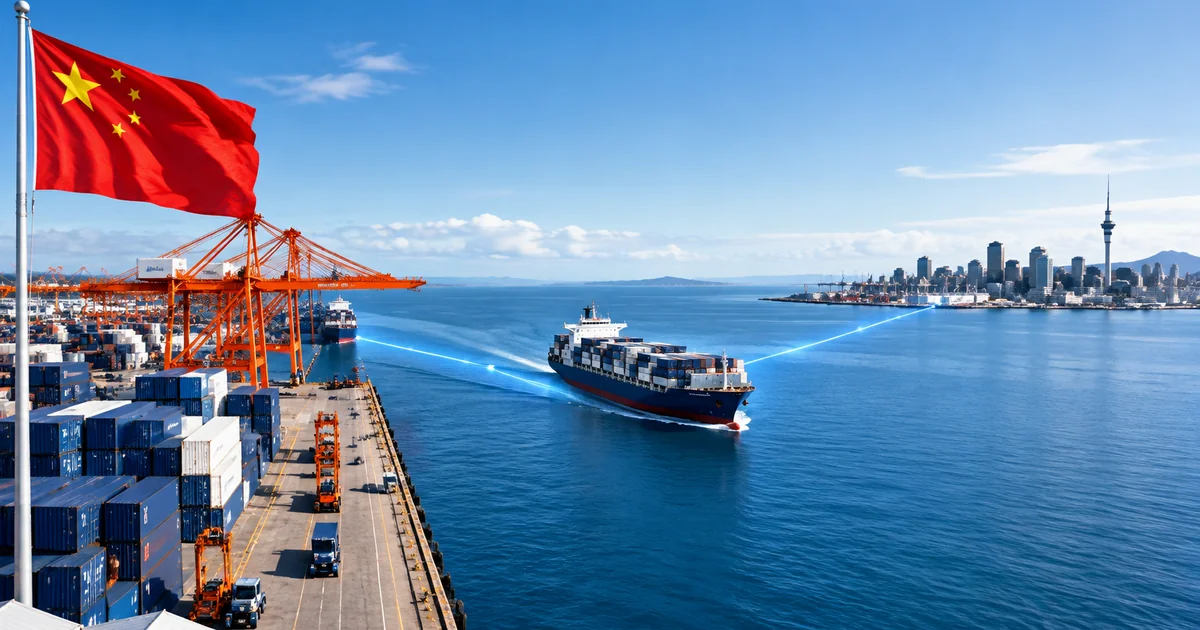
Reviewed by TJ Logistics Team — October 2026. TJ Logistics Team reviewed the route content, current planning references, and New Zealand destination preparation points for October 2026. The formal quotation and booking are prepared against the defined shipment.
Shipping from China to New Zealand: Route Overview
The Shenzhen (Yantian/Shekou), China → Auckland Port, New Zealand FCL 20GP reference is $3,015 per container with a planning transit time of 12–15 days, making ocean FCL a practical starting point for container-ready cargo from South China when the delivery schedule allows.
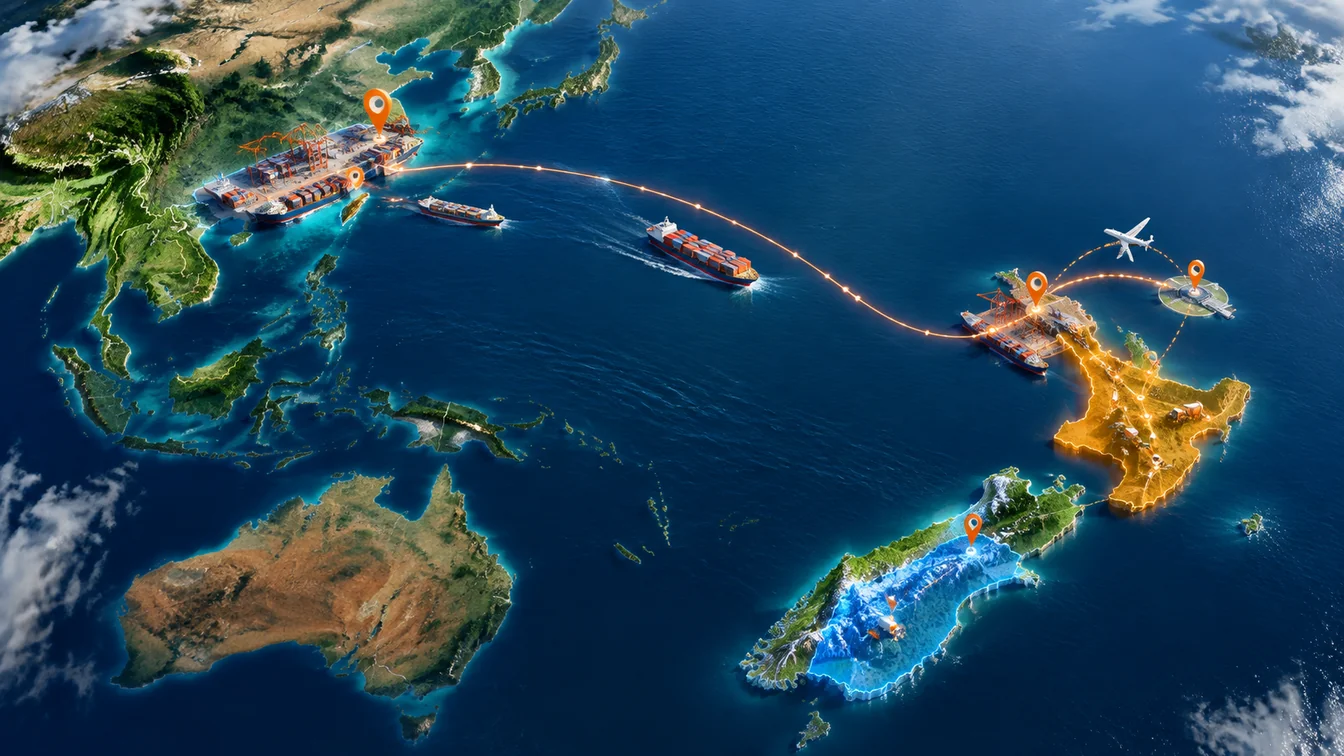
The ocean route uses the named Shenzhen export gateway group and the Port of Auckland as its destination gateway. After arrival, the importer or appointed broker coordinates customs clearance, followed by the inland movement required to reach the consignee’s final address. Air freight follows a separate airport-based path, while express shipping serves a different parcel-oriented requirement.
China to New Zealand Shipping Cost and Transit Time
Current TJ Logistics Team planning references provide route-specific China-to-New Zealand prices and transit times for October 2026. Each reference applies to its named route, method, equipment or unit; these are TJ Logistics Team indicative client-rate and planning-transit references reviewed in October 2026.
| Shipping route | Shipping method | Price | Transit time |
|---|---|---|---|
| Shenzhen (Yantian/Shekou), China → Auckland Port, New Zealand | FCL 20GP | $3,015 per container | 12–15 days |
| Shenzhen (Yantian/Shekou), China → Auckland Port, New Zealand | FCL 40GP | $6,030 per container | 12–15 days |
| Shenzhen (Yantian/Shekou), China → Auckland Port, New Zealand | FCL 40HQ | $6,030 per container | 12–15 days |
| China → Auckland Port, New Zealand | LCL | $34.2/CBM | 21–27 days |
| China → Auckland Airport, New Zealand | Air freight | $3.60/kg | 3–5 days |
| China → New Zealand | Express | $6.04/kg | 7–10 days |
Rate scope: These TJ Logistics Team planning references apply to the shipping route, method, equipment or unit shown. They are not market averages or binding quotations. The formal quotation confirms the agreed collection, delivery, customs, and charge scope for the shipment.
How to Choose a Shipping Method from China to New Zealand
Choose the method according to shipment form and delivery urgency rather than comparing unlike rate units. Container-ready cargo, shared loads, airport-based freight and parcel-oriented express services have different handling requirements and delivery handoffs.
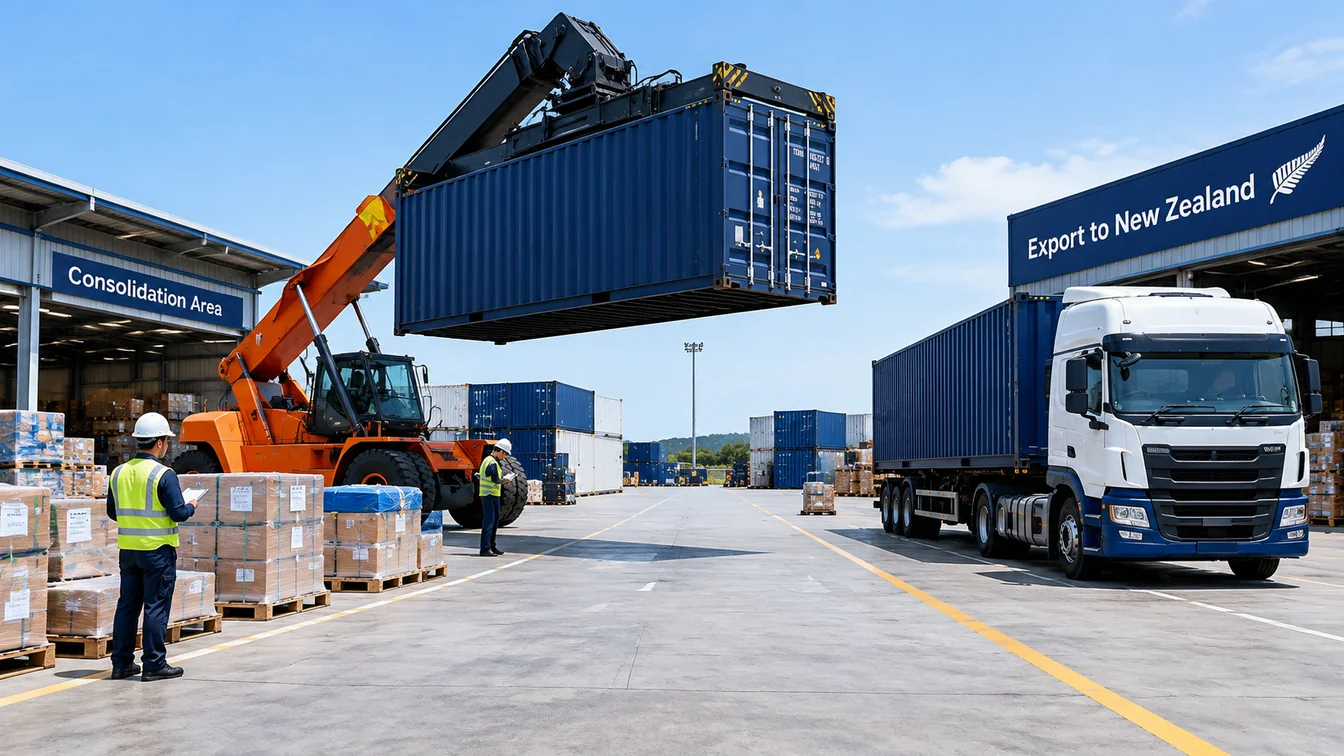
- Choose FCL when the shipment needs a dedicated container, because the cargo can move as one containerized load rather than through shared-load consolidation; loading arrangements and delivery-site access can change its suitability.
- Choose LCL when the cargo is suitable for a shared container, because the shipment can use consolidated ocean transport without assigning an entire container to it; origin cutoffs and destination release arrangements can change the fit.
- Choose air freight when the delivery deadline warrants airport-based cargo movement, because this method has a distinct air-cargo handling path; cargo acceptance, chargeable weight and the final delivery boundary affect suitability.
- Choose express when the shipment is compatible with parcel-oriented handling and courier-style delivery, because the service follows a different pickup, network and last-mile process; dimensions, destination coverage and customs-payment arrangements can affect eligibility.
- FCL — Full Container Load
- Use when: a dedicated container and container-level handling suit the cargo. Key route check: align the loading party, booked export gateway, destination release and empty-equipment return within the agreed sea freight service scope.
- LCL — Less than Container Load
- Use when: the shipment can be consolidated with other cargo without requiring a dedicated container. Key route check: establish the applicable consolidation cutoff and whether the destination service includes deconsolidation, cargo collection or onward delivery.
- Air Freight
- Use when: an airport-based cargo movement matches the shipment’s urgency and handling requirements. Key route check: align cargo acceptance, the booked airport handoffs, clearance arrangements and destination collection within the air freight service scope.
- Express
- Use when: parcel-compatible cargo benefits from a courier-oriented pickup and delivery process. Key route check: verify the selected service’s package limits, destination coverage and customs-payment responsibilities through the applicable express service.
Plan a China-to-New Zealand Shipment from Supplier to Final Delivery
After the China supplier releases the cargo, the agreed pickup and export handoff feed the selected international movement; on arrival in New Zealand, the importer or appointed broker coordinates customs entry and release, followed by delivery to the agreed endpoint. If the supplier is not handing cargo directly to the booked export gateway, the China-side pickup and transfer must be defined as a separate origin leg; trucking freight is the relevant service category for that movement.
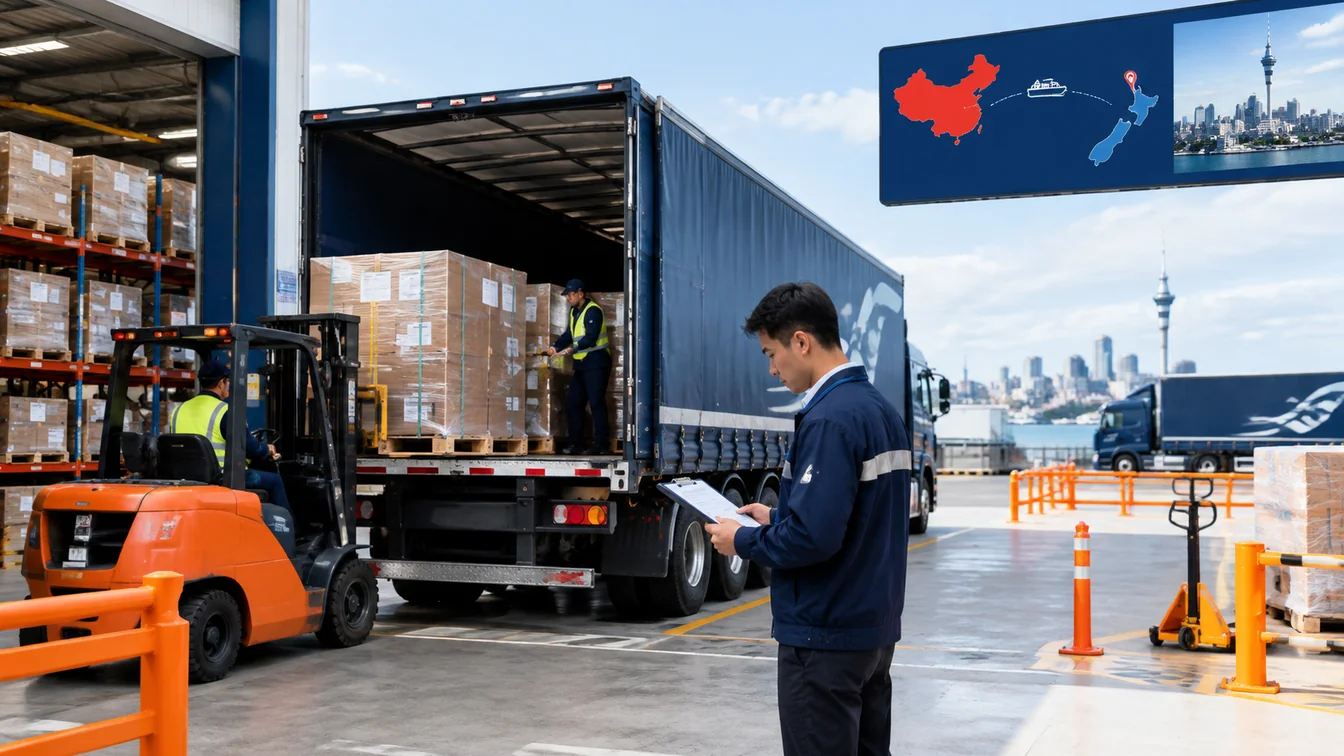
- FCL container movement
- The supplier or nominated loading party prepares, loads and seals the container before the booked export cutoff. The arrival handoff requires the appropriate release information, collection timing, final cartage arrangements and an agreed empty-container return.
- LCL consolidation movement
- Cargo enters an origin consolidation before export. At destination, deconsolidation or container-freight-station handling applies only when the booked service uses those facilities, so the release and collection arrangements must name the responsible destination party.
- Air freight movement
- Cargo must be accepted under the booked air-cargo service with shipment details matching the consignment. The Auckland-bound arrival-airport handoff is followed by import clearance and the collection or final-delivery movement included in the agreed scope.
- Express movement
- The shipment follows the selected express service’s pickup and network handoffs. New Zealand import requirements sit between arrival and final delivery, while recipient information and the destination service’s delivery coverage shape the last handoff.
Execution Checks Before Booking
- For FCL, assign container-loading responsibility and the required empty-equipment return arrangement.
- For LCL, record the consolidation cutoff and the party responsible for collection after destination release.
- For air freight or express, record the applicable cargo-acceptance and destination-collection handoffs for the selected service.
Choosing New Zealand Entry Gateways and Inland Delivery Routes
New Zealand entry planning should follow the final delivery area: the named ocean route enters through Auckland, while the separate air-freight reference uses an Auckland airport handoff. A South Island destination needs a separately planned inter-island onward movement after an Auckland arrival, so a door-to-door service scope is relevant only when its agreed boundary addresses the final delivery location.
| Final delivery area | Typical route pattern | Why the pattern fits | Details needed for the quote |
|---|---|---|---|
| Auckland area | South China export gateway → Auckland ocean gateway → final address; air cargo follows the separate Auckland-bound airport reference. | The named Auckland destination references are the clearest starting points for cargo delivered in the Auckland area. The consignee’s site requirements determine the final delivery arrangement. | The final postcode, receiving hours, site access and unloading arrangements determine the local delivery requirements. |
| North Island outside Auckland | Auckland arrival → separately defined onward movement to the final North Island address. | An Auckland arrival does not itself complete delivery to an address elsewhere on the North Island. The final town and site access can change the onward movement. | The destination town and postcode, vehicle access and any site-specific receiving restrictions. |
| South Island | Auckland arrival → separately planned inter-island onward movement → final South Island address. | The final address is on a different island from Auckland, so the onward transfer must be included in the route plan rather than treated as local Auckland delivery. | The South Island destination town and postcode, receiving arrangements and requirements for the onward transfer. |
Prepare a Comparable Freight Request
Provide: the China supplier or pickup point; cargo-ready timing and cargo profile (type, packages, dimensions, weight, and CBM); any loading or special-handling condition; the final postal code and receiving conditions; and the requested delivery scope, timing priority, and relevant importer or broker arrangement.
The formal quotation should state: the pickup and final-delivery boundary; transport method, equipment or unit, and routing pattern; the customs, destination-handling, and inland-delivery handoffs; material included and excluded charges; rate validity; and the conditions that can change the amount or timing.
Prepare for New Zealand Customs Before Departure
Commercial goods entering New Zealand must clear Customs through the appropriate electronic import or cargo-entry process, with applicable duties, GST and charges paid before release. The importer or appointed filing party must provide accurate shipment information and supporting documentation; the New Zealand Customs Service import guidance explains the main clearance steps and when additional documentation may be required.
What You May Pay at Import
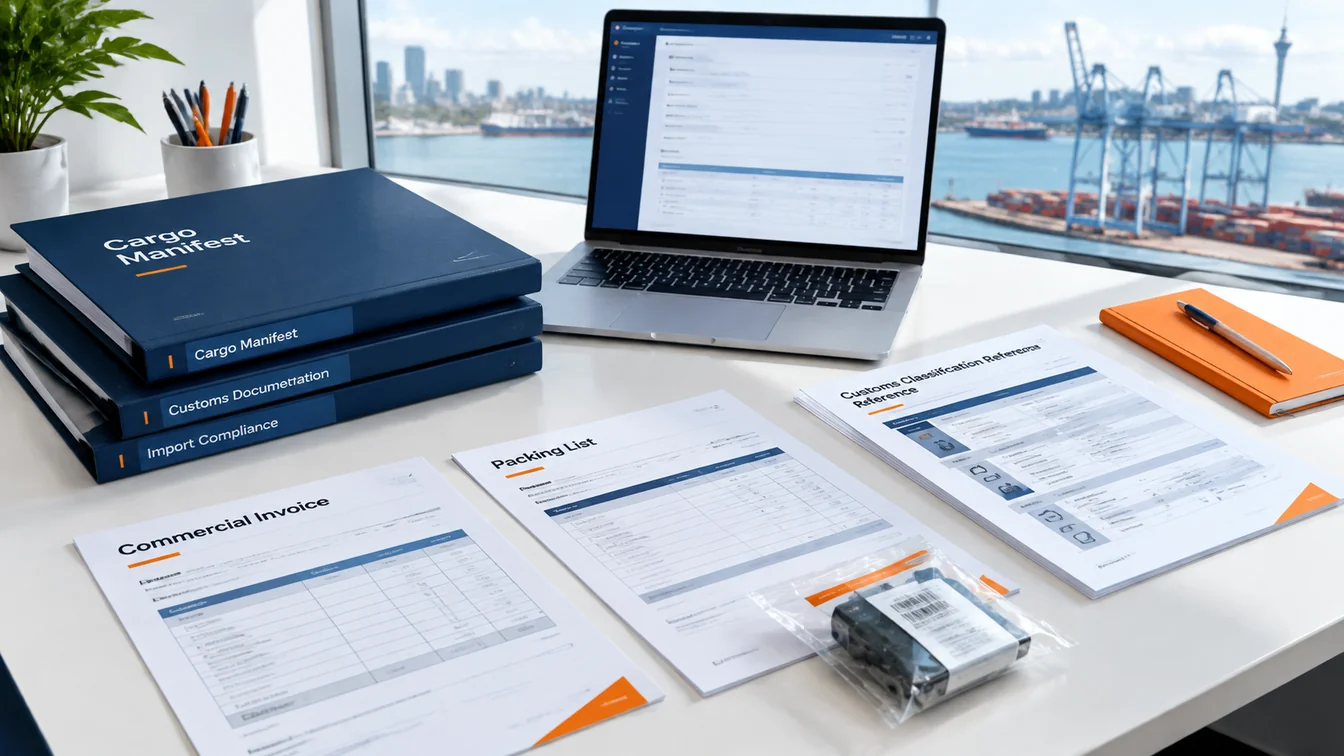
Potential import charges include applicable tariff duty, Goods and Services Tax (GST), and relevant Customs and biosecurity levies. Duty treatment depends on the goods’ classification and applicable origin rules, so use the Tariff of New Zealand to identify the relevant classification and duty treatment.
New Zealand requires a supportable customs value for imported goods, and the valuation basis can affect the amount used for duty and tax calculations. The official customs import-value rules explain how business imports are valued and what evidence may be needed.
Customs Readiness Checklist
New Zealand import readiness starts with a defined importer or filing party, accurate product classification and customs value, and any product-specific permission required for the goods.
- Assign the New Zealand importer and agree who will lodge the relevant electronic entry, provide supporting information and respond to clearance queries.
- Classify the goods under the Tariff of New Zealand; resolve uncertain classifications before shipment preparation is completed.
- Prepare evidence supporting the customs value, including the commercial sale information and any other valuation details required for the transaction.
- Describe the goods accurately, including their materials, intended use, quantities and country of origin, so the declaration reflects the actual shipment.
- Screen the goods against New Zealand’s prohibited and restricted import requirements and secure any required approval or consent before dispatch.
- Allocate responsibility for applicable duty, GST, levies and other import charges before cargo arrival.
- For regulated products, arrange any required permit, certificate, testing or biosecurity preparation before the cargo leaves China.
Documents to Prepare
- Commercial invoice and, where relevant, the purchase order or contract supporting the sale and declared value.
- Packing list with accurate goods descriptions, package counts, weights and dimensions.
- Bill of lading or sea waybill for ocean cargo, or air waybill for air cargo, as applicable to the booked movement.
- Product-specific permits, certificates, testing records or treatment evidence when the commodity’s New Zealand import requirements call for them.
New Zealand’s tariff treatment and product-control requirements are commodity-specific and can change. Restricted-goods permissions and any applicable biosecurity conditions should be resolved before the cargo is dispatched from China.
Choose the Right Delivery Scope for China-to-New Zealand Shipping
| Service scope | What the scope means | Key responsibility or condition |
|---|---|---|
| Port-to-port | Port-to-port covers the agreed movement between the named export and destination ports. It ends at the agreed port handoff rather than at the consignee’s final address. | The consignee or appointed party arranges import clearance and onward collection unless those services are expressly included elsewhere in the agreement. |
| Airport-to-airport | Airport-to-airport covers movement between the named origin and destination airports. It ends at the specified destination cargo handoff. | The importer or appointed broker handles the relevant clearance arrangements, while cargo collection or final delivery must be included separately when required. |
| Door-to-door | Door-to-door coordinates pickup from the defined China location through delivery to the named New Zealand address. The specific service agreement defines which transport and handling legs are included. | Import clearance, duties, taxes and product-compliance responsibilities need explicit allocation; the final delivery conditions also affect unloading and receiving arrangements. |
| DDP — Delivered Duty Paid | DDP allocates delivery costs and import-clearance and duty obligations to the seller under the agreed trade terms through the named destination. It does not automatically include every examination, storage, unloading or receiving charge. | The sale agreement and local import arrangements must support the stated responsibilities. The DDP label alone does not establish that every additional charge or compliance requirement is covered. |
For a New Zealand delivery address, the transport endpoint and import-clearance responsibilities should remain distinct decisions. Door-to-door describes the agreed transport scope; it does not automatically transfer the importer’s legal or product-compliance obligations to another party.
Cargo insurance is a separate risk decision rather than a change to the delivery endpoint or duty allocation. Review the cargo insurance service when the shipment’s value, handling exposure or contractual obligations warrant separate insurance arrangements.
Cargo Checks That Can Change the Route
- Wood packaging, pallets and dunnage
- Wood packaging entering New Zealand must comply with the applicable biosecurity standard, which may require ISPM 15 marking, treatment or other acceptable evidence depending on the material and applicable requirements. Non-compliant or contaminated packaging can require corrective treatment or other action at the border, affecting cargo release and handling. Ask the supplier to provide compliant packaging and any required documentation before loading, and review the official MPI wood-packaging requirements.
Why Use a Freight Forwarder for Shipping from China to New Zealand?
A freight forwarder helps turn a general shipping request into a workable movement, match a credible route to the shipment and keep the commercial and operational handoffs aligned. For New Zealand cargo, the difference between arrival at an Auckland gateway and delivery to the final address is one of the decisions that needs to remain clear throughout the plan.
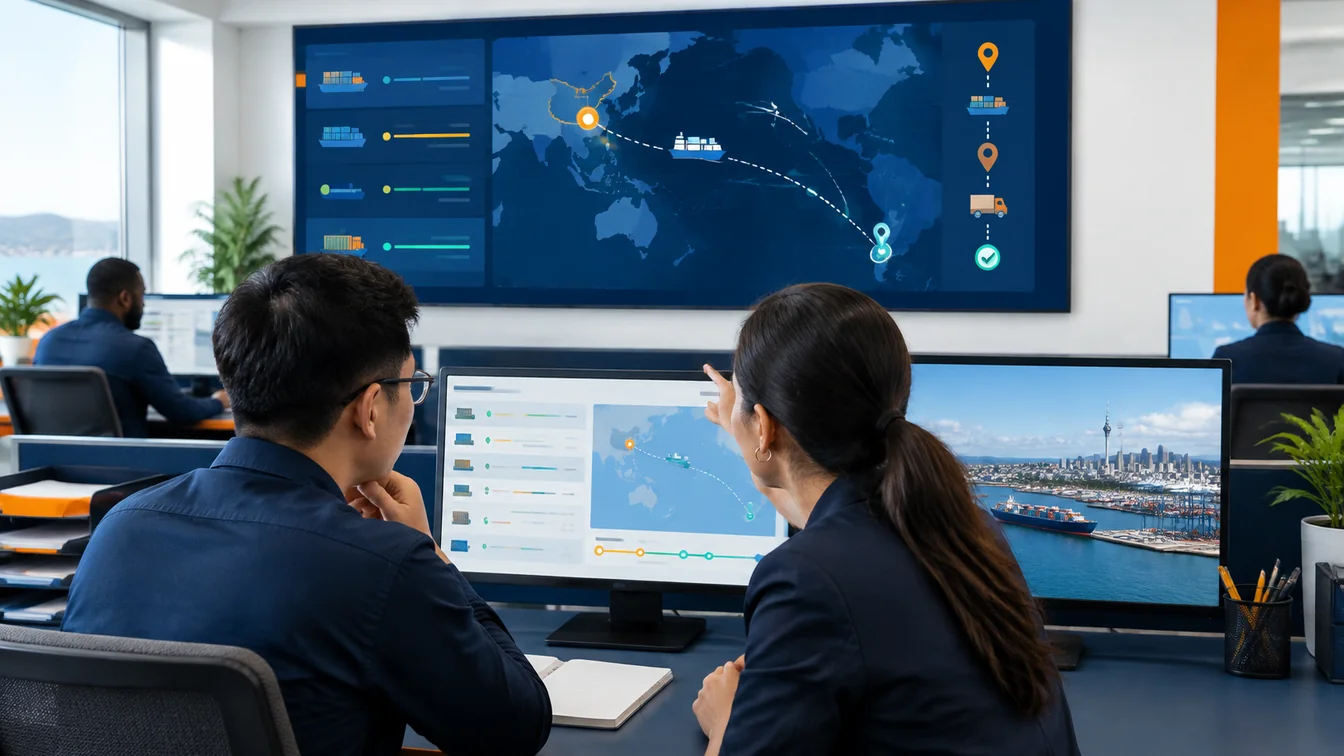
An incomplete movement definition. A freight forwarder helps translate the buyer’s request into a defined transport movement and service boundary. The appropriate definition changes with whether the shipment needs a dedicated container, a shared ocean load, air cargo handling or parcel-oriented delivery.
A route that does not fit the final destination. A freight forwarder helps match the origin, transport method and arrival arrangement to the required delivery area. A Shenzhen-to-Auckland ocean reference is a useful starting point for its stated route, but it does not by itself define onward delivery to every New Zealand destination.
Unclear responsibilities at the handoff. A freight forwarder helps the parties distinguish who supplies export information, handles import-entry arrangements, pays assessed charges and receives the goods after release. The allocation changes with the agreed transport and delivery terms.
How TJ Logistics Team Plans a China-to-New Zealand Shipment
- 1. Review the shipment definition
- TJ Logistics Team reviews the defined shipment request and flags any missing route-specific input that prevents a reliable next decision, such as an unclear delivery endpoint or loading arrangement.
- 2. Map the route and handoffs
- TJ Logistics Team compares the credible transport choices and gateway references against the shipment’s defined origin, destination and delivery scope, keeping the named Auckland references distinct from any separately planned onward movement.
- 3. Record the commercial boundary
- TJ Logistics Team records the agreed service boundary and the parties responsible for export handoff, New Zealand import-entry arrangements, destination release and final delivery before preparing the formal quotation.
- 4. Coordinate the next operational actions
- After the buyer accepts the agreed quotation and scope, TJ Logistics Team coordinates booking information, commercial documents and cargo handoffs, then identifies the next action required from the responsible party if timing, documentation, route or receiving conditions change.
China to New Zealand Shipping FAQ
How much does LCL shipping from China to New Zealand cost?
For the China → Auckland Port, New Zealand LCL reference, the TJ Logistics Team indicative client rate is $34.2/CBM in October 2026. LCL is worth comparing when cargo can share container space; the relevant unit and agreed destination-delivery scope should match the shipment being planned.
How long does sea freight from China to New Zealand take?
For Shenzhen (Yantian/Shekou), China → Auckland Port, New Zealand, the TJ Logistics Team FCL 20GP planning-transit reference is 12–15 days in October 2026. Use this reference for the named FCL route when planning the international movement; a final-address timeline also depends on whether inland delivery is included in the agreed scope.
What is the most cost-effective way to ship from China to New Zealand?
For container-ready cargo, start by comparing FCL; for a partial load suitable for shared consolidation, compare LCL. Air freight and express serve different urgency and handling requirements, so no single method is the cost-effective choice for every New Zealand shipment regardless of size, unit and delivery scope.
Which China gateway should I use for shipping to New Zealand?
For a South China supplier in the Shenzhen area, the Shenzhen (Yantian/Shekou) to Auckland Port FCL route is the concrete ocean starting point in TJ Logistics Team’s references. For a supplier elsewhere in China, the pickup origin and the actual service available for the destination should guide the gateway choice rather than treating that route as a universal default.
What documents should I prepare before shipping from China to New Zealand?
For commercial cargo entering New Zealand, prepare a commercial invoice, packing list and the applicable sea or air transport document. The importer or appointed filing party also needs accurate product classification, customs-value evidence and any permits or certificates required for the specific goods.
Can I ship door-to-door from China to New Zealand?
Door-to-door shipping can be defined from a China supplier to a named New Zealand final address when the agreed service covers the required transport legs. The agreement must allocate import-clearance arrangements, duties and taxes, unloading and site access; an address outside Auckland may require a separate onward-delivery movement.
How does the final delivery area affect a New Zealand shipping route?
For an Auckland-area consignee, the named Auckland sea or air entry reference is the natural starting point for route planning; a North Island address elsewhere requires its own onward-delivery arrangement. A South Island destination needs a separately planned inter-island movement after an Auckland arrival, so compare the end-to-end route rather than the arrival gateway alone.