


Reviewed by TJ Logistics Team — October 2026. TJ Logistics Team reviewed the route content, current planning references, and Greenland destination-preparation points for this month. The formal quotation and booking are prepared against the defined shipment.
Shipping from China to Greenland: Route Overview
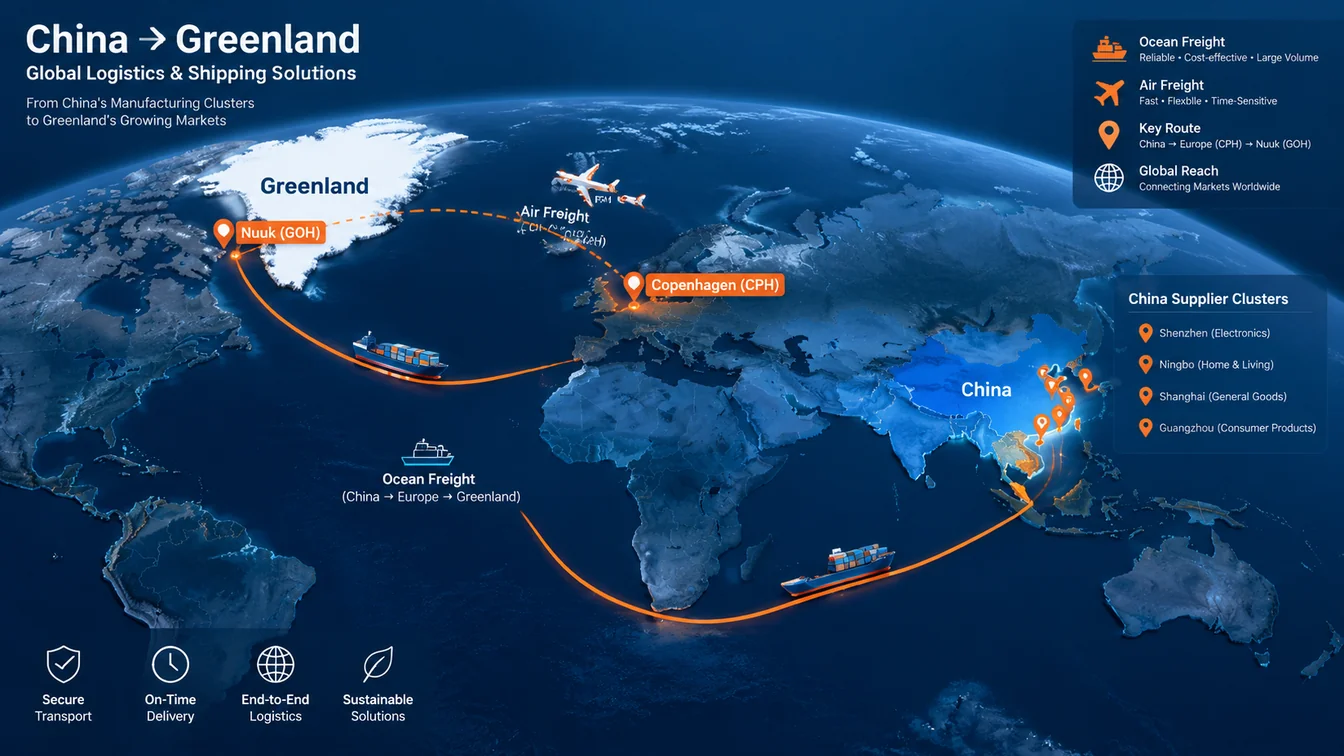
The Nanning, China → Nuuk, Greenland LCL reference is $130/CBM with a planning transit of 43 days in October 2026, making shared-load ocean freight a practical starting comparison for cargo that can travel by consolidation.
For more time-sensitive shipments, the available air-freight reference follows Shanghai Pudong (PVG), China → Copenhagen (CPH), Denmark → Nuuk (GOH), Greenland. The route decision connects the China supplier and origin handoff with the international transport path, Greenland import clearance, and delivery to the consignee’s actual address.
China to Greenland Shipping Cost and Transit Time
Current TJ Logistics Team planning references provide route-specific China-to-Greenland prices and transit times for October 2026. Each reference applies to its named route, shipping method, and stated price unit.
The available commercial references cover LCL shipping from Nanning to Nuuk, air freight through Copenhagen to Nuuk, and express shipping from Shenzhen to Greenland.
| Shipping route | Shipping method | Price | Transit time |
|---|---|---|---|
| Nanning, China → Nuuk, Greenland | LCL | $130/CBM | 43 days |
| Shanghai Pudong (PVG), China → Copenhagen (CPH), Denmark → Nuuk (GOH), Greenland | Air freight | $7.80/kg | 10–14 days |
| Shenzhen, China → Greenland | Express | $3.93/kg | 6–10 working days |
Rate scope: These TJ Logistics Team planning references apply to the shipping route, method, equipment or unit shown. They are not market averages or binding quotations. The formal quotation confirms the agreed collection, delivery, customs, and charge scope for the shipment.
How to Choose a Shipping Method from China to Greenland
Choose FCL when cargo is ready for a dedicated container and container-level handling suits the shipment; choose LCL when cargo can share a consolidated load; choose air freight when timing is important and the goods meet air-cargo acceptance requirements; and choose express for parcels that fit the selected courier’s Greenland service coverage. The deciding factors are the shipment’s form, urgency, handling needs, origin arrangements, and final delivery location.
- FCL ocean freight
- Use when: the shipment is suitable for a dedicated container and shared-load handling is undesirable. Key route check: the container type, loading responsibility, accepted sea-freight handoff, and destination release arrangements must fit the Greenland movement.
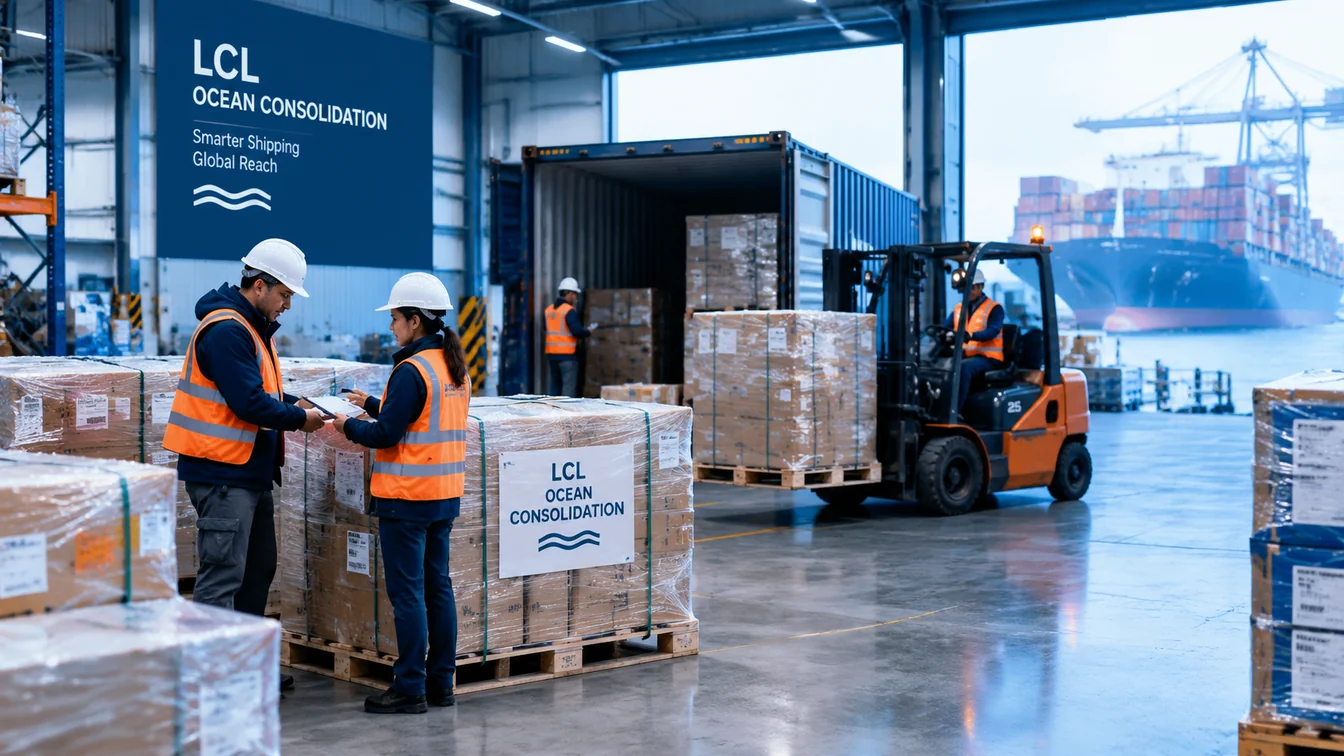
- LCL ocean freight
- Use when: cargo can be consolidated with other shipments instead of requiring a dedicated container. Key route check: the consolidation cutoff and cargo-release arrangements must suit the receiving plan; the sea freight service provides the relevant service category for comparison.
- Air freight
- Use when: a commercial shipment needs a more time-sensitive alternative to ocean consolidation and is suitable for air handling. Key route check: cargo acceptance, transfer handling, and the destination release arrangement must match the booked movement; review the air freight service for the transport mode.
- Express
- Use when: a parcel or smaller time-sensitive consignment fits a courier’s service and handling restrictions. Key route check: the chosen service must accept the destination postcode, parcel contents, packaging, and delivery conditions; the express service is the relevant service category to compare.
Plan a China-to-Greenland Route from Supplier to Final Delivery
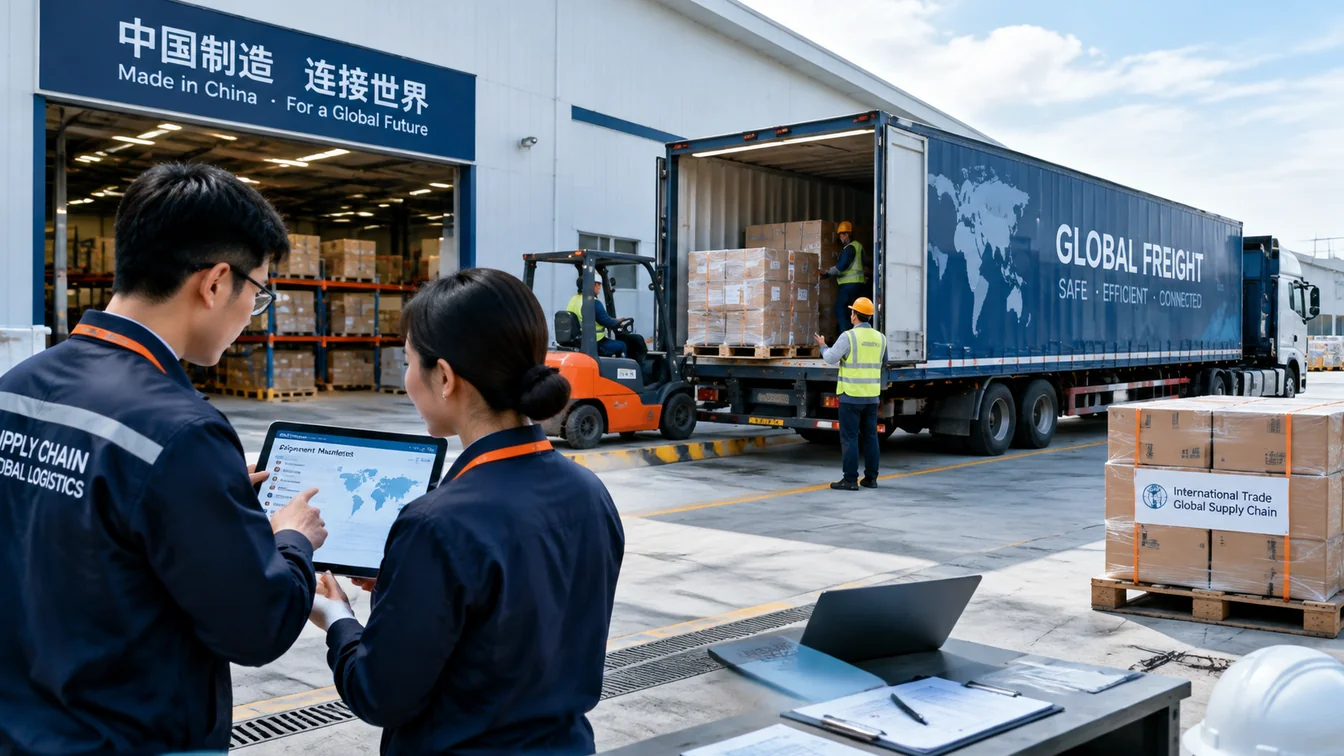
The common shipment chain is China supplier readiness → origin handoff → international transport → Greenland arrival and customs handoff → delivery to the consignee’s final address. Where collection from the supplier is needed, the China-side road movement can be scoped through the trucking freight service rather than assumed to be part of the international transport leg.
- FCL container movement
- For a container shipment, the operational handoffs centre on container allocation, loading responsibility, the accepted export and international handoff, arrival release, and any required equipment return. The Royal Arctic Line sailing schedules provide a route-specific reference for planning Greenland-bound sea movement.
- LCL consolidation
- Shared-load cargo requires an agreed consolidation cutoff and a clearly identified point where the cargo becomes available for collection or onward delivery. The operational plan should distinguish the consolidation handoff from destination release instead of treating the shipment as a dedicated container under one consignee’s control throughout.
- Air freight
- The named air path uses an origin airport, a Denmark transfer point, and a Greenland destination airport, so cargo acceptance and transfer handling must match each booked leg. Collection after arrival at the destination airport remains a separate handoff unless final delivery is included in the agreed scope.
- Express
- Express movement relies on the selected courier’s pickup and distribution arrangements, followed by the applicable import and delivery handoffs. The courier’s actual destination coverage and acceptance conditions determine whether the proposed parcel movement is workable.
Execution Checks Before Booking
- FCL: Record the loading appointment, container allocation, destination release contact, and equipment-return point where applicable.
- LCL: Document the consolidation cutoff and the named point at which released cargo becomes available for collection or local delivery.
- Air and express: Align cargo acceptance and handling restrictions with the chosen service, then assign the destination-release and receiving handoffs.
Choosing Greenland Entry Gateways and Final Delivery Routes
Nuuk is the clearest destination comparison for the available LCL and air planning paths, both of which name the capital as their destination. For another Greenland town or settlement, the plan generally requires a separate sea or air movement because communities are not connected by roads, as explained in Greenland Airports’ route guidance.
| Final delivery area | Typical route pattern | Why the pattern fits | Details needed for the quote |
|---|---|---|---|
| Nuuk | The available LCL planning path ends in Nuuk, while the air-freight path names Shanghai Pudong, Copenhagen, and Nuuk. | These references provide destination-specific starting points for a consignment intended for the capital. The remaining destination arrangement depends on the agreed cargo-release and local-delivery handoff. | The exact Nuuk delivery address and whether the consignee will collect cargo or receive local delivery. |
| Other Greenland towns and settlements | Plan a separate sea or air leg to the named community; Greenland has no continuous road network connecting its towns and settlements. | A truck-only inland movement cannot bridge the gap between communities, so the destination transport and local receiving arrangements change with the final location. | The exact town or settlement, the intended arrival point, and the available local delivery or collection arrangement. |
Prepare a Comparable Freight Request
Provide: the China supplier or pickup point; cargo-ready timing and cargo profile, including type, packages, dimensions, weight, and CBM; any loading or special-handling condition; the final postal code and receiving conditions; and the requested delivery scope, timing priority, and relevant importer or broker arrangement.
The formal quotation should state: the pickup and final-delivery boundary; transport method, equipment or unit, and routing pattern; the customs, destination-handling, and inland-delivery handoffs; material included and excluded charges; rate validity; and the conditions that can change the amount or timing.
Prepare for Greenland Customs Before Departure
The Greenland importer or consignee should own the goods description, customs-value information, and any required permit decisions, even when a broker is appointed to lodge declarations. Greenland is outside the EU customs and VAT territories, so a shipment routed through Denmark still requires Greenland-specific import handling; the European Commission’s territorial-scope list records this distinction.
What You May Pay at Import
Greenland applies import duties to specified categories of goods rather than one uniform import-duty rate. The Greenland Tax Agency’s import-duty guidance provides the relevant duty information for assessing the actual commodity.
Customs Readiness Checklist
Commercial cargo is ready for customs planning when the responsible importer, commodity details, and payment arrangements are documented before dispatch.
- Name the Greenland importer or consignee and the broker or other party authorised to lodge any required declaration.
- Prepare an accurate product description and the applicable commodity classification; avoid broad descriptions that do not identify the actual goods.
- Maintain a supportable customs-value basis and the commercial records needed by the responsible declaration party.
- Record the goods’ country of origin separately from the country of dispatch, including any transit through Denmark.
- Determine whether the commodity attracts Greenlandic import duty or requires a product-specific permit, certificate, or other approval.
- Assign responsibility for funding and paying any assessed import duties and relevant clearance charges before the cargo-release handoff.
Documents to Prepare
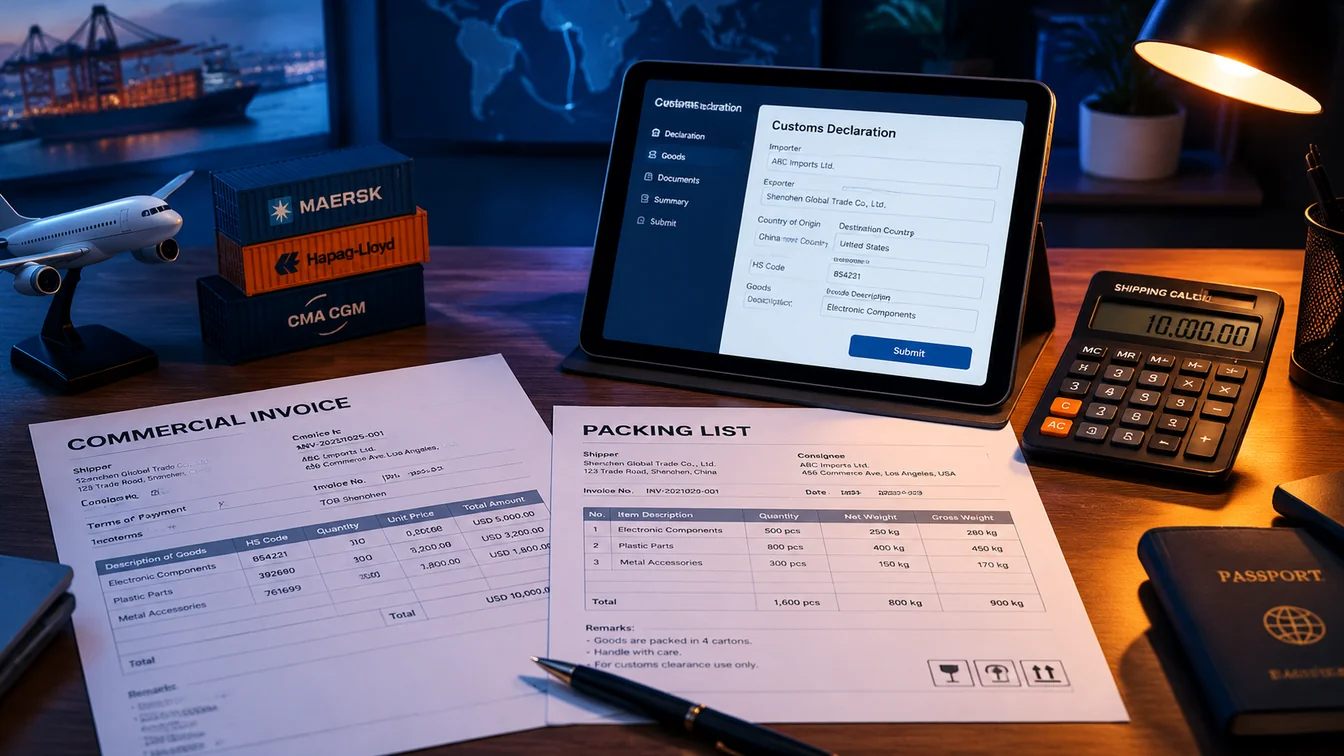
- Commercial invoice: a clear description of the goods, seller, buyer, transaction value, and other relevant commercial details.
- Packing list: package count and the corresponding shipment weights and contents.
- Transport document: the appropriate bill of lading or sea waybill for ocean freight, or air waybill for air and express movements.
- Conditional documents: permits, origin evidence, certificates, test records, or other product documents only when the goods and applicable rules require them.
Greenland’s import-duty categories and restricted-goods rules vary by commodity and may change. The importer should use the current applicable requirements before dispatch, particularly when the goods may require a special permit or duty assessment.
For China-side export formalities, the customs brokerage service can be scoped separately; China export documentation and Greenland import responsibilities are distinct parts of the shipment.
Choose the Right Delivery Scope for China-to-Greenland Shipping
| Service scope | What the scope means | Key responsibility or condition |
|---|---|---|
| Port-to-port | Port-to-port covers the named origin and destination seaports for the ocean leg only; it ends before inland collection or delivery unless those legs are separately included. | The consignee or appointed representative normally coordinates import clearance, destination release, and onward delivery unless the agreed scope assigns these tasks elsewhere. |
| Airport-to-airport | Airport-to-airport covers air transport between the named origin and destination airports; it does not by itself include customs handling or final-address delivery. | The importer or appointed representative handles the agreed customs process, while airport collection and local delivery remain separate unless expressly included. |
| Door-to-door | Door-to-door coordinates collection from the supplier’s address through the contracted transport legs to the named Greenland delivery address. | The agreed service scope must assign import clearance and duty payment; delivery beyond Nuuk may require a distinct sea or air leg and a local receiving arrangement. |
| DDP | DDP assigns delivery and import-clearance obligations, including applicable import duties, to the seller under the agreed Incoterms rules and named destination. | Use DDP only when the seller can meet the relevant Greenland import and duty obligations. It does not automatically cover costs or compliance requirements outside the agreed scope. |
A door-to-door freight service is most useful when the final Greenland community, import-clearance responsibility, and destination delivery handoff are clearly assigned. For deliveries outside Nuuk, the contracted scope must account for the separate sea or air movement rather than treating the entire final leg as road transport.
Why Use a Freight Forwarder for Shipping from China to Greenland?
Shipping from China to Greenland requires a workable movement definition, a transport path suited to the cargo and arrival priority, and clear handoffs between the supplier, transport parties, importer, and consignee. The main coordination challenge is keeping these decisions consistent when international transport and Greenland destination delivery involve different parties.
- Turn the shipment request into a workable movement
- An incomplete shipment definition can leave the transport mode, handling responsibilities, or final service boundary unclear. A freight forwarder helps turn the commercial requirement into a common movement specification that each responsible party can use.
- Match transport to the intended Greenland destination
- Ocean consolidation, air freight, and express handle cargo differently, so a route suitable for Nuuk is not automatically suitable for another Greenland community. A freight forwarder helps compare the credible path against the cargo’s form, urgency, and actual delivery location.
- Keep commercial and operational handoffs aligned
- The supplier, transport operator, importer or broker, and consignee may control separate stages of the movement. Clear handoff assignments help each party understand what must happen next when the booking, documentation, or receiving arrangements change.
How TJ Logistics Team Plans a China-to-Greenland Shipment
- Shipment-definition review
- TJ Logistics Team reviews the defined shipment request and flags gaps that prevent the next route decision, such as an unclear final Greenland community or an unresolved handoff. Where cargo value or handling risk raises a separate protection question, the cargo insurance service can be considered as a separate scope decision rather than assumed to be included in transport.
- Route and gateway mapping
- TJ Logistics Team compares credible sea, air, and express paths against the intended service and final delivery area. The route plan distinguishes a movement ending in Nuuk from one that requires a separate destination connection.
- Service-boundary and responsibility record
- TJ Logistics Team records the agreed collection and delivery boundaries, transport method, customs responsibilities, and parties responsible for the next handoffs before the formal quotation is prepared.
- Booking and change coordination
- After the buyer confirms the agreed quotation and scope, TJ Logistics Team coordinates booking information, commercial documents, and cargo handoffs with the responsible parties. Changes to route acceptance, paperwork, timing, or receiving conditions are flagged for the next operational decision.
China to Greenland Shipping FAQ
How much does LCL shipping from China to Greenland cost?
For LCL shipping from Nanning, China → Nuuk, Greenland, the TJ Logistics Team indicative client rate reference is $130/CBM in October 2026. Use it as a shared-load comparison when the shipment’s packing profile and commercial scope are also being compared on a per-CBM basis.
How long does sea freight from China to Greenland take?
For LCL shipping from Nanning, China → Nuuk, Greenland, the TJ Logistics Team planning-transit reference is 43 days in October 2026. Use this planning figure to coordinate cargo readiness and the intended receiving arrangement, allowing the agreed route and handoffs to govern the shipment plan.
What is the most cost-effective shipping method from China to Greenland?
LCL is the practical starting comparison for cargo that can share a consolidated load and does not require an urgent arrival. The LCL per-CBM reference cannot be ranked directly against air freight or express per-kilogram references as though they were equivalent shipment offers.
Which Denmark-side handoff should I compare for sea freight to Greenland?
Greenland-bound sea freight should be planned against the route accepted by the designated Greenland cargo operator, using the Royal Arctic Line sailing schedules as a route-specific starting reference. The intended sea-freight handoff and onward Greenland movement should be identified in the agreed shipment plan rather than inferred from a Danish city name.
Can I use air freight from China to Nuuk instead of sea freight?
Yes, air freight is a planning option for time-sensitive China-to-Nuuk cargo when the goods meet the chosen service’s acceptance requirements. The named air route runs from Shanghai Pudong (PVG), China → Copenhagen (CPH), Denmark → Nuuk (GOH), Greenland, with cargo handling and final delivery scoped to the actual booked movement.
What customs documents should be prepared before shipping from China to Greenland?
China-to-Greenland commercial shipments normally need a commercial invoice, packing list, and the applicable transport document, with permits or certificates added when required for the actual goods. Because Greenland is outside the EU customs territory, transit through Denmark does not replace the Greenland-specific import preparation.
Can I arrange door-to-door shipping from China to Greenland?
Door-to-door shipping from China to Greenland can be scoped when the agreed delivery address, destination transport legs, and import-clearance responsibilities are defined. A Nuuk delivery and a delivery to another Greenland community may require different destination arrangements, including a separate sea or air connection where applicable.