

Reviewed by TJ Logistics Team · October 2026. TJ Logistics Team reviewed the route content, current planning references, and Singapore destination-preparation points for October 2026. The formal quotation and booking are prepared against the defined shipment.
Shipping from China to Singapore: Route Overview
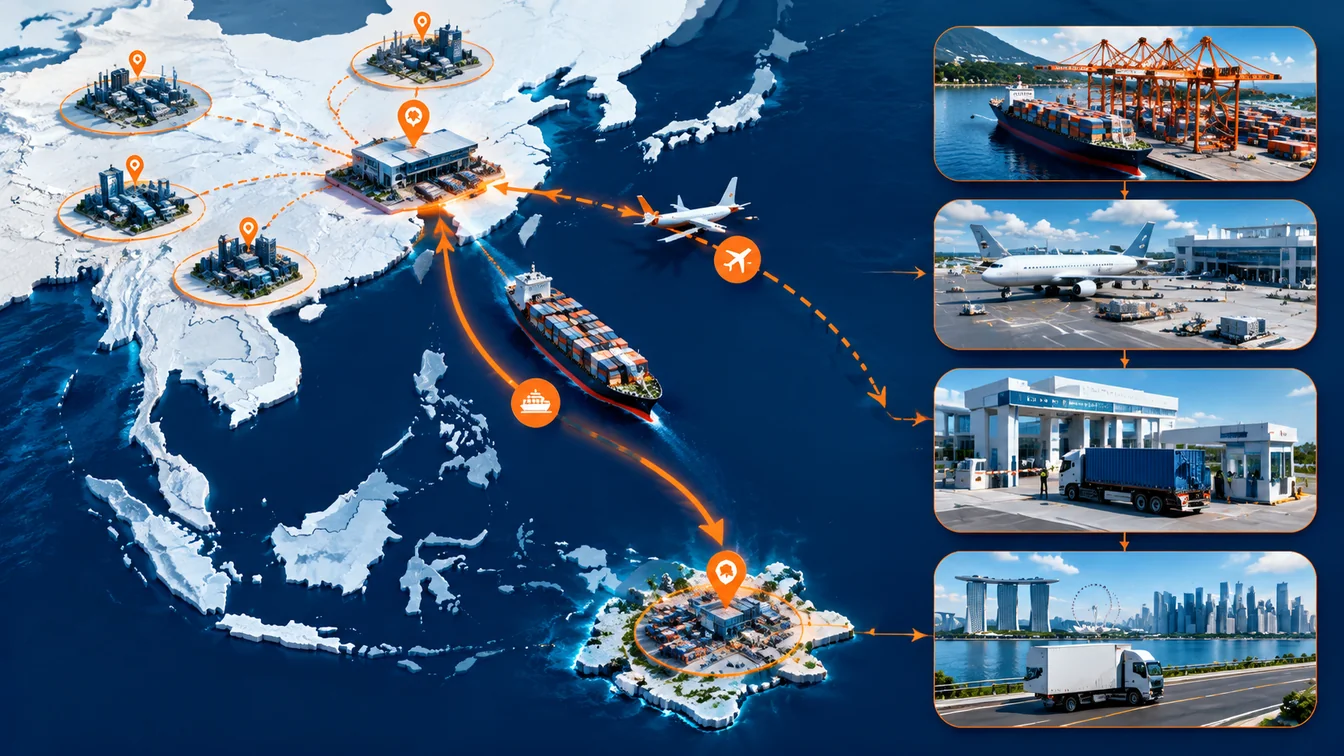
The China → Singapore Port FCL 20GP reference is $405–$495/container with a 9–11 day planning transit; it is a practical starting point for container-ready cargo when dedicated 20GP equipment fits the shipment.
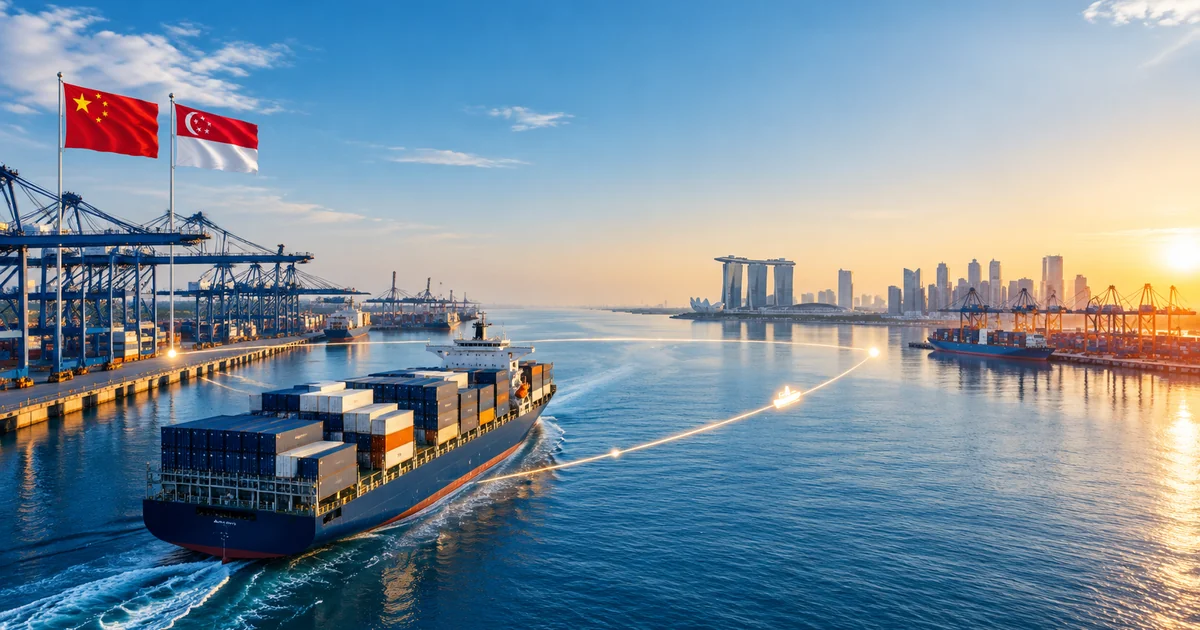
The route connects the China supplier to an appropriate export gateway, international sea or air transport, Singapore import clearance, and final-address delivery. Sea freight uses the selected commercial seaport terminal, while air freight within the Shenzhen, China (air hub) scope requires an air-cargo terminal handoff; the Maritime and Port Authority of Singapore terminal overview describes Singapore’s commercial cargo-terminal network, and Changi Airport air-cargo facilities provide destination-side context for air-freight planning.
China to Singapore Shipping Cost and Transit Time
Current TJ Logistics Team planning references provide route-specific China-to-Singapore prices and transit times for October 2026. Each reference applies to the route, method, equipment or unit named in its row.
| Shipping route | Shipping method | Price | Transit time |
|---|---|---|---|
| China → Singapore Port | FCL 20GP | $405–$495/container | 9–11 days |
| China → Singapore Port | FCL 40GP | $526.5–$643.5/container | 9–11 days |
| Foshan, China → Singapore delivery address | LCL | ~$57.56/CBM | 10–14 days |
| Shenzhen, China (air hub) → Singapore delivery address | Air freight | ~$4.56/kg | 3–5 days |
Rate scope: These TJ Logistics Team planning references apply to the shipping route, method, equipment or unit shown. They are not market averages or binding quotations. The formal quotation confirms the agreed collection, delivery, customs, and charge scope for the shipment.
How to Choose a Shipping Method from China to Singapore
The right starting point is the shipment’s physical form and delivery priority: dedicated-container cargo generally calls for an FCL comparison, shared-load cargo calls for LCL, and urgent shipments warrant an air-freight or eligible express-service comparison. The best-fit method changes with cargo dimensions, chargeable weight, handling requirements, supplier location, and the final Singapore delivery arrangement.
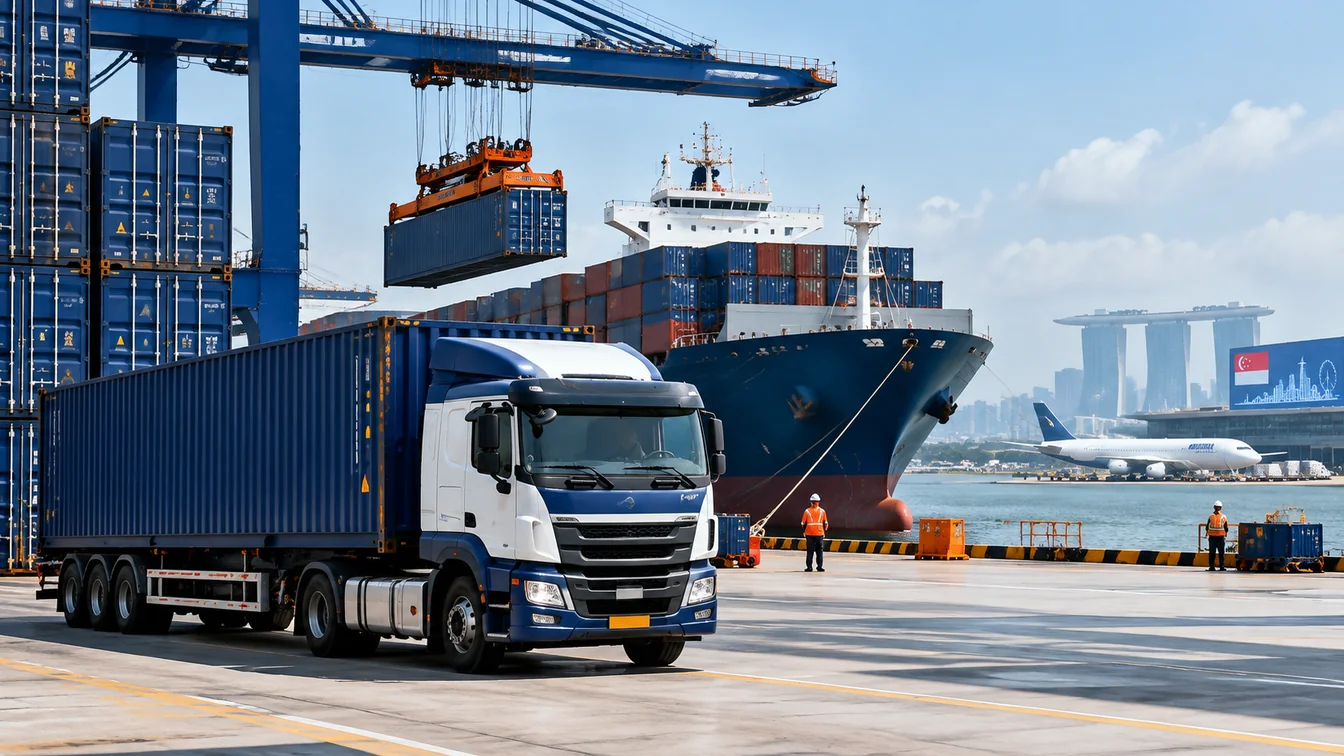
- Choose FCL when cargo needs a dedicated container and the supplier can load it appropriately, because the shipment moves in one container unit; loading access, equipment size, and receiving arrangements can change the plan.
- Choose LCL when the shipment can share container space, because consolidation accommodates cargo that does not require a dedicated container; origin acceptance and consolidation cutoffs remain important.
- Choose air freight when delivery urgency justifies air transport and the cargo meets the relevant acceptance requirements, because the international movement is generally shorter than an ocean route; import clearance and final delivery remain separate planning stages.
- Choose express when the shipment fits a parcel-oriented service and a suitable courier network meets the delivery requirement, because pickup and last-mile handling can be coordinated under one service; the actual service commitment depends on eligibility and coverage.
- FCL — Full Container Load
- Use when: The cargo requires dedicated container equipment and the loading arrangement supports it. Key route check: Match container type, supplier loading access, and destination collection arrangements. See TJ Logistics Team’s sea freight service for the relevant service scope.
- LCL — Less than Container Load
- Use when: The shipment can move as shared container space instead of dedicated equipment. Key route check: Align supplier cargo readiness with the origin consolidation cutoff and the agreed destination handling arrangements.
- Air Freight
- Use when: The delivery priority makes air transport more suitable than a sea-freight plan. Key route check: Determine whether the packed shipment meets cargo acceptance requirements and whether the destination terminal handoff supports the intended delivery arrangement. See TJ Logistics Team’s air freight service.
- Express
- Use when: The cargo qualifies for a parcel-oriented service and courier-style handling suits the delivery requirement. Key route check: The selected service must accept the shipment and cover the Singapore destination. TJ Logistics Team’s express service is relevant to this comparison.
For cargo with significant financial exposure, include the available protection and its exclusions in the transport decision rather than selecting a mode on transit alone. TJ Logistics Team’s cargo insurance service provides a starting point for reviewing that separate requirement.
Plan a China-to-Singapore Route from Supplier to Final Delivery
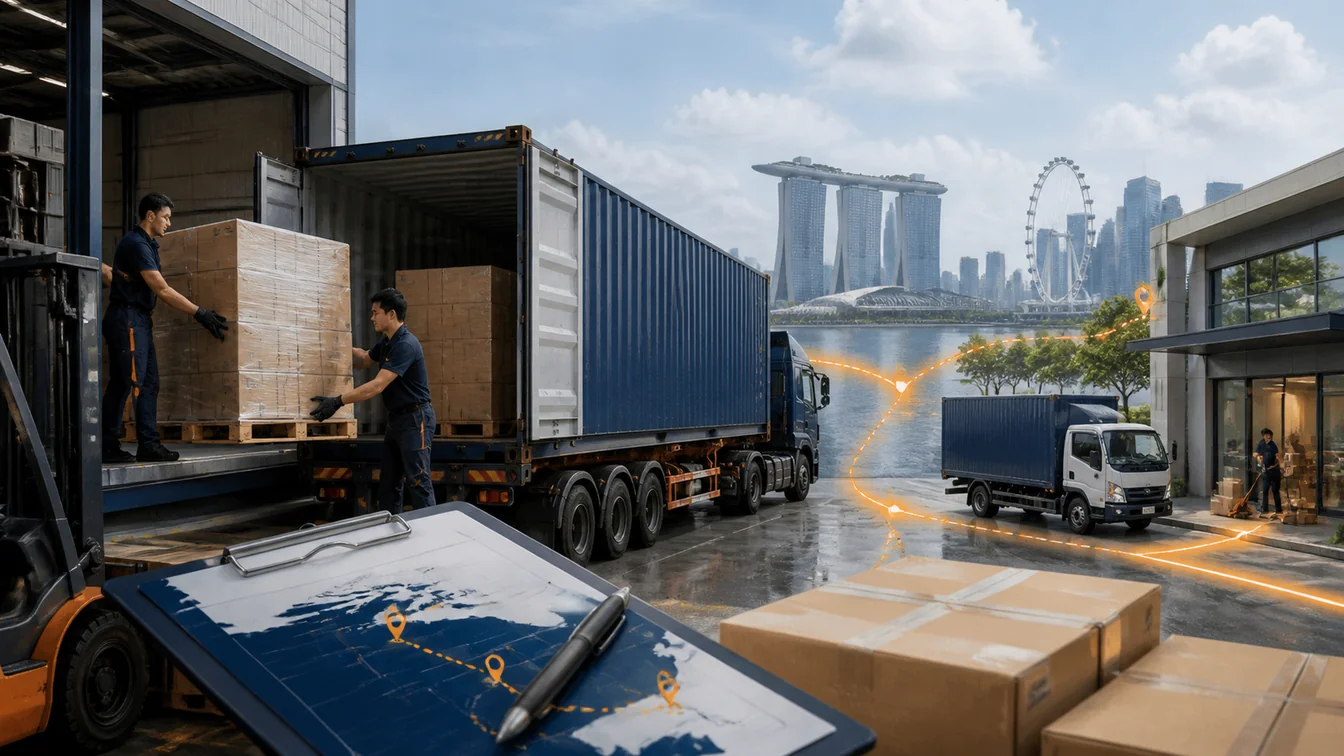
The common movement chain is supplier cargo readiness and handoff in China → export transport → international movement → Singapore arrival and customs handoff → final collection or delivery. When the supplier and export gateway are in different locations, the China-side road leg needs its own collection and handoff arrangement; TJ Logistics Team’s trucking freight service is relevant when that leg is within the agreed scope.
- FCL — Container Movement
- Agree which party loads and seals the container at origin, then record the destination release and collection responsibilities before arranging inland delivery in Singapore. The selected export gateway and the nominated destination receiving arrangements must support the agreed movement.
- LCL — Consolidated Cargo
- Arrange delivery of the shipment to the appointed origin consolidation point by its required cutoff, then coordinate destination handling, cargo release, and onward delivery under the agreed service scope. The consolidation and release handoffs should be clear before the cargo is tendered.
- Air Freight — Terminal Handoffs
- For the Shenzhen, China (air hub) reference, establish the origin cargo-acceptance point and the destination terminal collection arrangement before the shipment enters the air-freight process. Cargo release, customs clearance, and final-address delivery are separate handoffs that must fit the selected service.
Execution Checks After Method Selection
- For FCL, record the loading party, container-loading arrangement, destination collection party, and any applicable empty-equipment return responsibility.
- For LCL, align the origin consolidation cutoff with cargo readiness and establish the destination release sequence.
- For air freight, establish the cargo-terminal acceptance window, any special-handling acceptance requirements, and the collection or delivery handoff after release.
Prepare for Singapore Customs Before Departure
Commercial imports into Singapore generally require an import permit submitted through the applicable declaration process by the importer or an appointed declaring agent. The Singapore Customs’ TradeNet permit guidance explains the relevant importer registration, Customs Account, and permit arrangements.

What You May Pay at Import
For goods subject to import GST, the calculation uses the prevailing rate applied to customs value plus applicable duties; in specified cases where goods are sold more than once before import, the last selling price plus duties can form the basis. The Singapore Customs’ import-GST guidance explains the valuation bases that may apply, so the invoice and transaction structure should match the actual sale arrangement.
Customs Readiness Checklist
Singapore import readiness starts with the correct importer setup, a supportable product classification, and an appropriate import declaration; controlled goods may need additional authorisation before entry.
- Establish whether the Singapore importer has the required Unique Entity Number and activated Customs Account, or whether an appointed declaring agent will make the permit application on its behalf.
- Prepare an accurate product description and the applicable Singapore tariff classification so the goods can be assessed under the correct commodity category.
- Ensure the declared value, quantities, currency, and commercial descriptions are consistent with the underlying transaction and supporting documents.
- Determine whether the goods are dutiable, subject to GST, controlled, restricted, or prohibited before arranging the import movement.
- Use the Singapore Customs’ controlled-goods guidance to identify relevant product controls and any approval required from the competent authority.
- Agree who will prepare and submit the import permit, respond to declaration questions, and provide any required supporting information. Where useful, review TJ Logistics Team’s import service for the intended import-side coordination scope.
- Allocate responsibility for applicable duties, GST, permit-related payments, and cargo release before the shipment reaches the destination handoff.
Documents to Prepare
- Commercial invoice with a clear description of the goods, quantities, prices, and transaction details.
- Packing list showing package counts, packing details, and shipment contents.
- Bill of lading for sea freight or air waybill for air freight, as applicable to the selected method.
- Approved Singapore import permit and the relevant declaration information.
- Product-specific licences, certificates, test documents, or competent-authority approvals when the commodity or intended use requires them.
Singapore’s controlled-goods requirements depend on the specific product and its applicable controls. Resolve any necessary product approval before dispatch rather than assuming the normal commercial shipping documents are sufficient.
Choose the Right Delivery Scope for China-to-Singapore Shipping
| Service scope | What the scope means | Key responsibility or condition |
|---|---|---|
| Port-to-port | International sea movement between the agreed China loading port and Singapore discharge port. Origin pickup and destination delivery are separate unless expressly included. | The shipper and consignee typically arrange the separate inland legs and import-clearance responsibilities. The agreed service scope determines which port-side handling tasks are included. |
| Airport-to-airport | International air movement between the agreed origin and destination airports. Cargo-terminal handling and delivery beyond the airport are separate unless specified. | The responsible parties coordinate cargo acceptance, import clearance, and collection. Terminal services and post-arrival delivery must follow the actual booking scope. |
| Terminal-to-door | Movement from the named Singapore destination cargo terminal to the specified delivery address after the agreed release handoff. It does not, by itself, define the preceding international transport. | The importer or appointed declaring agent arranges required import formalities unless these are expressly assigned within the agreed service. Delivery also depends on site access and receiving arrangements. |
| Door-to-door | Coordinated movement from the agreed supplier collection point in China to the named delivery address in Singapore. The precise start and end points follow the agreed service boundary. | The quote specifies how export handling, import clearance, taxes, and final delivery are allocated. The Singapore importer or appointed declaring agent remains responsible for applicable import obligations unless a lawful agreed arrangement assigns a different role. |
Door-to-door planning is useful when one coordinated movement is preferred over separately arranged collection, international transport, and final delivery. TJ Logistics Team’s door-to-door service is relevant when defining that scope, but the Singapore import-permit and tax responsibilities still need to be assigned explicitly.
Why Use a Freight Forwarder for Shipping from China to Singapore?
A freight forwarder helps turn a cargo description into a workable movement, match the transport path to the supplier’s location and delivery priority, and align commercial terms with the operational handoffs. For China-to-Singapore shipments, the practical value lies in making the chosen mode, destination release, and final-delivery responsibilities clear before the shipment proceeds.

Define the Movement Before Booking
A shipment request that does not distinguish container-ready cargo from shared-load cargo can produce an unsuitable transport plan. A clear movement definition helps the buyer compare the relevant method and service scope before the cargo is released by the supplier.
Match Origin and Destination
The China supplier’s location and the final delivery requirement shape the international routing choice. The Foshan LCL reference and Shenzhen air-hub reference illustrate why origin-specific planning matters rather than treating every shipment from China as the same movement.
Keep Handoffs Accountable
When origin collection, transport, import clearance, and final delivery involve different parties, an agreed allocation of responsibilities makes the next action clearer. The importer, declaring agent, carrier, and consignee retain their respective responsibilities within the agreed arrangement.
How TJ Logistics Team Plans a China-to-Singapore Shipment
- 1. Shipment Request Review
- TJ Logistics Team reviews the defined shipment request and flags any route-specific information gap that prevents a reliable next decision, such as uncertainty over whether cargo is ready for container loading or needs consolidation.
- 2. Route and Gateway Comparison
- TJ Logistics Team compares relevant FCL, LCL, and air-freight paths against the supplier location, handling requirements, urgency, and Singapore delivery needs. The route plan records the applicable gateway and handoff arrangements without assuming an unverified connection.
- 3. Service Boundary and Responsibilities
- TJ Logistics Team records the agreed pickup and delivery boundaries, the principal transport method, and the parties responsible for the next operational and customs handoffs before preparing the formal quotation.
- 4. Booking and Change Coordination
- After the quotation and scope are agreed, TJ Logistics Team coordinates booking information, commercial-document handoffs, and cargo-release arrangements. If cargo readiness, routing, documentation, or receiving conditions change, the workflow identifies which party must act on the change.
China to Singapore Shipping FAQ
How much does it cost to ship a 20ft container from China to Singapore?
For the China → Singapore Port FCL 20GP reference, TJ Logistics Team’s indicative planning range is $405–$495/container in October 2026. Use this reference when dedicated 20GP equipment matches the shipment and the required loading arrangement.
How long does sea freight from China to Singapore take?
For the China → Singapore Port FCL 20GP and FCL 40GP references, TJ Logistics Team’s planning transit is 9–11 days in October 2026. Use this as a transport-planning reference when setting receiving and inventory dates, not as a guaranteed final-address delivery date.
Which shipping method is most cost-effective for China-to-Singapore cargo?
For cargo requiring dedicated container equipment, FCL is the practical starting comparison; LCL is more relevant when the shipment can share container space. Air freight suits shipments where urgency justifies air transport, while parcel-oriented express services need a suitable accepted service. Because the displayed references use container, CBM, and kilogram units, their headline numbers do not establish a universal cheapest method.
Which China port or gateway should I use when shipping to Singapore?
The China export gateway should match the supplier’s pickup location and the available service for the chosen method, rather than treating China as a single terminal. The FCL references name a China-to-Singapore port route without specifying an individual China port, while the air-freight reference is scoped to Shenzhen, China (air hub); use the applicable origin scope when comparing service arrangements.
What documents should I prepare before shipping from China to Singapore?
Commercial imports into Singapore commonly require a commercial invoice, packing list, the relevant bill of lading or air waybill, and an approved import permit. The importer or appointed declaring agent should also settle the applicable product classification and any required competent-authority approval before cargo release; the exact additional documents depend on the goods.
Can I ship door-to-door from China to Singapore?
Yes, China-to-Singapore door-to-door shipping can be arranged when the service scope covers the agreed supplier collection point, international transport, destination handoffs, and final delivery address. The quote should allocate import-clearance responsibilities and applicable taxes clearly rather than assuming that door delivery automatically includes them.
How is import GST calculated for goods shipped to Singapore?
Singapore import GST for goods subject to GST is calculated at the prevailing rate using the applicable customs valuation basis, with duties included where relevant. In specified cases where goods are sold more than once before import, the last selling price plus duties can be the relevant basis, so the commercial transaction should be represented accurately in the import documentation.