


Reviewed by TJ Logistics Team October 2026. TJ Logistics Team reviewed the route content, current planning references, and Germany destination-preparation points for this month. The formal quotation and booking are prepared against the defined shipment.
Shipping from China to Germany: Route Overview
The TJ Logistics Team FCL 20GP reference for Shanghai, China → Hamburg, Germany is $1,980–$2,430 per container, with a planning-transit reference of 22–30 days. For container-ready cargo, use this named ocean reference as a starting comparison; supplier location, delivery urgency, and the German final address can change the preferred transport method.
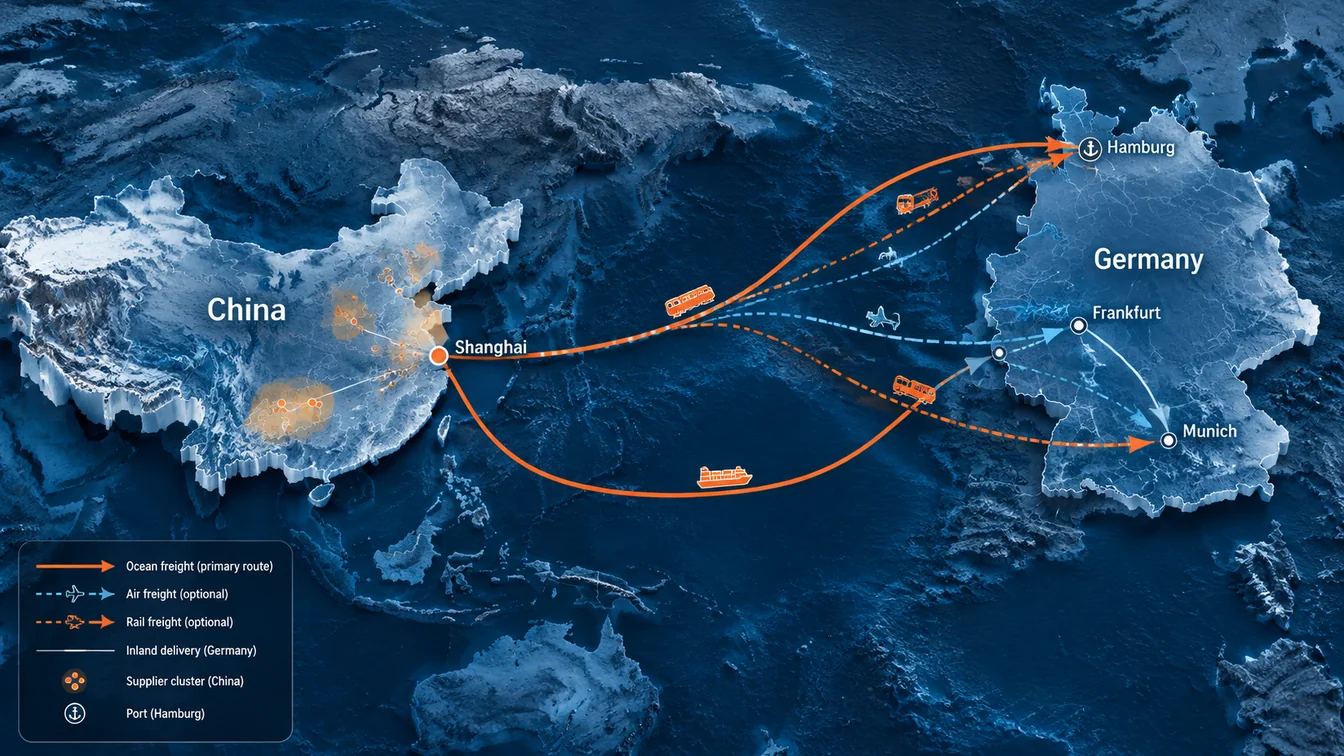
A workable China-to-Germany movement connects supplier readiness and export arrangements in China with the selected international transport path, German import customs clearance, and inland delivery to the consignee. Hamburg provides a named ocean-route reference, while the supplied air and China–Europe rail references identify additional destination areas for comparison.
China to Germany Shipping Cost and Transit Time
Current TJ Logistics Team planning references provide route-specific China-to-Germany prices and transit times for October 2026. Each displayed figure is a TJ Logistics Team indicative client rate or planning-transit reference for its named route, method, equipment or unit.
| Shipping route | Shipping method | Price | Transit time |
|---|---|---|---|
| Shanghai, China → Hamburg, Germany | FCL 20GP | $1,980–$2,430 per container | 22–30 days |
| Shanghai, China → Hamburg, Germany | FCL 40GP | $2,250–$2,700 per container | 22–30 days |
| Shanghai, China → Hamburg, Germany | FCL 40HQ | $2,520–$3,150 per container | 22–30 days |
| Shanghai, China → Hamburg, Germany | LCL | $54–$85.5/CBM | 30–34 days |
| China → Frankfurt/Munich, Germany | Air freight | $3.73/kg | 5–6 days |
| China → Germany | Express | $18–$36/kg | 3–6 days |
| China → Hamburg/Munich, Germany | China–Europe rail freight (20GP) | $4,293–$5,247 per container | 12–14 days |
Rate scope: These TJ Logistics Team planning references apply to the shipping route, method, equipment or unit shown. They are not market averages or binding quotations. The formal quotation confirms the agreed collection, delivery, customs, and charge scope for the shipment.
How to Choose a Shipping Method from China to Germany
The practical choice starts with cargo form and urgency: FCL fits dedicated-container shipments, LCL fits suitable shared loads, and air freight or express serves tighter delivery requirements. China–Europe rail freight is another option when a rail-based movement and its destination handoffs fit the shipment plan.
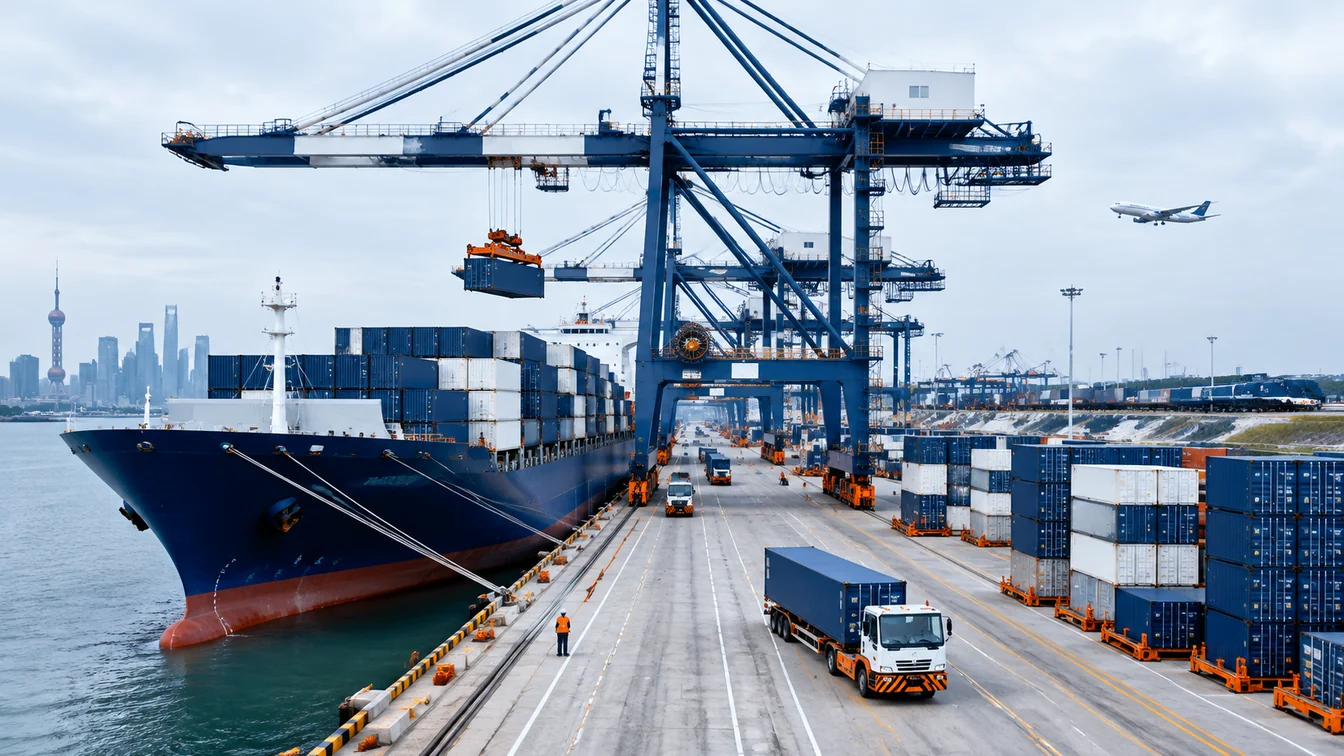
- Choose FCL when the cargo is ready for a dedicated container, because the shipment can move as a defined container load. Loading access, cargo dimensions and equipment suitability can change the choice.
- Choose LCL when the cargo is suitable for consolidation rather than a dedicated container, because compatible shipments share container space. Origin cut-off times, handling restrictions and destination release arrangements can affect its suitability.
- Choose air freight when the delivery deadline cannot accommodate a longer ocean or rail-based movement, because air transport offers a time-focused international option. Chargeable weight, cargo acceptance and destination handling remain important constraints.
- Choose express when an eligible time-sensitive consignment suits a courier-network service, because coordinated parcel handling may simplify pickup and last-mile delivery. Package dimensions, commodity restrictions and German delivery-address eligibility can change the service fit.
- FCL: 20GP, 40GP and 40HQ
- Use when: the cargo is ready for a dedicated container and the loading arrangement supports the selected equipment; compare the relevant sea freight service scope. Key route check: identify the actual China export terminal, destination release point, final drayage responsibility and empty-equipment return arrangement.
- LCL
- Use when: cargo can travel as a consolidated shipment instead of requiring a dedicated container. Key route check: establish the applicable consolidation cut-off, cargo-handling requirements and German destination release point.
- Air freight
- Use when: the cargo has a time-sensitive delivery requirement and is accepted for the selected air-cargo service; compare the air freight service scope. Key route check: the agreed departure and arrival airports, cargo acceptance conditions, chargeable weight and onward delivery arrangement must fit the shipment.
- Express
- Use when: a time-sensitive consignment meets the size, commodity and service requirements of a courier-network movement. Key route check: define the actual service, pickup arrangements, German postcode eligibility and destination customs handoff through the express service scope.
- China–Europe rail freight
- Use when: a rail-based China–Europe movement matches the delivery deadline and final destination. Key route check: specify the actual rail terminal or terminals, transfer arrangements, destination release point and onward road-delivery responsibility through the rail freight service scope; the city labels alone do not establish a direct connection.
Plan a China-to-Germany Route from Supplier to Final Delivery
The common shipment chain runs from supplier readiness and the agreed China pickup through export movement and the selected international transport path to German arrival, customs handoff and delivery to the consignee. The operational handoffs differ by transport method.
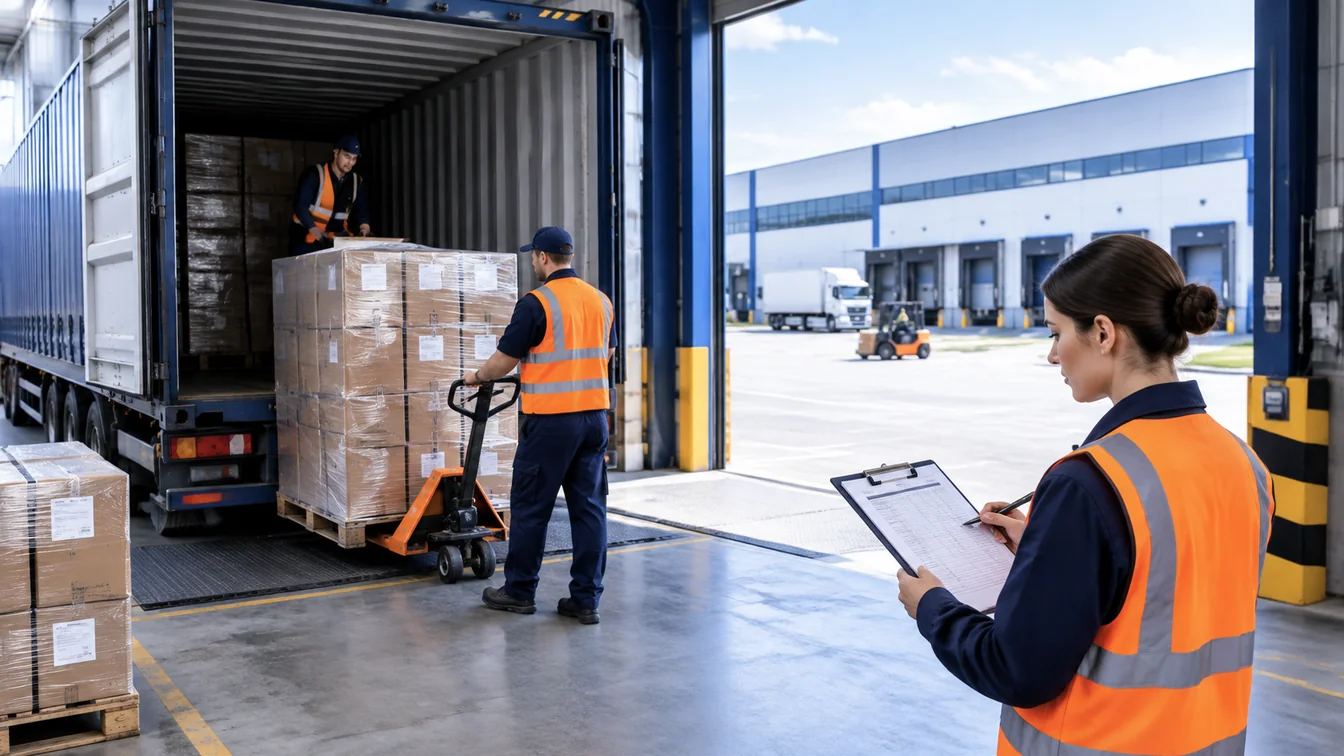
- FCL container handling
- The supplier or appointed loading party prepares the cargo for the agreed container, and the booking plan identifies the actual China export terminal and loading responsibilities. At destination, the release, collection, delivery-slot and empty-equipment return responsibilities must be defined for the chosen service.
- LCL consolidation and release
- The origin consolidation arrangement governs cargo acceptance and cutoff, while the destination process governs release after any applicable deconsolidation or cargo-station handling. The operating plan should identify the responsible parties and the point from which onward delivery can begin.
- Air cargo handoffs
- Cargo acceptance, terminal handling and the booked airport arrangement govern the air-cargo handoff. The destination plan should identify the actual arrival facility, release procedure and party responsible for collection or final delivery.
- Express collection and delivery
- The courier’s pickup acceptance and service conditions govern the first handoff, while the actual German customs and last-mile arrangements govern delivery. Package eligibility and the consignee’s address must be compatible with the selected service.
- Rail-based or multimodal transport
- The China–Europe rail movement should be documented as the actual agreed sequence of rail and any other transport legs, rather than assumed to be a direct service. Record the named terminals, any transfer points, the destination release arrangement and responsibility for onward trucking.
Execution Checks Before Booking
- For FCL, name the party responsible for the destination collection, delivery appointment, empty-equipment return and agreed return location.
- For LCL, record the applicable consolidation cutoff and destination release point, including cargo-station handling where required by the service.
- For air, express or rail, align the accepted cargo handoff with the actual arrival or transfer facility and the agreed delivery arrangement; road transport should have a defined scope through the trucking freight service where applicable.
Choosing Germany Entry Gateways and Inland Delivery Routes
For Germany, the final delivery area and selected transport mode determine which entry candidate deserves comparison: the named ocean reference points to Hamburg, the air reference names Frankfurt/Munich, and the rail reference names Hamburg/Munich. The Port of Hamburg is Germany’s largest multipurpose port and has established inland connections by road and rail.
| Final delivery area | Typical route pattern | Why the pattern fits | Details needed for the quote |
|---|---|---|---|
| Northern Germany / Hamburg area | Start with the Shanghai, China → Hamburg, Germany sea-freight reference for cargo suited to FCL or LCL. | Hamburg is a major multipurpose seaport with inland road and rail connections. The consignee’s location determines the remaining inland movement and whether the named route fits the delivery requirement. | Provide the final postal code, actual delivery address, receiving hours and any site-access or unloading restrictions. |
| Frankfurt / Rhine-Main area | Use the China → Frankfurt/Munich air-freight reference as a starting comparison for time-sensitive cargo destined for the Frankfurt area. | The Frankfurt CargoHub describes the airport area as a multimodal cargo facility with air, rail and road connections. The agreed arrival facility and final delivery address determine how the onward leg is arranged. | Specify the intended arrival airport and cargo terminal, final postal code, delivery requirements and any collection or receiving restrictions. |
| Munich / Bavaria area | The China → Frankfurt/Munich air reference and China → Hamburg/Munich rail reference both name Munich as a destination area. For rail, the actual destination terminal and onward truck leg must match the delivery address. | The selected mode determines the arrival or release facility and the inland handoff. A city label alone does not identify the airport, rail terminal or transfer arrangement. | State the required transport mode, actual arrival or release facility, destination postal code, receiving conditions and any required onward road movement. |
Prepare a Comparable Freight Request
Provide: the China supplier or pickup point; cargo-ready timing and cargo profile, including type, packages, dimensions, weight and CBM; any loading or special-handling condition; the final German postal code and receiving conditions; and the requested delivery scope, timing priority and relevant importer or broker arrangement.
The formal quotation should state: the pickup and final-delivery boundary; transport method, equipment or unit, and routing pattern; the customs, destination-handling and inland-delivery handoffs; material included and excluded charges; rate validity; and the conditions that can change the amount or timing.
Prepare for German Customs Before Departure
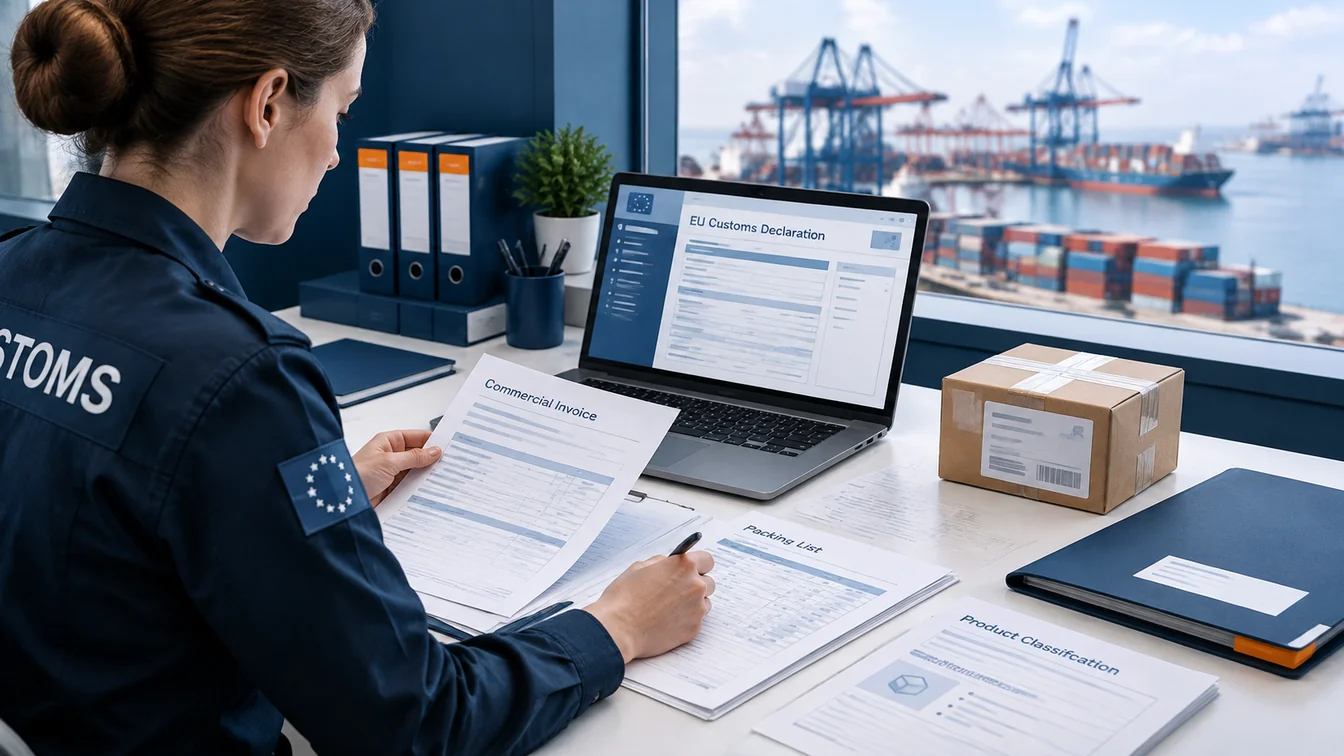
Commercial imports from China into Germany require an EU customs declaration, and an EORI number is mandatory for the relevant economic operator’s EU customs operations, as explained in the European Commission EORI guidance. Before dispatch, the importer and any customs representative should agree who lodges the declaration and who supplies the correct product and transaction information.
What You May Pay at Import
A German commercial import may incur customs duty and import VAT, while additional trade-defence duties or product controls apply only when the relevant classification, origin and current measure bring the goods within scope.
The EU TARIC database records classification-based customs measures, including applicable duties, trade-defence measures and import restrictions. The correct commodity classification and origin are essential to identify the measures relevant to the shipment.
Importation is a taxable transaction under EU VAT rules, as explained in the European Commission’s VAT guidance. The applicable tax treatment and payment arrangements depend on the goods and the import circumstances.
Customs Readiness Checklist
The importer and customs representative should agree the declaration responsibilities before departure, with product classification and origin established for the specific goods.
- Determine who will act as importer and declarant, who will represent the importer for customs purposes, and which relevant EORI number will be used.
- Assign the appropriate EU Combined Nomenclature or TARIC classification based on the product’s actual material, function and characteristics.
- Prepare the transaction value and supporting information needed for the customs value declared by the importer or its representative.
- State the actual country of origin separately from the dispatch country and transport route, retaining origin evidence when relevant to the applicable measures.
- Agree who provides declaration data, authorises the customs representative and responds to any request for additional information.
- For controlled goods, arrange the applicable permits, licences, conformity evidence or sanitary and phytosanitary documents before the shipment reaches the relevant entry point.
- Assign responsibility for customs-duty and import-VAT payment, including any separately agreed brokerage or examination-related costs.
Documents to Prepare
- Commercial invoice with a clear goods description and transaction details.
- Packing list showing the packages and their contents.
- The applicable transport document, such as a bill of lading, air waybill or rail consignment note.
- Product classification, origin and customs-value supporting information.
- Any permits, certificates, conformity evidence or product-specific documents required by the applicable import rules.
Tariff measures and product restrictions can change by commodity classification and origin. The importer or appointed broker should use the current applicable measures before dispatch rather than assume that the same treatment applies to every China-origin shipment.
Choose the Right Delivery Scope for China-to-Germany Shipping
| Service scope | What the scope means | Key responsibility or condition |
|---|---|---|
| Port-to-port | This scope covers the agreed transport between named origin and destination seaports. Inland pickup and final delivery fall outside it unless they are separately included. | The buyer or its appointed party normally arranges origin delivery, destination collection and customs responsibilities outside the contracted scope. The agreed service determines which port-handling activities are included. |
| Airport-to-airport | This scope covers the agreed air-cargo movement between named cargo airports. Pickup, airport-terminal handling, customs clearance and onward delivery may be separate services. | The party assigned to destination collection handles the cargo release and any onward movement outside the contracted scope. The actual booking terms determine which terminal services are included. |
| Door-to-door | This scope coordinates collection at the defined China pickup address through the international movement to the named German delivery address. The shipment may use several transport legs, and customs and duty/tax responsibilities must be defined. | The responsible parties coordinate the contracted pickup, transport legs and final-address handoff. Import duties and taxes remain the importer’s responsibility unless the agreed service terms allocate them elsewhere. |
| Delivered Duty Paid (DDP) | Under an agreed DDP sale, the seller takes responsibility for import clearance and applicable duties and taxes under that delivery term. Product compliance and final receiving requirements still apply. | The contractual importer and declaration arrangements must be workable for Germany. Storage, examinations, special handling and other additional costs depend on the actual agreement and are not automatically included. |
For delivery to a German business address, TJ Logistics Team’s door-to-door service can be considered when the buyer needs coordination across multiple transport legs. The importer or appointed customs representative still needs a workable declaration arrangement and a defined allocation of duties and taxes.
Why Use a Freight Forwarder for Shipping from China to Germany?
A freight forwarder helps a China-to-Germany buyer turn a cargo request into a usable movement definition, choose a workable transport and entry arrangement, and keep booking, customs and delivery handoffs aligned. These decisions are linked: a method that fits the cargo may not fit the consignee’s delivery area or receiving requirements.

- An unclear shipment scope creates incomparable offers. A freight forwarder helps translate the buyer’s movement requirement into a defined service scope, reducing ambiguity about what each transport option is expected to cover.
- A suitable transport method may not fit the final delivery area. A forwarder helps compare the applicable ocean, air or rail-based arrangement against the supplier’s location, urgency and German delivery requirements. High-value cargo also needs a separate risk-cover decision; the cargo insurance service can be considered when defining that requirement.
- Unassigned responsibilities can leave a shipment waiting for the next action. A freight forwarder helps distinguish the shipper’s, importer’s, customs representative’s, carrier’s and consignee’s responsibilities so that the next document or release decision has a named owner.
How TJ Logistics Team Plans a Germany Shipment
- Shipment-definition review
- TJ Logistics Team reviews the defined shipment request and flags information gaps that prevent a reliable route decision, such as an unspecified destination terminal or an unclear final-delivery requirement.
- Route and gateway comparison
- TJ Logistics Team maps credible transport and gateway options against the shipment definition, distinguishing the Shanghai–Hamburg ocean reference from the named Frankfurt/Munich air and Hamburg/Munich rail destination scopes.
- Service boundary and responsibility record
- TJ Logistics Team records the agreed transport scope, destination customs and delivery handoffs, and the parties responsible for the next actions before preparing the formal quotation.
- Booking and change coordination
- After the buyer confirms the agreed quotation and scope, TJ Logistics Team coordinates the relevant booking information, commercial documents and cargo handoff. If transport, documentation or receiving conditions change, the next responsible party and required decision are identified for coordination.
China to Germany Shipping FAQ
How much does a 20ft container cost from China to Germany?
For the Shanghai, China → Hamburg, Germany FCL 20GP reference, the TJ Logistics Team planning range is $1,980–$2,430 per container in October 2026. Use this reference when a dedicated 20GP container and the named Shanghai-to-Hamburg route match the shipment being planned.
How long does sea freight from China to Germany take?
For the Shanghai, China → Hamburg, Germany FCL 20GP reference, TJ Logistics Team’s planning-transit reference is 22–30 days in October 2026. This is the named FCL sea-freight planning reference, not a transit estimate for LCL, rail, air or final inland delivery.
What is the most cost-effective way to ship from China to Germany?
For container-ready cargo, start by comparing FCL; for a suitable shipment that does not require a dedicated container, compare LCL. Air freight or express may suit a tighter deadline, while rail freight is worth evaluating when its destination and onward-delivery arrangement fit the shipment. Because these services use different pricing units and scopes, the lowest displayed number alone does not establish the most cost-effective choice.
Which China gateway should I compare for shipments to Germany?
For cargo collected in or near Shanghai, the Shanghai, China → Hamburg, Germany commercial reference is a useful starting comparison for ocean freight. A supplier located elsewhere may have different pickup and export-positioning requirements, so the chosen China gateway should fit the collection point and the agreed route.
Which German entry route fits delivery in Munich or Frankfurt?
For Frankfurt-area delivery, the TJ Logistics Team air-freight reference names Frankfurt/Munich, Germany; the rail-freight reference names Hamburg/Munich, Germany. For a Munich destination, compare the selected mode’s actual arrival or release facility and the onward road leg rather than assume that the air and rail references use the same facility.
What documents should I prepare before shipping from China to Germany?
Prepare the commercial invoice, packing list and applicable transport document, together with accurate product classification, customs-value and origin information for the German import declaration. The relevant economic operator needs an EORI number for EU customs operations, and controlled products may require additional permits or compliance evidence.
Can I ship door-to-door from China to Germany?
Yes, a China-to-Germany shipment can be arranged as a door-to-door service when the pickup address, German delivery address and transport handoffs are defined. The importer or its customs representative still needs an agreed declaration arrangement, and duties and taxes are not automatically included unless the contracted service terms allocate them accordingly.
Why can two China-to-Germany freight quotes differ?
Two China-to-Germany quotes can differ because they cover different transport methods, equipment or charging units, cargo-handling requirements, gateways, destination handoffs or final-delivery scopes. Compare the actual shipment definition and written responsibility boundaries before treating two offers as equivalent.