

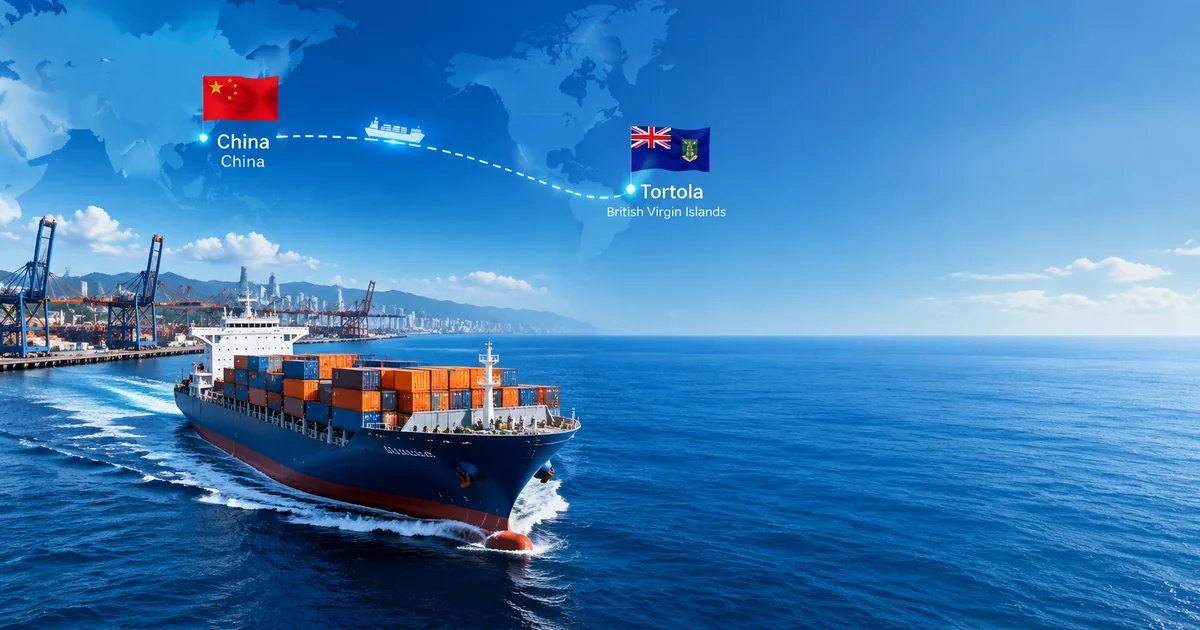
Reviewed by TJ Logistics Team — October 2026. TJ Logistics Team reviewed the route content, current planning references, and destination preparation points for October 2026. The formal quotation and booking are prepared against the defined shipment.
Shipping from China to the British Virgin Islands: Route Overview
For LCL cargo from China to Port Purcell, Road Town, Tortola, British Virgin Islands, the TJ Logistics Team indicative client rate reference is $95–$140/CBM, with a planning-transit reference of 28–38 days. This reference supports an ocean-freight comparison for shared cargo destined for Tortola, rather than a general price or transit claim for every island in the Territory.
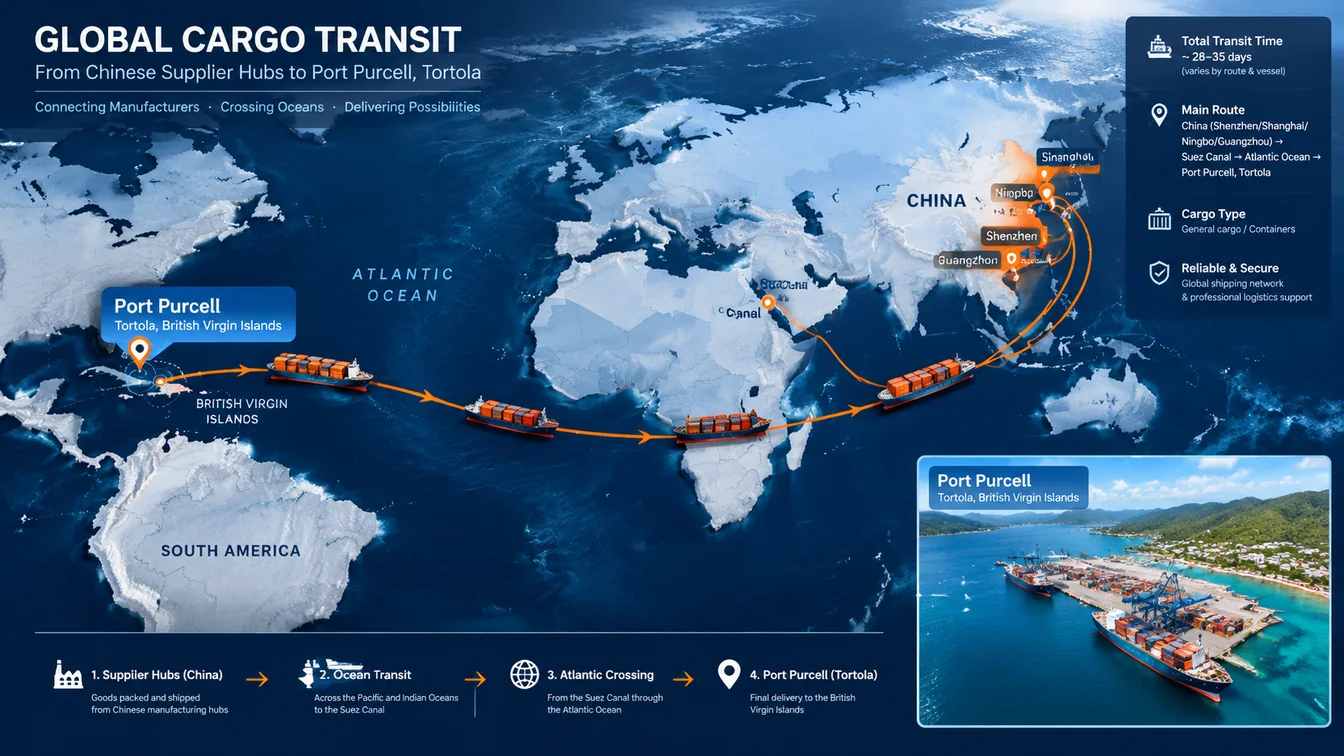
The practical route starts with the China supplier and a suitable export gateway, continues through the selected international movement to a BVI entry point, and ends with customs release and delivery to the consignee’s address. The destination island matters: Port Purcell is a cargo gateway on Tortola, whereas shipments for other islands need a separately defined arrival or onward-transfer arrangement.
China to British Virgin Islands Shipping Cost and Transit Time
Current TJ Logistics Team planning references provide route-specific China-to-British Virgin Islands prices and transit times for October 2026. These are TJ Logistics Team indicative client rate and planning-transit references, each applying to its named route and method, equipment or unit.
| Shipping route | Shipping method | Price | Transit time |
|---|---|---|---|
| China → Port Purcell, Road Town, Tortola, British Virgin Islands | LCL | $95–$140/CBM | 28–38 days |
Rate scope: These TJ Logistics Team planning references apply to the shipping route, method, equipment or unit shown. They are not market averages or binding quotations. The formal quotation confirms the agreed collection, delivery, customs, and charge scope for the shipment.
How to Choose a Shipping Method from China to the British Virgin Islands
- Choose FCL when the shipment needs a dedicated container and the supplier can load it to the agreed specification, because one container gives the cargo a dedicated equipment plan; the destination facility and empty-container return arrangements can change its suitability.
- Choose LCL when cargo can travel as a shared load, because the current route-specific reference is for LCL to Port Purcell on Tortola; packed volume, handling requirements and the consignee’s island affect the practical choice.
- Choose air freight when the delivery deadline is the dominant constraint, because the route reference names EIS via SJU/STT as the air path; the transfer arrangement and final delivery point remain important to the plan.
- Choose express when a compact, urgent parcel fits an accepted carrier service for the consignee’s exact island and address, because parcel networks depend on local delivery coverage; a general BVI service label alone does not define every island’s last-mile route.
- FCL
- Use when: the cargo needs a dedicated 20GP, 40GP or 40HQ container, or its handling requirements make shared loading unsuitable. Key route check: define the cargo-capable arrival facility, container release arrangements, final delivery and empty-equipment return before booking.
- LCL
- Use when: the shipment can be consolidated with compatible cargo rather than requiring a dedicated container. Key route check: the Port Purcell reference is specifically for Tortola; origin consolidation, destination cargo availability and the final island handoff shape the operating plan. TJ Logistics Team’s sea-freight service is relevant to this option.
- Air freight
- Use when: a more time-sensitive shipment justifies air transport and the goods satisfy the applicable cargo-acceptance requirements. Key route check: the EIS reference specifies a route via SJU/STT, so the intended transfer path and the onward delivery arrangement must fit the actual destination.
- Express
- Use when: a parcel needs an integrated express service and the selected carrier accepts the specific BVI island and delivery address. Key route check: the island-specific route and local delivery coverage must be established before treating express as a practical option.
Plan a China-to-British Virgin Islands Route from Supplier to Final Delivery
The common shipment chain runs from supplier readiness and export handoff in China to the selected international movement, destination arrival and customs handoff, then delivery to the named BVI island and address. Once the method is selected, the remaining operational work depends on its loading, transfer and cargo-release arrangements.
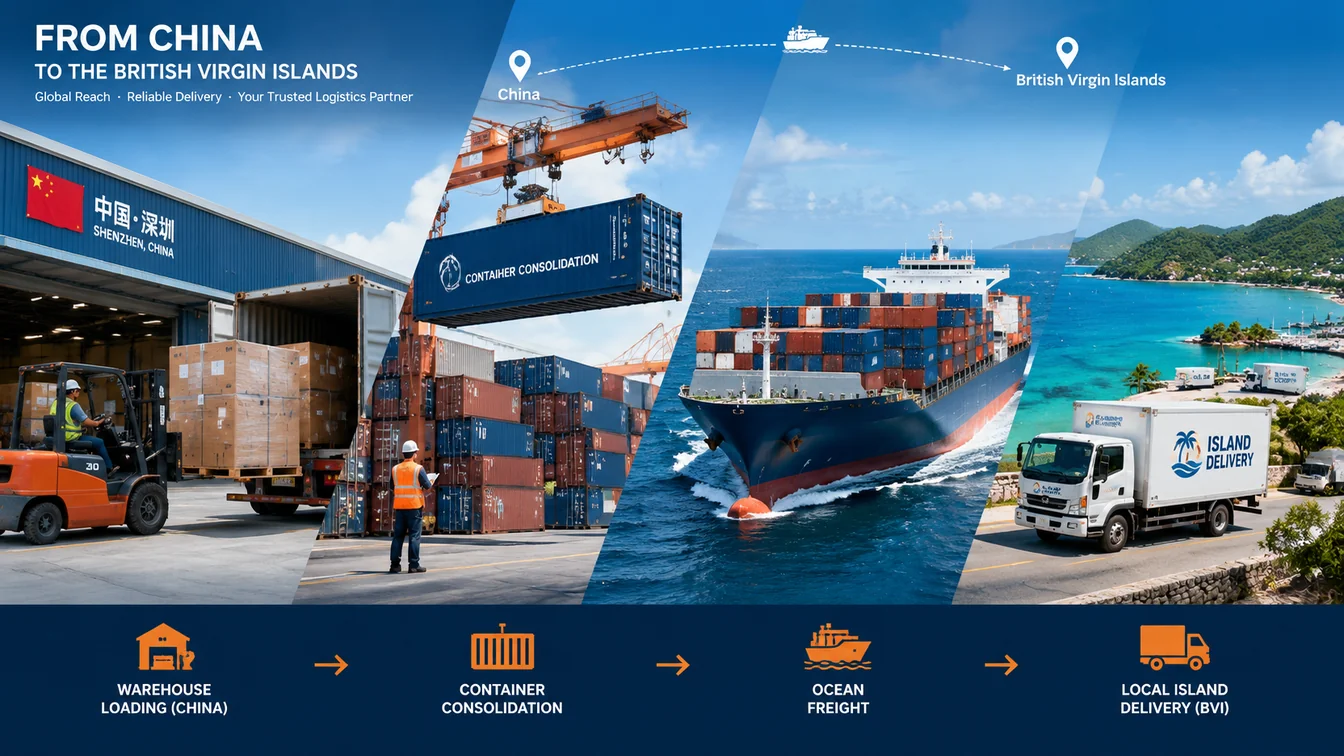
- FCL ocean freight
- The supplier or appointed loading party prepares the container for export, and the movement plan defines the export handoff, destination release and final collection. The receiving party’s ability to unload the cargo and the container’s return arrangements are material to the delivery plan.
- LCL ocean freight
- The origin handoff includes consolidation with other cargo, followed by the planned international movement and destination cargo-release process. Port Purcell has a container freight station, according to the facility information published by the British Virgin Islands Ports Authority; actual cargo availability and collection arrangements still form part of the shipment plan.
- Air freight
- The cargo must be accepted for air transport and passed through the applicable origin and transfer handling points before its destination arrival and customs handoff. The route reference names EIS via SJU/STT, while the government’s Beef Island cargo and air-traffic clearance service listing identifies local customs functions there; this does not establish a particular flight connection or final delivery arrangement.
- Express
- The operational chain starts with carrier acceptance and pickup, followed by the relevant network and customs handoffs and delivery to the accepted address. TJ Logistics Team’s express service is relevant when the carrier’s service coverage matches the actual BVI island and shipment.
- Rail-led multimodal
- The named route via Linyi rail yard, Sevilla rail yard and Algeciras port is a rail-led multimodal concept, not direct rail shipping to the British Virgin Islands. The sea leg into the Territory and any transfer from the destination cargo gateway to the consignee must be included in the defined movement; TJ Logistics Team’s rail-freight service is relevant to evaluating the rail leg, not proof of an end-to-end island connection.
Execution Checks Before Booking
- For FCL, establish who loads the container, who collects it after release and who arranges empty-equipment return.
- For LCL, align the origin consolidation cutoff with the destination cargo-release and collection arrangements.
- For air or express, establish which party controls each transfer and customs handoff before final delivery.
- For any method, make sure the consignee can receive the shipment at the planned time and with the required unloading arrangements.
Choosing British Virgin Islands Entry Gateways and Island Delivery
The final island changes the destination plan because cargo facilities and handling capabilities differ across the British Virgin Islands. The British Virgin Islands Ports Authority facility guide identifies Port Purcell on Tortola as the main cargo port, describes its container and container-freight-station facilities, and distinguishes local cargo facilities at St Thomas Bay and Great Harbour.
| Final delivery area | Typical route pattern | Why the pattern fits | Details needed for the quote |
|---|---|---|---|
| Tortola | China → Port Purcell, Tortola → customs release → final delivery on Tortola. | Port Purcell is the Territory’s main cargo port and has container-handling and container-freight-station facilities, making it the known cargo reference for Tortola-bound freight. | The final delivery address, vehicle access, consignee receiving window and required unloading equipment. |
| Virgin Gorda | China → defined BVI cargo entry → customs release → an agreed arrival or onward-transfer arrangement for Virgin Gorda. | St Thomas Bay has a local cargo facility that accommodates container ships and barges and includes a cargo shed; the deciding factor is the specific connection planned for the shipment. | The agreed island arrival or transfer arrangement, destination address and ability to receive the cargo or container. |
| Jost Van Dyke | China → defined cargo gateway → customs release → final island handoff and delivery on Jost Van Dyke. | Great Harbour’s larger jetty serves passenger and light cargo, so shipments requiring more substantial handling need a defined cargo and onward-delivery plan. | Cargo size and handling needs, the method of island-side delivery, and the consignee’s receiving and unloading arrangements. |
Prepare a Comparable Freight Request
Provide: the China supplier or pickup point; cargo-ready timing and cargo profile, including type, packages, dimensions, weight and CBM; loading or special-handling conditions; the final postal code, island and receiving conditions; and the requested delivery scope, timing priority and relevant importer or broker arrangement.
The formal quotation should state: the pickup and final-delivery boundary; transport method, equipment or unit, and routing pattern; customs, destination-handling and inland-delivery handoffs; material included and excluded charges; rate validity; and the conditions that can change the amount or timing.
Prepare for British Virgin Islands Customs Before Departure
Commercial imports into the British Virgin Islands must be declared to His Majesty’s Customs; the importer or appointed declarant remains responsible for accurate entry details and supporting records.
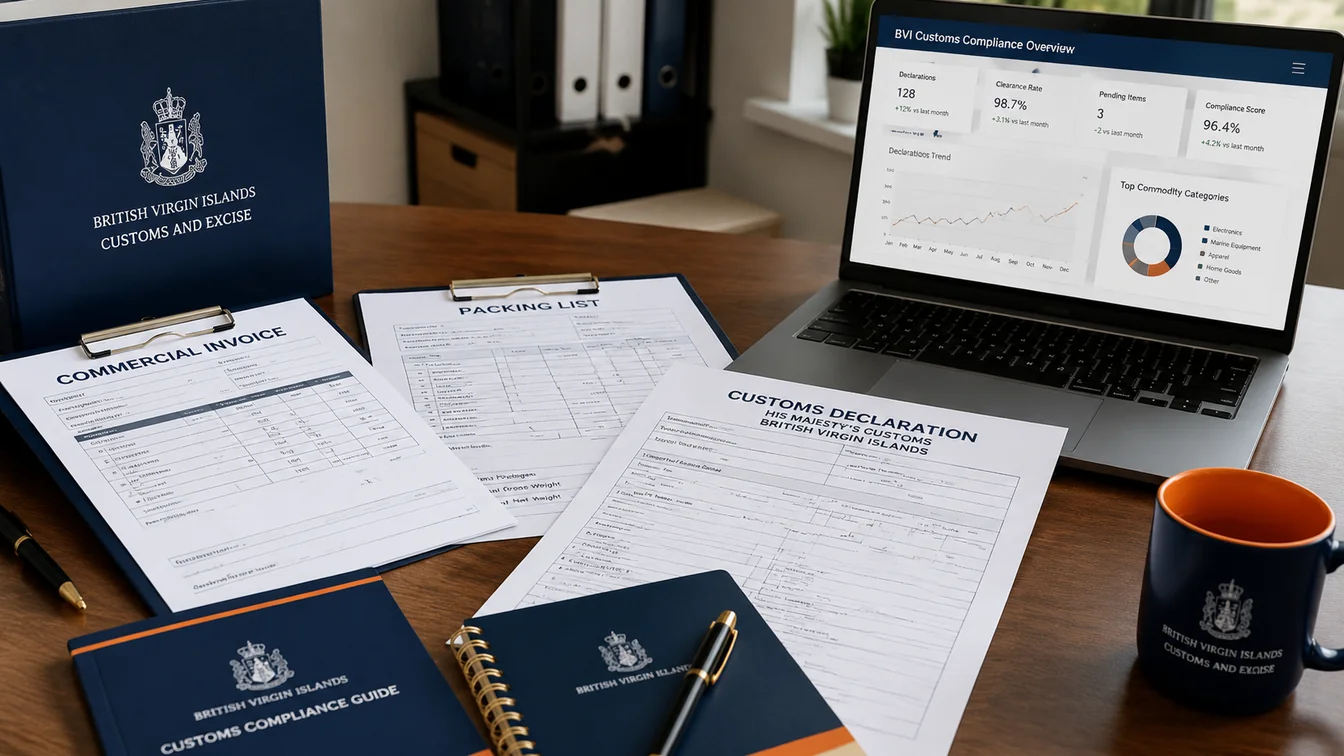
The Customs Management and Duties Act and applicable amendments provide the framework for declarations, tariffs and import duties. Product classification, customs value, origin and commodity-specific controls affect the entry requirements for a particular shipment.
Customs Readiness Checklist
- Assign the importer and declarant. Name the local importer or consignee and the party responsible for lodging the declaration and paying assessed duties before cargo release.
- Classify the goods accurately. Use a precise product description and the applicable tariff classification; composition, materials, function and intended use can affect the classification.
- Keep the commercial records consistent. Align product descriptions, quantities, package counts, country of origin, currency and declared values across the commercial invoice, packing list and transport documents.
- Retain evidence supporting the declaration. Keep the purchase and origin records needed to substantiate the information entered for customs assessment.
- Identify conditional product controls. Obtain any applicable commodity-specific permit or certificate before dispatch; ordinary transport documents do not replace a product approval.
- Allocate clearance and payment responsibilities. Agree who prepares the entry, who pays assessed duties and applicable local charges, and who arranges collection after release. Where a broker is appointed, customs-brokerage coordination can support the information handoff without replacing the responsible importer or declarant.
Documents to Prepare
- Commercial invoice describing the goods, quantities, values, currency and country of origin.
- Packing list showing package counts, contents and shipment identifiers.
- Sea bill of lading or air waybill, as applicable to the transport method.
- Any additional origin evidence, permit, certificate or product declaration required for the actual commodity and its import conditions.
The British Virgin Islands’ temporary duty-valuation and port-charge measures were specified for 1 May–31 July 2026. For a later import, use the applicable tariff, valuation and fee rules in force at the time of entry rather than carrying those temporary terms forward; the 2026 temporary import measures were expressly time-limited.
Choose the Right Delivery Scope for China-to-British Virgin Islands Shipping
Door-to-door scope is the clearest way to define movement through delivery at a named BVI island address; port-to-port is narrower when the buyer is responsible for destination clearance and delivery. The contractual endpoints determine which party owns each handoff.
| Service scope | What the scope means | Key responsibility or condition |
|---|---|---|
| Port-to-port | International transport is arranged between the named origin and destination ports. Customs clearance and inland delivery are outside the agreed boundary unless expressly included. | The importer normally handles destination customs and final delivery. Destination handling or cargo collection must be included only when stated in the agreed scope. |
| Terminal-to-door | Cargo is collected from the named destination terminal or cargo facility after release and moved to the specified delivery address. Customs release precedes collection. | The importer or appointed declarant normally arranges entry and payment of assessed charges. Vehicle access, receiving hours and unloading capacity can change the final-mile plan. |
| Door-to-door | Origin pickup is coordinated through delivery to the consignee’s stated island address. The phrase alone does not mean that import clearance or duties are included. | The importer remains responsible for statutory customs obligations unless a lawful and agreed arrangement states otherwise. Any inter-island movement must be part of the defined scope. |
| DDP | Under agreed Delivered Duty Paid terms, the seller undertakes delivery to the named destination with import clearance and duties and taxes paid as required by those terms. Unrelated receiving or accessorial costs are not automatically included. | Use DDP only where the required local clearance and payment arrangements can be fulfilled. Do not assume every destination charge or receiving cost is covered. |
For address-level delivery on Tortola, the agreed scope should define customs release and the last-mile collection and receiving arrangements; TJ Logistics Team’s door-to-door service and trucking-freight service are relevant when those legs are included. For Virgin Gorda or Jost Van Dyke, the final island handoff needs to be named rather than treating arrival on Tortola as completed delivery.
Why Use a Freight Forwarder for Shipping from China to the British Virgin Islands?
A freight forwarder helps turn a China supplier’s cargo request into a defined movement, match a workable route to the shipment and align the commercial and operational handoffs. The final island is a material part of that definition because a Tortola cargo arrival and delivery to another BVI island are not the same final-address requirement.

A Shipment Definition That Matches the Cargo
Unclear cargo and handling requirements can lead to a method or service scope that does not fit the shipment. A defined movement helps distinguish shared cargo from dedicated equipment and keeps special handling separate from routine transport decisions; high-value cargo may also need a separate cargo-insurance decision because policy cover and carrier liability are not the same.
A Route That Reaches the Correct Island
A port name alone does not settle the full delivery plan for an archipelago. Route planning needs to distinguish the Tortola cargo gateway from any separately arranged arrival or onward transfer needed for Virgin Gorda or Jost Van Dyke.
Clear Responsibilities at Every Handoff
Export documents, customs entry, cargo release and final receipt can involve different parties. Clear responsibilities help the buyer see which party must act next, while leaving statutory customs decisions and obligations with the legally responsible importer, declarant and authorities.
How TJ Logistics Team Plans a China-to-British Virgin Islands Shipment
- 1. Define the shipment and flag gaps
- TJ Logistics Team reviews the shipment request and flags any missing route or cargo information that would prevent a reliable method or service-scope decision.
- 2. Map the international and island handoffs
- TJ Logistics Team compares credible movement and gateway options against the supplier location, required service and final island, distinguishing the Port Purcell cargo reference from unconfirmed onward-transfer arrangements.
- 3. Record the agreed service boundary
- TJ Logistics Team records the proposed transport scope and the parties responsible for the next handoffs, including customs and destination delivery responsibilities, before the formal quotation is prepared.
- 4. Coordinate booking and operational changes
- After the buyer confirms the quotation and scope, TJ Logistics Team coordinates booking information, commercial documents and cargo handoff details, and flags changes to routing, timing, documents or receiving conditions so the responsible party can take the next action.
China to British Virgin Islands Shipping FAQ
How much does LCL shipping from China to the British Virgin Islands cost?
For China → Port Purcell, Road Town, Tortola, British Virgin Islands, the TJ Logistics Team LCL indicative client rate reference is $95–$140/CBM in October 2026. The per-CBM unit is a shared-load reference, so cargo volume and handling suitability matter when deciding whether LCL fits the shipment.
How long does sea freight from China to the British Virgin Islands take?
For China → Port Purcell, Road Town, Tortola, British Virgin Islands, the TJ Logistics Team LCL planning-transit reference is 28–38 days in October 2026. For a Tortola receiving deadline, plan the local customs-release, cargo-collection and consignee-receiving handoffs as part of the delivery schedule.
Which shipping method is most cost-effective for China-to-BVI cargo?
For shared cargo destined for Port Purcell on Tortola, LCL is a practical starting comparison because a route-specific client rate reference is available for that movement. FCL is worth evaluating when cargo needs a dedicated container, while air freight or express is more relevant when urgency, parcel size or handling requirements justify the different service.
Which cargo gateway should I compare when shipping from China to the British Virgin Islands?
Port Purcell on Tortola is the strongest starting point when the final delivery area is Tortola, because it is the Territory’s main cargo port and supports container handling. A consignee on Virgin Gorda or Jost Van Dyke may need a distinct island-side delivery arrangement, so a Tortola cargo arrival should not be treated as completed delivery to another island.
Can I ship door-to-door from China to the British Virgin Islands?
Door-to-door shipping from China to the British Virgin Islands can be scoped to a named island address, but the agreed movement must define customs responsibility and any transfer beyond the initial cargo gateway. For delivery outside Tortola, the service scope should name the island handoff and the party responsible for the next delivery leg.
What documents should be prepared before shipping from China to the British Virgin Islands?
Prepare a commercial invoice, packing list and sea bill of lading or air waybill, with consistent goods descriptions, quantities, package counts, origin, values and tariff classification. Commodity-specific permits or certificates may also be required, depending on the goods and the controls that apply to them.
How are import duties calculated in the British Virgin Islands?
Import duties for the British Virgin Islands depend on the applicable tariff classification and the rules in force at the time of entry. The temporary 2026 duty-valuation and port-charge changes were specified to end on 31 July 2026, so an October 2026 import should not automatically be assessed on the basis of those expired temporary terms.
Can air freight enter the British Virgin Islands through EIS?
Terrance B. Lettsome International Airport (EIS) is the named arrival point in the TJ Logistics Team air-freight route reference, which specifies routing via SJU/STT. The transfer arrangement and the final delivery plan must fit the consignee’s actual island and address rather than assuming that arrival at EIS completes the shipment.