

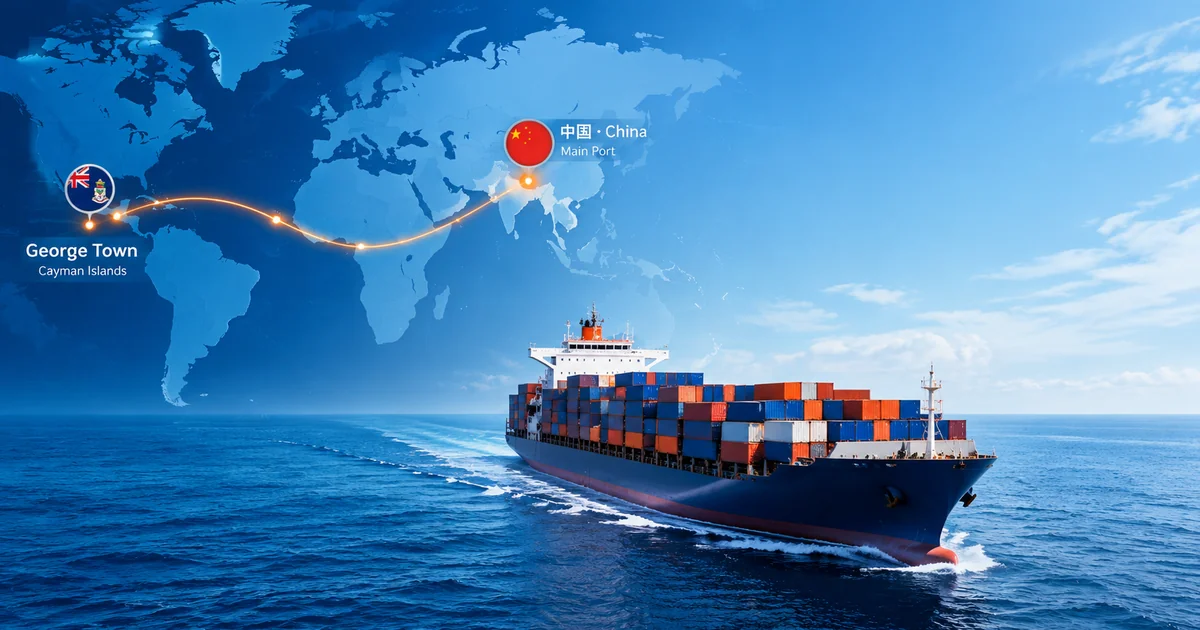
Reviewed by TJ Logistics Team · October 2026. TJ Logistics Team reviewed the route content, current planning references, and destination preparation points for October 2026. The formal quotation and booking are prepared against the defined shipment.
Shipping from China to the Cayman Islands: Route Overview
The TJ Logistics Team reference for Shanghai, China → George Town, Cayman Islands (via Miami) LCL is $561/CBM with a 23-day planning transit. For non-urgent cargo, the main decision is between dedicated-container FCL and shared-container LCL; air freight or express is worth evaluating when delivery urgency or shipment form makes ocean transport unsuitable.
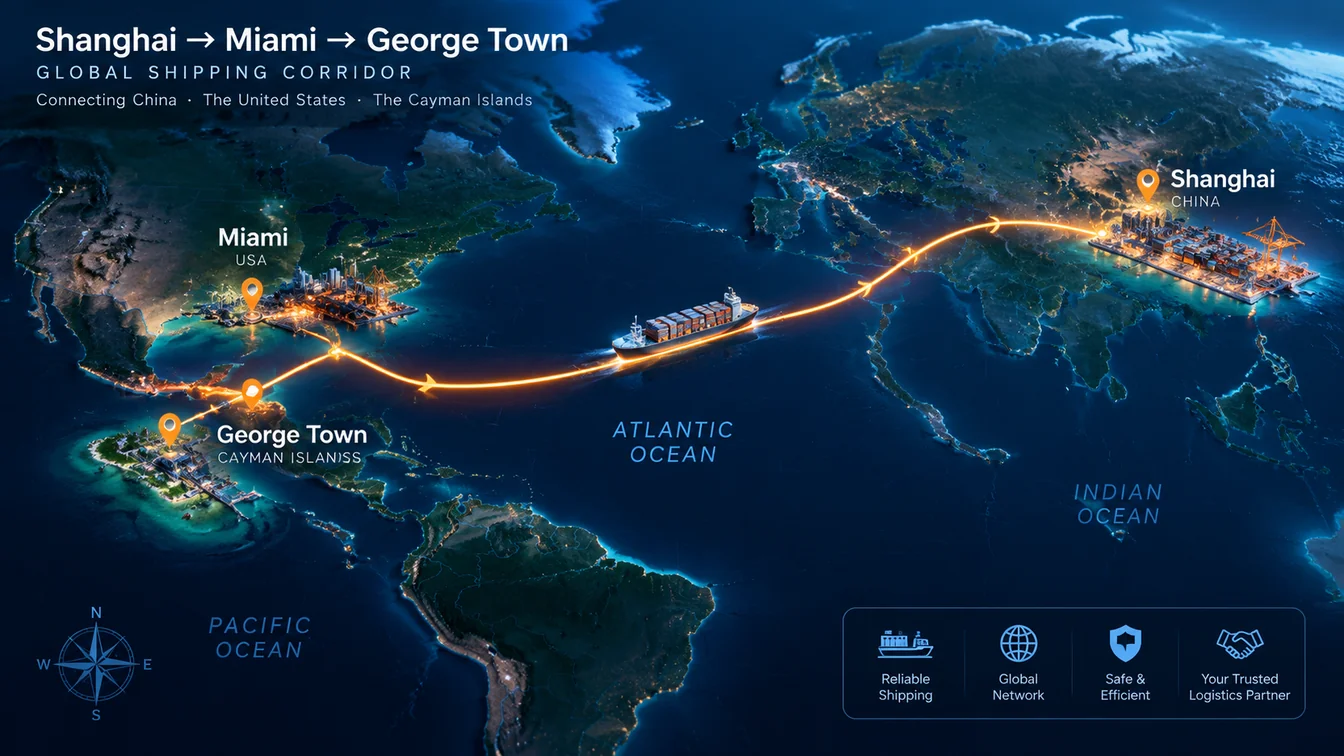
China supplier location determines the practical export gateway, while the destination island determines the arrival and final-delivery handoff. For a George Town-bound sea plan, the Port Authority identifies the Port of George Town on Grand Cayman. The sea freight service can be considered for the international ocean leg, with the agreed delivery scope extending only as far as the formal shipment arrangement provides.
China to Cayman Islands Shipping Cost and Transit Time
Current TJ Logistics Team planning references provide route-specific China-to-Cayman Islands prices and transit times for October 2026. Each reference applies to its named route, shipping method, container equipment or billing unit.
| Shipping route | Shipping method | Price | Transit time |
|---|---|---|---|
| China → Cayman Islands | FCL 20GP | $4,938 per container | 35–50 days |
| China → Cayman Islands | FCL 40GP | $6,405 per container | 35–50 days |
| China → Cayman Islands | FCL 40HQ | $6,796 per container | 35–50 days |
| Shanghai, China → George Town, Cayman Islands (via Miami) | LCL | $561/CBM | 23 days |
| Shenzhen City, China → George Town, Cayman Islands | Express | $12.18/kg | 4–7 days |
Rate scope: These TJ Logistics Team planning references apply to the shipping route, method, equipment or unit shown. They are not market averages or binding quotations. The formal quotation confirms the agreed collection, delivery, customs, and charge scope for the shipment.
How to Choose a Shipping Method from China to the Cayman Islands
Container suitability, cargo urgency and the final delivery island are the three primary method-selection factors.
- Choose FCL when the shipment warrants a dedicated container, because one container provides a defined loading arrangement without combining the shipment with other customers’ cargo; loading access and the actual container requirement can change the decision.
- Choose LCL when the cargo is suitable for shared-container handling and delivery is not highly time-critical, because consolidation avoids reserving a dedicated container; cargo dimensions, handling requirements and consolidation cutoffs affect suitability.
- Choose air freight when timing takes priority over an ocean movement and the cargo meets airline acceptance requirements, because airport cargo handling offers a different transport path from container shipping; chargeable weight, cargo acceptance and destination handling must fit the shipment.
- Choose express when the shipment is parcel-like and time-sensitive, because courier networks can simplify small-shipment handling; dimensions, chargeable weight, commodity restrictions and delivery coverage for the final island can change the choice.
- FCL: 20GP, 40GP or 40HQ
- Use when: a dedicated container fits the cargo and loading plan. Key route check: determine container availability, loading responsibility and the destination release and equipment-return arrangements.
- LCL: Shared ocean cargo
- Use when: the consignment can travel as consolidated cargo. Key route check: align the origin consolidation cutoff with the agreed destination release point and delivery arrangement.
- Air freight
- Use when: urgency or cargo handling makes air movement a practical alternative to ocean freight. Key route check: match origin cargo acceptance, the intended arrival airport and the collection or delivery arrangement. The air freight service is the relevant service category to evaluate.
- Express courier
- Use when: a smaller, time-sensitive consignment fits the courier operator’s acceptance rules. Key route check: establish whether the specific shipment and final Cayman Islands address are covered by the booked service. Review the express service option for this type of movement.
For high-value or difficult-to-replace goods, treat cargo insurance as a separate risk decision rather than assuming it is included in the shipping method. The cargo insurance service is relevant when the financial impact of loss or damage warrants additional protection.
Plan a China-to-Cayman Islands Shipment from Supplier to Final Delivery
Every China-to-Cayman Islands shipment follows the same broad sequence: supplier readiness and origin handoff, export movement, destination arrival and customs handoff, then delivery to the named consignee. The selected method determines which operational handoffs must be arranged separately.
- FCL: Container loading and release
- The supplier or appointed loading party prepares cargo for the agreed container movement, followed by export handling and the booked ocean route. The execution plan must identify who handles container loading, destination release and any required empty-equipment return; China-side collection can require a separate trucking freight arrangement.
- LCL: Consolidation and destination release
- The shipment enters origin consolidation before moving along the named Shanghai-to-George Town route via Miami. The operational handoff must specify where the consolidated cargo is released and whether the agreed scope includes subsequent delivery to the consignee.
- Air freight: Airport cargo handling
- Air cargo requires acceptance at the selected origin airport, the booked air movement and an identified arrival-side cargo handoff. The Cayman Islands Airports Authority describes local airline cargo operations and courier services, but this does not by itself establish a specific China-origin flight or transfer arrangement.
- Express: Courier network and last mile
- The courier operator must accept the goods under the booked China pickup and Cayman Islands destination service. The route plan must identify the customs handoff and intended delivery address, particularly when the consignee is on Cayman Brac or Little Cayman rather than Grand Cayman.
Execution Checks Before Booking
- For FCL, settle container-loading responsibility and the equipment-release and return arrangements.
- For LCL, align consolidation cutoffs with the intended destination release and collection plan.
- For air freight or express, establish the cargo-acceptance requirements and actual arrival-side handoff for the selected service.
- For final delivery, establish the consignee’s receiving arrangements and any access or appointment requirements that affect the delivery vehicle or time window.
Choosing Cayman Islands Entry Gateways and Final-Delivery Routes
The final island changes the practical entry and delivery decision. Grand Cayman has the named George Town sea reference and Owen Roberts International Airport; Cayman Brac has Charles Kirkconnell International Airport, while Little Cayman is served by Edward Bodden Airfield for inter-island operations, as described in the Civil Aviation Authority’s airport overview. These different facilities do not, by themselves, establish a complete China-to-island cargo service.
| Final delivery area | Typical route pattern | Why the pattern fits | Details needed for the quote |
|---|---|---|---|
| Grand Cayman | The named sea reference is Shanghai, China → George Town, Cayman Islands (via Miami); the Port Authority separately identifies the Port of George Town. | George Town is the destination named in the LCL reference, making it the clearest supplied sea-route comparison for a Grand Cayman delivery plan. The final local movement still depends on the consignee’s address and receiving conditions. | Final postal address, intended release point and whether delivery is required to a commercial facility or residence. |
| Cayman Brac | Compare a proposed cargo handoff at Charles Kirkconnell International Airport with a proposed Grand Cayman entry followed by a separately arranged inter-island movement. | Cayman Brac has its own international airport, and Cayman Airways’ cargo office details identify a cargo presence there. Neither fact confirms that a particular China-origin routing is available for the shipment. | Whether the shipment can be booked to the intended arrival point or needs a separate inter-island transfer, plus the final receiving address. |
| Little Cayman | Treat the onward movement to Little Cayman as a distinct route leg; the official airport description identifies Edward Bodden Airfield as an uncertified facility serving inter-island operations. | The local airfield’s role is different from the certified international airports, so an international arrival point and the final island handoff should not be treated as interchangeable. | Whether the intended service accepts the shipment for onward movement, any cargo-size or weight restrictions, and the final receiving arrangements. |
Prepare a Comparable Freight Request
Provide: the China supplier or pickup point; cargo-ready timing and cargo profile, including type, packages, dimensions, weight and CBM; any loading or special-handling condition; the final Cayman Islands postal address and receiving conditions; and the requested delivery scope, timing priority and relevant importer or broker arrangement.
The formal quotation should state: the pickup and final-delivery boundary; transport method, equipment or unit, and routing pattern; customs, destination-handling and inland-delivery handoffs; material included and excluded charges; rate validity; and the conditions that can change the amount or timing.
Prepare for Cayman Islands Customs Before Departure
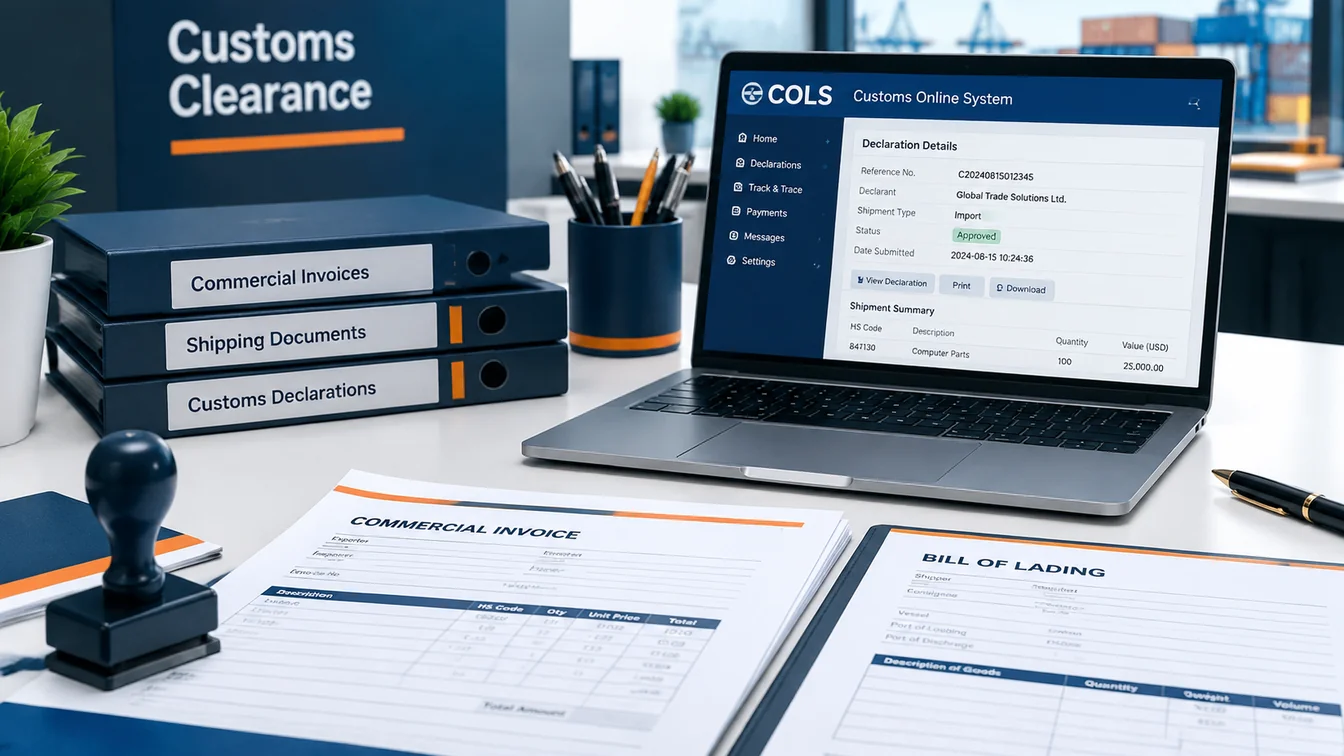
The Cayman Islands importer is legally responsible for lodging the import declaration for all imported goods, including goods on which no duty is payable, within seven days of arrival through the Customs Online System (COLS). Commercial importers must obtain a Trader Identification Number (TIN) before importing commercial goods. The current requirements are set out by Cayman Islands Customs and Border Control.
What You May Pay at Import
Cayman Islands import duty is determined under the applicable tariff classification and may be calculated as a percentage of customs value or as a specific amount per unit. The commodity code, quantity and customs value affect the assessment, so the duty treatment must be established for the actual goods rather than assumed from the shipping method or origin country.
Customs Readiness Checklist
- Register the importer. Obtain a TIN for the commercial import account before bringing commercial goods into the Cayman Islands.
- Determine the tariff classification. Prepare a sufficiently detailed product description and identify the appropriate Cayman Islands tariff code for each relevant product category.
- Support the declared value. Keep the commercial transaction and valuation information consistent with the invoice, quantities and actual goods.
- Prepare for the declaration deadline. Arrange for the importer or duly authorized agent to submit the electronic entry within seven days after arrival, including when the goods are not dutiable.
- Allocate importer and broker responsibilities. Decide who will prepare and submit the entry, supply supporting records and handle any subsequent correction. Using a customs broker does not remove the importer’s legal responsibility for the declaration.
- Review restricted or controlled products. Determine whether another government department requires a permit, certificate, authorization or inspection for the specific commodity.
- Plan duty payment and release. Allocate payment responsibility and the next collection or delivery handoff after customs processing.
Documents to Prepare
- Commercial invoice with a clear description of the goods, quantities, transaction values and relevant trading parties.
- Packing list matching the shipment’s packages and contents.
- Bill of lading, air waybill or courier transport document, as applicable to the selected method.
- Product permits, certificates or inspection documentation where the goods are subject to specific controls.
- Importer or authorized-agent details and supporting authorization where an agent submits the entry.
Tariff classification and product-specific import controls are the principal compliance risks to resolve before dispatch. Customs and Border Control may examine goods and request clarification if the declaration, invoice or product description requires further scrutiny.
Choose the Right Delivery Scope for China-to-Cayman Islands Shipping
| Service scope | What the scope means | Key responsibility or condition |
|---|---|---|
| Port-to-port | Ocean carriage between the agreed origin and destination ports. Pre-carriage and delivery beyond the agreed ports are separate unless included. | The buyer or its appointed parties normally arrange the other transport and clearance legs. The written booking must define any additional services allocated to the seller or forwarder. |
| Airport-to-airport | Air carriage between the agreed origin and destination airports. Collection, destination clearance and final delivery sit outside this scope unless included. | The parties must allocate cargo acceptance, airport handling and post-arrival collection. The selected destination airport must suit the actual delivery island and booked service. |
| Door-to-door | Collection from the named China pickup address through delivery to the specified Cayman Islands address. Customs and duties are included only when the agreed service expressly provides for them. | The shipment arrangement must identify the responsible import party and final receiving point. Access restrictions or a required onward movement to another island may change the delivery scope. |
| Delivered Duty Paid (DDP) | Under agreed DDP terms, the seller assumes the allocated delivery, import-clearance and duty or tax obligations prescribed by the applicable Incoterms rules. DDP does not automatically include every inspection, storage, product-compliance or accessorial cost. | The seller must be able to perform the agreed import obligations lawfully for the transaction. The written agreement must state any permitted exclusions and the party responsible for requirements outside the agreed DDP scope. |
For shipments requiring collection in China and delivery to a named Cayman Islands address, a door-to-door service is a relevant scope to evaluate. The final island, customs responsibility and exact receiving point must fit the agreed arrangement rather than being assumed from the international transport method.
Why Use a Freight Forwarder for Shipping from China to the Cayman Islands?
A freight forwarder helps turn a shipment request into a defined movement, compare workable transport paths, and keep the commercial and operational handoffs aligned. For the Cayman Islands, that work must account for the selected China origin, the actual international routing and the difference between delivery on Grand Cayman, Cayman Brac and Little Cayman.
- Define the shipment before selecting the route. An unclear loading plan or cargo profile can prevent a reliable method decision; a movement definition brings the shipment requirements together before the transport arrangement is selected.
- Match the route to the actual destination. A named George Town sea reference is useful for a Grand Cayman comparison, but a consignee on another island may require a different arrival or onward-delivery arrangement.
- Keep responsibility at each handoff clear. Unassigned customs, collection or receiving tasks can leave a shipment without a clear next action; the forwarder helps identify the responsible party while the importer retains its legal customs obligations.
How TJ Logistics Team Plans a China-to-Cayman Islands Shipment
- 1. Shipment definition and gap review
- TJ Logistics Team reviews the shipment request and flags any missing information that prevents a reliable decision, including an unclear loading arrangement or an unresolved final-island delivery requirement.
- 2. Route and gateway comparison
- TJ Logistics Team maps suitable transport and gateway options against the defined shipment, distinguishing the named Shanghai-to-George Town LCL reference from other potential movements that would require their own routing and service scope.
- 3. Quotation scope and responsibility record
- TJ Logistics Team records the agreed service boundary and the parties responsible for the next handoffs before preparing the formal quotation, including the agreed importer or broker responsibility where relevant.
- 4. Booking and operational handoff
- After the buyer confirms the quotation and agreed scope, TJ Logistics Team coordinates the relevant booking information, commercial-document handoffs and cargo arrangements, and flags the next decision when route, document, timing or receiving conditions change.
China to Cayman Islands Shipping FAQ
How much does a 20GP container from China to the Cayman Islands cost?
For the China → Cayman Islands FCL 20GP reference, the TJ Logistics Team planning price is $4,938 per container in October 2026. This basis applies to a dedicated-container shipment; cargo suited to shared-container handling requires an LCL comparison instead.
How long does sea freight from China to the Cayman Islands take?
For the China → Cayman Islands FCL 20GP reference, the TJ Logistics Team planning transit is 35–50 days in October 2026. Use this as the initial planning window for the named FCL reference rather than as a guaranteed arrival date.
Which shipping method is most cost-effective for China-to-Cayman Islands cargo?
FCL is the relevant starting comparison when cargo warrants a dedicated container, while LCL suits compatible cargo moving in shared container space and express suits eligible time-sensitive parcels. The appropriate choice depends on cargo form, urgency, handling and final delivery needs; prices expressed per container, CBM and kilogram are not directly comparable.
Which China gateway should I use when shipping to the Cayman Islands?
The practical starting point is the China export gateway that suits the supplier’s location and the selected transport arrangement. Shanghai is the named origin for the Shanghai-to-George Town LCL reference via Miami, while the FCL references do not specify a particular China port, so the chosen gateway should match the actual shipment plan.
Which entry gateway should I use for Cayman Brac or Little Cayman?
The final island should determine the gateway comparison: George Town is the named sea destination in the LCL reference, Charles Kirkconnell International Airport serves Cayman Brac, and Edward Bodden Airfield serves Little Cayman for inter-island operations. The official airport overview establishes these different airport roles, but a complete China-origin cargo route still needs to match the intended island and service handoff.
What documents should be prepared before shipping from China to the Cayman Islands?
China-to-Cayman Islands commercial cargo normally requires a commercial invoice, packing list and the applicable transport document, with permits or certificates added when the goods are controlled. The importer must also arrange the required customs entry through COLS within seven days of arrival, as set out in Cayman Islands customs regulations.
Can I ship door-to-door from China to the Cayman Islands?
A door-to-door scope can be defined for China-to-Cayman Islands cargo when the selected service covers the pickup, agreed international movement and final delivery address. The importer and customs responsibilities still need to be allocated clearly, and delivery to Cayman Brac or Little Cayman must not be assumed from a Grand Cayman destination reference.
Can I send express shipments from China to the Cayman Islands?
Express is a practical option for eligible time-sensitive parcels when the courier accepts the goods and serves the final destination. The Cayman Islands Airports Authority’s cargo and courier information describes international courier operations with flights to and from Miami, but that destination-side information does not confirm a specific China-origin service or coverage for every island.