

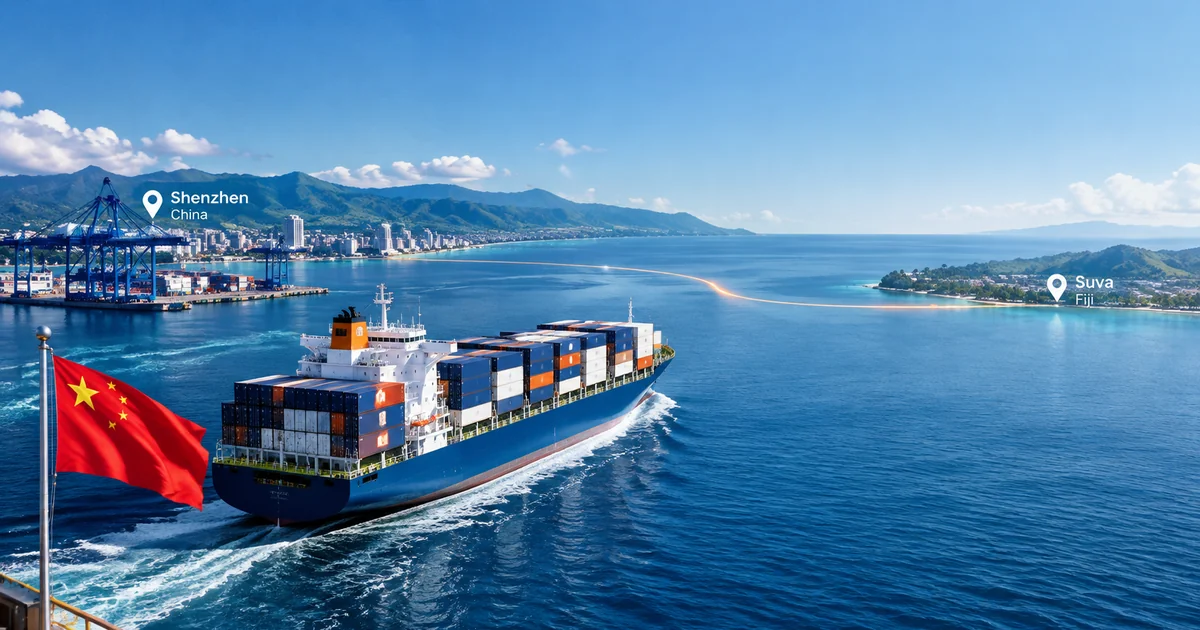
Reviewed by TJ Logistics Team — October 2026. TJ Logistics Team reviewed this route content, current planning references, and Fiji destination-preparation points for this month. The formal quotation and booking are prepared against the defined shipment.
Shipping from China to Fiji: Route Overview
The TJ Logistics Team FCL 20GP reference for Shenzhen (Yantian/Shekou), China → Suva, Fiji is $1,620–$2,520 per container, with a planning transit time of 18–24 days. For container-ready cargo destined for Suva, this named sea-freight route is a practical starting point; the appropriate alternative changes when the shipment is a shared load, time-critical air cargo, or an express consignment.
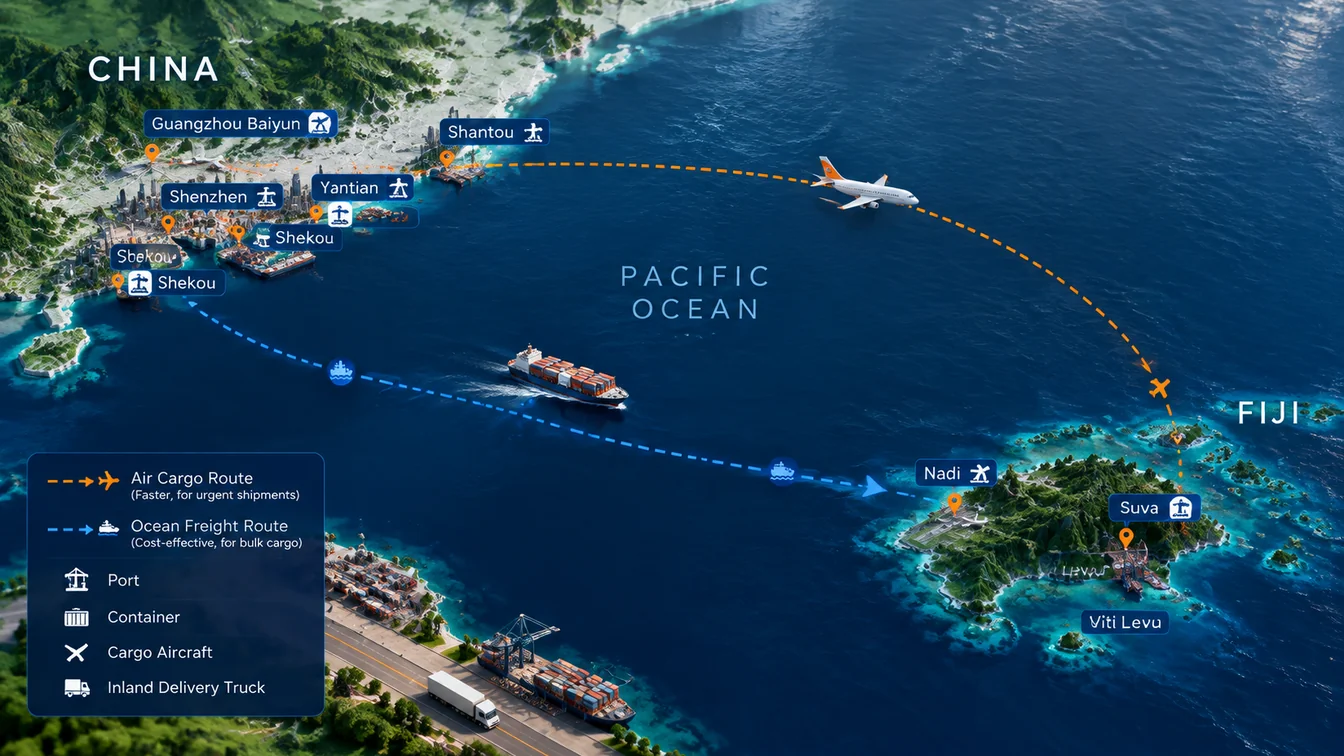
A workable China-to-Fiji shipment connects the supplier’s cargo-ready arrangements with a suitable China export gateway, an ocean or air transport path, the designated Fiji entry point, customs clearance, and delivery to the consignee’s address. The key route decision is whether the origin and arrival gateways fit the cargo and final delivery area, rather than simply selecting a transport method by name.
China to Fiji Shipping Cost and Transit Time
Current TJ Logistics Team planning references provide route-specific China-to-Fiji prices and transit times for October 2026. Each reference applies to its named route, method, equipment or unit; these indicative client-rate and planning-transit references were reviewed in October 2026.
| Shipping route | Shipping method | Price | Transit time |
|---|---|---|---|
| Shenzhen (Yantian/Shekou), China → Suva, Fiji | FCL 20GP | $1,620–$2,520 per container | 18–24 days |
| Shenzhen (Yantian/Shekou), China → Suva, Fiji | FCL 40GP | $2,700–$3,780 per container | 18–24 days |
| Shenzhen (Yantian/Shekou), China → Suva, Fiji | FCL 40HQ | $2,880–$4,050 per container | 18–24 days |
| Shantou, China → Suva, Fiji | LCL | $152.1/CBM | 28 days |
| Guangzhou Baiyun (CAN), China → Nadi (NAN), Fiji | Air freight | $5.85–$7.20/kg | 3–5 days |
| China → Suva, Fiji | Express | $10.8–$16.2/kg | 4–7 days |
Rate scope: These TJ Logistics Team planning references apply to the shipping route, method, equipment or unit shown. They are not market averages or binding quotations. The formal quotation confirms the agreed collection, delivery, customs, and charge scope for the shipment.
How to Choose a Shipping Method from China to Fiji
Choose the method that matches the shipment’s physical form and delivery priority; container readiness, shared-load suitability, chargeable weight, and the final Fiji address are the main decision factors.
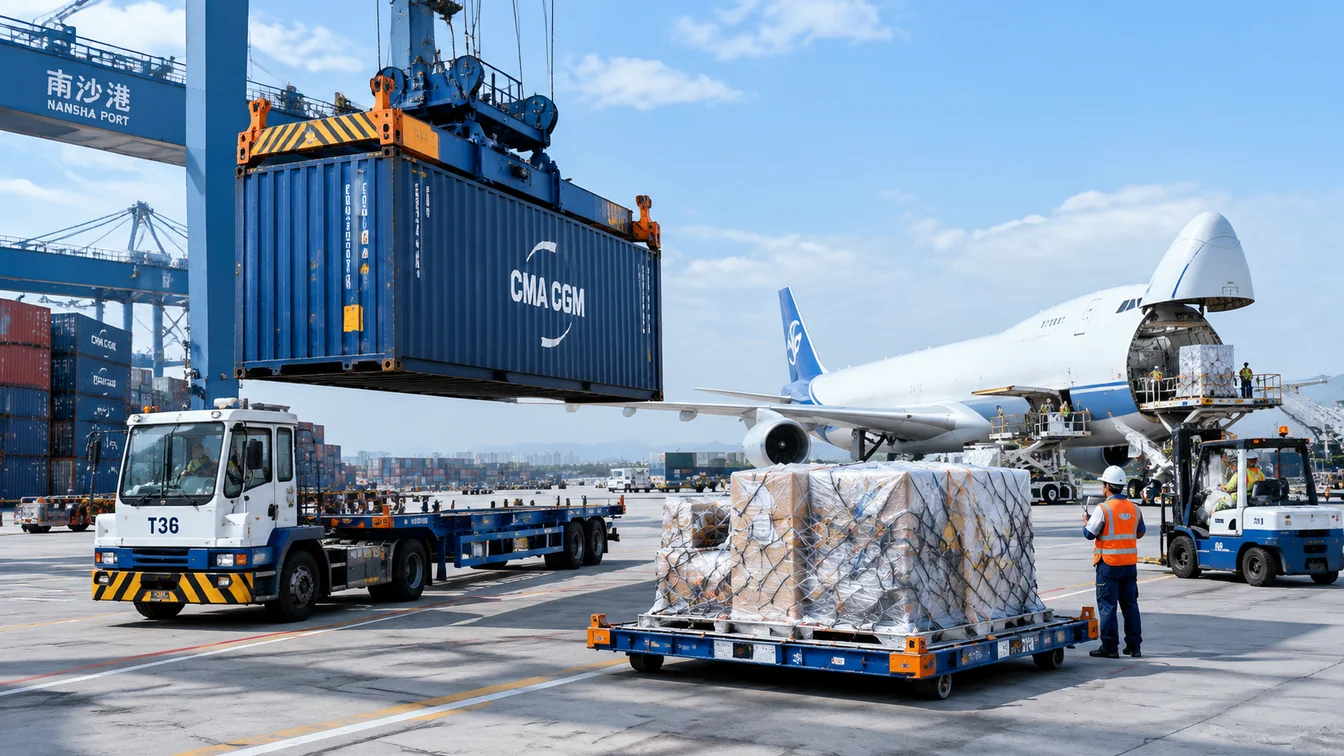
- Choose FCL when the cargo is suitable for a dedicated container, because containerized loading keeps the shipment in a single equipment unit; the required container size and loading access determine suitability.
- Choose LCL when the shipment is suitable for shared container space, because it allows cargo to move without reserving a whole container; consolidation and additional cargo-handling handoffs need to fit the delivery plan.
- Choose air freight when the delivery deadline justifies air transport, because the named Guangzhou Baiyun (CAN) to Nadi (NAN) reference is the air-freight option for Fiji; chargeable weight and the final delivery location affect the decision.
- Choose express when the shipment fits a carrier’s accepted consignment and delivery service, because a carrier-managed express movement may suit time-sensitive packages; dimensions, commodity acceptance, destination coverage, and the final delivery address can change suitability.
- Full-container ocean freight
- Use when: The cargo can be loaded into a dedicated 20GP, 40GP, or 40HQ container and the planned delivery can accommodate container handling. Key route check: Select the appropriate equipment and define loading, destination release, and final container delivery responsibilities. See TJ Logistics Team’s sea freight service.
- Shared-load ocean freight
- Use when: The shipment is better suited to consolidated cargo than a dedicated container. Key route check: The Shantou-to-Suva reference is the relevant named LCL route; the actual consolidation handoff and destination release arrangements must suit the shipment.
- Air freight
- Use when: Meeting the requested delivery schedule matters more than choosing an ocean movement. Key route check: The named Guangzhou Baiyun (CAN) to Nadi (NAN) reference should be matched to cargo acceptance, chargeable weight, and the Fiji delivery address. See TJ Logistics Team’s air freight service.
- Express
- Use when: The shipment fits an available express service and its delivery requirements. Key route check: Establish the actual carrier, accepted commodity and dimensions, destination coverage, and customs handoff before choosing the service. See TJ Logistics Team’s express service.
For cargo whose value makes loss or damage exposure material, include a separate risk-protection decision in the shipment plan and review TJ Logistics Team’s cargo insurance service for relevant scope.
Plan a China-to-Fiji Shipment from Supplier to Final Delivery
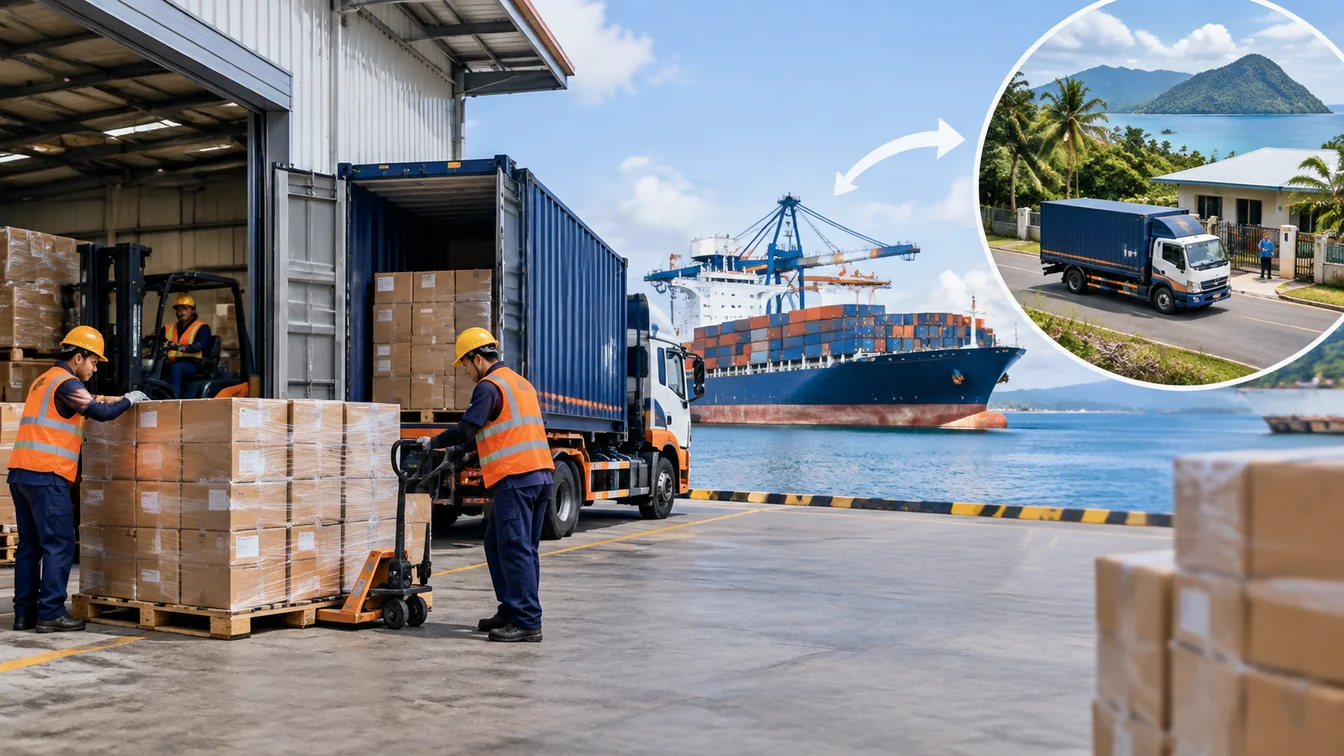
The common shipment chain is supplier cargo readiness and handoff → China export movement → the selected international transport path → Fiji arrival and customs handoff → inland delivery to the consignee’s address. Each method has a different operational handoff that should be documented before cargo is released to the transport provider.
- FCL container movement
- The supplier and loading party arrange container stuffing, cargo securing, and the loading handoff before the container enters the agreed export movement. At Suva, the release and collection arrangements must connect with the agreed final haulage, including any applicable delivery access or empty-equipment return requirements.
- LCL consolidated movement
- The origin consolidation party receives the shipment for inclusion in a shared-load movement. The shipment plan needs to identify the applicable origin cutoff and who handles destination deconsolidation, cargo release, and onward delivery under the selected service.
- Air-cargo movement
- The origin handoff depends on cargo acceptance and the applicable air-cargo documentation, while the destination handoff depends on arrival-terminal release and the agreed collection or delivery service. The named Guangzhou Baiyun (CAN) to Nadi (NAN) route provides the airport reference without establishing a direct flight or a particular transfer pattern.
- Express consignment
- The shipment passes from the supplier or pickup party into the designated express provider’s network, followed by the applicable Fiji import and delivery handoffs. The actual carrier service must support the goods, destination, and required delivery location.
Execution Checks Before Booking
- For FCL, agree who loads and seals the container, how destination collection is arranged, and which party is responsible for returning empty equipment where required.
- For LCL, establish the applicable origin consolidation cutoff and the party responsible for destination cargo release.
- For air freight, align cargo acceptance requirements with the agreed packaging and documentation, then determine the arrival-terminal collection or delivery handoff.
- For express, document the carrier’s acceptance and delivery scope, including any recipient availability or delivery-access requirements.
Choosing Fiji Entry Gateways and Inland Delivery Routes
Fiji’s final delivery area changes which entry gateway deserves consideration: Suva and Lautoka are the country’s two primary commercial ports, while the named air-freight reference uses Nadi. The Fiji Ports official facilities overview identifies the principal sea gateways; a route to Lautoka should be evaluated as its own arrangement rather than assumed from a Suva reference.
| Final delivery area | Typical route pattern | Why the pattern fits | Details needed for the quote |
|---|---|---|---|
| Suva and nearby delivery areas on Viti Levu | The named sea references run from Shenzhen (Yantian/Shekou) or Shantou to Suva. | Suva aligns with the supplied ocean-route references. The final delivery location and the consignee’s ability to receive the cargo determine the onward movement. | Provide the delivery address, container-access conditions, unloading arrangements, and any receiving appointment requirements. |
| Nadi and western Viti Levu | The named air-freight reference runs from Guangzhou Baiyun (CAN) to Nadi (NAN). For sea cargo, Lautoka is a separate commercial-port candidate requiring its own route arrangement. | Nadi’s cargo terminal handles import, export, and transshipment cargo, as described by ATS Fiji’s cargo and ramp services. The air reference matches the named airport, while a western-area sea route needs its own defined entry and inland handoffs. | Provide the final locality and address, required delivery date, cargo form, and whether the proposed route is air entry through Nadi or a separately defined sea movement through Lautoka. |
Prepare a Comparable Freight Request
Provide: The China supplier or pickup point; cargo-ready timing and cargo profile, including type, packages, dimensions, weight, and CBM; any loading or special-handling condition; the final Fiji delivery address and receiving conditions; and the requested delivery scope, timing priority, and relevant importer or broker arrangement.
The formal quotation should state: The pickup and final-delivery boundary; transport method, equipment or unit, and routing pattern; the customs, destination-handling, and inland-delivery handoffs; material included and excluded charges; rate validity; and the conditions that may change the amount or timing.
Prepare for Fiji Customs Before Departure
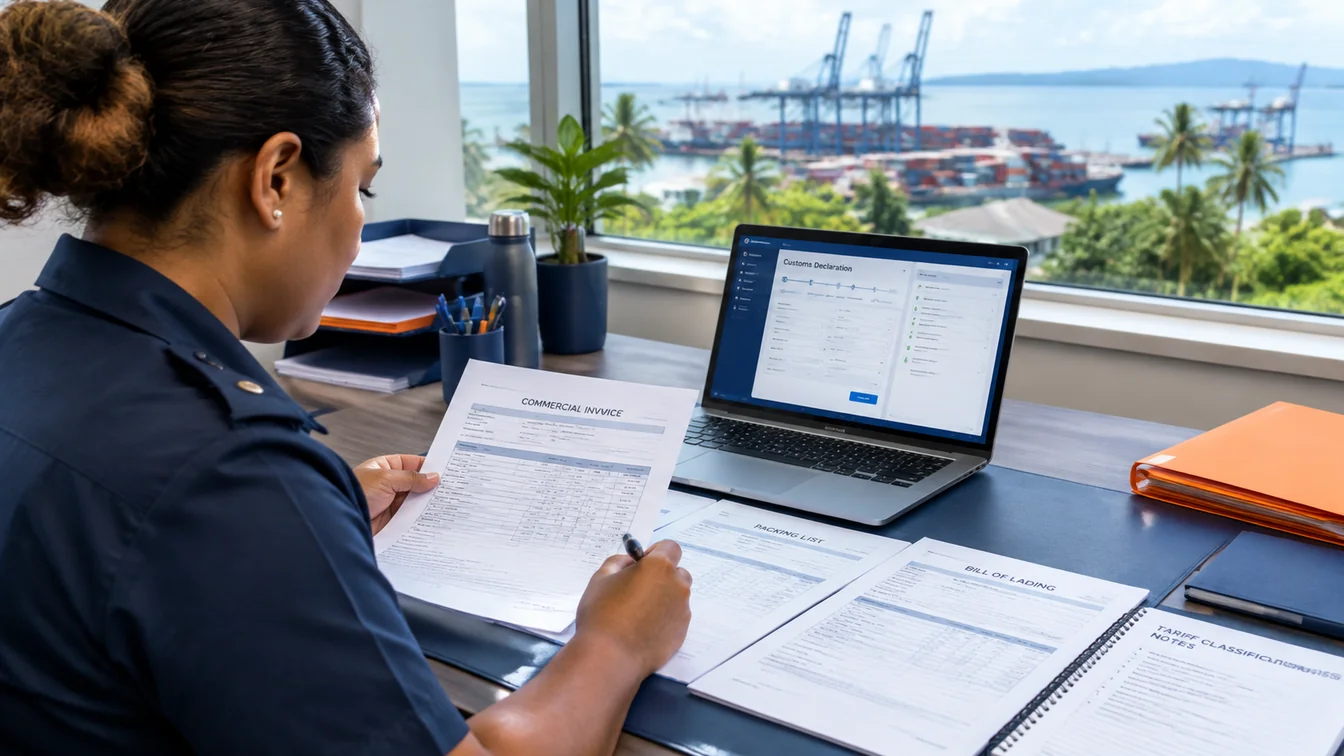
Commercial imports into Fiji require a customs declaration through the ASYCUDA World system operated by the Fiji Revenue and Customs Service (FRCS) import procedure, and the importer remains responsible for accurate declarations and applicable import charges. First-time importers need the required registration before importing, and a customs agent may act when properly appointed by the importer.
What You May Pay at Import
Import costs in Fiji may include customs duty, VAT, other applicable taxes, and entry fees. The amount depends on the goods’ tariff classification, customs value, origin, and the rules applicable to the specific commodity.
Customs Readiness Checklist
- Use the correct importer and consignee details, and complete the required Customs Automated System registration if the importer is new to the process.
- Classify each product using the appropriate Harmonized System code, with a description that accurately reflects its composition, function, and intended use.
- Prepare a supportable customs value and declare the country of origin accurately, since these are inputs to duty and tax assessment.
- Match the commercial invoice, packing list, and applicable bill of lading or air waybill to the actual cargo description, packages, and weights.
- Arrange for the importer or its authorized customs agent to prepare and lodge the required customs entry and supporting documents.
- Allocate responsibility for assessed duties, VAT, entry fees, and any applicable inspection or regulatory charges before goods are released.
- Obtain any commodity-specific permits or approvals that must be in place before the goods leave China.
- Keep carrier arrival details, consignee information, and customs paperwork consistent so that document discrepancies can be resolved promptly.
Documents to Prepare
- Commercial invoice with an accurate description, value, quantity, and country of origin.
- Packing list showing package count and cargo details.
- Bill of lading for sea freight or air waybill for air freight or the applicable transport document for the selected express service.
- Customs entry and importer registration details required for the Fiji declaration.
- Any product-specific import permit, phytosanitary or health certificate, or other regulatory approval required for the goods.
- Customs-agent authorization and any applicable concession or supporting declaration documents.
Fiji’s import controls and tariff treatment can vary by commodity, origin, and the rules in force at entry. Regulated products should be reviewed before dispatch so that a missing approval does not interrupt the intended movement.
Choose the Right Delivery Scope for China-to-Fiji Shipping
The agreed delivery scope defines where the transport responsibility ends and which party arranges the next handoff. A named port or airport destination is not the same service scope as delivery to the consignee’s final address.
| Service scope | What the scope means | Key responsibility or condition |
|---|---|---|
| Port-to-port | Port-to-port service covers the agreed origin-port to destination-port movement. The service boundary ends at the named port handoff rather than the final delivery address. | The buyer or its designated party normally arranges the next destination handoff unless additional services are agreed. The named port and the responsibilities for cargo release must match the shipment agreement. |
| Airport-to-airport | Airport-to-airport service covers the agreed origin-airport to destination-airport movement. It does not itself include delivery to the consignee’s address. | The buyer or its designated party arranges the applicable import release and onward delivery unless those tasks are included in the agreed scope. Cargo acceptance and destination collection requirements remain relevant. |
| Door-to-door | Door-to-door service coordinates the shipment from the agreed collection point in China to the named final address in Fiji. The particular quotation defines which transport, clearance, handling, and delivery activities are included. | The importer remains responsible for its legal obligations and import charges unless the agreed commercial arrangement expressly allocates them otherwise. The final address must be accessible for the planned delivery equipment and cargo. |
| Delivered Duty Paid (DDP) | DDP allocates import-clearance and duty-and-tax responsibilities to the seller under the agreed DDP trade term, with delivery to the specified destination. It does not automatically include every possible accessorial or receiving charge. | The seller must be able to perform the assigned import obligations in Fiji. Any regulatory approvals, delivery limitations, and charges outside the agreed DDP scope need an explicit allocation. |
For a Fiji shipment that needs collection in China and delivery to a named consignee address, TJ Logistics Team’s door-to-door service is a relevant service-scope reference. A separate customs brokerage arrangement may also be needed, with the Fiji importer retaining responsibility for its import obligations and authorizing the party that handles the local declaration.
Cargo Checks That Can Change the Route
- Plant, plant products, and animal-origin goods
- Regulated plant and animal products may require Fiji biosecurity import permits and origin health or phytosanitary documents, and product restrictions can change whether the intended dispatch is permissible. Use the Biosecurity Authority of Fiji import requirements system to determine the commodity- and origin-specific requirements and obtain necessary approvals before the supplier releases the cargo.
Why Use a Freight Forwarder for Shipping from China to Fiji?
A freight forwarder helps turn a shipment description into a usable transport plan, match the route to the cargo and delivery need, and keep commercial and operational responsibilities aligned. For China-to-Fiji shipments, these functions are particularly useful when the proposed sea or air entry point differs from the final delivery area or when several parties handle the transport and clearance handoffs.
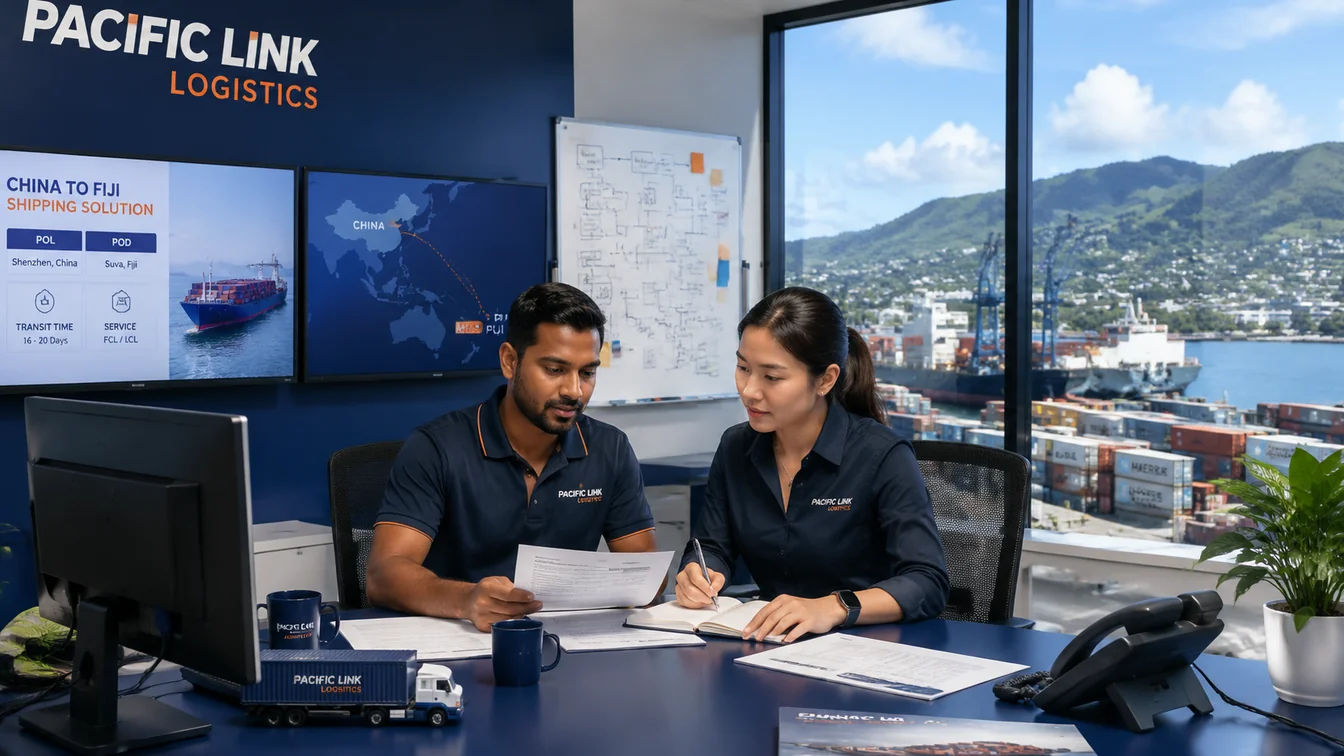
- Define the actual movement. A general request can leave the equipment, handling needs, or final service boundary unclear; a workable movement definition aligns the cargo form and intended delivery scope before routes are compared.
- Match the route to the destination. A suitable China export gateway may not produce the right final delivery arrangement in Fiji; the origin, transport mode, entry point, and consignee location need to work together.
- Keep the handoffs accountable. Ocean or air transport, Fiji customs, and inland delivery can involve different responsible parties; an explicit handoff plan clarifies who must provide documents, arrange release, or act when the agreed conditions change.
How TJ Logistics Team Plans a Fiji Shipment
- 1. Define the shipment and its gaps
- TJ Logistics Team reviews the stated cargo requirements, readiness, origin, destination, and intended service scope, then flags any missing route-specific information that prevents a reliable comparison.
- 2. Compare the relevant transport path
- The team maps the shipment against the applicable China gateway, the named Suva ocean references or Guangzhou Baiyun-to-Nadi air reference, and the proposed Fiji delivery area. Any alternative gateway must be treated as a separate routing possibility until its actual service scope is defined.
- 3. Record the commercial boundary
- TJ Logistics Team records the agreed transport method and intended service boundary, including the relevant customs, destination-handling, and final-delivery responsibilities, before a formal quotation is prepared.
- 4. Coordinate the agreed handoffs
- After the buyer confirms the quotation and scope, the team coordinates the agreed booking information, commercial-document handoffs, and cargo readiness, while tracking which party must act if the route, documentation, timing, or receiving conditions change.
China to Fiji Shipping FAQ
How much does LCL shipping from China to Fiji cost?
For LCL shipping from Shantou, China to Suva, Fiji, the TJ Logistics Team indicative client rate reference is $152.1/CBM in October 2026. This per-CBM reference is relevant to shared-load planning, so the shipment’s measured volume is central to evaluating the applicable service.
How long does sea freight from China to Fiji take?
For FCL 20GP from Shenzhen (Yantian/Shekou), China to Suva, Fiji, the TJ Logistics Team planning-transit reference is 18–24 days in October 2026. Use this route-specific planning figure when matching an ocean shipment to the required delivery date, rather than treating it as a guaranteed arrival date.
What is the most cost-effective way to ship from China to Fiji?
For cargo suited to a dedicated container, begin by comparing FCL; for a smaller shipment suitable for consolidation, consider LCL. Air freight or express may fit a more urgent requirement, while the practical choice depends on shipment form, chargeable weight or volume, handling, and final delivery needs.
Which China gateway should I use for sea freight to Fiji?
For containerized cargo that can be handled in the Shenzhen origin area, the named FCL reference starts at Shenzhen (Yantian/Shekou) and ends at Suva; the separate LCL reference starts at Shantou and also ends at Suva. Supplier location, the actual pickup arrangement, and cargo suitability determine which origin reference is appropriate.
Should cargo for western Fiji enter through Suva or Nadi?
For time-sensitive cargo destined for Nadi or western Viti Levu, the named Guangzhou Baiyun (CAN) to Nadi (NAN) air-freight reference is the relevant airport-based comparison. The named sea references end at Suva, so they do not establish a sea service to Lautoka; a western-area sea movement needs its own defined entry and inland-delivery arrangement.
What documents should be prepared before shipping from China to Fiji?
China-to-Fiji shipments normally require a commercial invoice, packing list, and the appropriate transport document, such as a bill of lading or air waybill, alongside the applicable customs entry and importer details. The Fiji Revenue and Customs Service import procedure explains the declaration process, while product-specific permits or certificates must be added when required.
Can I ship door-to-door from China to Fiji?
Door-to-door shipping from China to Fiji can be arranged as a defined collection-to-final-address service when the proposed scope supports the shipment and delivery location. The service agreement must allocate customs, import charges, destination handling, and onward delivery responsibilities; door-to-door coordination alone does not transfer the Fiji importer’s legal obligations.
Do plant or animal products need special approval to enter Fiji?
Commercial shipments of regulated plant or animal products may require Fiji biosecurity permits and supporting health or phytosanitary documents before dispatch, depending on the product and its origin. Use the Biosecurity Authority of Fiji import requirements system to identify the applicable conditions before the supplier releases the goods for transport.